
What Acne Really Is - And Why It’s Not Just Teenage Trouble
Acne isn’t just a bad day with a pimple. It’s a full-blown skin condition that starts deep inside your pores. When oil, dead skin cells, and bacteria team up, they clog hair follicles and trigger inflammation. That’s when you get whiteheads, blackheads, or worse - red, painful bumps that won’t go away. It’s not caused by eating greasy food or not washing your face enough. It’s biology. And it affects way more people than you think.
According to the American Academy of Dermatology, about 50 million Americans deal with acne every year. That’s one in six people. And while it’s common in teens, it’s not just a teenage thing. Around 15% of adult women in the UK and US still get breakouts - often deep, painful cysts around the jawline and chin. These are hormonal acne flare-ups, tied to menstrual cycles, stress, or even menopause. Men get it too, but women are more likely to struggle with it past their 20s.
The Four Main Types of Acne - And How to Tell Them Apart
Not all acne looks the same. And treating them the same way? That’s why so many people feel like nothing works.
- Comedonal acne is the mildest form. These are clogged pores - either closed (whiteheads) or open (blackheads). Whiteheads sit under the skin, looking like tiny bumps. Blackheads look dark because the oil and dead skin inside the pore oxidize when exposed to air. This type doesn’t swell or hurt. It’s more of a texture issue.
- Inflammatory acne is where things get red and angry. Papules are small, firm, red bumps. Pustules are the same but filled with pus, giving them a white or yellow center. These hurt to touch. They’re the kind that make you want to pop them - but you shouldn’t.
- Cystic acne is the most severe. These are large, deep, painful lumps under the skin. They don’t come to a head. They just sit there, swollen and sore. Cysts can last for weeks or months and often leave scars if not treated properly.
- Hormonal acne is a subtype of cystic acne that follows a pattern. It shows up right before your period, or during pregnancy or menopause. It’s usually clustered along the lower face - chin, jawline, neck. It’s not about dirt. It’s about hormones.
There’s also fungal acne - yes, that’s a real thing. It looks like tiny, itchy bumps on the forehead, chest, or back. It’s caused by yeast overgrowth, not bacteria. Most acne treatments won’t touch it. You need antifungal products.
Why Acne Happens - It’s More Than Just Oil
People think acne is just oily skin. But here’s the real breakdown, based on what dermatologists now know:
- Too much oil - Your sebaceous glands make sebum to protect your skin. But when hormones like androgens spike (during puberty, stress, or menstrual cycles), these glands go into overdrive.
- Clogged pores - Skin cells that should shed naturally stick together because of excess keratin. Instead of falling off, they pile up and block the follicle.
- Bacteria - Cutibacterium acnes (formerly Propionibacterium acnes) lives on your skin. Normally harmless. But when it’s trapped in a clogged pore, it multiplies fast and triggers inflammation.
- Inflammation - This is what turns a clogged pore into a red, swollen bump. Your body’s immune system attacks the bacteria, but ends up damaging your own skin in the process.
Genetics play a big role too. If both your parents had bad acne, your risk goes up by 50%. Medications like steroids, lithium, or testosterone can also trigger breakouts. Even tight helmets, phone screens, or sweat from workouts can cause mechanical acne - friction pushes oil and bacteria deeper into pores.
Topical Treatments - What Actually Works
For mild to moderate acne, topical treatments are the first line of defense. They go on directly where the problem is. No pills. No side effects system-wide. But they take time.
- Benzoyl peroxide - Kills acne bacteria and helps clear out clogged pores. Studies show a 90% reduction in bacteria within four weeks. Start with 2.5% - higher concentrations (5%, 10%) don’t work better, but they irritate your skin more.
- Salicylic acid - A beta-hydroxy acid that dissolves oil and exfoliates dead skin. Great for blackheads and whiteheads. Look for 0.5-2% in cleansers or toners. You’ll see results in 6-8 weeks.
- Retinoids (tretinoin, adapalene) - These are vitamin A derivatives. They don’t kill bacteria. They fix the root problem: skin cells sticking together. Tretinoin (0.025-0.1%) and Differin Gel (adapalene 0.1%) help cells shed normally. They reduce inflammatory lesions by 70% after 12 weeks. But expect purging - your skin might get worse for the first 3-4 weeks. That’s normal.
- Combination creams - Many dermatologists prescribe a mix: benzoyl peroxide + clindamycin or benzoyl peroxide + adapalene. These combo treatments clear up inflammatory acne 65-80% of the time, compared to 40-50% with single ingredients.
Over-the-counter options like La Roche-Posay Effaclar Duo work well for blackheads and mild red bumps. But if you have cystic acne? Don’t waste your money. It won’t touch deep lumps.
Oral Treatments - When Topicals Aren’t Enough
If your acne is moderate to severe, or if it’s hormonal, you’ll likely need something stronger. Oral treatments work from the inside out.
- Antibiotics (doxycycline, minocycline) - These reduce inflammation and kill bacteria. They’re usually prescribed for 3-6 months. About 50-70% of people see improvement. But here’s the catch: 25% develop antibiotic resistance. That’s why doctors now avoid long-term use and pair them with topical benzoyl peroxide to reduce resistance risk.
- Oral contraceptives - For women, birth control pills with ethinyl estradiol and progestin can slash hormonal acne by 50-60%. They work by lowering androgen levels. It takes 3-6 months to see results. Not for everyone - but if you’re on the pill anyway and struggling with jawline breakouts, this can be a game-changer.
- Spironolactone - This is a blood pressure drug that also blocks androgens. It’s not FDA-approved for acne, but dermatologists use it off-label all the time. It cuts hormonal acne by 40-60% in women after 3 months. Side effects? Dizziness, fatigue, irregular periods. Some women stop because of this. But for many, it’s the only thing that works.
- Isotretinoin (Accutane) - This is the nuclear option. It shrinks oil glands, reduces bacteria, and prevents clogged pores. For cystic acne, it clears up 80-90% of cases. About 60% of people never get acne back after one course. But it’s serious. You need monthly blood tests. You can’t get pregnant - ever - while taking it and for a full month after. Dry skin, lips, eyes? Guaranteed. But if you’ve tried everything else? It’s worth it.
What Doesn’t Work - And Why You Should Skip It
There’s a lot of noise out there. Tea tree oil? It’s natural, so people think it’s better. But studies show it’s only 40% as effective as benzoyl peroxide. Zinc supplements? They help a little - about 25% extra improvement when added to regular treatment. But they’re not a replacement.
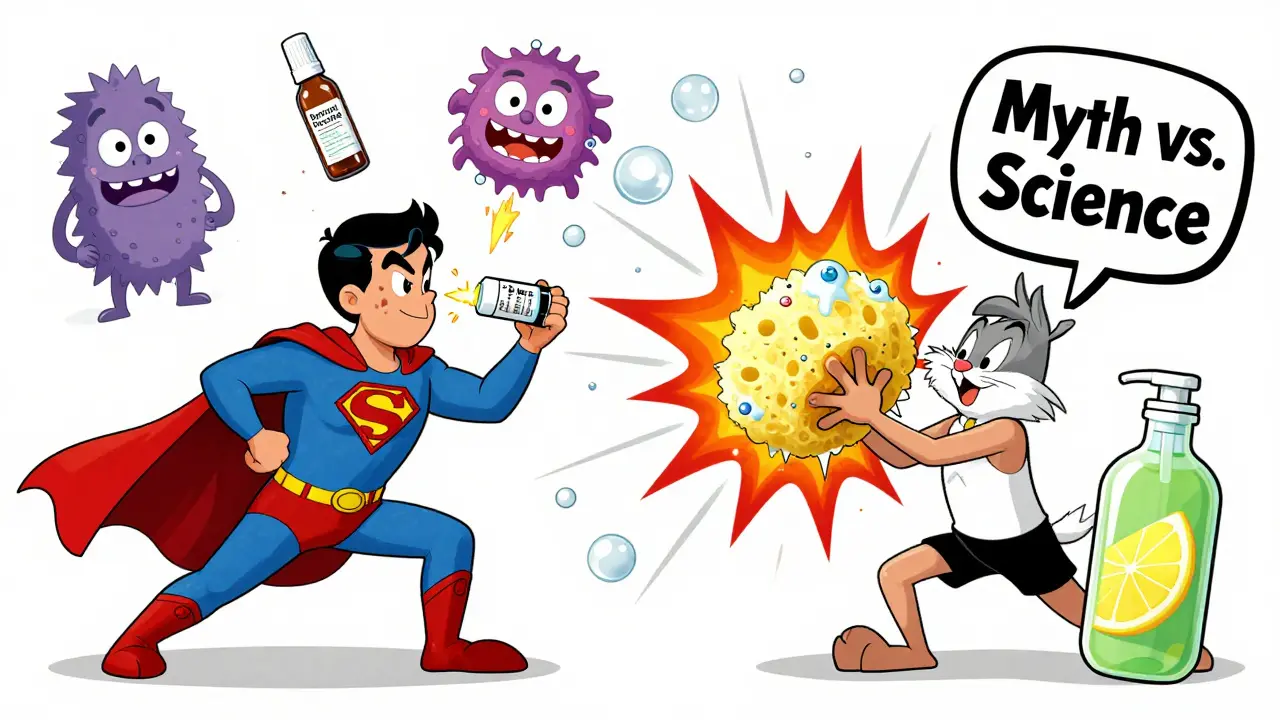
Face scrubs, lemon juice, toothpaste on pimples? These are myths. Scrubs irritate skin and make acne worse. Lemon juice burns. Toothpaste dries out your skin and can cause chemical burns. And don’t believe the “detox” cleanses or charcoal masks that promise to pull out toxins. Your liver does that. Your skin doesn’t need help.
Even some popular brands market products that look like they should work - but don’t. If it doesn’t contain one of the proven ingredients above, it’s probably just expensive water.
How Long Until You See Results? (And Why Most People Give Up Too Soon)
Here’s the hard truth: acne treatments don’t work overnight. Topical creams take 6-8 weeks. Oral meds take 3-6 months. And your skin might get worse before it gets better - especially with retinoids. That’s called “purging.” It’s not a reaction to the product. It’s your skin clearing out old clogs faster than usual.
Studies show 70% of people quit their treatment before the 8-week mark because they don’t see results. They think it’s not working. But if you stick with it, your chances of clearing up jump by 50%. Consistency matters more than intensity. Use your treatment twice daily. Don’t skip days. Be gentle. Wash with a mild cleanser. Moisturize. Wear sunscreen.
And don’t expect perfection. Even with the best treatment, you might still get one or two breakouts a month. That’s normal. The goal isn’t flawless skin. It’s fewer, less angry, less scarring breakouts.
What’s New in Acne Treatment? (And What’s Coming)
The acne treatment world is changing. In 2020, the FDA approved Winlevi (clascoterone), the first topical treatment that blocks androgens at the skin level. It reduces inflammatory acne by 45% in 12 weeks. But it’s expensive - around $650 a month without insurance. Adoption is slow.
Next up? Microbiome therapies. Companies like Azitra are developing treatments that target only the bad bacteria (C. acnes) without wiping out the good ones. Early trials look promising. No more antibiotic resistance.
AI skin analysis tools are starting to appear in apps and dermatology clinics. They scan your face and suggest personalized routines. In 2024, only 5% of users use them. By 2028, that number could jump to 35%.
But here’s the real problem: access. In the US, the average wait to see a dermatologist is 3-6 weeks. In the UK, it’s even longer. And newer treatments? They’re not covered by insurance. So many people are stuck with OTC products that don’t work - and feel like they’ve run out of options.
Final Thoughts - What to Do Right Now
Don’t panic. Don’t try everything at once. Start simple.
- If you have blackheads or whiteheads - try adapalene gel (Differin) or salicylic acid.
- If you have red, inflamed bumps - add benzoyl peroxide.
- If you’re a woman with breakouts around your jawline - talk to your doctor about hormonal options like birth control or spironolactone.
- If you have deep, painful cysts - see a dermatologist. You need prescription help.
Acne is treatable. But it’s not quick. It’s not easy. But it’s not hopeless either. The key is matching your treatment to your type of acne - not to what worked for your friend, or what you saw on TikTok. Be patient. Be consistent. And don’t give up before your skin has a chance to heal.

Coy Huffman
February 3, 2026 AT 11:56Amit Jain
February 5, 2026 AT 04:01Keith Harris
February 5, 2026 AT 21:14Kunal Kaushik
February 6, 2026 AT 17:10Jamillah Rodriguez
February 7, 2026 AT 12:45Susheel Sharma
February 7, 2026 AT 16:15Prajwal Manjunath Shanthappa
February 9, 2026 AT 01:51Wendy Lamb
February 9, 2026 AT 15:02Antwonette Robinson
February 10, 2026 AT 18:50Ed Mackey
February 12, 2026 AT 07:58Katherine Urbahn
February 14, 2026 AT 02:55Meenal Khurana
February 14, 2026 AT 10:50