
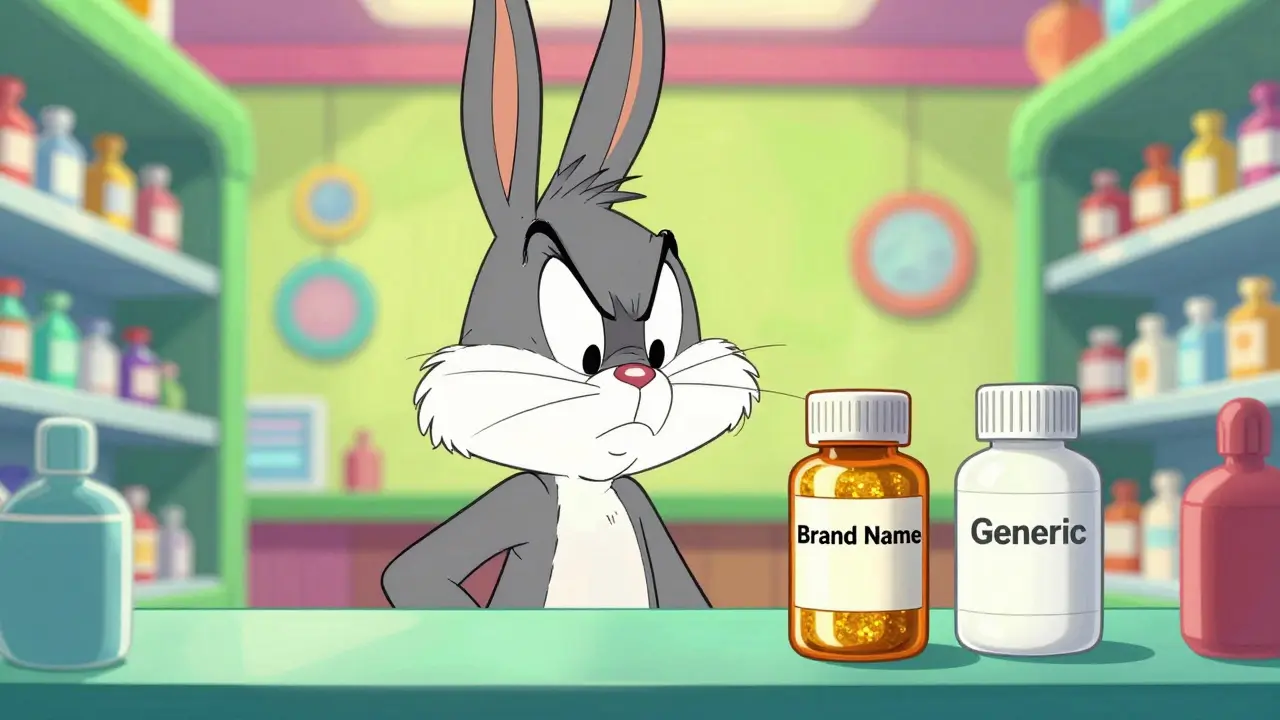
You want to save money on your prescriptions, but the idea of switching to a generic version makes you nervous. Maybe you've heard stories about people feeling different side effects, or perhaps you're taking a medication where a tiny dose change can cause a big problem. This is where authorized generics is a specific type of generic drug produced by the original brand-name manufacturer, containing identical active and inactive ingredients but sold without the brand name. It is essentially the brand-name drug in a different bottle and at a generic price.
For most people, a standard generic is perfectly fine. But for a specific group of patients, the "fillers" or inactive ingredients in a traditional generic can cause issues. Authorized generics solve this by offering a mirror image of the original drug, removing the guesswork and the risk of adverse reactions during a transition.
Key Takeaways for Your Next Pharmacy Visit
- Identical Formula: Unlike traditional generics, authorized generics have the exact same inactive ingredients as the brand.
- Lower Cost: You get the brand-name quality but pay the generic price, typically 15-20% less than the brand.
- Safe Switching: They are the most reliable option for people sensitive to fillers or those taking narrow therapeutic index drugs.
- Availability: Only about 15-20% of brand drugs have an authorized generic version, so you'll need to ask your pharmacist.
What Exactly is an Authorized Generic?
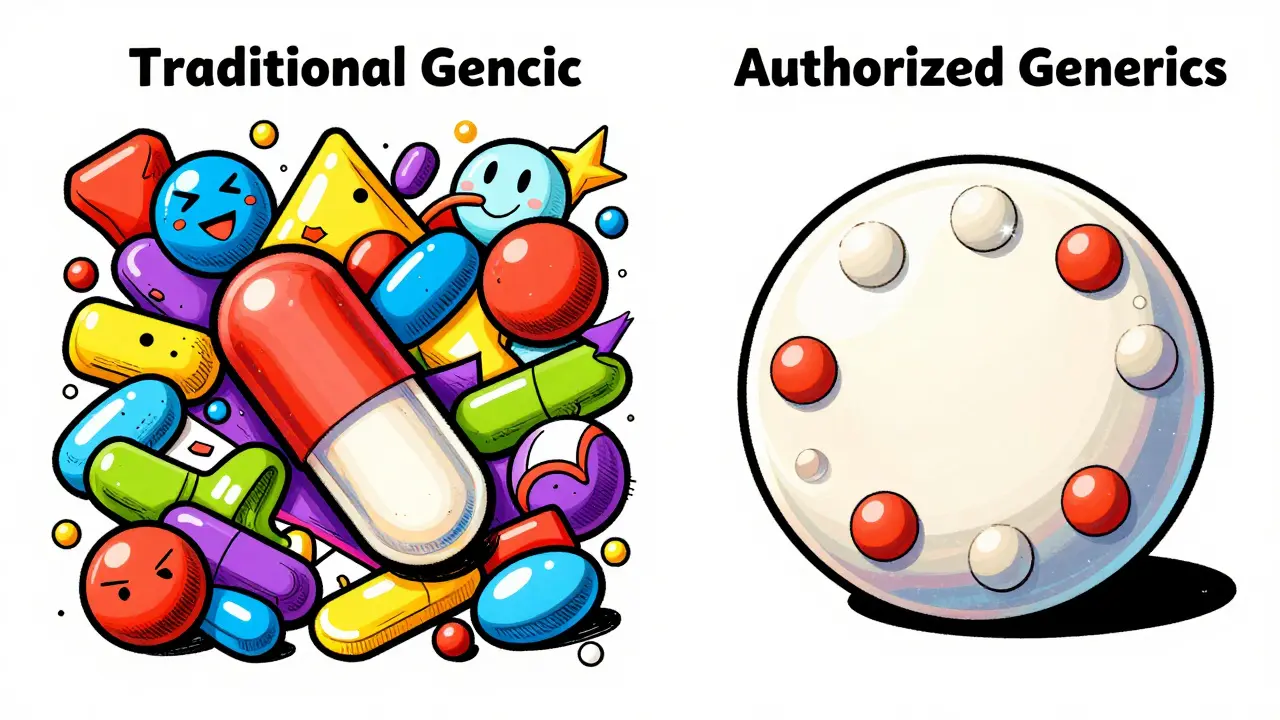
To understand these, you first have to understand how the FDA (Food and Drug Administration) handles drugs. Usually, when a company creates a new drug, they get a patent. When that patent expires, other companies file an ANDA (Abbreviated New Drug Application) to create a generic. These traditional generics must prove they work the same way (bioequivalence), but they don't have to use the same inactive ingredients-the dyes, binders, or fillers.
An authorized generic is different. It is marketed under the original NDA (New Drug Application). This means the brand company itself is selling the exact same pill they've always made, just without the fancy label. Because they don't have to prove bioequivalence (since it is the drug), they bypass the usual generic testing process. You get the exact same chemical makeup, including the pharmacokinetic properties, which is how the drug moves through your body.
Authorized vs. Traditional Generics: Which One Should You Choose?
If you are healthy and taking a common medication like a statin or a basic antibiotic, a traditional generic is almost always the right move. However, the difference becomes critical when dealing with "narrow therapeutic index" drugs. These are medications where a very small difference in the amount of drug that reaches your bloodstream can lead to either a treatment failure or toxicity.
Common examples include warfarin (a blood thinner) or levothyroxine (for thyroid issues). According to data from US Pharmacist, about 32% of patients report adverse reactions when switching to traditional generics because of these formulation differences. For someone on thyroid meds, a slight change in a filler can mean the difference between feeling energetic and feeling exhausted.
| Feature | Brand-Name | Authorized Generic | Traditional Generic |
|---|---|---|---|
| Active Ingredients | Identical | Identical | Identical |
| Inactive Ingredients | Original | Identical to Brand | Can Vary |
| FDA Approval Path | NDA | Original NDA | ANDA |
| Price | Highest | Low (Generic Price) | Lowest |
| Risk of Filler Allergy | Baseline | Same as Brand | Higher Potential |
How to Switch Without the Stress
Switching medications can be anxiety-inducing. The best way to handle this is through a direct conversation with your pharmacist. You should ask specifically: "Is there an authorized generic available for this medication?"
Your pharmacist will likely check the Orange Book, which is the FDA's official list of approved drug products. While authorized generics aren't always listed by name in the Orange Book, pharmacists use National Drug Code (NDC) cross-referencing to identify them. If your doctor hasn't written "no substitution" on the prescription, the pharmacist can usually make the switch for you right at the counter.
Be aware that the pill might look slightly different. A GoodRx analysis notes that authorized generics may differ in color or markings to distinguish them from the brand, but the actual medicine inside is the same. If you receive a pill that looks different but is labeled as an authorized generic, don't panic-it's designed that way.
The Cost and Insurance Reality
The main draw here is the price. Research from PubMed indicates that authorized generics generally cost 15-20% less than the brand-name version. While they might be a tiny bit more expensive than the cheapest "no-name" generic, the peace of mind is often worth the few extra dollars.
As for insurance, the coverage is generally strong. CMS data shows that Medicare Part D covers authorized generics at generic copay levels about 92% of the time. Commercial insurers are slightly lower at around 78%, but most will treat them as generics because they are listed as such in the pharmacy's system.
Why Aren't All Drugs Available as Authorized Generics?
You might wonder why you can't get an authorized generic for every pill you take. The truth is, these are often used as strategic tools by pharmaceutical companies. Brand manufacturers usually launch an authorized generic only after the first traditional generic hits the market. This allows them to keep a piece of the generic market share while competing with other generic firms.
This "strategic timing" is actually a point of contention. Some groups, like the Generic Pharmaceutical Association, argue that brand companies use this to maintain dominance. However, for the patient, this competition is a win. The FTC found that when authorized generics enter the market, prices can drop another 25-30% compared to when no authorized generic is available.
Is an authorized generic the same as a regular generic?
No. While both have the same active ingredient, a regular generic can have different inactive ingredients (fillers, binders, colors). An authorized generic is an exact replica of the brand-name drug, including all inactive ingredients, because it is made by the original manufacturer.
Will my insurance cover an authorized generic?
In most cases, yes. Most insurance plans, including Medicare Part D, classify them as generics. However, because coverage varies by provider, it is best to check with your insurance or pharmacist to see if it's on your specific formulary.
Can I switch to an authorized generic without my doctor's permission?
Depending on your state laws and the prescription, pharmacists can often interchange brand drugs with generics. However, if your doctor wrote "Dispense as Written" or "No Substitution," the pharmacist cannot switch it without contacting your doctor first.
Why would I choose an authorized generic over the cheapest traditional generic?
You should consider it if you have a history of allergic reactions to pill fillers or if you are taking a narrow therapeutic index drug (like levothyroxine) where consistency in formulation is critical to avoid adverse effects.
How do I know if I'm taking an authorized generic?
Check the label or ask your pharmacist. The packaging will not have the brand name, but the NDC (National Drug Code) will identify it as the authorized version produced by the original manufacturer.
What to Do Next
If you are currently paying a high premium for a brand-name drug and are afraid to switch to a generic, take these steps:
- Review your medications: Identify if any of your drugs are considered "narrow therapeutic index" (ask your doctor if you aren't sure).
- Consult your pharmacist: Ask specifically if an authorized generic exists for that medication.
- Check your budget: Compare the cost of the brand, the authorized generic, and the traditional generic.
- Monitor your response: If you switch, keep a simple log of how you feel for the first two weeks to ensure the transition is smooth.

Kali Murray
April 29, 2026 AT 19:43this is actually super helpful info ✨
Jarrett Jensen
April 30, 2026 AT 01:33The conceptual framework provided here is rudimentary at best, as it fails to adequately address the complex economic interplay between patent litigation and market exclusivity periods. One would expect a more sophisticated analysis of the strategic incentives driving original equipment manufacturers to flood the market with their own generics to stifle true competition. It is quite tiresome to see such simplified narratives presented as comprehensive guides to pharmaceutical procurement.
Jean Robert
April 30, 2026 AT 02:12I just want to say that for anyone out there who feels a bit overwhelmed by the medical system, please know that you are not alone and it is totally okay to take things one step at a time. It can be so scary to change a medication that you've relied on for years, but focusing on these authorized generics seems like such a gentle way to bridge that gap while still being kind to your wallet. Just remember to be patient with yourself and your body as you navigate these choices, and maybe keep a little journal of how you're feeling because you deserve to feel supported and healthy in every single way possible!
Ryan Wilson
May 1, 2026 AT 23:54Absolute corporate alchemy. They're just slapping a different label on the same sludge to keep the profit margins bloated while pretending they're doing us a favor. It's a predatory game of musical chairs where the patient is the only one losing money in the long run. The sheer audacity of these pharma giants to call this "competition" is enough to make anyone gag.
Abhishek Charan
May 2, 2026 AT 00:00Actually... most people just blindly follow whatever the pharmacist says without checking the NDC!!! 🙄 It is almost laughable how little people care about the actual chemistry of their pills!!!! 💊💥
prince king
May 2, 2026 AT 14:14It is really wonderful to see more accessible ways to get the same quality of care 🌈 I think focusing on the harmony between cost and health is the way to go! 🍀✨
Amber McCallum
May 3, 2026 AT 21:31Money isn't everything. People just want the brand name because they are scared. It's just a pill. Be simple.
Timothy Brown
May 4, 2026 AT 02:06Basically just a fancy way of saying the company is playing both sides of the fence. Classic corporate greed disguised as a health tip.
Stephen Johnson
May 4, 2026 AT 23:55The shift toward understanding the nuances of inactive ingredients is a quiet but important victory for patient autonomy. It allows us to exist in a space where we don't have to choose between financial stability and physiological stability.
Kat G
May 5, 2026 AT 21:21I appreciate the clear explanation of the difference between the two types of generics.
Angela Cook
May 6, 2026 AT 00:44We need more of this transparency in the US healthcare system right now! Stop letting these companies hide the truth about what we are paying for! Get the facts and take control!
lalit adesara
May 6, 2026 AT 16:31Pharma logic is a circle. Greed is the only truth here.
Kevin Taggart
May 8, 2026 AT 04:08wonder if my insurance would let me do this for my meds... probly gotta call them first :-)
Jonathan Hall
May 9, 2026 AT 10:21I completely agree that the peace of mind is worth the extra cost, but we must also recognize that the aggressive nature of the pharmaceutical industry often forces patients into these precarious positions where they have to be their own advocates just to get a drug that doesn't make them sick, which is honestly a failing of the system that should be addressing these disparities with much more urgency and compassion for the average person.