
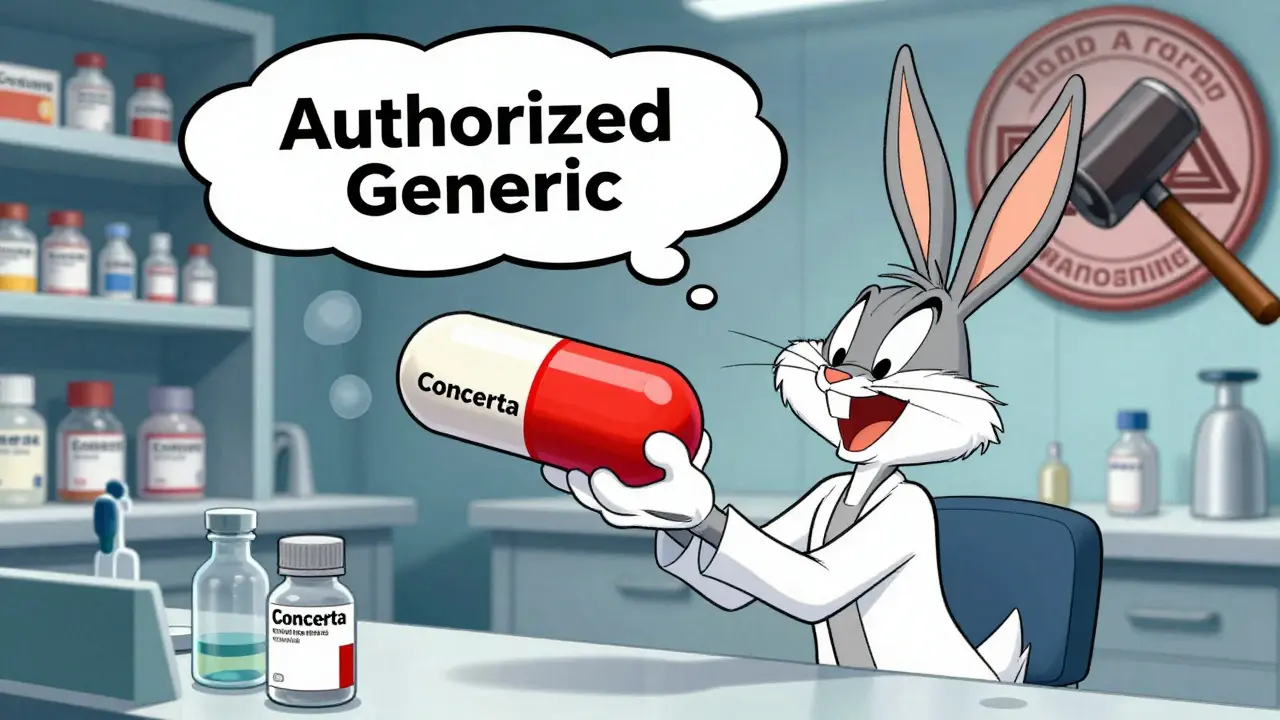
When a brand-name drug’s patent runs out, the market opens up for cheaper generic versions. But here’s the twist: sometimes, the same company that made the original brand drug also starts selling its own generic version. This isn’t a loophole. It’s called an authorized generic, and it’s one of the most strategic moves in pharmaceutical history.
What Exactly Is an Authorized Generic?
An authorized generic is the exact same pill, capsule, or injection as the brand-name drug - same active ingredients, same inactive fillers, same manufacturing process. The only difference? No brand name on the label. It’s the same product, just repackaged and sold at a lower price. For example, if you’ve taken Concerta for ADHD, you might have seen a generic version labeled as methylphenidate ER. If that’s an authorized generic, it was made by the same company that made Concerta - just without the brand name. Same factory. Same quality control. Same results. Unlike regular generics, which must prove they’re bioequivalent through a separate FDA process (called an ANDA), authorized generics don’t need to do that. They’re approved under the original brand’s New Drug Application (NDA). That means they skip the years-long testing phase. They’re not new drugs. They’re just the old drug with new packaging.Why Do Brand Companies Do This?
It’s not charity. It’s business. When a patent expires, the first generic company to file gets 180 days of exclusive rights to sell the generic version. That’s a huge advantage - they can charge less than the brand but still make a profit. But here’s where the brand company fights back: they launch their own authorized generic right before or during that 180-day window. This strategy does two things:- It cuts the first generic’s monopoly. Instead of one generic company controlling the market, now there are two - the brand’s version and the original generic. That drives prices down faster.
- It keeps the brand company’s revenue flowing. Instead of losing 100% of sales to a competitor, they keep a slice of the market.
How Do Authorized Generics Affect Prices?
Here’s the surprising part: authorized generics usually make drugs cheaper - for consumers. The Federal Trade Commission (FTC) studied this in 2011. They found that when a brand company launched an authorized generic during the 180-day exclusivity period, prices dropped 15-20% faster than in markets without one. Why? Because now there’s competition between two suppliers - the first generic and the brand’s own version. That competition pushes prices down. In some cases, authorized generics are the cheapest option available. Take Celebrex, for example. Its authorized generic, made by Greenstone (a Pfizer subsidiary), is often priced lower than the traditional generic version - even though they’re chemically identical. But here’s the catch: this price drop only lasts as long as the authorized generic is on the market. Once the 180-day window ends and more generic companies enter, prices usually fall even further. The authorized generic doesn’t stop competition - it just speeds it up.Why Aren’t They Listed in the FDA’s Orange Book?
The FDA’s Orange Book is the official list of approved drug products with therapeutic equivalence evaluations. You’ll find regular generics there. But you won’t find authorized generics. Why? Because they’re not new drugs. They’re the same drug under a different label. The FDA’s official stance, updated in October 2025, is clear: authorized generics are considered therapeutically equivalent to their brand-name counterparts - even if they’re not listed in the Orange Book. This creates confusion for pharmacists and patients. If a pharmacist checks the Orange Book to see if a generic is interchangeable with the brand, they won’t see the authorized generic. That means they might not know it’s an option - or worse, they might think it’s not approved.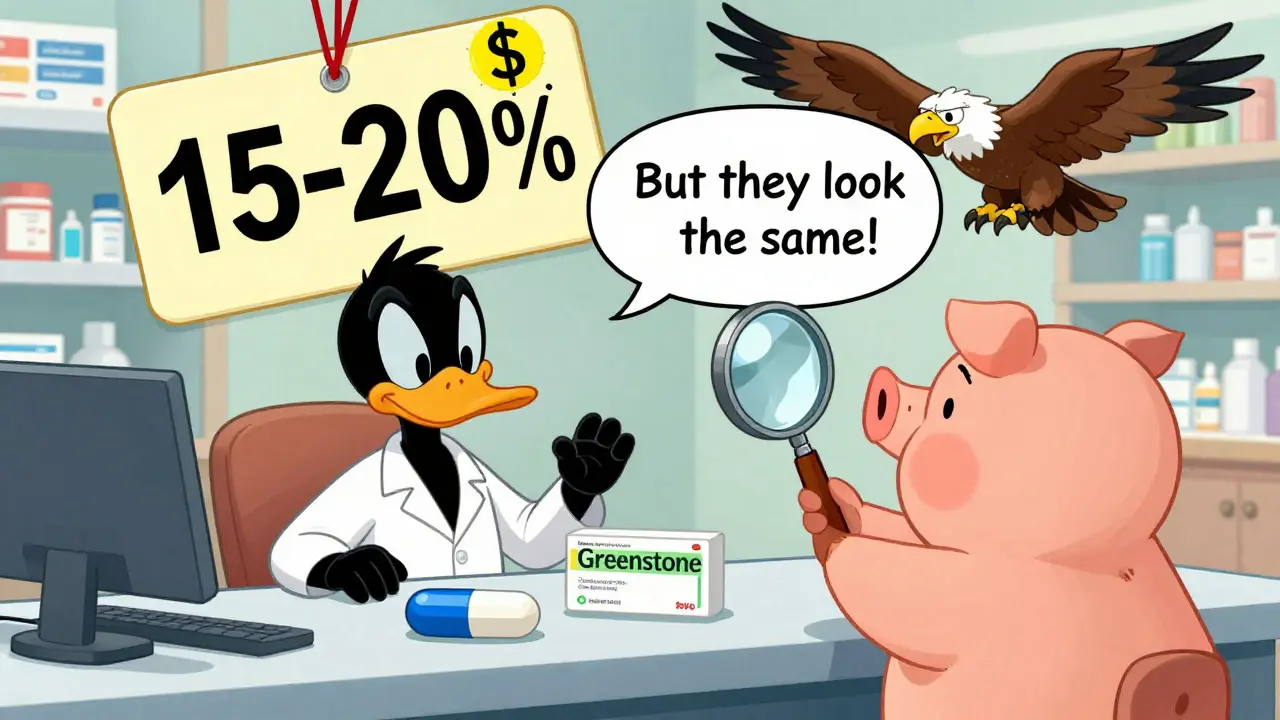
Authorized Generics vs. Regular Generics: What’s the Real Difference?
| Feature | Authorized Generic | Regular Generic | |--------|-------------------|-----------------| | Manufacturer | Same as brand-name drug | Different company | | Ingredients | Identical active and inactive ingredients | Only identical active ingredients | | FDA Approval | Under brand’s NDA, no new approval needed | Requires ANDA submission and bioequivalence testing | | Listed in Orange Book? | No | Yes | | Price | Often lower than brand, sometimes lower than generic | Usually lowest price option | | Appearance | May look different (color, shape) but same formula | May look different and have different fillers | The biggest practical difference? Inactive ingredients. For most people, it doesn’t matter. But for drugs with a narrow therapeutic index - like levothyroxine for thyroid issues, or warfarin for blood thinning - even small changes in fillers can affect how the drug works. That’s why many doctors and patients prefer authorized generics: they’re a guaranteed match to the brand.Who Benefits? Who Loses?
Patients benefit from lower prices and consistent quality. A 2022 Reddit thread with over 140 comments from pharmacists and patients showed that many people who switched from brand to regular generic had side effects - but switched back to the authorized generic and felt fine. One pharmacist wrote: “I’ve seen patients stabilized on brand who failed on traditional generic but did fine on authorized generic due to identical inactive ingredients.” Pharmacies benefit too. Some PBM companies like Express Scripts actively promote authorized generics because they’re perceived as higher quality. In 2021, Express Scripts reported 28% higher utilization of authorized generics compared to traditional generics. But not everyone wins. The first generic company loses its 180-day monopoly. If the brand company launches an authorized generic during that window, the first generic’s sales can drop by half. That’s why the Generic Pharmaceutical Association (GPhA) has criticized the practice - they argue it’s a way for big pharma to delay true competition. And then there’s the confusion. A 2023 survey by Pharmacy Times found that 68% of pharmacists said patients were confused about authorized generics. One patient reviewed an authorized generic of Singulair and wrote: “I got this ‘generic’ but it looks identical to the brand I used before - is this actually generic?”What’s Happening Now? (2025-2026)
The FDA’s 2025 update lists 1,247 authorized generics - up from just 854 in 2019. That’s a 46% increase in six years. Evaluate Pharma predicts that by 2027, 45% of major branded drugs will have authorized generics launched within a year of patent expiration. That’s up from 32% in 2022. The trend is accelerating. CNS drugs - like those for depression, epilepsy, and ADHD - have the highest adoption rate (67%) because inactive ingredients matter most. Antibiotics? Only 22%. Why? Because small changes in fillers rarely affect their effectiveness. Meanwhile, the FTC is running a new study. Preliminary findings expected in early 2026 will look at whether the rules around authorized generics still make sense. There’s also a proposed bill in Congress - the Promoting Competition in Pharmaceutical Markets Act - that would ban brand companies from launching authorized generics during the 180-day exclusivity period.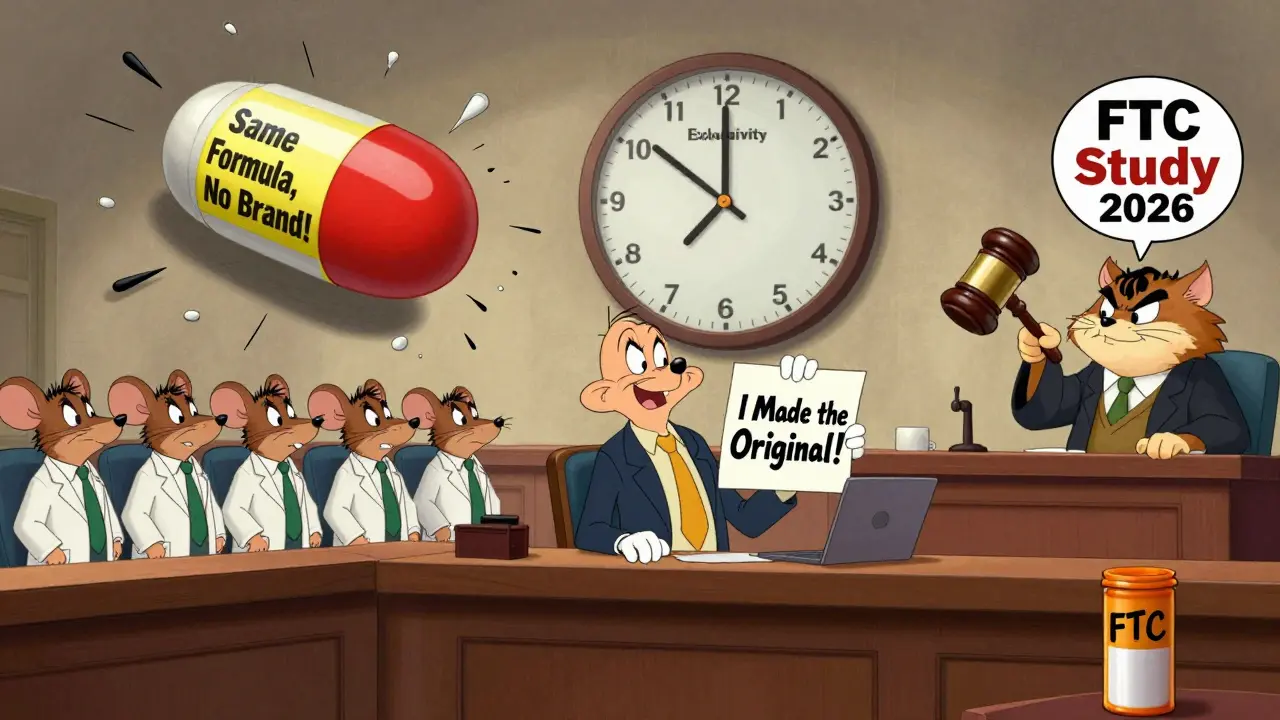
What Should You Do as a Patient?
If you’re on a brand-name drug and it’s about to go generic:- Ask your pharmacist: “Is there an authorized generic for this?”
- Ask your doctor: “Can I switch to the authorized generic?”
- Check your prescription label. If it says the same name as the brand but without the brand logo, it might be an authorized generic.
What Should Pharmacies Do?
Pharmacies are on the front lines of confusion. Many don’t know how to identify or explain authorized generics. The best practice? Update your pharmacy management system. Epic Systems added a flag for authorized generics in 2021, reducing misidentification by 67%. Other systems should follow. Train staff. A 2022 AmerisourceBergen report found that 73% of pharmacy technicians needed 2-3 weeks of training to properly handle authorized generics. Don’t skip this. Patients are asking. If you can’t answer, they’ll go elsewhere.What’s Next?
Authorized generics aren’t going away. They’re becoming a standard tool in the brand drug playbook. As more patents expire - especially for high-cost drugs like biologics and specialty meds - expect more of these moves. The real question isn’t whether they’re legal or ethical. It’s whether we’re using them right. Are they helping patients get better drugs at lower prices? Or are they just a clever way for big pharma to hold onto profits? The data says they lower prices. The patient stories say they improve outcomes. But the system is still messy. And until we fix how we label, track, and explain them, patients will keep wondering: “Is this really a generic - or just the brand in disguise?”Are authorized generics the same as brand-name drugs?
Yes. Authorized generics contain the exact same active and inactive ingredients as the brand-name drug. They’re made in the same factory, using the same process. The only difference is the label - no brand name, no marketing. They’re therapeutically identical.
Why aren’t authorized generics listed in the FDA’s Orange Book?
Because they’re not new drug applications. Authorized generics are marketed under the original brand’s New Drug Application (NDA), so they don’t need separate FDA approval. The FDA considers them therapeutically equivalent, but they’re not included in the Orange Book since they’re not new products.
Do authorized generics cost less than regular generics?
Sometimes. Often, they’re priced lower than the brand-name drug and sometimes even lower than the first generic. Because there are two suppliers during the 180-day exclusivity window, competition drives prices down. In some cases, authorized generics are the cheapest option available.
Can I trust an authorized generic if I’ve had side effects with regular generics?
Yes - and that’s one of their biggest advantages. Regular generics only need to match the active ingredient. Inactive ingredients (fillers, dyes, binders) can vary and sometimes cause side effects. Authorized generics match the brand’s full formula, including those inactive ingredients. For drugs with narrow therapeutic windows - like thyroid meds or blood thinners - this can make a real difference.
Do authorized generics delay cheaper generics from entering the market?
They can. By launching their own version during the first generic’s 180-day exclusivity period, brand companies can fragment the market. This reduces the first generic’s profits and may discourage other companies from entering later. Critics argue this delays true competition. Supporters say it still lowers prices faster than if no authorized generic existed.
Blow Job
December 23, 2025 AT 17:12Man, I switched to an authorized generic for my ADHD med last year and honestly? My anxiety dropped like a rock. Same pill, no brand markup. Why the hell are pharmacies not pushing this harder?
Christine Détraz
December 25, 2025 AT 14:48I’ve been a pharmacist for 18 years and I still get asked if authorized generics are ‘fake.’ It’s wild. The label says ‘methylphenidate ER’ but looks exactly like Concerta. Patients think they got scammed. We need better signage, better training. This isn’t rocket science.
John Pearce CP
December 26, 2025 AT 04:47It is a profound and troubling development that the American pharmaceutical establishment has institutionalized a mechanism whereby monopolistic entities, under the guise of market efficiency, deliberately undermine the very structure of generic competition. The authorized generic is not a consumer-friendly innovation-it is a legalistic Trojan horse, engineered to preserve corporate profits under the veneer of affordability. The FTC must act decisively, and Congress must ban this predatory practice without delay.
EMMANUEL EMEKAOGBOR
December 28, 2025 AT 02:18This is fascinating. In Nigeria, we don’t have authorized generics at all. We get generics from India and China, and sometimes the fillers are so different that patients get rashes or nausea. I wish we had this system here-same drug, same quality. It’s not about brand, it’s about safety. Thank you for explaining this so clearly.
CHETAN MANDLECHA
December 29, 2025 AT 12:41Wait so if the authorized generic is the same as brand, why does it cost less? Because the brand company owns it? That’s like McDonald’s selling a burger without the logo for half price. Makes sense, but also kinda shady.
Jillian Angus
December 31, 2025 AT 05:28My doc switched me to the authorized version of my blood thinner and I didn’t even notice until I checked the bottle. No more panic attacks over weird side effects. I just wish more people knew this was a thing
Ajay Sangani
January 2, 2026 AT 02:12isnt it kinda ironic that the system designed to make drugs cheaper ends up being controlled by the same companies that made them expensive in the first place? we’re just rearranging deck chairs on the titanic. capitalism is a beautiful and terrible thing
Pankaj Chaudhary IPS
January 3, 2026 AT 05:06As a global health advocate, I commend the transparency of this model. While the corporate motive is undeniable, the outcome-improved patient access and reduced therapeutic variability-is a win for public health. Nations like India and Brazil should study this framework to adapt it for their own generic ecosystems. Quality should never be sacrificed for cost.
Steven Mayer
January 4, 2026 AT 16:20The NDA-based regulatory bypass for authorized generics represents a structural inefficiency in the FDA’s therapeutic equivalence paradigm. The absence of Orange Book listing introduces significant clinical ambiguity, particularly in polypharmacy contexts where bioequivalence thresholds are non-linear. This constitutes a de facto pharmacovigilance gap.
Sidra Khan
January 6, 2026 AT 10:11sooo... this is just the brand pretending to be a generic? 🤡