

Insomnia is exhausting. When you haven’t slept in days, the promise of a pill that guarantees eight hours of rest feels like a lifeline. You might have been prescribed a sedative-hypnotic, which is a class of central nervous system depressants used primarily to treat insomnia and anxiety. These drugs fall into two main camps: benzodiazepines and non-benzodiazepines (often called Z-drugs). For decades, doctors prescribed them as standard care for sleep disorders. But the medical consensus has shifted dramatically. In fact, recent guidance from major health authorities suggests these medications may do more harm than good for long-term use.
You are not alone if you feel confused by conflicting advice. Millions of prescriptions are still written every year. Yet, new data highlights significant risks ranging from memory loss to dangerous falls. Understanding the difference between these two classes of drugs is crucial for making an informed decision about your health. This guide breaks down how they work, their specific risks, and what modern medicine recommends instead.
How Sedative-Hypnotics Work in the Brain
To understand why these drugs affect you differently, we need to look at what happens inside your brain. Both benzodiazepines and non-benzodiazepines target the same neurotransmitter: gamma-aminobutyric acid (GABA). GABA is your brain’s primary "brake pedal." It slows down nerve activity, promoting relaxation and sleep.
Benzodiazepines, such as Valium or Xanax, were developed in the 1950s and 1960s. They bind broadly to multiple sites on the GABA-A receptor. Think of this like turning up the volume on all channels of a radio at once. This broad action is why benzodiazepines are effective for both anxiety and sleep, but it also leads to wider side effects like muscle relaxation and sedation during the day.
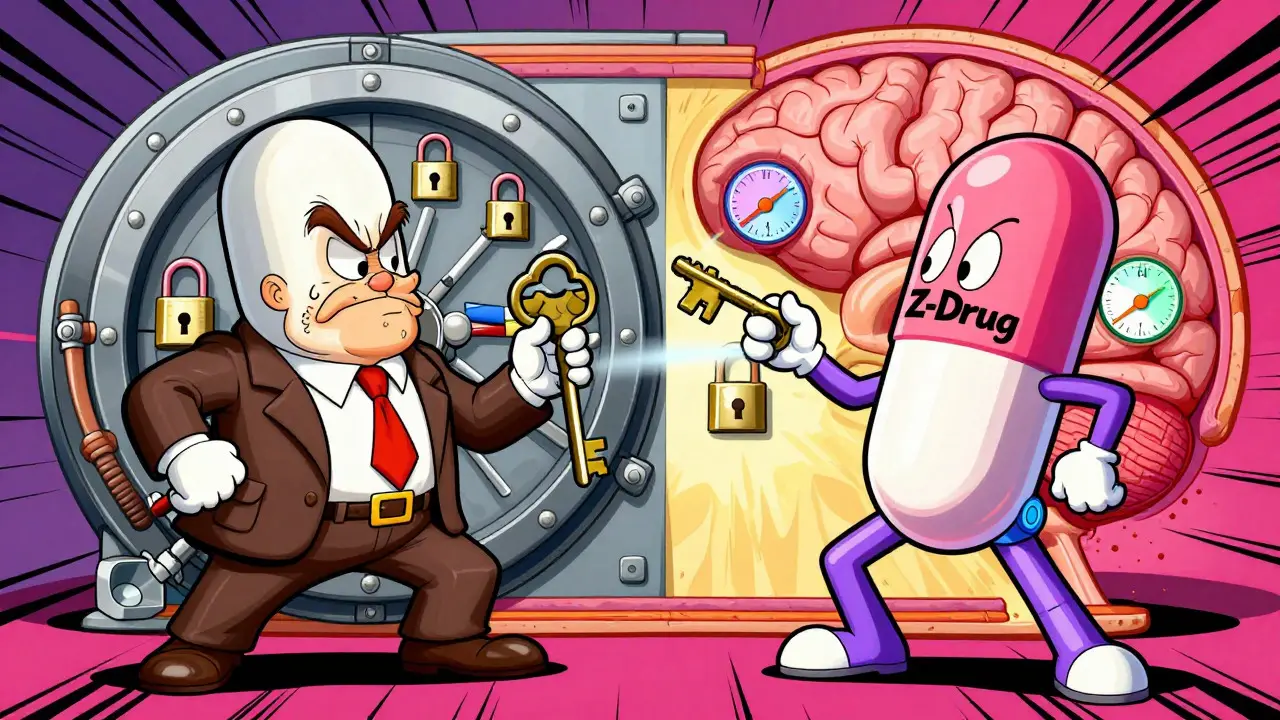
Non-benzodiazepines, or Z-drugs, emerged in the 1980s and 1990s. Examples include zolpidem (Ambien), eszopiclone (Lunesta), and zaleplon (Sonata). These were designed to be more selective. They target only the omega-1 subtype of the GABA-A receptor. The goal was to induce sleep without the heavy sedation or muscle-relaxing effects of older benzos. While theoretically safer, research shows the distinction in real-world outcomes is often smaller than advertised.
Benzodiazepines: The Old Guard
Benzodiazepines have been around longer, so their profile is well-documented. Common names you might recognize include triazolam, temazepam, flurazepam, and alprazolam. Their biggest advantage is versatility; they treat generalized anxiety disorder (GAD) as well as insomnia.
However, their duration of action varies wildly, which causes problems. Short-acting agents like triazolam (half-life 1.5-5.5 hours) help you fall asleep but can cause severe rebound anxiety and withdrawal symptoms the next day. Long-acting agents like flurazepam (half-life 40-250 hours) stay in your system for days. A study by Kripke et al. noted that long-half-life agents cause "considerable impairment of daytime performance" because the drug accumulates in your body with daily use.
The withdrawal process for benzodiazepines is notoriously difficult. Symptoms can range from mild irritability to life-threatening seizures if stopped abruptly. This creates a cycle where patients stay on the medication longer than intended to avoid feeling sick, leading to tolerance and dependence.
Non-Benzodiazepines (Z-Drugs): The Targeted Alternative
Z-drugs were marketed as a safer alternative because they supposedly had fewer side effects and less potential for abuse. They are indicated primarily for insomnia, not anxiety. Because they clear the system faster, they were thought to reduce next-day grogginess.
Yet, the safety gap is narrowing. Zolpidem, for instance, has a half-life of 1.6-4.5 hours. Eszopiclone lasts 5-7 hours. While shorter than some benzos, they are not instantaneous. The FDA mandated a 50% dosage reduction for zolpidem in 2013 (from 10mg to 5mg for women) after studies showed residual effects impaired driving and morning alertness.
A unique risk associated with Z-drugs is complex sleep behaviors. Users have reported sleep-driving, sleep-eating, and even making phone calls while unconscious. Between 2005 and 2010, zolpidem was implicated in 66% of FDA-reported sleep-related driving incidents. These events happen because the drug suppresses consciousness but not motor function entirely.
| Feature | Benzodiazepines | Non-Benzodiazepines (Z-Drugs) |
|---|---|---|
| Primary Use | Anxiety & Insomnia | Insomnia Only |
| Receptor Binding | Broad (Multiple GABA-A sites) | Selective (Omega-1 subtype) |
| Withdrawal Severity | High (Can be life-threatening) | Moderate (Milder, but still present) |
| Fall Risk in Elderly | 2.3-fold higher hip fracture risk | 1.8-fold higher hip fracture risk |
| Unique Side Effects | Daytime sedation, muscle relaxation | Complex sleep behaviors (sleep-driving) |
The Hidden Costs: Memory, Falls, and Quality of Life
The most alarming data comes from large-scale observational studies. The Veterans Affairs (VA) Academic Detailing Service released a stark warning in 2023: "It is no longer recommended to take a sedative-hypnotic drug to treat insomnia or anxiety." This statement reflects a growing body of evidence showing that the risks outweigh the benefits for most patients.
Here are the specific risks quantified by recent research:
- Memory and Concentration: A 5-fold higher risk of cognitive issues. You may find yourself forgetting conversations or struggling to focus at work.
- Daytime Fatigue: A 4-fold increased risk of feeling tired during the day, counteracting the purpose of taking the drug.
- Falls and Fractures: A 2-fold increased risk of falls and fractures, particularly in the hips and wrists. This is especially dangerous for adults over 65.
A 2012 JAMA Internal Medicine study highlighted that while both classes increase fall risk, benzodiazepines pose a slightly higher threat for hip fractures. However, non-benzodiazepines are not harmless. User reports frequently mention "next-day impairment," with 34% of users in a 2021 meta-analysis reporting drowsiness severe enough to impact job performance.
Long-term use also correlates with poorer quality of life. Studies tracking patients over three years found that hypnotic users had more doctor consultations, more hospital days, and worse scores on quality-of-life surveys compared to non-users. Essentially, the medication may be treating the symptom (insomnia) while worsening the patient’s overall health trajectory.
Who Is Most at Risk?
Not everyone reacts the same way, but certain groups face heightened dangers. If you fall into any of these categories, you should approach sedative-hypnotics with extreme caution:
- Adults Over 65: Older metabolisms process drugs slower. The American Geriatrics Society Beers Criteria lists both benzodiazepines and Z-drugs as "potentially inappropriate medications" for seniors due to strong evidence of harm.
- Patient with Sleep Apnea: Sedatives relax throat muscles, which can worsen obstructive sleep apnea. Dr. Daniel Kripke notes that hypnotics can exacerbate apnea, potentially leading to chronic hypertension or cardiac issues.
- Those Taking Other CNS Depressants: Mixing sleeping pills with opioids, antidepressants, or alcohol can slow breathing to fatal levels. Even a small amount of alcohol can dangerously potentiate the effect of these drugs.
- People with Liver or Kidney Issues: Since these drugs require hepatic metabolism, patients with severe liver impairment (Child-Pugh class C) or low kidney function (CrCl <30 mL/min) are at high risk of toxicity.

What Should You Do Instead?
If you are currently taking these medications, do not stop abruptly. Withdrawal can be severe. Instead, work with your doctor on a tapering plan. Benzodiazepines typically require a slow taper (reducing the dose by 10% every 1-2 weeks), while Z-drugs may allow for a quicker 2-4 week taper.
The gold standard for treating chronic insomnia is now Cognitive Behavioral Therapy for Insomnia (CBT-I). Unlike medication, CBT-I addresses the root causes of sleeplessness-such as poor sleep hygiene, anxiety about sleep, and irregular schedules. Clinical guidelines from the American Academy of Sleep Medicine recommend CBT-I as the first-line treatment, reserving medication only for short-term adjunctive use (2-4 weeks).
Newer classes of drugs, such as orexin receptor antagonists (e.g., suvorexant/Belsomra), are emerging as alternatives. Early phase 3 studies suggest they may have lower rates of next-day impairment compared to traditional sedative-hypnotics, though they are not without their own considerations.
Key Takeaways for Patients
Navigating sleep medication requires vigilance. Here is a checklist to discuss with your healthcare provider:
- Limit Duration: Aim for short-term use (2-4 weeks maximum).
- Monitor Side Effects: Keep a log of daytime drowsiness, memory lapses, or unusual behaviors.
- Avoid Alcohol: Never mix sedative-hypnotics with alcohol.
- Consider CBT-I: Ask for a referral to a sleep specialist or therapist trained in CBT-I.
- Review Regularly: If you’ve been on these meds for months or years, ask if it’s time to taper off.
Sleep is essential, but the path to better rest doesn’t always involve a pill. By understanding the real risks of benzodiazepines and non-benzodiazepines, you can advocate for safer, more sustainable treatments.
Are non-benzodiazepines safer than benzodiazepines?
Historically, non-benzodiazepines (Z-drugs) were marketed as safer because they target specific receptors and have shorter half-lives. However, recent studies show that both classes carry similar risks for falls, memory impairment, and dependency. While Z-drugs may have milder withdrawal symptoms, they introduce unique risks like complex sleep behaviors (e.g., sleep-driving). Current guidelines suggest neither class is safe for long-term use.
How long should I take sedative-hypnotics?
Clinical guidelines from the American Academy of Sleep Medicine recommend limiting use to short-term periods, typically 2 to 4 weeks. Long-term use leads to tolerance, meaning you need higher doses for the same effect, and increases the risk of physical dependence and cognitive decline.
Can sleeping pills cause memory loss?
Yes. Research indicates a 5-fold higher risk of memory and concentration problems among regular users of sedative-hypnotics. Both benzodiazepines and Z-drugs can impair the formation of new memories while under the influence, and long-term use has been linked to persistent cognitive deficits.
What is the best alternative to sleeping pills?
Cognitive Behavioral Therapy for Insomnia (CBT-I) is considered the first-line treatment by major medical organizations. It helps patients change thoughts and behaviors that interfere with sleep. Unlike medication, CBT-I provides lasting results without side effects or dependency risks.
Is it dangerous to stop benzodiazepines suddenly?
Yes, stopping benzodiazepines abruptly can be dangerous and even life-threatening. Withdrawal symptoms can include seizures, severe anxiety, tremors, and hallucinations. Always taper off under medical supervision, usually reducing the dose by 10% every 1-2 weeks.