Buying medication online feels easier than ever. You click a button, fill out a quick form, and get your pills delivered to the door. But behind that convenience sits a complex web of rules designed to keep you safe from counterfeit drugs, dangerous dosages, and data theft. In 2026, the regulatory landscape for online pharmacies is digital platforms that dispense prescription medications directly to consumers via the internet has shifted significantly. The old days of vague oversight are gone, replaced by stricter federal enforcement and clearer state responsibilities.
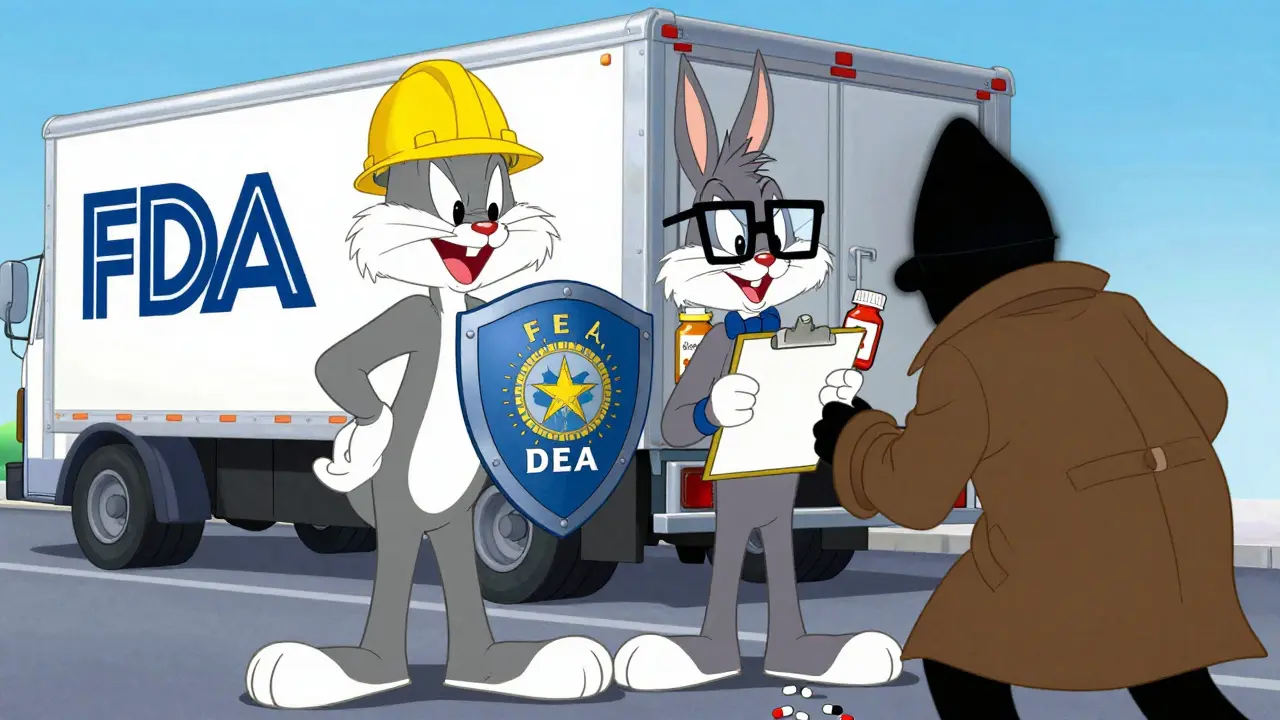
If you’ve ever wondered who actually watches over these websites, the answer isn’t just one agency. It’s a two-layer system involving the Food and Drug Administration (FDA) is the U.S. federal agency responsible for protecting public health by ensuring the safety, efficacy, and security of human and veterinary drugs at the national level and your local state board of pharmacy is a state-level regulatory body that licenses and oversees pharmacies and pharmacists within its jurisdiction. Understanding how they work together is the only way to tell a legitimate service from a scam.
The Federal Layer: FDA Safety and DEA Control
At the top of the pyramid sits the federal government. The FDA doesn’t care about whether your pharmacist is nice; it cares about whether the drug in your bottle is what it claims to be. Their job is to regulate drug safety, efficacy, labeling, and advertising. If an online site sells unapproved drugs or skips required warnings, the FDA steps in. They also run the BeSafeRx program is an FDA initiative that helps consumers identify legitimate online pharmacies through verification tools and educational resources, which serves as your first line of defense.
But the FDA isn’t alone. When it comes to controlled substances-like ADHD medications, anxiety drugs, or painkillers-the Drug Enforcement Administration (DEA) is the federal law enforcement agency under the Department of Justice that enforces controlled substance laws takes the lead. The relationship between these agencies and online providers has tightened dramatically in early 2025 and 2026. Why? Because illegal sites were exploiting loopholes to sell dangerous concoctions without proper medical oversight.
In January 2025, the DEA introduced new rules for telemedicine prescribing. This was a major shift. Previously, the Ryan Haight Act generally required doctors to see patients in person before prescribing controlled substances. The new framework creates three types of Special Registrations for telemedicine providers:
- Standard Registration: Allows prescribing of Schedule III-V controlled substances (like certain benzodiazepines or lower-strength opioids) via telehealth.
- Advanced Telemedicine Prescribing Registration: Reserved for specific specialists like psychiatrists, hospice physicians, and pediatricians, allowing them to prescribe Schedule II substances (like Adderall or OxyContin) remotely.
- Limited State Telemedicine Registrations: For states with their own strict telemedicine laws.
This change acknowledges that many people live in rural areas or have mobility issues that make in-person visits difficult. However, it comes with strings attached. Practitioners must now review Prescription Drug Monitoring Program (PDMP) data before prescribing. This means checking a database to see if you’re already getting similar drugs from another doctor, helping prevent "doctor shopping" and overdose risks.
The State Layer: Licensing and Daily Oversight
While the FDA and DEA set the broad rules, the day-to-day policing happens at the state level. Every state has a board of pharmacy. These boards license the actual pharmacies and the pharmacists who work there. If an online pharmacy operates in Texas, it needs a license from the Texas State Board of Pharmacy. If it ships to California, it often needs compliance with California’s rules too.
This creates a multi-layered system. A legitimate online pharmacy must satisfy both federal requirements (FDA/DEA) and state licensing laws. Illegal sites usually fail on both counts. They might operate from overseas, bypassing U.S. jurisdiction entirely, or they might be domestic but unlicensed.
State boards are increasingly active. In 2024, state pharmacy boards collectively processed nearly 3,000 complaints about online pharmacies. States like California, Texas, and Florida saw the highest volumes. Why? Because these states have large populations and aggressive enforcement teams. If a pharmacy violates state law-by, say, dispensing without a valid prescription or failing to maintain patient records-the state board can revoke its license, issue fines, or refer the case to federal authorities.
For consumers, this means you can verify a pharmacy’s legitimacy locally. Most states provide online databases where you can search for a pharmacy’s license status. If a site doesn’t appear in the state database where it claims to be based, that’s a massive red flag.
How to Spot a Legitimate Online Pharmacy
You don’t need to be a lawyer to spot a fake. The FDA’s BeSafeRx guidelines offer a simple checklist. Any legitimate online pharmacy must meet these criteria:
- Requires a Doctor’s Prescription: If a site sells prescription-only drugs without asking for a valid prescription from a licensed provider, it is illegal and unsafe. No exceptions.
- Provides a Physical Address: Look for a street address in the U.S., not just a P.O. Box or an email address. Legitimate businesses have physical locations.
- Offers Pharmacist Access: There should be a licensed pharmacist available to answer questions. Check if you can call a phone number or chat with a real person.
- Is Licensed: The site should display its state license number. You can verify this using the FDA’s BeSafeRx location tool or your state board’s website.
Beyond these basics, look for accreditation. The Verified Internet Pharmacy Practice Sites (VIPPS) is a seal of accreditation administered by the National Association of Boards of Pharmacy for online pharmacies meeting high standards program accredits pharmacies that follow strict privacy and practice standards. As of late 2025, fewer than 200 pharmacies held this seal. If you see the VIPPS seal, you’re likely in good hands.
Also, watch out for marketing tricks. Scam sites often use deep discounts, celebrity endorsements, or urgency tactics like "limited stock." Legitimate pharmacies rarely advertise heavily on social media with sensational claims. In September 2025, the FDA announced new measures to crack down on misleading direct-to-consumer advertising, especially on social media platforms. If an influencer is pushing a cheap version of a popular weight-loss drug, proceed with extreme caution.
The Compounding Pharmacy Loophole
A unique challenge in 2026 involves compounded medications, particularly GLP-1 drugs like Semaglutide and Tirzepatide. Due to widespread shortages of brand-name versions, many patients turned to compounding pharmacies. These are facilities that mix ingredients to create custom medications.
There are two types: 503A and 503B. Section 503A pharmacies compound drugs for individual patients based on specific prescriptions. Section 503B outsourcing facilities mass-produce compounded drugs for general distribution. In September 2025, the FDA removed Semaglutide and Tirzepatide from its drug shortage list. This meant that 503B facilities could no longer legally compound these drugs for general sale. Only 503A pharmacies can still compound them, but only with a valid, patient-specific prescription.
Why does this matter? Because compounded drugs are not FDA-approved. The FDA does not verify their safety or effectiveness before they reach you. This places more responsibility on state boards to oversee 503A operations. If you buy a compounded GLP-1 drug, ensure the pharmacy is a registered 503A entity in your state and requires a genuine prescription. Buying bulk vials from an unverified source is risky and potentially illegal.
| Entity | Primary Responsibility | Key Action for Consumers |
|---|---|---|
| FDA | Drug safety, efficacy, labeling, advertising | Use BeSafeRx to verify legitimacy |
| DEA | Controlled substances, telemedicine prescribing rules | Ensure prescriber has valid telemedicine registration |
| State Board of Pharmacy | Pharmacy licensing, pharmacist discipline | Check state license database for the pharmacy |
| NABP (VIPPS) | Accreditation of online pharmacies | Look for the VIPPS seal on the website |
Red Flags That Signal Danger
Not all online pharmacies are bad, but many are. Here are the warning signs that you’re dealing with an illegal operation:
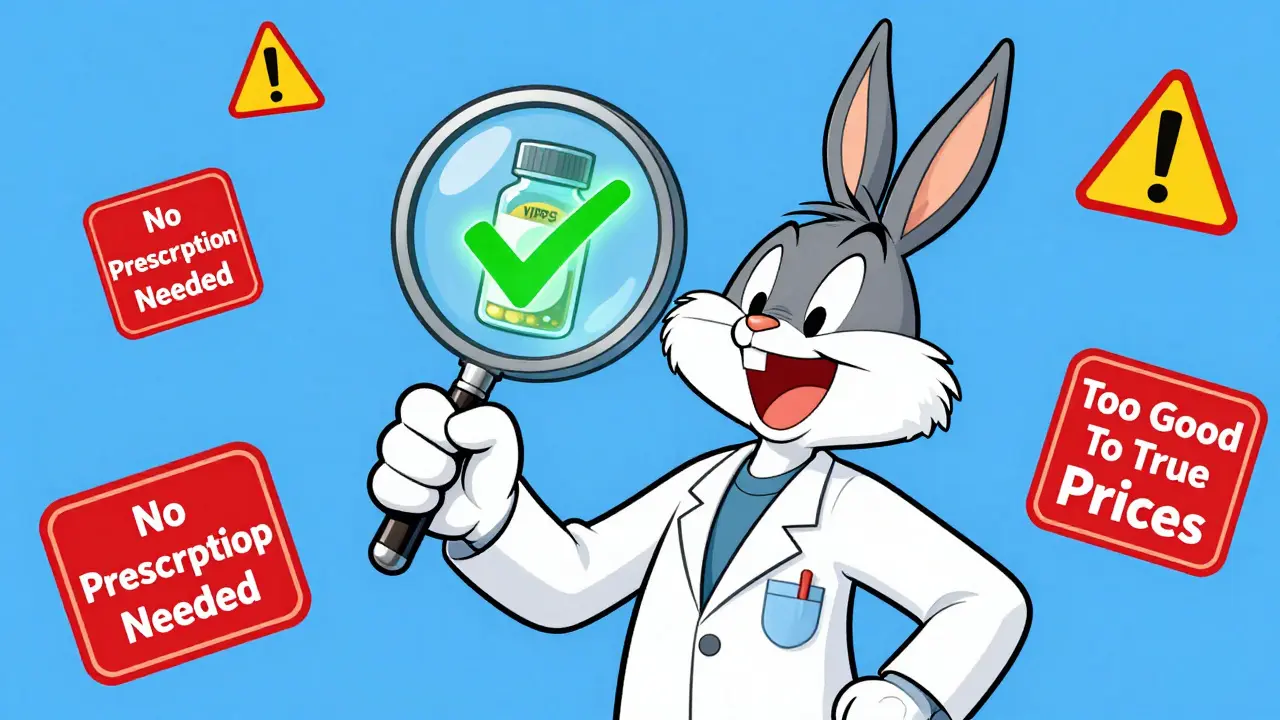
- Prices Too Good to Be True: If a drug costs 90% less than everywhere else, it’s likely counterfeit. Counterfeit meds may contain wrong ingredients, incorrect dosages, or harmful substances like fentanyl.
- No Physical Address: Only a P.O. Box or no address at all suggests the company is hiding its location.
- Unsolicited Emails: Legitimate pharmacies don’t spam you with offers for prescription drugs.
- Selling Controlled Substances Without Evaluation: If a site lets you buy Xanax or Adderall after a 2-minute online quiz with no video visit, it’s violating DEA rules.
- Poor Privacy Policies: Scam sites often sell your personal and financial data to third parties.
User reports on forums like Reddit highlight real consequences. Patients have received pills that didn’t work, caused unexpected side effects, or contained chalk instead of medicine. In August 2025, the FDA fined QuickMedsOnline.com $500,000 for repeated violations of the Ryan Haight Act. This shows that while enforcement is happening, scammers are still active.
What’s Next for Online Pharmacy Regulation?
The regulatory framework is evolving fast. By Q3 2026, the DEA plans to implement a nationwide Prescription Drug Monitoring Program (PDMP). This will give doctors and pharmacists a single view of your prescription history across all states, reducing the risk of dangerous drug interactions and diversion.
The FDA is also expanding its BeSafeRx program to include real-time verification of telemedicine prescriptions by December 2026. This means you’ll soon be able to check if a digital prescription is valid instantly, rather than relying solely on the pharmacy’s word.
For now, the burden of safety rests partly on you. Use verified services, stick to pharmacies affiliated with traditional brick-and-mortar chains when possible, and never skip the step of verifying a pharmacy’s license. The convenience of online ordering is worth it, but not if it compromises your health.
Can I trust any online pharmacy that accepts my insurance?
Accepting insurance is a good sign, but not a guarantee. Some scam sites mimic legitimate ones. Always verify the pharmacy’s license with your state board of pharmacy or use the FDA’s BeSafeRx tool. Insurance companies vet their network providers, so sticking to in-network pharmacies reduces risk significantly.
What is the difference between a 503A and 503B compounding pharmacy?
503A pharmacies compound medications for individual patients based on specific prescriptions. 503B outsourcing facilities mass-produce compounded drugs for general distribution. After September 2025, 503B facilities cannot compound GLP-1 drugs like Semaglutide due to the end of the shortage declaration. Only 503A pharmacies can do so with a valid patient-specific prescription.
Do I need an in-person doctor visit for controlled substances online?
Not always. Under new DEA rules effective in 2025, telemedicine providers with Special Registrations can prescribe certain controlled substances (Schedule III-V) without an initial in-person exam. However, they must check PDMP data. Schedule II drugs require advanced specialist registration. Always ensure your provider is properly registered.
How do I report an illegal online pharmacy?
You can report suspicious online pharmacies to the FDA via the MedWatch program or to your state board of pharmacy. Provide details like the website URL, product names, and any correspondence. The FDA and DEA actively investigate these reports to shut down illegal operations.
Is the VIPPS seal necessary for a pharmacy to be legal?
No, VIPPS is a voluntary accreditation, not a legal requirement. However, it indicates that the pharmacy meets high standards for privacy and practice. Many reputable pharmacies hold this seal. Its absence doesn’t mean a pharmacy is illegal, but its presence adds a layer of trust.