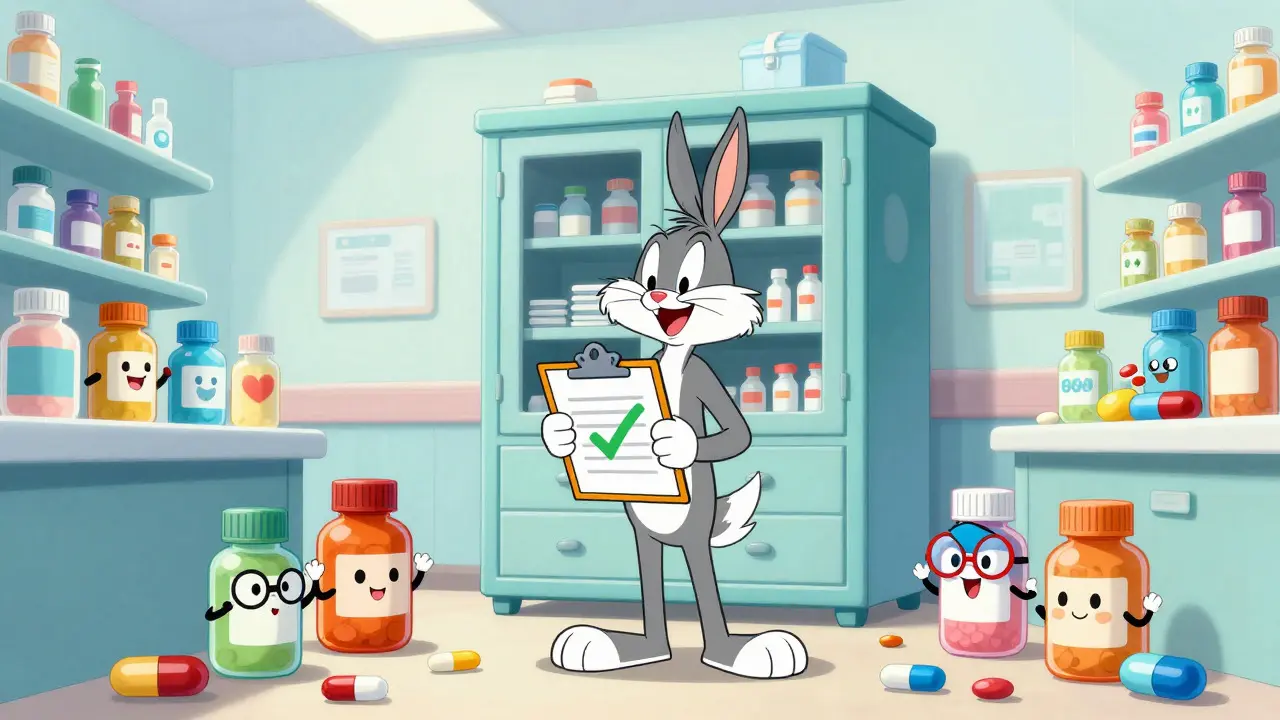
Ever wondered why your hospital gives you a specific brand of medication, even when cheaper alternatives exist? It’s not random. Behind the scenes, a complex machinery called the Hospital Formulary is a continuously updated list of medications approved for use within a healthcare system, developed through an ongoing process that methodically evaluates medications for inclusion based on clinical evidence and cost-effectiveness. This isn't just a shopping list; it's a strategic tool that balances patient safety, clinical efficacy, and the hospital's bottom line. For providers, understanding this system is crucial because it dictates what you can prescribe, how quickly patients get access to new treatments, and how much the facility spends on pharmacy.
The concept originated in the mid-20th century as healthcare systems expanded, but formalized Pharmacy and Therapeutics (P&T) committees became standard in U.S. hospitals by the 1970s. Today, these formularies typically contain between 300 and 1,000 drug dosage forms. They operate as 'closed formularies,' meaning only approved medications are routinely available. The primary goal, as defined by the American Society of Health-System Pharmacists (ASHP), is to ensure "the safest, most effective medications that will produce the desired goals of therapy at the most reasonable cost." In short, it’s about getting the right drug to the right patient at the right price, without cutting corners on quality.
The Role of the P&T Committee
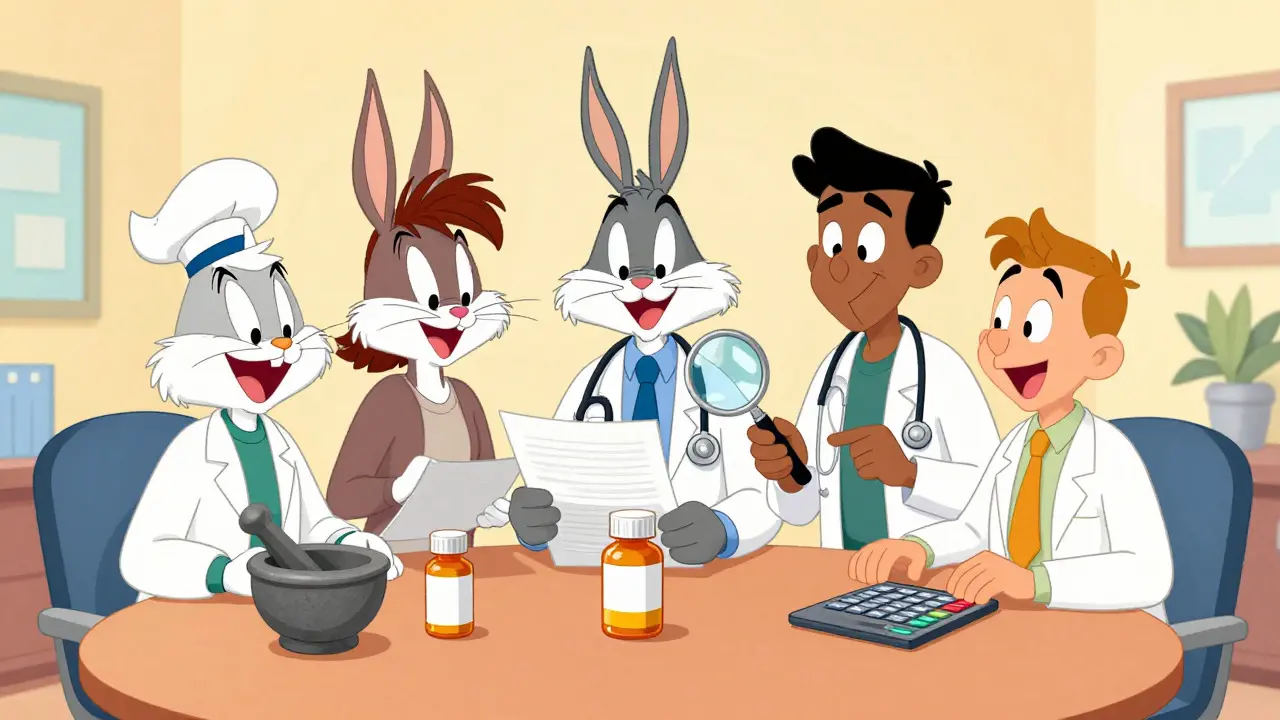
At the heart of every hospital formulary is the Pharmacy and Therapeutics (P&T) Committee, a multidisciplinary group of pharmacists, physicians, and healthcare economists responsible for evaluating and selecting medications for the hospital formulary. This isn't a single decision-maker; it’s a collaborative effort. Committees typically comprise 12 to 15 members, including pharmacists with Board Certification in Pharmacotherapy (BCPP) and physicians with specialty board certification. Their job is to review drug requests, assess clinical evidence, and make recommendations for inclusion or exclusion.
The process is rigorous. When a new generic drug is proposed, the committee doesn't just look at the price tag. They examine systematic literature reviews, often requiring data from at least 15 to 20 clinical studies per drug class. They also analyze safety profiles using data from the FDA Adverse Event Reporting System. According to ASHP's 2023 guidelines, decisions must be grounded in robust clinical evidence first, with economic considerations secondary but essential. This ensures that a cheap drug isn't chosen if it has a higher risk of adverse events or lower efficacy than its competitors.
Evaluating Generic Drugs: Beyond Price
Generic drugs occupy the lowest tier (Tier 1) of most formularies, requiring minimal patient cost-sharing. But getting onto that list requires passing a strict gauntlet. The baseline is FDA therapeutic equivalence, verified through the Orange Book designation. This means the generic must demonstrate bioequivalence within 80-125% of the reference listed drug's pharmacokinetic parameters. However, hospitals apply additional criteria beyond basic FDA approval.
They evaluate medication efficacy, safety profiles, and cost-effectiveness. Cost-effectiveness here doesn't just mean the acquisition cost. As Dr. Steven J. Simoens, Professor of Pharmaceutical Policy at KU Leuven, noted in a 2022 Health Affairs commentary, sophisticated formulary systems evaluate generics by "total cost of care," including impact on hospital length of stay and readmission rates. A generic that is slightly more expensive upfront but reduces complications might be preferred over a cheaper option that leads to longer stays. This holistic view is becoming increasingly common, with 61% of hospitals now using predictive analytics to model how generic drug choices affect downstream costs according to a 2023 KLAS Research report.
Therapeutic Interchange and Provider Challenges
One of the most distinctive features of hospital formularies is the therapeutic interchange program. Unlike Medicare Part D plans, which rely on patient cost-sharing tiers, hospital formularies allow pharmacists to substitute therapeutically equivalent agents at the point of dispensing. This can streamline workflows and reduce costs, but it often creates friction with prescribers. In a 2022 survey by the American Pharmacists Association, 57% of pharmacists reported conflicts with physicians over generic substitution decisions.
For providers, this means that the drug you order might not be the one the patient receives. While this is usually safe and clinically appropriate, it requires clear communication. If you have a specific reason for choosing a particular formulation-perhaps due to a patient's history of allergies or previous adverse reactions-you need to document it clearly. Otherwise, the pharmacist may switch to the formulary-preferred alternative. This is where prior authorization requirements come into play. A 2022 survey of 1,200 U.S. physicians showed that while 68% supported formularies, 41% expressed frustration with prior authorization requirements for non-formulary generics in specialty areas. Balancing standardization with individual patient needs remains a key challenge for both providers and pharmacists.

Implementation and Practical Realities
Implementing a formulary change is not a simple toggle switch. It involves a structured process beginning with a drug request submission, typically requiring a completed formulary dossier with clinical studies, medication description, and usage details. The average P&T committee review takes 45 to 60 days, though urgent requests can be processed in 14 to 21 days. Once a decision is made, the hospital must update its electronic health record (EHR) systems, educate nursing staff, and manage inventory transitions.
Nursing staff often face the most immediate challenges. On AllNurses.com, a thread with 142 comments highlighted that "formulary changes create workflow disruptions when we have to re-educate on different generic formulations." In fact, 73% of respondents reported temporary medication errors during transitions. To mitigate this, hospitals like Johns Hopkins have invested in robust training programs. Their case study showed that switching to formulary-preferred generic anticoagulants saved $1.2 million annually without increasing adverse events, thanks to careful implementation and staff education.
| Feature | Hospital Formulary | Medicare Part D |
|---|---|---|
| Primary Focus | Clinical efficacy & total cost of care | Patient cost-sharing & budget neutrality |
| Substitution Mechanism | Therapeutic interchange by pharmacists | Step therapy & prior authorization |
| Decision Makers | P&T Committee (physicians & pharmacists) | Plan sponsors & actuaries |
| Update Frequency | Quarterly to semi-annually | Annually (plan year changes) |
Market Context and Future Trends
Hospital formularies manage approximately $650 billion in annual U.S. drug expenditures, with generic drugs comprising 90% of prescriptions but only 26% of costs according to 2023 IQVIA data. The formulary management industry itself has grown to a $1.2 billion market, with major players like Express Scripts, OptumRx, and Prime Therapeutics handling significant portions of hospital contracts. Regulatory pressures are also shaping the landscape. The 2022 Inflation Reduction Act mandates Medicare Part D redesign by 2025, which will influence hospital formulary structures through alignment requirements.
Looking ahead, two trends stand out. First, the integration of pharmacogenomic data into formulary decisions. Eighteen percent of academic medical centers are piloting genotype-guided formulary restrictions, tailoring drug choices based on patient genetics. Second, the shift toward value-based formularies. Forty-three percent of hospitals now incorporate outcomes-based contracts for select medications, tying reimbursement to real-world results rather than just volume. As CMS increasingly ties reimbursement to medication optimization, formulary systems are likely to become mandatory for all Medicare-certified facilities by 2028, ensuring that every dollar spent on drugs delivers measurable value to patients.
What is a closed formulary?
A closed formulary is a list of medications where only approved drugs are routinely available for use in the hospital. If a drug is not on the list, it generally requires special approval or prior authorization before it can be prescribed or dispensed.
How long does it take to add a new drug to a hospital formulary?
The average P&T committee review takes 45 to 60 days for standard requests. Urgent requests, such as those for critical care medications, can be processed in 14 to 21 days.
Can pharmacists switch my prescription to a generic without asking me?
Yes, under therapeutic interchange policies, pharmacists can substitute therapeutically equivalent agents at the point of dispensing. This is common in hospital settings to optimize cost and adherence, but providers should document any specific reasons for choosing a particular formulation.
What is the Orange Book?
The Orange Book is a list of drugs marketed in the United States maintained by the FDA. It includes information on patent expiration dates and exclusivity periods, as well as therapeutic equivalence ratings for generic drugs, which are crucial for formulary decisions.
Why do hospitals prefer generics over brand-name drugs?
Hospitals prefer generics primarily due to lower costs, which can significantly reduce overall healthcare expenditures. Generics are also required to meet FDA standards for safety, strength, and quality, making them a reliable choice for most patients.