
Most people toss out medications the moment they hit their expiration date. You see it on the bottle: Exp. 03/2024. You think, That’s it. Gone. Useless. Maybe even dangerous. But what if that’s not true? What if your old ibuprofen, your leftover antibiotics, or even your blood pressure pills are still working just fine - years after the date printed on the label?
Expiration Dates Aren’t What You Think
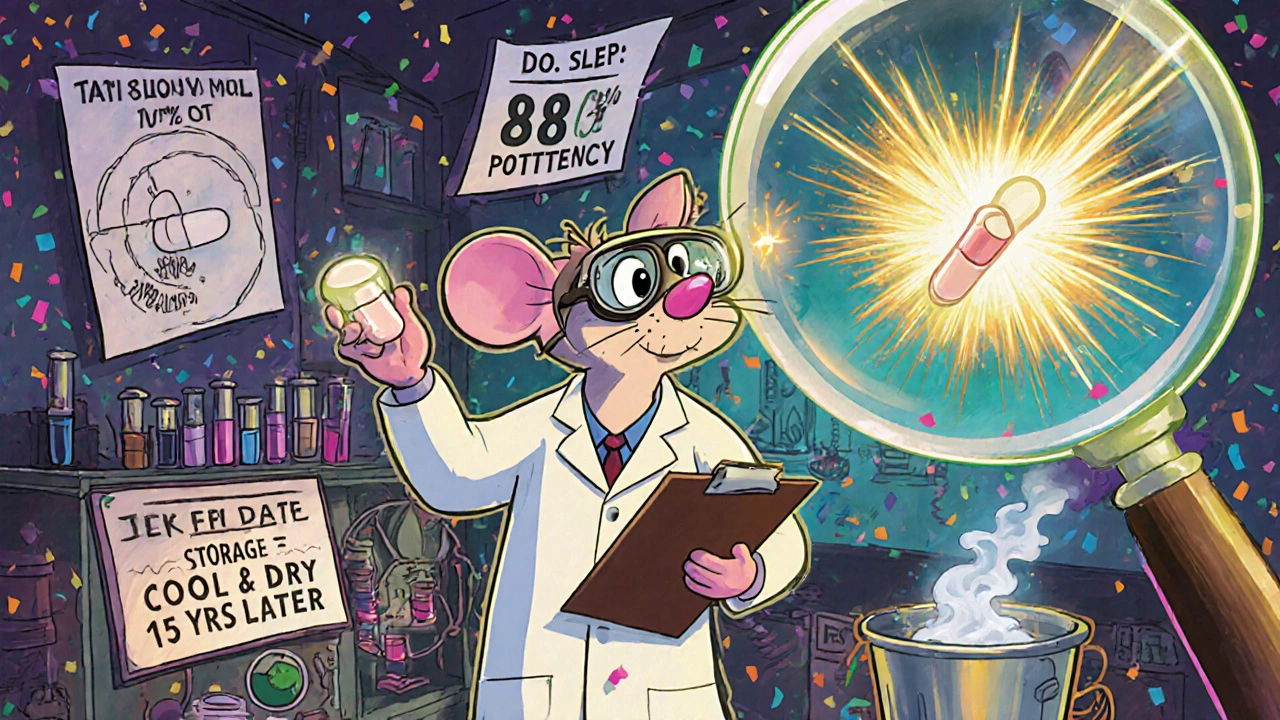
The expiration date on your medicine isn’t a scientific deadline saying, "Poof! Now it’s trash." It’s a guarantee. The manufacturer promises that the drug will be at least 90% as potent as labeled up to that date. After that? They don’t have to prove anything. The FDA only requires stability testing for 12 to 60 months after production. That’s it. No long-term data needed. That’s why your 10-year-old aspirin might still work - the company never had to test it past two years.What the Science Actually Shows
A major 2012 study by researchers from the University of California-San Francisco looked at 14 drugs that had expired 28 to 40 years earlier. These weren’t sitting in a damp bathroom or a hot car. They were stored properly - cool, dry, and sealed in original containers. The results? Twelve of the 14 drugs still had at least 90% of their original potency. Eight of them were still fully effective after 40 years. This isn’t an outlier. The U.S. Department of Defense has been running the Shelf-Life Extension Program (SLEP) since 1986. They test stockpiled military medications. In that program, 88% of the 122 drugs tested were cleared for use beyond their original expiration dates - often by an average of 66 months. Some lasted over 23 years past their labeled date. The FDA itself has tested over 100 drugs. Their findings? About 90% of them remained safe and effective up to 15 years past expiration - if stored right.Which Medications Are Safe? Which Aren’t?
Not all drugs are created equal. Stability depends on form and chemistry. Safe for long-term use (if stored properly):- Tablets and capsules (ibuprofen, acetaminophen, aspirin, amoxicillin, blood pressure meds, antidepressants)
- Most solid oral medications
- Codeine, hydrocodone, and other opioids
- Liquid antibiotics (like amoxicillin suspension)
- Insulin
- Nitroglycerin (for chest pain)
- Epinephrine auto-injectors (EpiPens)
- Tetracycline (an older antibiotic)
- Mefloquine (antimalarial)
Storage Matters More Than You Think
Your medicine’s lifespan isn’t just about the date on the bottle. It’s about where it’s been. If you keep your pills in the bathroom medicine cabinet? You’re exposing them to heat and moisture. That’s the worst place. Humidity and temperature swings break down active ingredients faster. The same pills, stored in a cool, dark drawer - like in a bedroom - will last years longer. Original sealed packaging protects them from air and light. Once you transfer pills to a pill organizer, you’re accelerating their decay. A 2012 Harvard Medical School study found that medications moved into pharmacy canisters degraded faster due to air and moisture exposure.Why Do Expiration Dates Exist If Drugs Last So Long?
Because it’s easier for manufacturers to say, "Use by this date," than to run expensive, decade-long stability tests. There’s no financial incentive for them to prove their drugs last longer. If your blood pressure pill lasts 10 years instead of 2, you won’t buy a new bottle as often. That hurts profits. Expiration dates are also a legal shield. If someone takes an old pill and has a bad reaction, the company can point to the date and say, "We didn’t guarantee this." It’s about liability, not science.Should You Take Expired Medications?
Here’s the real answer: It depends. For non-critical, solid-form meds - like painkillers, antihistamines, or birth control pills - that have been stored properly, you’re likely fine. A pill that’s a year or two past its date won’t hurt you. It might be slightly less potent, but not dangerous. But if you’re treating something serious - high blood pressure, epilepsy, heart disease, or an infection - don’t risk it. You need full potency. If your medication is expired, get a new prescription. And never, ever use expired insulin, EpiPens, or liquid antibiotics. Those aren’t just less effective. They can be deadly.


Ifeoma Ezeokoli
November 30, 2025 AT 01:11Okay but like… I just found my grandma’s 2012 blood pressure pills in her old drawer last week. They looked fine, sealed, kept in a dark cabinet. I didn’t take them, but I didn’t toss them either. Now I’m just sitting here wondering if I should’ve kept them for emergencies. 🤔
Daniel Rod
November 30, 2025 AT 16:58It’s wild how we’ve been conditioned to treat medicine like milk. ‘Exp date = trash.’ But science says otherwise. The real tragedy isn’t expired pills-it’s the corporate greed behind those dates. Companies don’t want you to know your $80 prescription could last 15 years. They profit from fear, not facts. 💔
gina rodriguez
December 1, 2025 AT 02:28I love this post so much. I’ve been storing all my pills in a sealed container in my bedroom drawer since I read that Harvard study. My mom used to keep them in the bathroom-no wonder her aspirin always tasted weird. Small changes, big impact. 🙌
Sue Barnes
December 1, 2025 AT 11:01STOP. Just STOP. You’re telling people to take 10-year-old pills like they’re vintage wine? That’s not wisdom, that’s negligence. If you’re not willing to pay for a new prescription, that’s your problem-not the system’s. People die from underdosed meds. Don’t be that person.
jobin joshua
December 2, 2025 AT 11:43Bro I took my expired Xanax last year 😅 and it worked better than my new bottle lmao. Maybe the new one is fake? 😂
Sachin Agnihotri
December 2, 2025 AT 12:58Wait, wait, wait… So you’re saying the FDA doesn’t require testing beyond 5 years? And the DoD found drugs working after 23 years? That’s… insane. I mean, if they can prove it, why not just update the labels? It’s not like the pills are magic. They’re just… chemicals. And chemicals don’t care about dates. 😅
Diana Askew
December 2, 2025 AT 18:37THIS IS A GOVERNMENT TRICK. They want you to keep buying pills so they can sell you more vaccines. I read on a forum that the FDA is paid by Big Pharma to keep expiration dates short. That’s why your EpiPen expires so fast. They need you to buy new ones every year. 💀
King Property
December 3, 2025 AT 16:01You’re all missing the point. The real issue isn’t whether expired meds work-it’s that you’re trusting a post written by someone who didn’t cite the original FDA study. The 2012 UCSF study? It was funded by the DoD. The SLEP program? Classified data. You’re quoting secondhand info like it’s gospel. Meanwhile, your 12-year-old ibuprofen could be 30% less potent and you’re calling it ‘fine.’ That’s not science. That’s wishful thinking. And if you think I’m being aggressive-you’re the one risking your life.
Yash Hemrajani
December 5, 2025 AT 15:31Oh wow, so now we’re all amateur pharmacists? Congrats, you read a blog and now you’re debating drug stability like you’ve got a PhD in chemistry. Here’s a tip: if your medication is expired, go to CVS. They’ll give you a $5 generic version. Or better yet-go to a clinic. Your ‘saving money’ gamble isn’t worth a hospital bill. Just buy the damn pill.