
Symptom vs. Side Effect Calculator
How to Use This Tool
This calculator uses medical research to help you determine if your symptoms are likely caused by medication or your condition. Based on data from the Journal of Affective Disorders and FDA guidelines:
- 70% of side effects are dose-dependent
- 60-70% of common side effects fade within 2-4 weeks
- Timing is critical for identification
When you start a new medication, it’s easy to panic when you feel off. Is it your condition getting worse? Or is it the drug itself? This confusion isn’t just annoying-it’s dangerous. Medication side effects and disease symptoms often look identical, and misreading them can lead to unnecessary tests, wrong treatments, or even hospital visits. In the U.S. alone, over 1.3 million emergency room visits each year are linked to people mistaking side effects for disease flare-ups. The good news? With a few simple tools and a bit of awareness, you can tell the difference-and take control.
What Exactly Is a Side Effect?
A side effect is not a mistake. It’s a known, predictable reaction to a drug at normal doses. Think of it like this: your medication is doing its job-say, lowering blood pressure-but it also accidentally affects another system in your body. That’s a side effect. The World Health Organization defines it clearly: any unintended response to a medicine given for treatment, prevention, or diagnosis. Common side effects? They’re everywhere. Nausea hits 25-30% of people starting a new drug. Constipation, dry mouth, drowsiness, headaches-these aren’t rare. In fact, according to the American Society of Health-System Pharmacists, they’re the top five. Antidepressants like sertraline cause sexual dysfunction in up to 70% of users. Blood pressure pills like lisinopril often trigger a dry, persistent cough. These aren’t accidents. They’re documented. And they’re listed in your medication guide.What Are Disease Symptoms?
Disease symptoms are your body’s way of telling you something’s wrong internally. They come from the illness itself-not the treatment. If you have depression, your brain chemistry is altered. That leads to fatigue, trouble concentrating, low mood, and sleep problems. These aren’t side effects. They’re the core of the condition. A 2012 study in the Journal of Affective Disorders found that 85% of people with major depression report constant fatigue. 78% struggle with sleep. 72% have memory or focus issues. These numbers don’t change because you take a pill-they change because the disease changes. Side effects come and go with dosage. Disease symptoms follow their own path.Timing Is Everything
One of the clearest ways to tell the difference? Look at when things started. Side effects usually show up after you begin a new medication. Most appear within 1 to 4 weeks. If you started a new antidepressant last Tuesday and felt dizzy by Friday? That’s likely a side effect. If you’ve been on the same drug for six months and suddenly feel worse? That’s probably the disease. Here’s the pattern:- Immediate: Drowsiness from antihistamines-within hours.
- Delayed: Weight gain from paroxetine-weeks to months.
- Chronic: Bone thinning from long-term steroids-years.
Dose Matters
Try this: if you’ve been feeling off since you increased your dose, it’s probably the drug. About 70% of side effects are dose-dependent. That means if you take more, the side effect gets worse. Take less, and it fades. If you’re on 20mg of a medication and get headaches, then move to 40mg and the headaches double? That’s a classic sign of a side effect. Disease symptoms don’t care about dosage. If your arthritis pain is getting worse, it won’t get better just because you cut your pill in half. It might even get worse.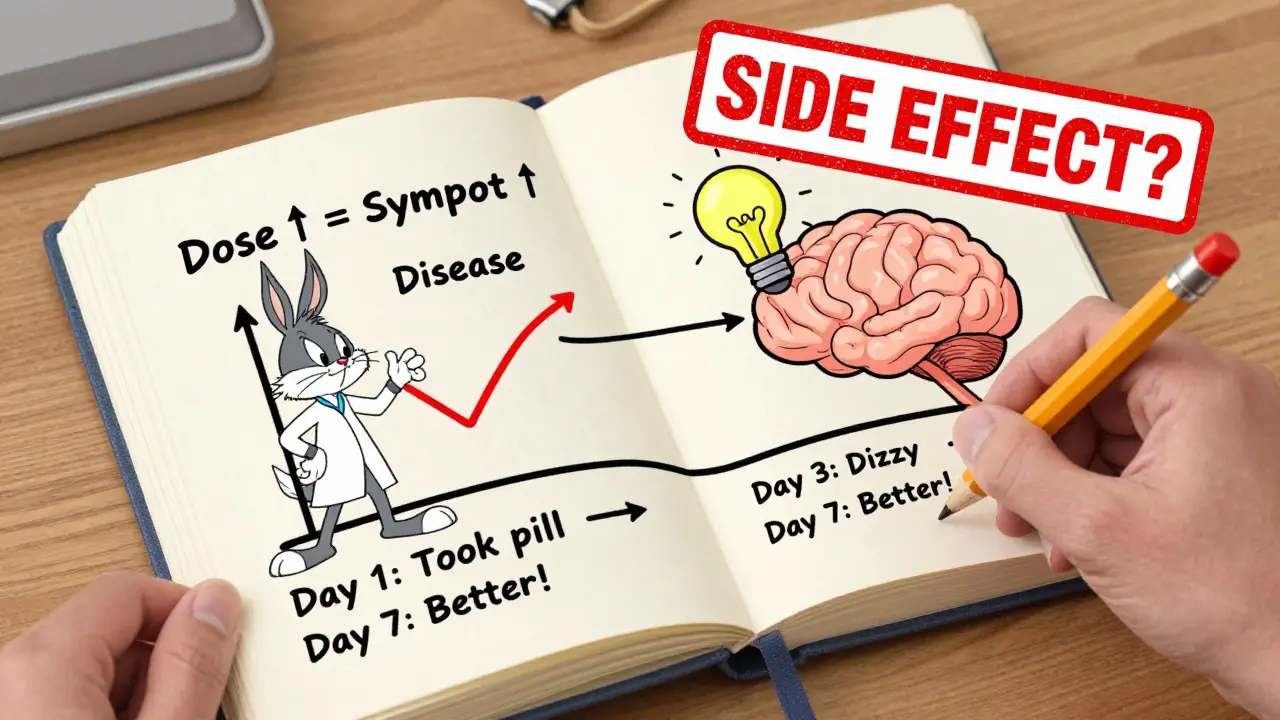
What About Allergic Reactions?
Not all bad reactions are side effects. Some are allergic-and those are urgent. Allergies are different. They’re not dose-dependent. Even a tiny amount can trigger them. Signs? Hives, swelling of the face or throat, trouble breathing, or a sudden, severe rash. These happen fast-within minutes to hours. If you’ve never had a reaction before but suddenly feel like you can’t breathe after taking a pill? Call 999. Don’t wait. Don’t Google it. Allergies aren’t side effects. They’re emergencies. And they’re rare-only 7-10% of people ever have one. But when they happen, they’re unmistakable.How to Track What’s What
The best tool you have? A simple journal. Write down:- What you took (name and dose)
- When you took it
- What you felt (use a 1-10 scale for severity)
- How long it lasted
- Any triggers (food, stress, sleep)
When to Suspect a Drug Interaction
If you’re on five or more medications? You’re at higher risk. Dr. Thomas Moore from Johns Hopkins found that 35% of people on multiple drugs experience symptoms that look like disease progression-but are actually drug interactions. For example, a blood pressure pill and a painkiller might combine to cause dizziness. A statin and a supplement might cause muscle pain. Use the FDA’s Drug Interaction Checker (available online). Talk to your pharmacist. They see these clashes every day. Don’t assume your doctor knows every pill you’re taking. Many patients don’t mention supplements, over-the-counter meds, or herbal teas.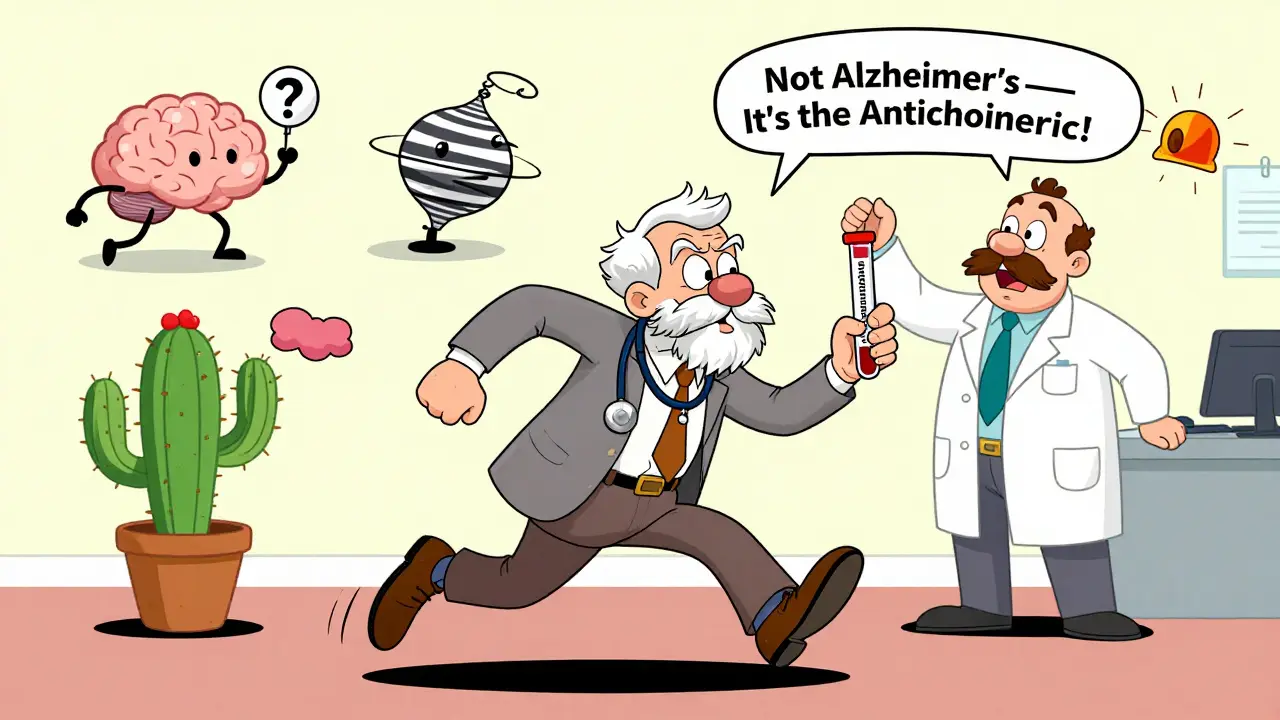
The Dechallenge-Rechallenge Trick
This is a method doctors use-and you can ask about it. Dechallenge: Temporarily stop the suspected drug (only under medical supervision). If symptoms disappear? That’s a strong clue. Rechallenge: Restart the drug. If symptoms come back? That’s nearly proof it’s the medication. This method is 85% accurate. But it’s not for DIY. Stopping certain meds-like antidepressants or blood pressure drugs-can be dangerous. Always do this with your doctor.Why This Matters in Mental Health
Mental health meds are especially tricky. Fatigue? Low mood? Trouble sleeping? These are symptoms of depression. But they’re also common side effects of SSRIs. A 2012 study of 164 patients found that 38% of those on antidepressants had insomnia-but 65% of those same patients already had insomnia from depression. So which is it? Patients often double up on meds. One for depression, one for sleep. Then they feel worse. The real fix? Adjusting the antidepressant dose or switching drugs-not adding another pill. The Massachusetts General Hospital National Depression Evaluation Scale now includes side effect tracking. Clinics using it reduced misdiagnosis by 37%.What’s Changing in Healthcare
New tools are helping. AI systems like MedAware’s SafetyRx now analyze your health records and predict which symptoms are likely side effects with 91% accuracy. Electronic health records in 67% of U.S. hospitals now flag potential side effects in real time. Pharmacogenomic testing-where a simple saliva sample tells you how your body will react to certain drugs-is now covered by 65% of insurers. It’s not magic, but it cuts misattribution by 44%. Even the FDA and WHO are pushing change. Since 2020, European drug labels must include clear guidance on how to tell side effects from disease symptoms. The U.S. is expected to follow by 2025.What You Can Do Today
You don’t need a PhD to protect yourself. Here’s your action plan:- Ask for the side effect list when you get a new prescription. Read it.
- Start a symptom journal. Note dates, times, doses, and severity.
- Don’t ignore new symptoms. But don’t panic either. Track them first.
- Never stop a prescription cold turkey. Talk to your doctor.
- Use apps like Medisafe to log doses and symptoms. They link timing automatically.
Can side effects go away on their own?
Yes, many do. About 60-70% of common side effects like nausea, drowsiness, or mild headaches fade within 2-4 weeks as your body adjusts. That’s why doctors often say, "Give it time." But if symptoms worsen or hit a red flag-like swelling, trouble breathing, or chest pain-don’t wait. Call your doctor.
Can a side effect be mistaken for a new disease?
Absolutely. A 2018 study in the Annals of Internal Medicine found that 32% of patients with chronic illnesses wrongly blamed side effects on disease progression. One woman thought her memory loss was early dementia-it was actually a side effect of her antihistamine. Another thought his joint pain was worsening arthritis-it was from his blood pressure pill. Always rule out the drug before assuming the disease is changing.
Are older adults more at risk of confusion between symptoms and side effects?
Yes. The American Geriatrics Society reports that 15-20% of new dementia diagnoses in people over 65 are actually caused by side effects from anticholinergic drugs-like some bladder meds, sleep aids, or allergy pills. These drugs can cause confusion, memory loss, and dizziness that mimic Alzheimer’s. That’s why doctors are now more cautious about prescribing them to seniors.
How long should I wait before reporting a side effect?
Don’t wait. If a symptom starts within days of a new medication, report it immediately. Even if it seems minor. Delaying can lead to unnecessary tests or worse, adding more drugs to "treat" a side effect. A 2023 survey found that 47% of people waited an average of 5.2 weeks before speaking up-just because they weren’t sure. That’s 37 extra days of discomfort.
Is it safe to skip a dose to see if a symptom goes away?
Only if your doctor says so. Skipping doses can be dangerous with some medications-like those for epilepsy, heart conditions, or depression. A sudden drop can cause seizures, rebound anxiety, or high blood pressure. If you suspect a side effect, talk to your provider first. They might suggest lowering the dose, switching drugs, or doing a controlled dechallenge.


Brandon Osborne
February 8, 2026 AT 17:29So let me get this straight-you’re telling me I shouldn’t just quit my meds when I feel like crap? What a revolutionary concept. I’ve been on sertraline for 8 months and my libido’s in the graveyard. My doctor says it’s "just a side effect" like it’s some minor inconvenience. Meanwhile, I’m out here trying to date like a normal human being. This article is just sugarcoating the nightmare of modern psychopharmacology. If your drug turns you into a zombie with no sex drive, maybe the real disease is the pharmaceutical industry.
And don’t even get me started on the "journal" suggestion. Like I got time to write down "felt sad, took pill, still sad" like some kind of emotional lab rat. I got bills to pay, kids to feed, and a boss who thinks I’m lazy because I yawn too much. You want me to track symptoms? Fine. But I’m also tracking how many times I’ve been told to "just push through" while my brain feels like it’s being scooped out with a spoon.
Simon Critchley
February 10, 2026 AT 04:36As a pharmacovigilance enthusiast, I’m thrilled to see this breakdown-especially the dechallenge-rechallenge paradigm. The 85% accuracy rate is statistically robust, but let’s not forget the confounding variables: polypharmacy, circadian rhythm disruption, and the placebo/nocebo effect, which can skew symptom attribution by up to 30%.
Also, kudos to the FDA’s impending label overhaul. The current black-box warnings are too vague. We need granular, time-dependent symptom matrices embedded in e-prescriptions. Imagine if your EHR auto-flagged a 72-hour post-dose spike in fatigue alongside your SSRI dosage? That’s precision medicine, baby. 📊💊
And yes, anticholinergic burden in seniors is a silent epidemic. I’ve seen 78-year-olds on oxybutynin for "urgency" who’ve been misdiagnosed with early-onset dementia for YEARS. The real tragedy? It’s reversible. Just stop the damn pill. 🤦♂️
Tom Forwood
February 12, 2026 AT 01:42Man, I wish I read this 3 years ago. I was on gabapentin for nerve pain and thought my brain fog was my MS acting up. Turns out? It was the gabapentin. I cut it out, went back to baseline in 10 days. My neurologist was like "huh, interesting."
Side note: the journal thing? I used Medisafe and it’s a game-changer. Just tap in when you take it, tap in when you feel weird. It graphs everything. I didn’t even realize my headaches were tied to my dose increase until it showed up in red. I’m not a nerd, but this app made me feel like one in a good way.
Also, skip a dose? Nah. I learned that the hard way. Missed one dose of my blood pressure med and my heart felt like it was trying to escape my chest. Not worth it. Talk to your doc first. Always.
John McDonald
February 12, 2026 AT 05:18This is the kind of info we need to make healthcare less scary. Too many people panic when they feel weird after starting a med and assume the worst. But you’re right-timing, dosage, and patterns matter.
I’ve been helping my mom navigate her meds since she got diagnosed with hypertension and diabetes. She kept thinking her dizziness was her heart failing. Turned out it was the beta-blocker. We lowered the dose, and boom-she’s back to gardening. No hospital visits. Just a little patience and tracking.
Don’t ignore symptoms, but don’t assume the worst either. Talk to your pharmacist. They’re the unsung heroes of this whole system.
Chelsea Cook
February 12, 2026 AT 09:13Oh honey, you wrote a 2,000-word essay and didn’t even mention that 80% of people on antidepressants are told "it’s just in your head" when they report side effects? Yeah. That’s the real disease.
Also, "give it time" is the medical equivalent of "just breathe" during a panic attack. It’s not helpful. It’s dismissive. My therapist said the same thing when I told her I couldn’t orgasm. "It’ll pass." Guess what? It didn’t. I switched meds. Now I’m alive again.
Journaling? Cute. But if your doctor doesn’t listen? No amount of color-coded charts will save you. You need an advocate. Or a new doctor. Or a gun. (Kidding. Mostly.)
Andrew Jackson
February 14, 2026 AT 06:31It is a profound moral failing of our modern medical-industrial complex that citizens are expected to become amateur pharmacologists simply to avoid being misdiagnosed. The very premise of this article-that individuals must meticulously log their bodily responses to patented chemicals-is not empowerment. It is surrender.
We have entrusted our health to a system that profits from confusion. The pharmaceutical corporations design drugs with predictable adverse effects because they know the average patient will lack the education, time, or institutional access to challenge them. The FDA’s new labeling guidelines? A PR stunt. The real solution is systemic: universal access to pharmacists, mandatory side-effect counseling, and the abolition of direct-to-consumer advertising.
Until then, we are all lab rats in a capitalist experiment. And this article? It is a well-crafted pamphlet for the cage.
Joseph Charles Colin
February 15, 2026 AT 09:02From a clinical pharmacology standpoint, the dose-response relationship is the most reliable indicator of side effect vs. disease progression. The Hill criteria for causality apply here: temporality, biological gradient, consistency, and plausibility.
For example, if a patient on a stable dose of lamotrigine for bipolar disorder develops a rash after a dose increase from 100mg to 150mg, and the rash resolves upon dose reduction, this satisfies all five Hill criteria. This is not anecdotal-it’s evidence-based.
Also, pharmacogenomic testing (CYP2D6, CYP2C19) is underutilized. Up to 30% of patients are poor metabolizers of SSRIs. They don’t "get side effects"-they get toxic accumulation. A simple genetic test could prevent 40% of unnecessary discontinuations. Why isn’t this standard of care? Because insurance won’t cover it unless you’re in a clinical trial.
Jessica Klaar
February 16, 2026 AT 10:33I’ve been living with lupus for 12 years and have been on 7 different meds. I’ve learned to read my body like a map.
One time, I thought my joint pain was my disease flaring. Turns out? It was the new statin. I stopped it, pain went away in 5 days. My rheumatologist was shocked-I had to show him my journal.
My advice? Don’t be ashamed to say "I think this is the drug." Most doctors will listen if you come prepared. And yes, journaling works. I use a notebook. Scribbles, doodles, bad handwriting. It’s messy. But it’s mine.
Also, talk to your pharmacist. They’re not just the guy who hands you the pill. They’re your secret weapon.
Kathryn Lenn
February 17, 2026 AT 02:37Oh, so now we’re supposed to become data-entry clerks for Big Pharma? "Track your symptoms!" Yeah, right. What about the fact that drug companies intentionally bury side effects in tiny print? I read the label for my antihypertensive-it said "may cause dizziness" but didn’t mention the 37% chance of suicidal ideation in the first 6 weeks.
And don’t even get me started on AI "SafetyRx." That’s just another way for insurers to deny care. "AI says this isn’t a side effect." So now algorithms decide if I’m in pain or not?
Real talk: if you’re on more than three meds, you’re a walking clinical trial. And nobody’s paying you.
They’re not trying to help you. They’re trying to keep you alive long enough to keep buying pills.
John Watts
February 18, 2026 AT 15:03YES. This. I’ve been telling people this for years. Side effects aren’t your fault. They’re not weakness. They’re biology.
I went from thinking my anxiety was getting worse to realizing my thyroid med dose was too high. Once we adjusted it, I felt like myself again. No new therapy. No new pill. Just a tweak.
Use the journal. Use the apps. Talk to your pharmacist. And if your doctor brushes you off? Find a new one. You deserve care that listens.
Also, side effects can fade. But you have to give it time-and trust yourself enough to speak up. You’re not overreacting. You’re paying attention. That’s strength.
Chima Ifeanyi
February 20, 2026 AT 04:57Western medicine is a casino. You roll the dice with a new drug and hope you don’t land on "severe neutropenia" or "retinal hemorrhage."
Journaling? Cute. But if your doctor doesn’t speak your language, doesn’t know your culture, and dismisses your concerns as "anxiety," then your journal is just a diary of humiliation.
And let’s be real: in Nigeria, we don’t have access to Medisafe or pharmacogenomics. We have a 200mg pill, a prayer, and a cousin who works at a pharmacy. The idea that we’re all supposed to become symptom-tracking scientists? That’s colonial thinking wrapped in a wellness app.
Real solution? Decolonize prescribing. Stop treating African bodies like American lab models.
Angie Datuin
February 20, 2026 AT 17:04I just wanted to say thank you for writing this. I’ve been too scared to talk to my doctor about how bad I feel on my new med. I thought I was just being dramatic. But now I know it’s not me-it’s the drug. I’m going to start my journal tomorrow. And I’m going to ask for the side effect sheet. I’m not alone in this. That’s something.
Frank Baumann
February 22, 2026 AT 04:55Let me tell you about the time I thought I was having a stroke because I got dizzy after starting lisinopril. I called 911. Paramedics came. Took my blood pressure. Checked my vitals. Said, "You’re fine. You just started a new BP med. This is common. Go home. Don’t panic."
So I went home. Sat there. Felt like a fool. Then I read the damn pamphlet. It said "dizziness is common in the first 2 weeks."
Two weeks later? Gone. But I didn’t know that because no one told me. Not my doctor. Not the pharmacist. Not the nurse who handed me the script. Just a tiny paragraph on page 7 of a 20-page leaflet.
Here’s the problem: doctors assume you read the fine print. You don’t. You’re scared. You’re overwhelmed. You’re trying to survive. And if you don’t know what to look for? You panic. And panic leads to ER visits. And ER visits cost $5,000. And we’re all just trying not to go bankrupt while being sick.
So yeah. Journal. Track. Talk. But also-tell your doctor you didn’t read the pamphlet. Because most of us didn’t. And if they roll their eyes? Find a new one. You’re worth more than a 72-hour window of silence.
Brandon Osborne
February 23, 2026 AT 08:23Re: Frank Baumann’s comment-YES. That’s EXACTLY what happened to me. Called 911 over dizziness. Got lectured by a paramedic who said "it’s just the meds." Like I’m some kind of drama queen for having a body.
And now my doctor won’t even adjust my dose because "it’s not severe." I’ve been dizzy for 4 months. Can’t drive. Can’t work. Can’t sleep. But hey-according to the pamphlet, it "usually resolves in 2 weeks."
So what do I do? Keep taking it until I pass out? Or quit cold turkey and risk withdrawal seizures?
This system isn’t broken. It’s designed to make us feel crazy while it makes money.