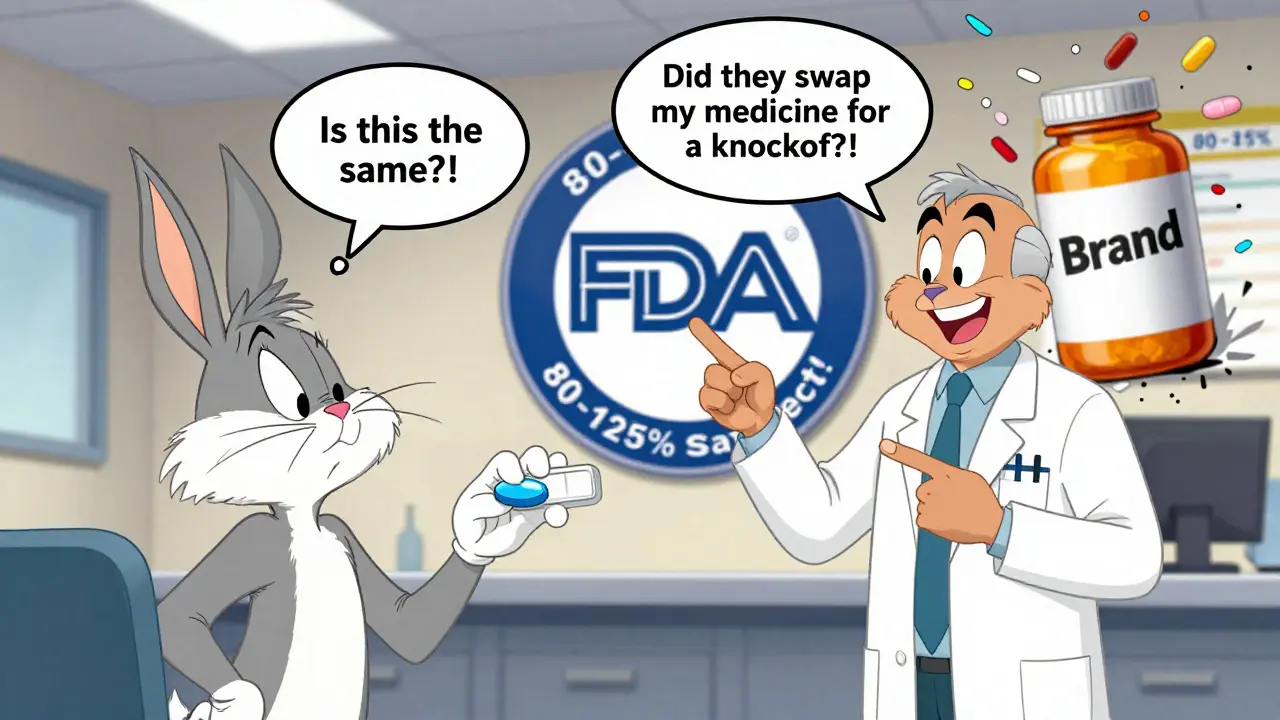
When a patient sees their prescription change from a familiar brand-name pill to a different-looking generic, it’s not just a change in color or shape-it can feel like a change in trust. Many patients worry: Is this really the same? Will it work? Am I getting a second-rate drug? These concerns aren’t irrational. They’re rooted in real experiences, misleading ads, and a system that rarely explains what’s really going on.
Why Patients Doubt Generics
It’s not about being stubborn. It’s about confusion. A 2021 study found that 27% of patients openly express hesitation about generic medications. Why? For many, it’s appearance. One patient on Reddit described it perfectly: "When my blue oval pill became a white rectangle, I thought it was a different medication entirely." That’s not an outlier. Research from the University of Michigan shows 78% of patients cite pill appearance as their top concern.
Another big issue? Misinformation. Nearly half of patients believe generics contain only 80% of the active ingredient. That’s not true. The FDA requires generics to deliver between 80% and 125% of the brand’s effect in the bloodstream-meaning they’re just as effective. But most patients don’t know this. Only 32% are aware of the strict bioequivalence standards set by the Hatch-Waxman Act in 1984.
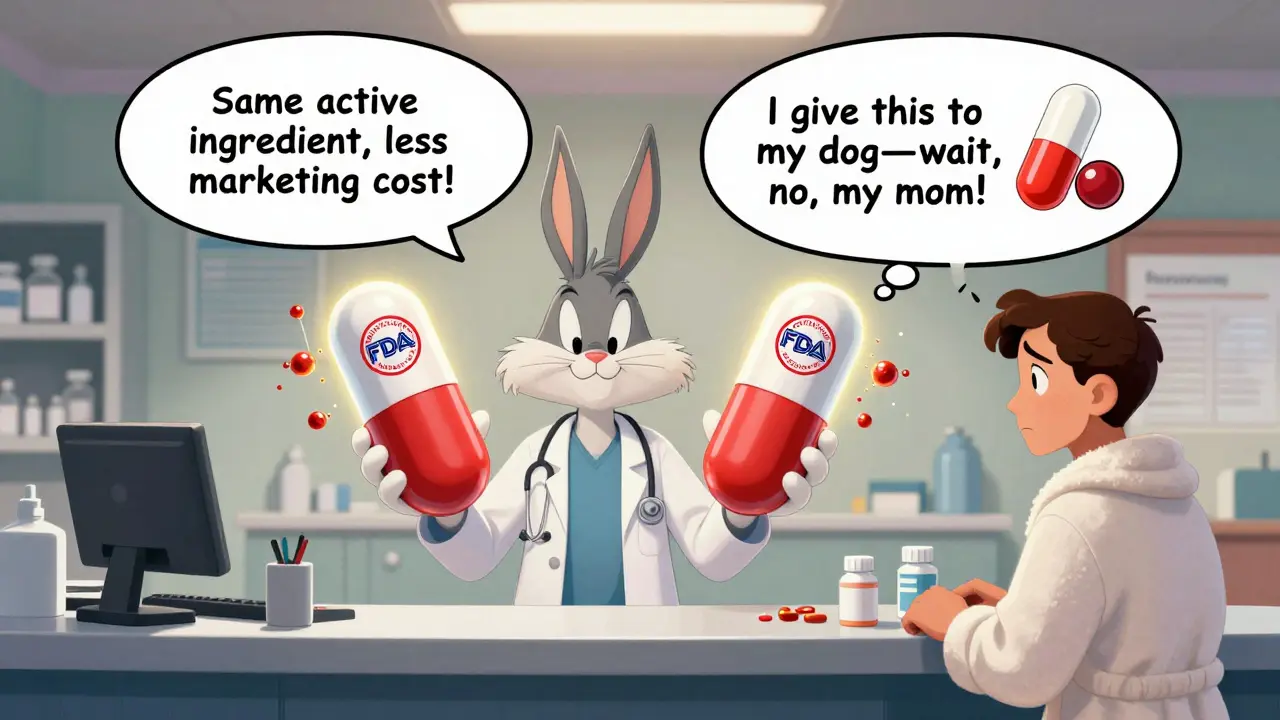
And then there’s cost. Some patients think "cheaper" means "worse." A 2021 study showed that saying "This is cheaper" only improved acceptance by 7%. But when pharmacists explained, "This medication contains exactly the same active ingredient but without the brand name marketing costs," acceptance jumped 29%. The message matters more than the savings.
What Actually Works: Communication That Builds Trust
Simply saying "It’s the same drug" doesn’t cut it. Patients have heard that before-and they’ve been burned. One man stopped taking his warfarin after a switch to generic without explanation. He ended up hospitalized for a blood clot. That’s the cost of silence.
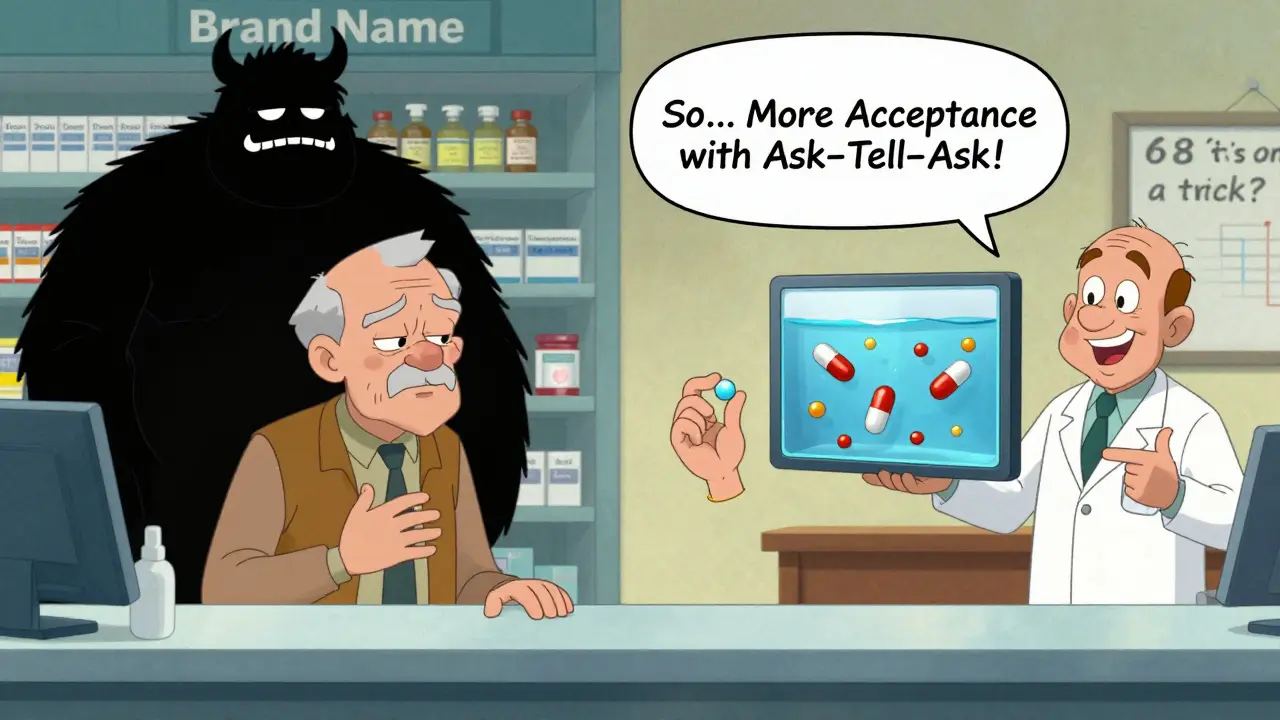
The most effective approach? Ask-Tell-Ask. It’s simple:
- Ask: "What do you know about this generic version?"
- Tell: "It has the same active ingredient as your old pill. The FDA requires it to work the same way-within 80-125% of the brand. We test this in labs, not guesswork."
- Ask: "Can you tell me back what you understand?"
This method, tested on over 1,200 patients, boosted generic acceptance from 42% to 68%. Why? Because it turns a lecture into a conversation.
Even better? Personal endorsement. When providers say, "I prescribe this generic for my own family," acceptance rates rise by 37 percentage points. It’s not about being perfect-it’s about being human. Patients trust people who show they’re in the same boat.
Timing Is Everything
Most conversations about generics happen at the pharmacy counter. Too late. By then, the patient has already imagined the worst. The FDA found that 89% of patients accept generics when they hear about the switch at the time of prescribing-when the doctor writes the script-not when they pick it up.
That’s why team-based care works. When a prescriber and pharmacist coordinate, acceptance jumps to 85%. A doctor says: "I’m switching you to this generic because it’s just as effective and will save you money." Then the pharmacist adds: "I’ll show you how it’s tested and answer any questions."
But here’s the problem: most doctors have 18 seconds before interrupting patients who raise concerns, according to a 2020 JAMA study. That’s not enough. And 50% of psychosocial medication worries go unnoticed in routine visits.
Tools That Help: Visuals, Not Just Words
Some patients need to see it to believe it. A 2022 survey found that 68% would accept generics if shown side-by-side images of the brand and generic pill. The FDA now offers free tools-counter mats, brochures, even 3D models of how generics are tested. One pilot at CVS used virtual reality to show patients how the active ingredient dissolves the same way in both pills. Acceptance rose 29%.
Another powerful tool? Teach-back. Instead of explaining and walking away, ask the patient: "Can you explain why we switched you to this pill?" If they can say it in their own words, they’re more likely to take it. A Kaiser Permanente study showed this method lifted acceptance from 54% to 81% across 12,000 patients.
What Doesn’t Work
Don’t say: "It’s the same drug, just cheaper." That phrase triggers distrust. One study showed it actually reduced acceptance to 31%. Patients hear "cheaper" and think "low quality."
Don’t dismiss concerns. If someone says, "I’ve taken this brand for 10 years-I don’t want to change," don’t reply: "You’re overthinking it." That shuts down trust. Instead, say: "I get why you’d feel that way. Let’s talk about what’s different-and what’s the same."
And never assume. Older adults are twice as likely to hesitate-38% of patients over 65 worry about generics, compared to 22% of younger patients. Rural patients show even higher concern. One-size-fits-all messaging fails.
The Bigger Picture: Why This Matters
Generics make up 90.9% of all prescriptions in the U.S.-but only 22.9% of spending. That’s $313 billion saved every year. Yet, because of hesitation, patients still pay for brand-name drugs they don’t need. That costs the system $8.2 billion annually.
The system is changing. Starting in 2024, Medicare Part D ratings now include "generic substitution acceptance rate" as a quality metric. Pharmacies that don’t improve will lose points. That’s pushing change.
And it’s not just about money. It’s about access. When patients can’t afford their meds, they skip doses. Generics keep people on treatment. A 2022 study found that when patients understood the science behind generics, adherence improved by 41%.
How to Start Today
You don’t need a big budget. Start small:
- Keep printed pill images on hand-before and after-for common switches.
- Practice the Ask-Tell-Ask method with your next three patients.
- Use the FDA’s free resources: counter mats, brochures, videos.
- Ask your prescribers: "Can we talk about generics at the time of prescribing?"
- Use teach-back: "Can you explain why we switched?"
It’s not about convincing people. It’s about listening, clarifying, and rebuilding trust-one conversation at a time.
Are generic medications really as effective as brand-name drugs?
Yes. The FDA requires generics to deliver the same active ingredient in the same amount and at the same rate as the brand-name drug. They must fall within 80% to 125% of the brand’s effect in the bloodstream-a range proven to be therapeutically equivalent. This isn’t guesswork. Every generic goes through lab testing, bioequivalence studies, and manufacturing inspections before approval.
Why do generic pills look different from brand-name ones?
The active ingredient is the same, but the inactive ingredients-like color, shape, and filler-are not. Brand-name companies hold patents on those design features. Once the patent expires, generic manufacturers can’t copy the exact look. That’s why a blue oval pill might become a white rectangle. It doesn’t affect how the medicine works-just how it looks.
Can switching to a generic cause side effects?
Rarely. Most side effects come from the active ingredient, which doesn’t change. But some patients may react to different inactive ingredients-like dyes or fillers-used in the generic. If a patient reports new symptoms after switching, it’s worth checking. But in most cases, the issue isn’t the drug-it’s the change in appearance or a psychological reaction to the switch.
Why do some patients say the generic doesn’t work as well for them?
Sometimes, it’s not about the drug. It’s about expectations. If a patient believes generics are inferior, their brain may interpret normal side effects as "it’s not working." Studies show that when patients are given a placebo but told it’s a powerful new drug, they report better results. The same reverse happens with generics. Personalized communication-linking the switch to their goals, like "This will help you save money so you can afford your other meds"-reduces this effect.
How can pharmacists fit these conversations into busy days?
Start with high-risk situations: new prescriptions, patients on blood thinners, diabetes meds, or those who’ve had bad experiences before. Use quick tools: a pill comparison image, a one-sentence endorsement ("I give this to my mom too"). The FDA now offers 17 free resources designed for 30-second explanations. And under Medicare Part D, you can now bill for 10-minute medication therapy management sessions-perfect for addressing hesitation.