
Why Opioid Safety in Pain Management Matters More Than Ever
Every year, over 108,000 people in the U.S. die from drug overdoses, and nearly 9 out of 10 of those deaths involve synthetic opioids like fentanyl. This isn’t just a crisis-it’s a pattern. Many of these deaths start with a legitimate prescription for pain after surgery, an injury, or a chronic condition. The problem isn’t the pain. It’s the system that lets opioids become the default solution without enough safeguards.
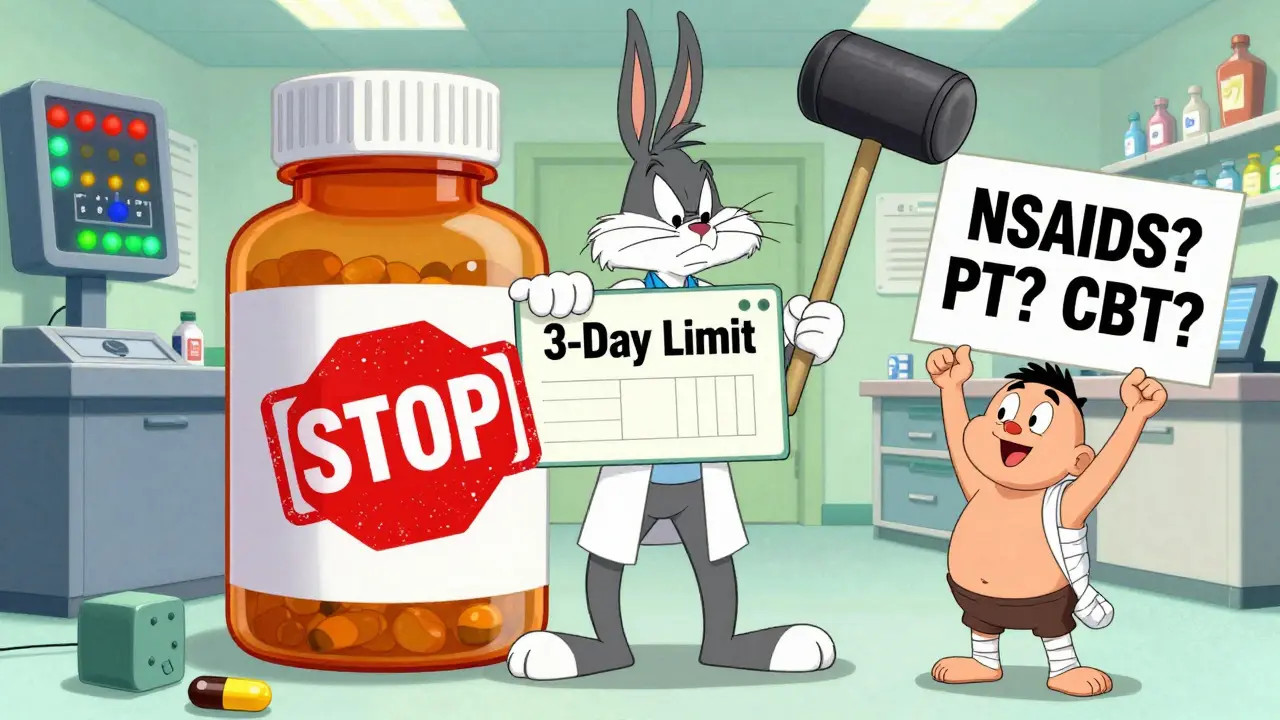
Since 2025, federal guidelines have tightened dramatically. The CDC, FDA, and CMS have aligned on clear limits: no more than a three-day supply for most acute pain. Doses above 50 morphine milligram equivalents (MME) per day double the risk of overdose. At 90 MME or higher, the risk jumps even more. Yet, too many patients still end up on long-term opioids because alternatives weren’t offered, or because providers didn’t have the tools to assess risk properly.
The New Rules: What Prescribers Must Follow in 2026
The 2025 CDC Clinical Practice Guideline for Prescribing Opioids for Pain is now the standard. It’s not optional. It’s enforced through Medicare Part D systems and state prescription monitoring programs. Here’s what it means in practice:
- Three-day limit for acute pain: For things like dental extractions, sprains, or minor surgeries, opioids should only be prescribed for up to three days. A seven-day supply is allowed only if the provider documents a clear clinical reason-like complex trauma or multiple fractures.
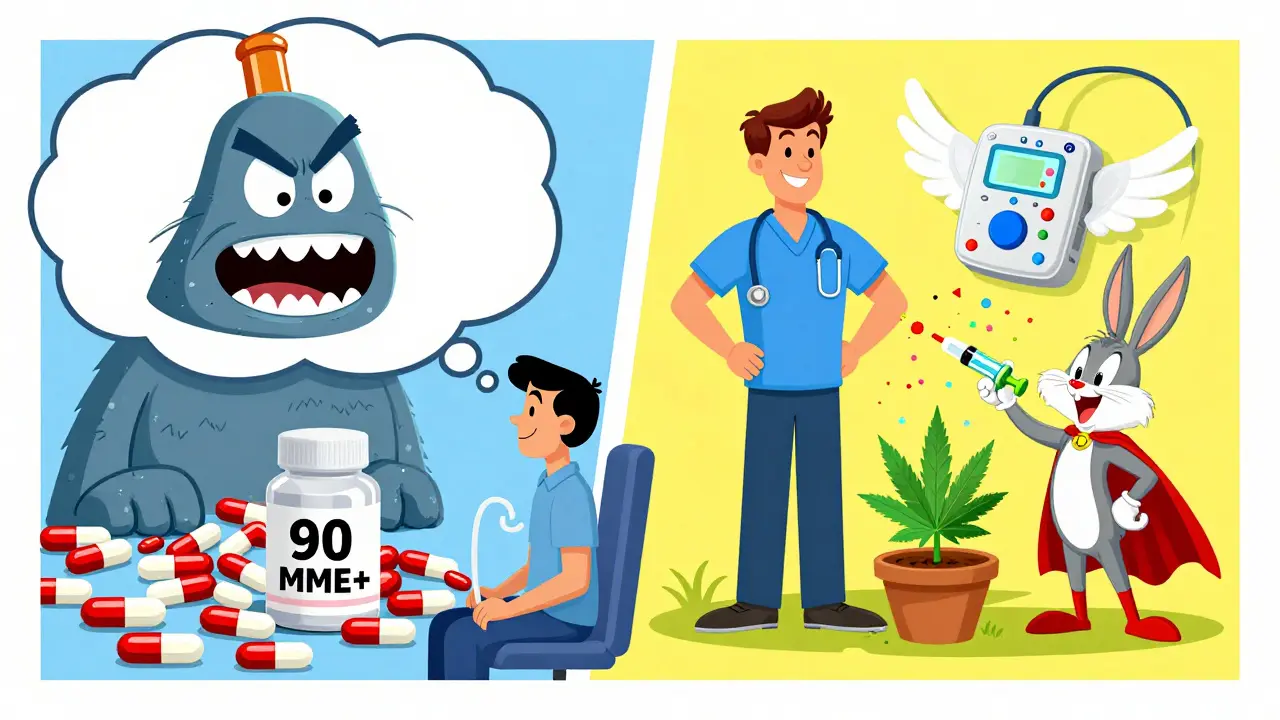
- 50 MME is the red flag: Once a patient hits 50 MME per day, the risk of overdose increases 2.8 times. Providers must reassess benefits versus risks at this point. This isn’t a hard cap-it’s a warning sign.
- Avoid 90 MME unless absolutely necessary: Doses above 90 MME per day should only be used in cancer care, palliative settings, or end-of-life care. Outside those cases, it’s considered unsafe and poorly justified by current evidence.
- Point-of-sale edits block unsafe prescriptions: Pharmacies now have automated systems that reject initial opioid prescriptions longer than three days for acute pain. These are hard stops, not suggestions.
These rules aren’t arbitrary. They’re based on data from over 2 million patient records analyzed between 2022 and 2024. Each extra day of opioid use after the third day increases the chance of long-term use by 20%.
Who’s at Highest Risk-and How to Spot It
Not everyone who takes opioids develops a problem. But some people are far more vulnerable. The key is knowing who they are before you write the prescription.
- Patients with mental health conditions: Those with depression, anxiety, PTSD, or a history of substance use disorder are at significantly higher risk. The VA found that 11.4% of veterans on long-term opioids also had PTSD.
- People with a personal or family history of addiction: Even if they’ve never misused drugs, a close relative who has raises the risk.
- Those taking benzodiazepines or other sedatives: Combining opioids with these drugs increases overdose risk by up to 10 times.
- Elderly patients and those with kidney problems: Older adults metabolize opioids slower. A 30 MME daily dose may be too much for someone over 65 with reduced kidney function.
Tools like the Opioid Risk Tool (ORT) and SOAPP help. ORT scores under 4 mean low risk. Scores above 8 mean high risk-and opioids should be avoided unless an addiction specialist is involved. These aren’t just checklists. They’re lifesavers.
What to Do Instead of Reaching for Opioids
Opioids aren’t the only option. In fact, they’re the last option. Multimodal pain management-using several non-opioid methods together-works better and is safer.
- NSAIDs and acetaminophen: These are first-line for most types of pain. Studies show combining ibuprofen and acetaminophen is just as effective as low-dose opioids for post-surgical pain-with no addiction risk.
- Physical therapy: For back pain, joint issues, or post-injury recovery, PT reduces opioid use by 40-50% over time.
- Cognitive behavioral therapy (CBT): Helps patients reframe how they experience pain. It’s especially effective for chronic pain and reduces reliance on meds.
- Ice, heat, braces, and TENS units: Simple, low-cost tools that work for many types of acute and subacute pain.
- CBD-based products: While still under study, early data shows promise for nerve pain and inflammation without psychoactive effects.
Practices that offer these options on-site see fewer opioid prescriptions, fewer emergency visits, and higher patient satisfaction. The key is making them accessible-not as afterthoughts, but as the foundation of care.
The Hidden Cost: When Guidelines Go Too Far
These safety measures have saved lives. But they’ve also created new problems. Some patients who relied on opioids for years-often because other treatments failed-have been abruptly cut off. A U.S. Pain Foundation survey found 7-10% of long-term users experienced sudden discontinuation, leading to pain crises and ER visits.
The FDA warns against rapid tapering. Sudden withdrawal can trigger severe pain, anxiety, and even suicide. A 2024 study showed a 23% spike in suicide attempts among patients whose opioids were stopped too quickly.
The solution? Personalization. Not rigidity. For patients on stable, long-term therapy with no signs of misuse, tapering should be slow, patient-led, and supported by counseling. The goal isn’t to remove opioids from everyone’s life-it’s to remove them from the wrong lives.
What Patients Can Do to Stay Safe
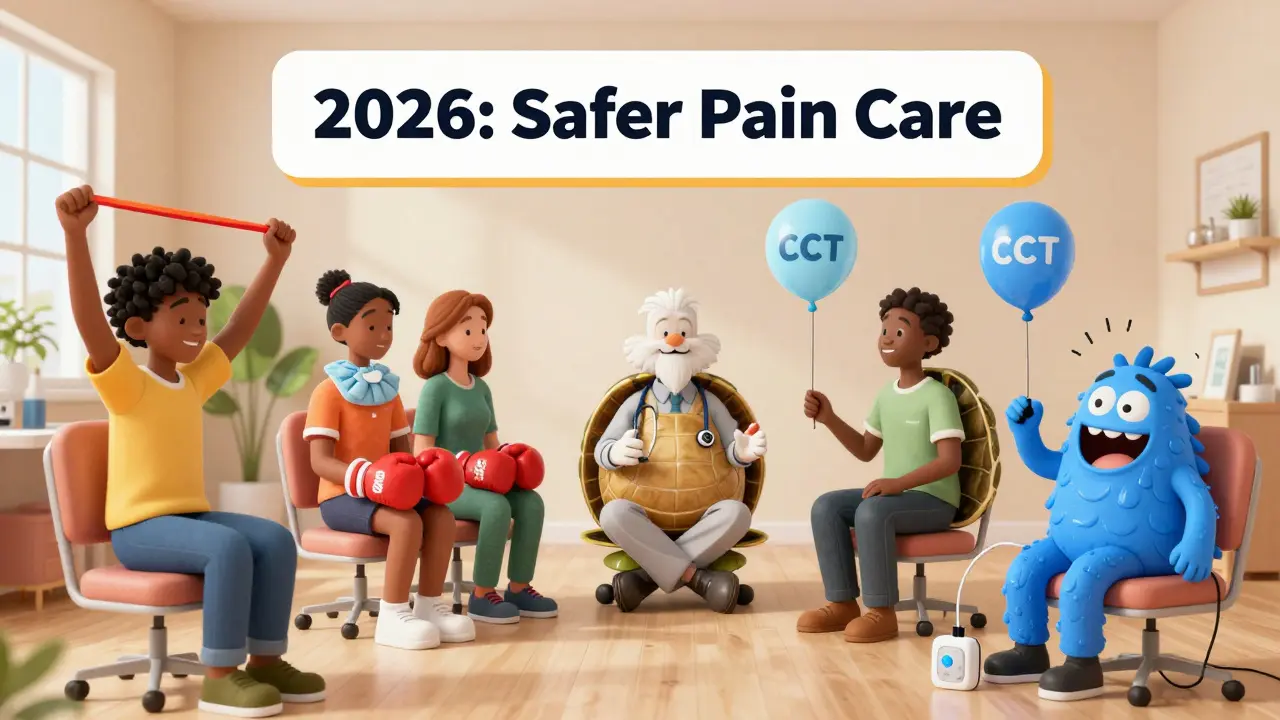
If you’ve been prescribed opioids, here’s how to protect yourself:
- Ask: “Is this really necessary?” Don’t assume opioids are the best option. Ask about NSAIDs, physical therapy, or other alternatives.
- Know your dose: Ask your doctor what your MME is. If it’s above 50, ask why and what the plan is to reduce it.
- Use one pharmacy: This helps prevent overlapping prescriptions and makes it easier to spot dangerous combinations.
- Store pills securely: Keep them locked up. Many overdoses happen when someone else takes the medication.
- Have naloxone on hand: If you or someone you live with is on opioids, get naloxone. It reverses overdoses. It’s available without a prescription in most states.
- Report side effects: If you feel drowsy, confused, or unusually euphoric, tell your provider. These aren’t normal-they’re warning signs.
The Future: Where Pain Management Is Headed
By 2027, 65% of acute pain episodes are expected to be managed without opioids. That’s up from 48% in 2025. Why? Because non-opioid treatments are getting better-and cheaper.
The NIH has invested $125 million in new pain therapies, with 42% going toward non-addictive drugs. States are expanding access to pain clinics, and telehealth is making CBT and PT more available-even in rural areas.
But there’s still a gap. Over 12,500 pain specialists are needed to meet demand, especially outside cities. And not all providers have the time or training to implement these changes.
The real win? When pain care becomes proactive, not reactive. When patients get help before they need opioids. When doctors have the tools to say no-and the support to offer better alternatives.
Final Thought: Safety Isn’t About Restriction-It’s About Responsibility
Minimizing opioid risks doesn’t mean denying care. It means delivering better care. The goal isn’t to eliminate opioids entirely-it’s to make sure they’re used only when truly needed, at the lowest effective dose, for the shortest time possible.
Every prescription carries weight. Every conversation matters. And in 2026, safety isn’t a box to check. It’s the standard.

Amy Ehinger
January 17, 2026 AT 06:07Man, I remember when my buddy got his wisdom teeth out and got a 30-day script for oxycodone. Like, what even was that? Now I’m actually kinda glad we’re finally fixing this. I’ve seen too many people go from ‘just taking a few for the pain’ to needing a whole new life. The three-day limit makes total sense - it’s not about punishing people, it’s about stopping the slide before it starts. I wish my grandma’s doctor had known this back in 2018.
Also, the fact that pharmacies are now blocking long scripts? That’s the kind of automated safety net we needed. No more ‘oops, I forgot to check the script length’ moments. And honestly, I’m glad they’re pushing non-opioid stuff like PT and CBT - I did PT after my ACL tear and it felt way better than just numb-ing the pain away.
It’s funny how we used to think opioids were magic. Now we know they’re more like a really loud fire alarm - works great for emergencies, but if you keep ringing it, everyone just stops listening.
RUTH DE OLIVEIRA ALVES
January 18, 2026 AT 01:41It is imperative to acknowledge the profound clinical and ethical implications of the revised opioid prescribing guidelines as they pertain to public health policy in the United States. The alignment among the CDC, FDA, and CMS represents a paradigmatic shift from reactive pharmacological intervention to proactive, evidence-based, multimodal pain management.
The imposition of a three-day limit for acute pain, coupled with the MME thresholds and point-of-sale pharmacological safeguards, constitutes a necessary and scientifically grounded intervention. The data derived from over two million patient records is not merely suggestive - it is conclusive.
Moreover, the integration of the Opioid Risk Tool and SOAPP into routine clinical workflows ensures that risk stratification is not left to subjective judgment but is instead anchored in validated psychometric instruments. This is not restriction; it is responsibility.
It is regrettable, however, that the implementation of these protocols has, in some instances, precipitated unintended consequences, including abrupt discontinuation and iatrogenic distress among long-term users. This underscores the necessity of individualized care pathways - not as exceptions, but as integral components of the new standard.
Niki Van den Bossche
January 18, 2026 AT 21:03Oh, so now we’re pretending opioids are the devil because some corporate-backed ‘guidelines’ got funded by a NIH grant and a few overworked bureaucrats with PowerPoint decks? Tell me - when did pain become a moral failing? When did human suffering get reduced to a spreadsheet cell labeled ‘MME’?
You know what’s really dangerous? The arrogance of people who think they can quantify agony. That guy with the shattered spine who’s been on 40 MME for ten years because PT made him cry and NSAIDs made his stomach bleed? You’re not protecting him - you’re erasing him. And now you want to slap a ‘3-day limit’ sticker on his life like he’s a coupon expiring at midnight?
And don’t even get me started on ‘CBD-based products’ - the new placebo for people who want to feel enlightened while their pain still screams.
This isn’t safety. This is spiritual colonialism dressed in clinical jargon.
Jami Reynolds
January 20, 2026 AT 03:56Did you know the CDC’s 2025 guidelines were influenced by a 2023 study funded by the pharmaceutical lobby that makes non-opioid alternatives? The ‘three-day limit’? That’s not evidence - it’s a script written by insurance companies who don’t want to pay for physical therapy. The ‘90 MME’ rule? It was lifted from a Canadian trial that excluded patients with complex regional pain syndrome. And naloxone? It’s not a solution - it’s a PR tool so hospitals can say they ‘care’ while still overprescribing.
They’re not reducing addiction. They’re creating a black market for old prescriptions. You think people aren’t buying fentanyl off the street now because they can’t get oxycodone? Wake up. This isn’t safety. It’s control. And they’re using your fear of overdose to justify it.
Jan Hess
January 20, 2026 AT 10:00Iona Jane
January 20, 2026 AT 14:49Jaspreet Kaur Chana
January 22, 2026 AT 11:41Man, I came from India where pain meds are basically impossible to get unless you’re dying - and I still think this is the right direction. Back home, people use turmeric, massage, and prayer for pain. No opioids. No problems. Here, we just hand out pills like candy. I’ve seen friends get hooked after a tooth extraction. It’s wild.
But honestly? The real win is making PT and CBT easy to access. I did CBT for anxiety and it changed my whole life. Same for pain. Your brain learns to stop screaming. And the fact that telehealth makes it possible for people in rural areas? That’s the future. No more driving three hours for a 15-minute doctor visit. Just log in, talk to someone, and get real help.
Also - TENS units. They’re like magic for back pain. I got one for $40 on Amazon. Works better than half the pills I’ve taken.
ellen adamina
January 22, 2026 AT 16:18Gloria Montero Puertas
January 23, 2026 AT 03:27Tom Doan
January 24, 2026 AT 03:27