
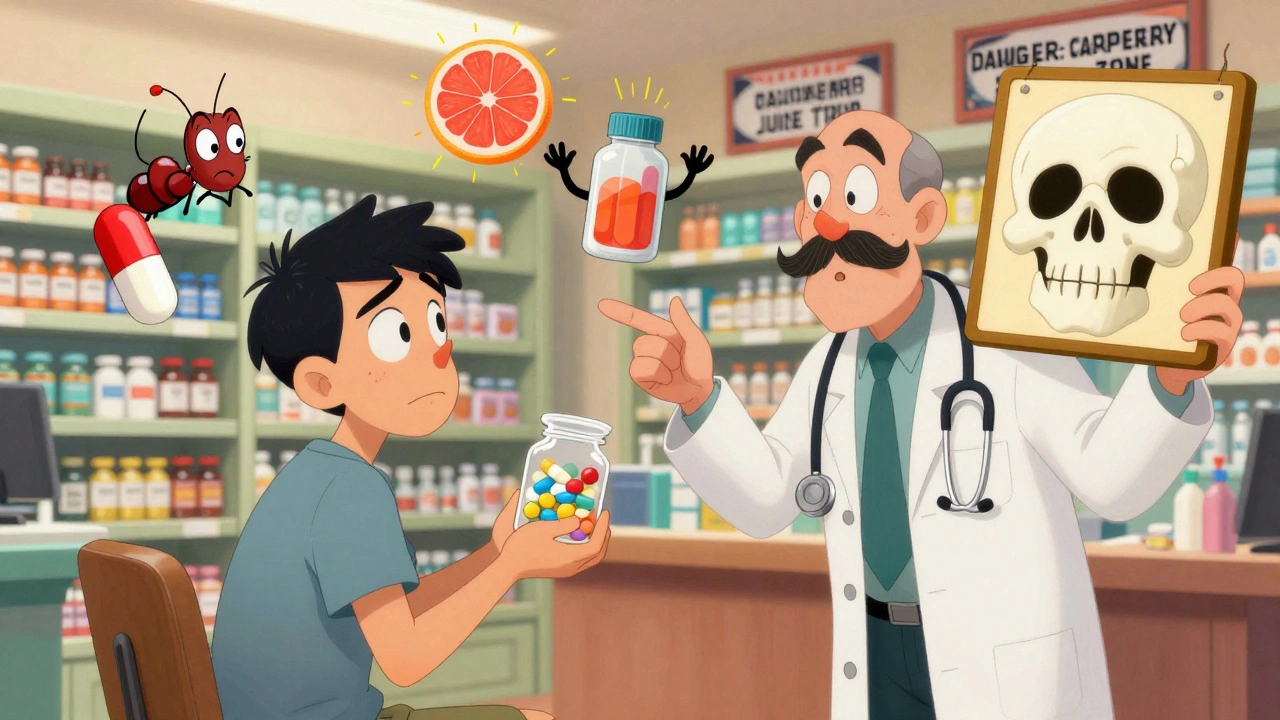
Every year, over a million people in the U.S. end up in the hospital or injured because of medication errors. And medication interactions are behind nearly 7% of those cases. Most of these aren’t accidents caused by doctors or pharmacists-they happen because patients never asked the right questions. You might think your pharmacist just fills prescriptions, but they’re trained to spot dangerous combinations you’d never catch on your own. The problem? Only about 38% of patients get a real conversation about interactions when they pick up a new prescription.
Why Medication Interactions Are More Common Than You Think
You’re not alone if you assume your meds are safe just because your doctor prescribed them. But drugs don’t exist in isolation. They interact with other pills, supplements, food, drinks, and even sunlight. A simple antacid like Tums can block the absorption of your Hepatitis C treatment. Grapefruit juice can spike your statin levels by 1,500%. Cranberry juice can turn your blood thinner into a ticking time bomb. Even something as common as alcohol can cause serious reactions with over 40% of medications, including antibiotics like metronidazole. And herbal supplements? They’re not regulated like drugs, so you can’t assume they’re harmless. One patient taking levothyroxine for thyroid issues didn’t realize calcium supplements cut its effectiveness by half-until their TSH levels went haywire. Pharmacists see these mistakes every day. They’re the only healthcare pros with a Doctor of Pharmacy degree and years of training focused entirely on how drugs behave in the body. Yet most of them are waiting for you to ask.What Kind of Interactions Should You Worry About?
There are four main types of interactions that can mess with your meds:- Drug-drug: Two prescriptions clashing. Like mixing SSRIs (e.g., fluoxetine) with MAOIs-this can cause serotonin syndrome, a life-threatening spike in body temperature and heart rate.
- Drug-supplement: Vitamins, herbs, or minerals interfering. Warfarin and vitamin K-rich supplements? That’s a dangerous combo. So is St. John’s Wort with antidepressants or birth control.
- Drug-food: What you eat changes how your drug works. Grapefruit juice affects 85 prescription drugs, including blood pressure meds and cholesterol-lowering statins. Dairy can stop antibiotics like tetracycline from working.
- Drug-beverage/environment: Alcohol, caffeine, and even sun exposure matter. Some meds make your skin burn faster in the sun. Others react violently with alcohol, causing nausea, vomiting, or even heart problems.
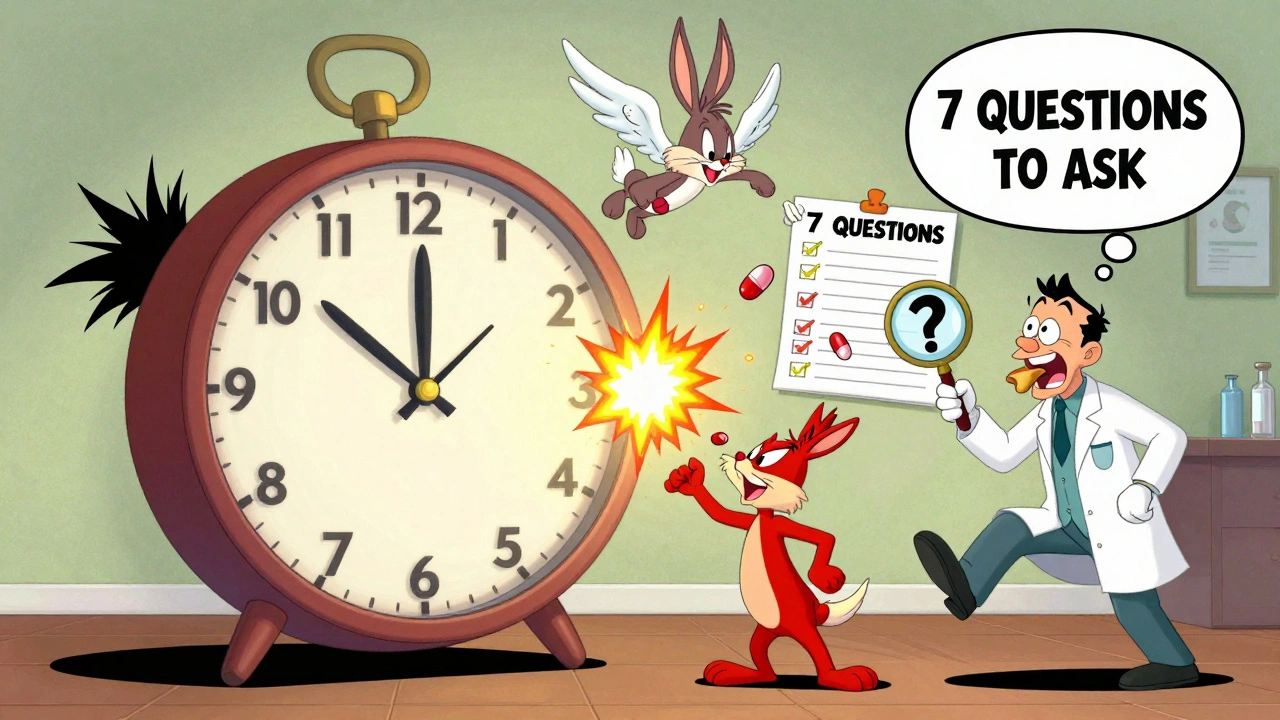
7 Essential Questions to Ask Your Pharmacist
Don’t wait for them to ask you. Bring this list with you every time you pick up a new prescription-or even refill one.- Does this medication interact with anything else I’m taking? This includes prescriptions, over-the-counter pills, vitamins, and herbal supplements. Don’t say “I take a multivitamin.” Say “I take a multivitamin with 800 mcg of vitamin K and 1,200 mg of calcium daily.” Specifics matter.
- Are there foods, drinks, or beverages I should avoid? Grapefruit juice, alcohol, caffeine, dairy, and even high-fat meals can change how your body processes a drug. Ask specifically about your usual breakfast or weekend habits.
- What are the warning signs if an interaction happens? You need to know what to watch for. Is it dizziness? Nausea? A rash? Rapid heartbeat? Unusual bruising? Knowing the red flags can save your life.
- Should I take this at a different time than my other meds? Timing can prevent interactions. For example, taking levothyroxine 4 hours before calcium or iron supplements avoids absorption issues. Your pharmacist can give you a simple schedule.
- Will this affect my ability to do daily activities? Some meds cause drowsiness, dizziness, or sun sensitivity. If you drive, work outdoors, or operate machinery, you need to know.
- Do I need any blood tests or monitoring while taking this? Warfarin, lithium, and some antibiotics require regular lab checks. Ask what’s needed and how often.
- What if I miss a dose or accidentally take too much? This isn’t just about adherence-it’s about safety. Some drugs cause rebound effects or toxic buildup if you skip or double up.
What to Bring to Your Pharmacist
You won’t get good advice if you don’t give them the full picture. Bring:- A written list of every medication you take-prescription, OTC, vitamins, and supplements. Include dosages and how often you take them.
- A list of any new symptoms you’ve noticed since starting a new drug. Even “I feel weird after lunch” could be a clue.
- Your pharmacy’s app or online portal login, if you use one. Many have interaction checkers, but they’re not perfect.
- Your doctor’s contact info, in case the pharmacist needs to clarify something.
What to Do If Your Pharmacist Doesn’t Offer Details
Many pharmacists are overworked. Time limits, staffing shortages, and automated systems mean they can’t always initiate the conversation. If they don’t bring up interactions, don’t leave without asking. If you feel brushed off, say: “I’ve had bad reactions to meds before, and I want to make sure this is safe with everything else I take.” Most pharmacists will drop what they’re doing and give you their full attention. You can also ask: “Can I schedule a 10-minute consultation to review all my meds?” Many pharmacies offer free medication therapy management (MTM) sessions, especially if you’re on Medicare Part D. These are designed for exactly this purpose.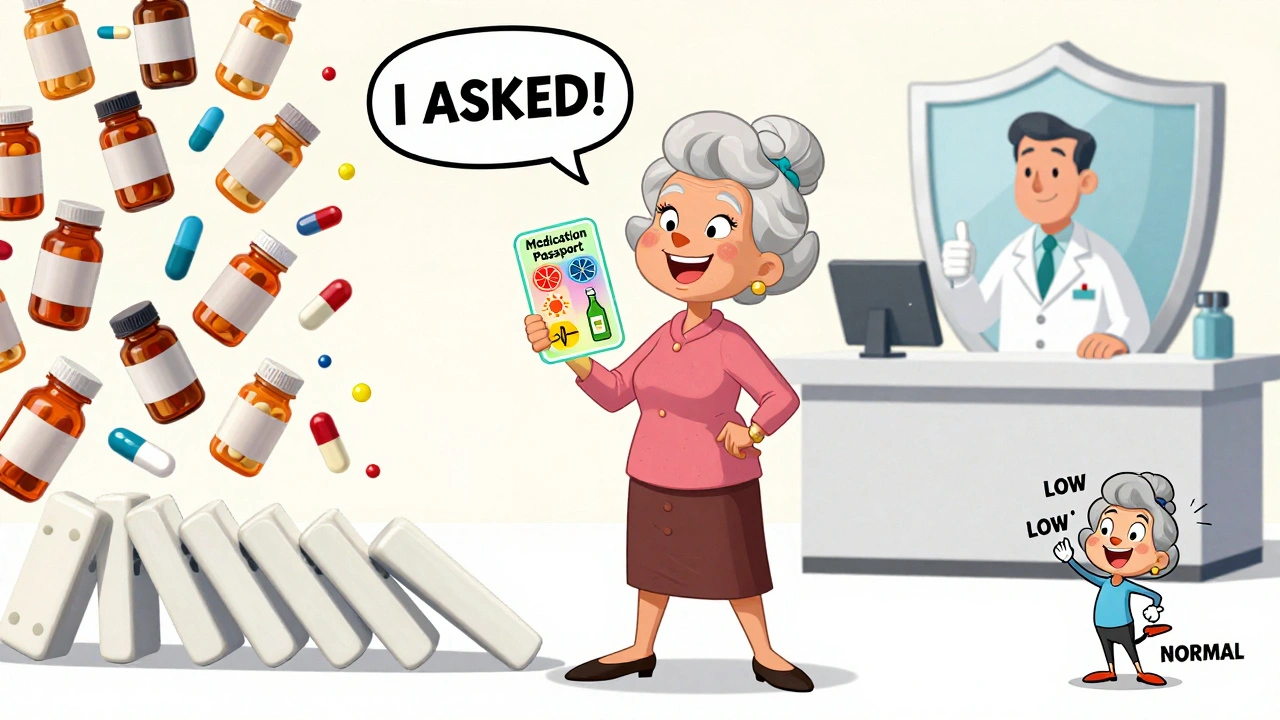
Real Stories, Real Risks
One Reddit user shared how their pharmacist caught that their new antibiotic would cancel out their birth control. They were about to skip backup protection-until the pharmacist stepped in. Another patient took simvastatin daily and drank grapefruit juice every morning. Their cholesterol was fine, but their muscle enzymes were dangerously high. The pharmacist flagged it before they developed rhabdomyolysis-a condition that can cause kidney failure. On the flip side, a woman taking warfarin didn’t know cranberry juice increased her bleeding risk. She ended up in the ER after a minor fall. Her pharmacist later told her, “We see this every week. We’re here to help. You just have to ask.”What’s Changing in Medication Safety
New tools are emerging. The FDA now lets you report interactions directly through a mobile app. CVS and Walgreens have interaction checkers in their apps-but they only catch about 63% of serious risks. That’s why human advice still matters. Some clinics are testing “medication interaction passports”-simple visual cards that show your personal risk profile. Imagine carrying a card that says: “Avoid grapefruit. Take with water only. Monitor for muscle pain.” That’s the future. And soon, genetic testing may tell your pharmacist if you’re a slow metabolizer of certain drugs. That could mean personalized dosing and interaction warnings based on your DNA.Final Thought: You’re the Most Important Part of the System
Doctors write prescriptions. Pharmacies fill them. But you’re the one swallowing the pills. No one else is in your body. No one else knows your habits, your diet, your sleep schedule, or your alcohol use. Pharmacists have the knowledge. But they can’t help you if you don’t speak up. The next time you pick up a new prescription, don’t just say “thanks.” Ask the seven questions. Bring your list. Push for clarity. You’re not being difficult-you’re being smart. Your health isn’t a guess. It’s a system-and you’re the only one who can make sure all the parts work together safely.Can I just check for drug interactions on my phone app?
Phone apps and online checkers can help, but they’re not foolproof. They miss about 37% of clinically significant interactions, especially those involving supplements, herbal products, or complex timing issues. Apps can flag grapefruit and warfarin, but they won’t know you take a specific brand of turmeric supplement that affects your blood pressure med. Always verify with your pharmacist.
What if I’m taking a lot of medications? Can my pharmacist help me sort through them all?
Yes. If you’re on five or more medications, you’re eligible for a free Comprehensive Medication Review (CMR) under Medicare Part D. This is a 30-minute session with a pharmacist to review every pill, vitamin, and supplement you take. They’ll look for duplicates, interactions, and unnecessary drugs. Ask your pharmacy if they offer this service-it’s designed for people exactly like you.
Do generic drugs have the same interaction risks as brand names?
Generally, yes. Generic drugs contain the same active ingredient as brand names, so interaction risks are nearly identical. But sometimes, inactive ingredients (like fillers or coatings) can affect absorption-especially for time-release meds or drugs with narrow therapeutic windows like warfarin or thyroid meds. If you switch from brand to generic and notice new side effects, tell your pharmacist.
I take supplements because I think they’re healthy. Why should I be worried?
Supplements aren’t regulated like drugs. That means what’s on the label isn’t always what’s inside. A 2022 study found 1 in 4 herbal products contained unlisted pharmaceuticals. St. John’s Wort can make birth control fail. Vitamin K can undo warfarin. Magnesium can lower blood pressure too much if you’re already on a beta-blocker. Your pharmacist needs to know everything-even if you think it’s “just a natural remedy.”
I forgot to ask about interactions. Can I call back later?
Absolutely. Pharmacists expect follow-up questions. Call your pharmacy and say, “I just picked up [medication name] and realized I didn’t ask about interactions with my other meds. Can you review them for me?” Most pharmacies will do this over the phone at no cost. Don’t wait until you feel sick-ask now.
My doctor didn’t mention any interactions. Does that mean there aren’t any?
No. Doctors are focused on treating your condition, not managing every possible interaction. They may not know about your supplements, or they might assume you already know about grapefruit and warfarin. Pharmacists are the specialists in drug interactions. Their job is to catch what others miss. Always ask your pharmacist-even if your doctor says everything’s fine.
How often should I review my meds with a pharmacist?
At least once a year, or anytime you start or stop a medication-even if it’s over-the-counter. If you’re on multiple chronic meds, consider a review every six months. Your body changes. New conditions arise. Supplements get added. What was safe last year might not be safe now. Don’t assume your meds are still working the same way.

nikki yamashita
December 12, 2025 AT 00:25Just asked my pharmacist about my new blood pressure med and she caught that my magnesium supplement was canceling it out. So glad I asked. Seriously, just bring your list. It takes 2 minutes.
Lawrence Armstrong
December 13, 2025 AT 06:38My pharmacist always gives me a little handout with interactions highlighted. 🙌 Seriously, they’re the unsung heroes of healthcare. Don’t skip this step.
sandeep sanigarapu
December 14, 2025 AT 13:11India also has high medication misuse. Many take antibiotics for colds. Pharmacists here are often not consulted. Education is needed.
Laura Weemering
December 15, 2025 AT 08:43Have you ever wondered how many of these "interactions" are just corporate fear-mongering to sell more tests? The FDA approves these drugs… and they’re funded by Big Pharma. 🤔 The real danger is blind trust in the system.
Donna Anderson
December 16, 2025 AT 07:34omg i just realized i’ve been taking my thyroid med with my calcium gummies… like for 3 years?? 😳 i’m calling my pharmacy right now
Levi Cooper
December 16, 2025 AT 22:16Why are we even letting pharmacists give medical advice? They’re not doctors. In America, we trust the MD, not the guy behind the counter. This whole thing feels like a slippery slope.
Ashley Skipp
December 17, 2025 AT 19:04My doctor said it was fine so I didn’t ask. Now I’m on warfarin and drinking cranberry juice every day. I’m fine. Probably.
Robert Webb
December 19, 2025 AT 15:34I’ve been on 8 medications for 12 years. Last year I scheduled a Comprehensive Medication Review. The pharmacist found three duplicates, two unnecessary prescriptions, and a dangerous interaction between my antidepressant and my turmeric supplement I didn’t even know I was taking. I was shocked. They don’t just fill prescriptions-they audit your entire health ecosystem. If you’re on more than three meds, this is not optional. It’s essential. And it’s free under Medicare Part D. You literally have nothing to lose except potential hospitalization.
Reshma Sinha
December 21, 2025 AT 00:56As a clinical pharmacist, I can confirm: 87% of patients don’t disclose OTCs or supplements. The most common hidden interaction? St. John’s Wort with SSRIs. We see it weekly. The real issue isn’t knowledge-it’s communication. Patients assume we already know. We don’t. You have to tell us. Even if it’s "just ashwagandha."
Nathan Fatal
December 22, 2025 AT 05:55It’s not about fear-it’s about agency. You’re the only one who lives in your body. The system is designed to be passive. But health is active. Asking the seven questions isn’t being difficult-it’s practicing self-advocacy. That’s the real medicine.
Rob Purvis
December 22, 2025 AT 18:16Wait-so if I take my statin with grapefruit juice, and my blood thinner with cranberry, and my thyroid med with calcium… am I just… doomed? 😭
wendy b
December 23, 2025 AT 00:47As a PharmD graduate, I must emphasize that pharmacists are not trained to diagnose, only to flag interactions. The real problem is that primary care physicians are overburdened and fail to coordinate care. This is a systemic failure, not a patient failure. Also, the term "medication interaction" is misleading-it’s pharmacokinetic and pharmacodynamic modulation. Please use precise language.
Stacy Foster
December 24, 2025 AT 17:29They’re hiding something. Why do all these "interaction alerts" only happen with brand-name drugs? Why do generics get a pass? And why do they never warn you about the fillers? I’ve been reading forums-there’s a whole underground of people who say the real danger is the inactive ingredients. The FDA won’t tell you. Your pharmacist won’t tell you. But I found a whistleblower video. You need to see this.
Adam Everitt
December 25, 2025 AT 04:14we are all just chemicals in a meat suit, aren't we? the pills, the juice, the sun... it's all just entropy trying to find balance. but who are we to say what's "safe"? maybe the body knows better than the pharmacists. maybe the real interaction is between us and the illusion of control.