
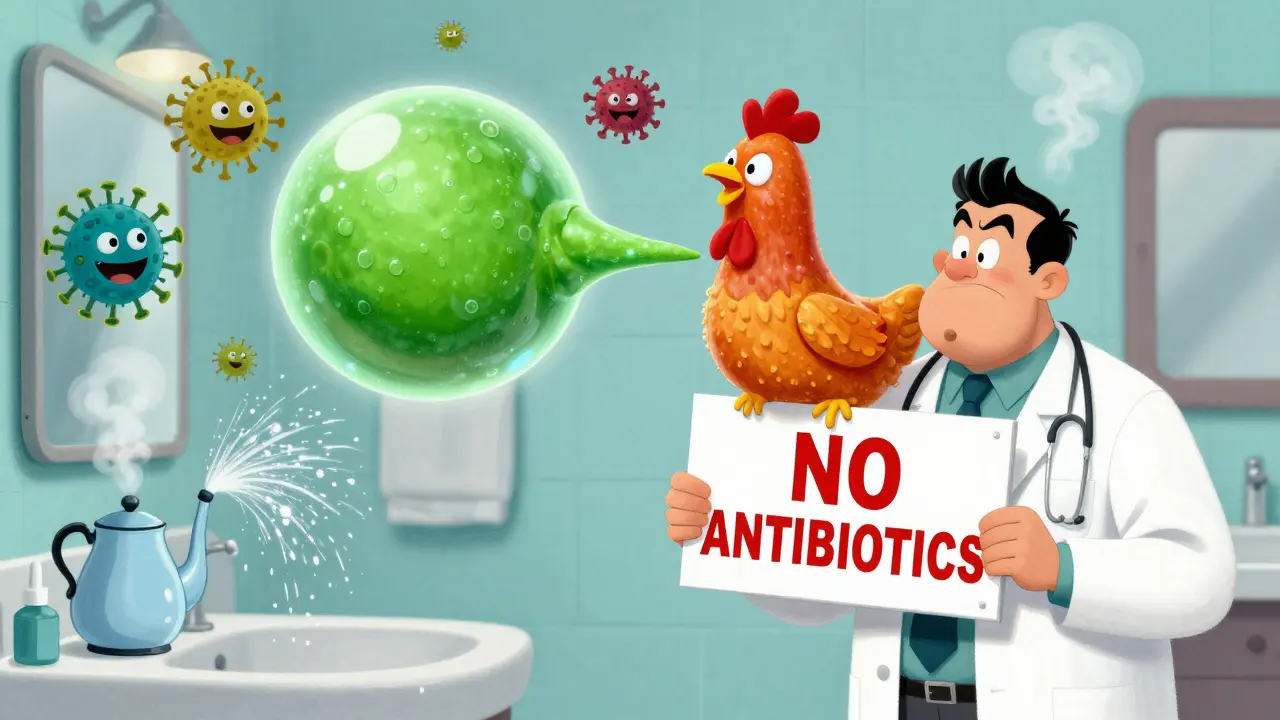
Most people think if their nose is stuffed up, their face hurts, and the mucus is green, they need antibiotics. But here’s the truth: sinusitis is almost always viral-and antibiotics won’t touch it. In fact, taking them when you don’t need them does more harm than good.
What Really Causes Sinusitis?
Sinusitis means your sinuses-the air-filled spaces around your nose, eyes, and cheeks-are swollen and inflamed. It’s not a single illness. It’s your body’s reaction to something irritating or infecting those areas. About 90 to 98% of acute cases are caused by viruses, usually the same ones that give you a cold. The rest? Bacteria. Fungal infections are rare and mostly affect people with weakened immune systems. The big problem? Doctors are pressured to prescribe antibiotics. Patients expect them. But studies show 78% of antibiotic prescriptions for sinus infections are unnecessary. That’s not just wasteful-it’s dangerous.How to Tell Viral From Bacterial Sinusitis
You can’t tell just by looking at green mucus. That’s a myth. Even viral infections can produce thick, discolored discharge. The real clues are in timing and how your symptoms change.- Viral sinusitis usually starts like a cold: runny nose, mild facial pressure, maybe a low-grade fever. Symptoms peak around day 3 to 5 and then slowly improve. Most people feel better by day 7 to 10. If you’re getting better after a week, it’s almost certainly viral.
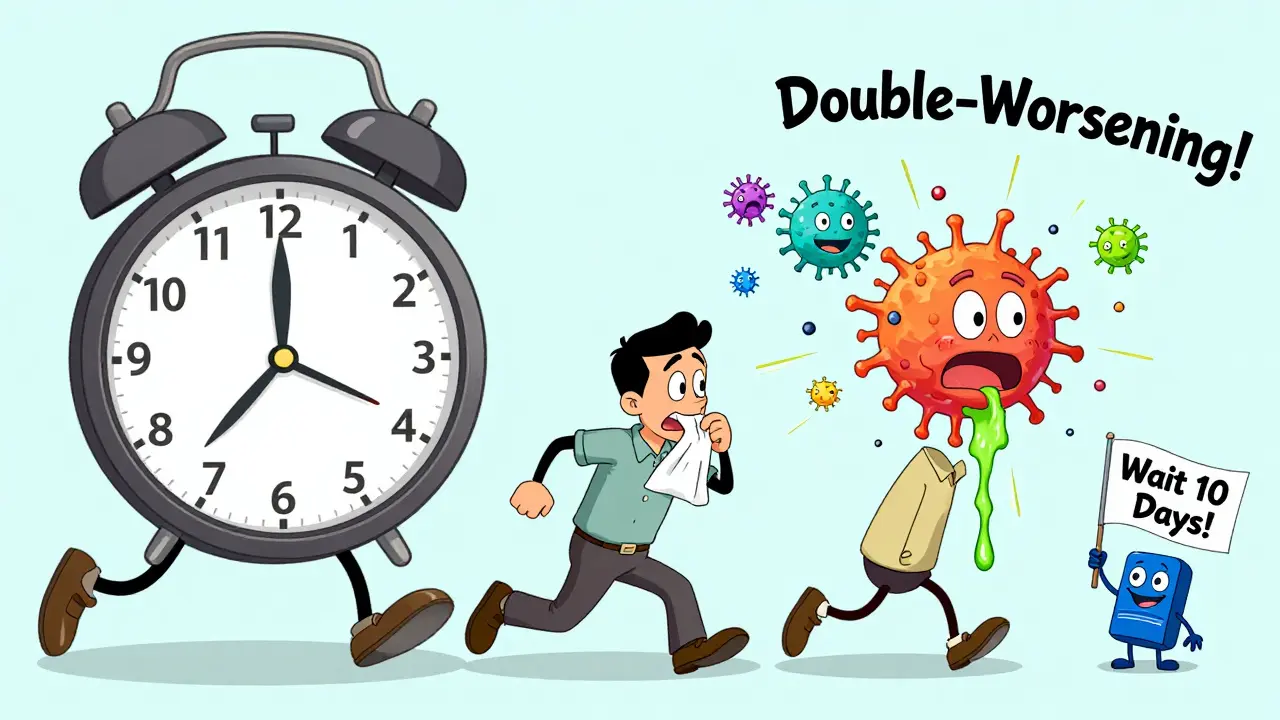
- Bacterial sinusitis behaves differently. It either lasts longer than 10 days without improvement, or-this is the key sign-it gets better for a few days, then suddenly gets worse again. That’s called the "double-worsening" pattern. It often means a secondary bacterial infection has taken hold after the virus weakened your defenses.
- Fever over 102°F (38.9°C) that lasts more than 3 days
- Severe, one-sided facial pain or pressure
- Pain in your upper teeth (that’s your maxillary sinuses talking)
- Pus-like nasal discharge that doesn’t clear up after 3-4 days
When Do Antibiotics Actually Help?
Antibiotics are only useful when bacteria are the cause-and even then, they’re not always needed. The Infectious Diseases Society of America says antibiotics should only be considered if:- Symptoms last more than 10 days without improvement
- You have the double-worsening pattern
- You have severe symptoms from the start (high fever, intense pain, thick pus)
Why Antibiotics Are Risky-Even When They "Work"
Every time you take an antibiotic unnecessarily, you’re playing Russian roulette with your gut bacteria and the health of your community.- Up to 10% of people get diarrhea, rash, or vomiting from antibiotics.
- One in 20 people who take antibiotics develop Clostridioides difficile (C. diff), a nasty gut infection that causes severe diarrhea, fever, and abdominal pain. It’s hard to treat, and up to 30% of cases come back.
- Antibiotic resistance is growing. The CDC says over 2.8 million antibiotic-resistant infections happen in the U.S. every year, and 35,000 people die from them.
- When you take antibiotics for a viral infection, you’re not helping yourself-you’re making it harder to treat future infections, for you and everyone around you.
What to Do Instead (The Real Fix)
If you have viral sinusitis-which you almost certainly do-antibiotics are the wrong tool. Here’s what actually works:- Hydrate. Drink at least 2 to 3 liters of water a day. Thin mucus flows better.
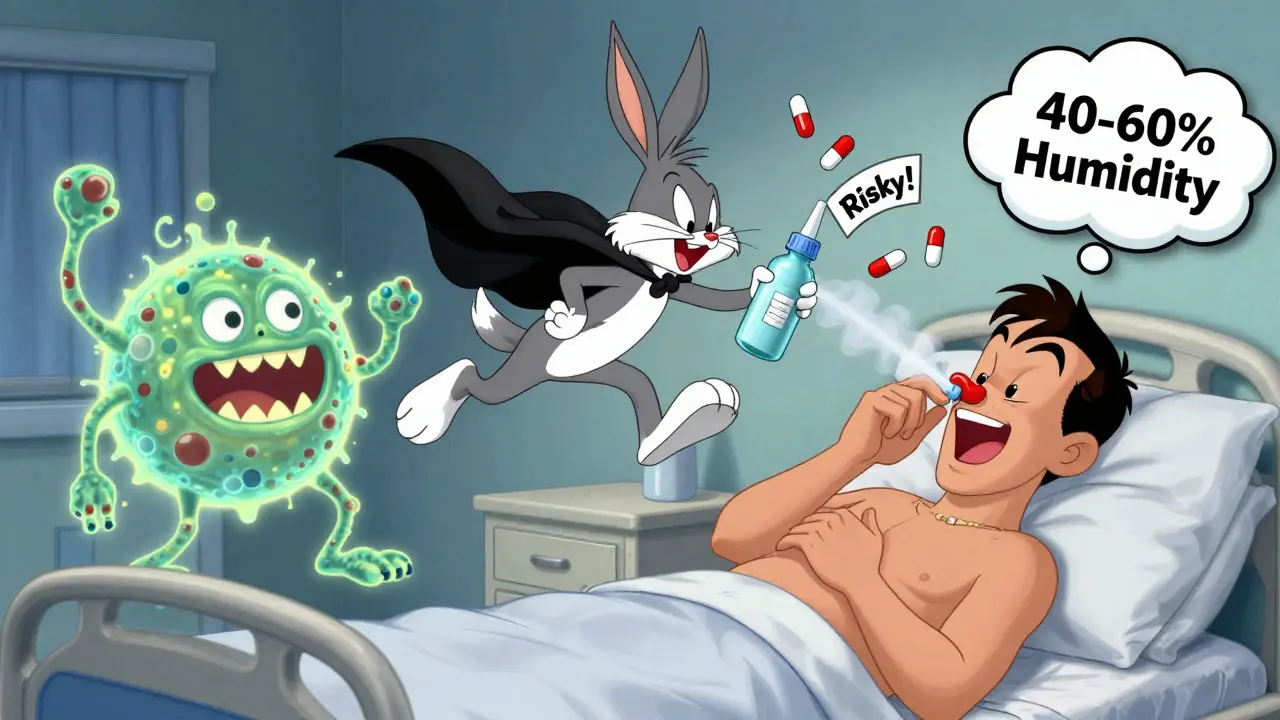
- Saline nasal irrigation. Use a neti pot or nasal spray with sterile saline. Do it twice a day. Studies show 75% of people get the technique right after watching a video. It clears mucus, reduces swelling, and speeds recovery.
- Humidify. Keep indoor humidity between 40% and 60%. Dry air irritates sinuses.
- Pain relief. Take acetaminophen (650-1000mg every 6 hours) or ibuprofen (400-600mg every 6 hours) for pain and fever.
- Rest. Your body fights infection better when it’s not running on empty.
What About Tests and Scans?
CT scans? MRIs? No. These show swelling and fluid in the sinuses-even in healthy people. A 2023 study found 87% of asymptomatic adults had "abnormal" sinus scans. That leads to overdiagnosis and unnecessary treatment. New tools are coming. In May 2023, the FDA approved a rapid test called SinuTest™ that detects bacterial markers in nasal secretions. It’s 89% accurate. But it’s not widely available yet. For now, diagnosis still comes down to symptoms and timing.When to See a Doctor
Most sinus infections clear on their own. But call your doctor if you have:- Fever over 102°F lasting more than 3 days
- Vision changes, swelling around the eyes, or double vision
- Severe headache that doesn’t respond to painkillers
- Stiff neck or confusion
- Symptoms lasting longer than 10 days without improvement

Kristina Felixita
January 8, 2026 AT 17:57OMG YES!!! I used to take antibiotics for everything, then I got C. diff after a "bad cold"... 3 weeks in the hospital, IVs, the whole nightmare. Now I just do saline rinses and drink water like it's my job. My sinuses haven't acted up in 2 years. Please, just stop the pills unless it's truly necessary!!
Ken Porter
January 9, 2026 AT 23:15Doctors prescribe antibiotics because they’re scared of lawsuits. Not because it’s medicine. It’s corporate healthcare in a nutshell.
Dave Old-Wolf
January 10, 2026 AT 05:27I never knew green snot didn’t mean bacteria. I thought that was like, the universal sign. I’ve probably taken 5 rounds of amoxicillin in the last 5 years for nothing. That’s wild. I’m gonna start using the neti pot now. Thanks for the clarity.
Prakash Sharma
January 11, 2026 AT 11:13In India, we don’t even need a doctor to get antibiotics. Pharmacy guy gives you 10 pills for $1. No questions asked. This post is great, but in places like mine, people don’t have the luxury of waiting 10 days. They need relief NOW.
Donny Airlangga
January 12, 2026 AT 03:52My mom used to say, ‘If you don’t feel better in 3 days, you need medicine.’ I believed that until I read this. I’m rethinking everything.
Molly Silvernale
January 12, 2026 AT 22:05Antibiotics are the emotional support pills of modern medicine-everyone wants one because they make you feel like something’s being DONE, even when nothing needs doing. It’s not treatment, it’s theater. And we’re all just audience members holding our breath waiting for the curtain to fall on another unnecessary prescription.
Joanna Brancewicz
January 13, 2026 AT 07:03Saline irrigation has 75% efficacy? That’s higher than most OTC decongestants. Why isn’t this standard protocol?
swati Thounaojam
January 13, 2026 AT 20:21i never knew about the double worsening thing… i thought my last infection was just bad luck. i’ll watch for that now. thank you :)
Luke Crump
January 13, 2026 AT 22:39So you’re saying the entire pharmaceutical industry is built on lies? That doctors are just pawns? That nature heals better than science? I’m not buying it. What if your body’s just too weak to fight on its own? Maybe we need the pills to compensate for our toxic lives. You’re just glorifying suffering.
Manish Kumar
January 15, 2026 AT 10:37Look, I respect the science here, but let’s be real-we live in a world where people don’t rest, don’t hydrate, don’t sleep, and then wonder why they get sick. Antibiotics are the Band-Aid on a bullet wound. The real problem is our lifestyle. We’ve forgotten how to be human. We rush, we stress, we eat garbage, we sit all day, then we pop a pill because we don’t have time to heal. The bacteria didn’t win-we did. We surrendered to convenience. And now we’re paying the price-not just with our guts, but with our future. Every time you take an antibiotic for a virus, you’re not just hurting yourself-you’re stealing the future from your kids. The real cure isn’t in a bottle. It’s in slowing down. In breathing. In listening to your body before it screams.