
Statin Liver Enzyme Checker
Check Your Liver Enzyme Levels
This tool helps you understand if your statin-related liver enzyme elevations are concerning based on current medical guidelines.
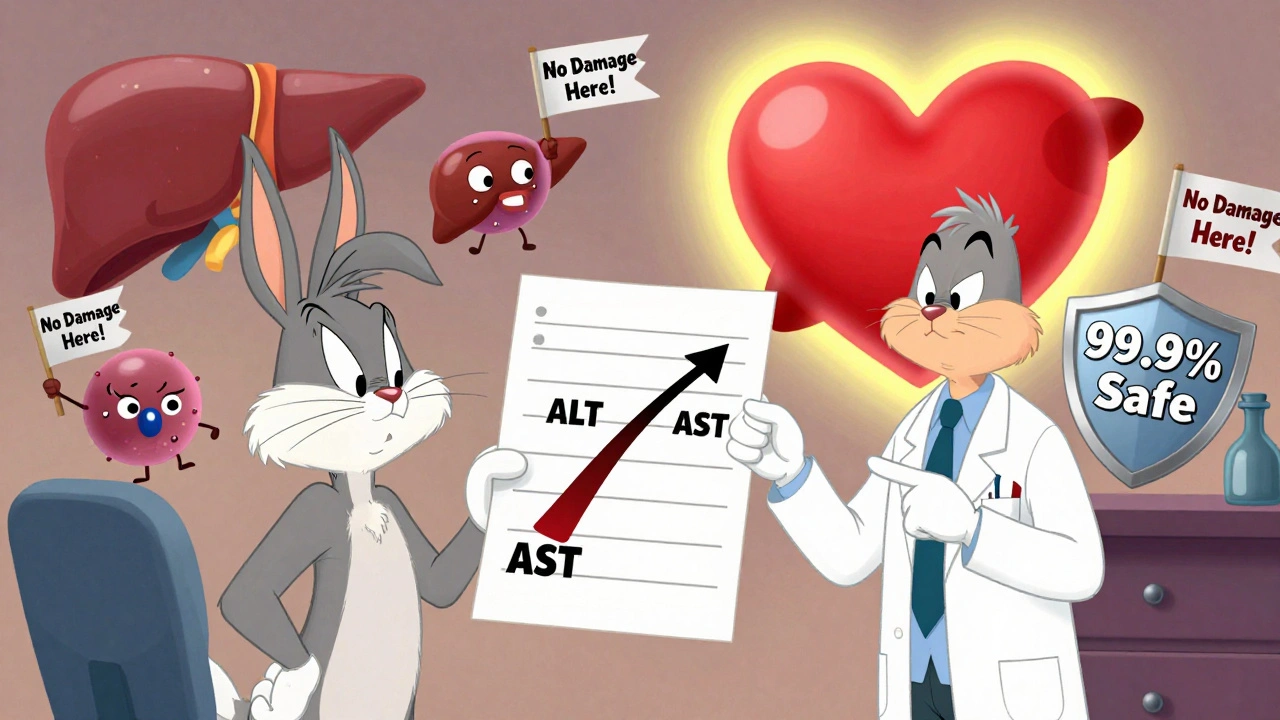
When you start taking a statin to lower your cholesterol, you’re doing something that could save your life. But then your blood test comes back with higher-than-normal liver enzymes, and suddenly, you’re worried. Is your liver damaged? Should you stop the pill? You’re not alone. Thousands of people panic when they hear their ALT or AST levels are up. But here’s the truth: statin-related liver enzyme elevations are rarely dangerous - and stopping your statin over them might be riskier than keeping it.
What Does It Mean When Liver Enzymes Go Up?
Your liver makes enzymes like ALT (alanine aminotransferase) and AST (aspartate aminotransferase). These help process nutrients and detoxify your body. When liver cells get stressed - from alcohol, fat, viruses, or even a medication - they leak a bit of these enzymes into your blood. That’s what shows up on a blood test. For most people on statins, the rise is tiny. It’s not a sign of damage. It’s just noise. The FDA says serious liver injury from statins happens in fewer than 1 in 10,000 people. Meanwhile, enzyme levels that go above three times the upper limit of normal (3x ULN) occur in only 0.5% to 2% of users. And even then, most of those cases go back to normal on their own - without stopping the statin.Why Do Statins Cause This?
Statins work by blocking an enzyme your liver uses to make cholesterol. But that same enzyme is involved in making other important molecules, like coenzyme Q10, which helps power your mitochondria - the energy factories inside your cells. Some statins, especially the lipophilic ones like simvastatin and atorvastatin, slip easily into liver cells. In rare cases, they can stress those mitochondria, leading to a small increase in enzyme leakage. It’s not about toxicity. It’s about sensitivity. People with certain gene variants - especially SLCO1B1 *521T>C - are more likely to see enzyme spikes. This gene controls how statins enter the liver. If your version is slow, the drug builds up a little more, increasing the chance of a temporary rise in enzymes. And yes, some statins are safer than others. Pravastatin and rosuvastatin are more water-soluble. They don’t enter liver cells as easily, so they’re less likely to cause this. Cerivastatin - pulled from the market in 2001 - had the highest risk. But it’s gone. Today’s statins? Much safer.Is It Really the Statin?
Before you blame the pill, look elsewhere. In nearly half of all cases where liver enzymes are elevated, something else is to blame. Nonalcoholic fatty liver disease (NAFLD) affects about 45% of adults in the U.S. - and it’s the #1 cause of high ALT levels. Alcohol use? That’s another 19%. Hepatitis B or C? Around 4%. Even a recent bout of the flu or a high-fat meal the night before your blood draw can nudge numbers up. Doctors who jump to stop statins without checking these other causes are doing more harm than good. A 2020 VA study showed that using a simple checklist - test for hepatitis, ask about alcohol, check for obesity - cut unnecessary statin stops by over 60%.What Should You Do If Your Enzymes Are High?
Here’s the step-by-step guide based on current guidelines from the American College of Cardiology and the FDA:- Check your baseline. Get liver enzymes tested before you start a statin. If they’re already high, figure out why - don’t assume it’s the statin.
- Don’t panic over small rises. If ALT or AST is under 3x ULN and you feel fine, keep taking your statin. Repeat the test in 4 to 6 weeks. Most times, it goes back down on its own.
- Only stop if it’s above 3x ULN. If it’s higher than that, pause the statin for 4 to 6 weeks. Retest. If enzymes normalize, try restarting - but maybe switch to a different statin, like pravastatin or rosuvastatin.
- Never stop without talking to your doctor. Stopping statins increases your risk of heart attack and stroke. A 2022 Mayo Clinic study found that 5 out of 17 patients who quit statins over enzyme spikes had a heart event within 18 months.

Who’s at Higher Risk?
Some people are more likely to see enzyme changes:- People over 75
- Those with kidney problems (creatinine clearance under 30 mL/min)
- People taking other drugs that interact with statins - especially clarithromycin, itraconazole, or grapefruit juice (which blocks CYP3A4 metabolism)
- Those on high doses of simvastatin or atorvastatin
What About Testing?
The FDA removed routine liver testing from statin guidelines in 2012. Why? Because decades of data showed it doesn’t catch serious problems early. Out of 20 million patient-years of statin use, only 32 cases of acute liver failure were confirmed - that’s 0.00016% per year. Yet, in 2023, over a third of U.S. doctors still order liver tests every 6 months. That costs the system over $1 billion a year. And it causes anxiety. A 2021 survey found 68% of patients were deeply worried about liver damage - even though only 1.2% ever saw enzyme levels above 3x ULN.What If You’re Still Worried?
If you’re anxious, talk to your doctor about switching to a gentler statin. Pravastatin and rosuvastatin are your best bets. Or consider a lower dose. Many people get the same heart protection from 10mg of atorvastatin as they do from 40mg - with fewer side effects. There’s also a new genetic test called StatinSafety Plus. It checks for the SLCO1B1 gene variant and CYP3A4 metabolism speed. It’s 84% accurate at predicting who might have enzyme spikes. But it’s expensive. Right now, it’s only recommended for people with existing liver disease or those about to start high-dose statins.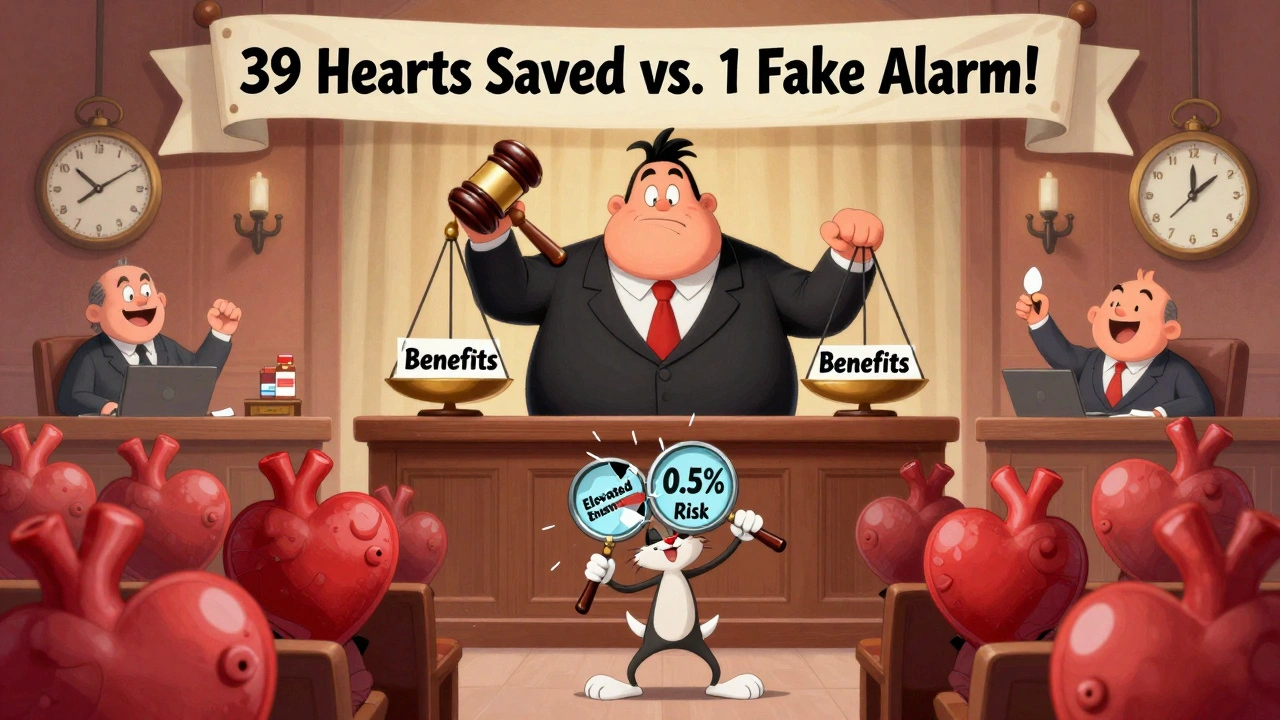



Hamza Laassili
December 12, 2025 AT 23:02Whoa, hold up-statins don’t kill your liver?? 😱 I’ve been avoiding them since 2018 because my cousin’s uncle’s dentist said they cause "liver rot"!! I’m 42, LDL’s 190, and I’ve been eating kale smoothies like it’s my job… and still got plaque!!
Constantine Vigderman
December 14, 2025 AT 18:56YESSSS!! This is the truth I’ve been screaming into the void!! 🙌 Statins saved my life after my first heart scare-and my ALT was 85 for 3 months!! Doc said "keep going" and now it’s 32!! You’re not broken if your enzymes spike-you’re just human!! 💪
Michael Gardner
December 16, 2025 AT 12:59Interesting. But if statins are so safe, why did the FDA remove routine testing? Because they didn’t want to admit they were wrong? Or because the pharmaceutical lobby pushed it? The data is cherry-picked. Always is.
Lauren Scrima
December 17, 2025 AT 11:44So… you’re telling me my 6-month liver panel is just a money-making scam for labs? 😏 And I’ve been stressing over every 5-point rise like it’s a death sentence? Thanks, I guess. I’ll stop crying into my turmeric tea now.
nina nakamura
December 19, 2025 AT 04:16Statins are overprescribed. Your article ignores the fact that 70% of people on statins have no clinical benefit. You cite studies but ignore confounding variables. Your tone is condescending. This is medical paternalism disguised as education.
Jamie Clark
December 19, 2025 AT 08:02You call this a balanced take? This is a pharmaceutical pamphlet dressed in lab coat. Statins suppress your body’s natural cholesterol production-your liver doesn’t "leak" enzymes, it’s being chemically assaulted. You’re not protecting hearts-you’re protecting Big Pharma’s bottom line.
Scott Butler
December 20, 2025 AT 08:36Only in America do people get panic attacks over liver enzymes. In my country, we just take the pill and trust the doctor. No testing. No fear. No nonsense. You people turn medicine into a horror movie.
Emma Sbarge
December 20, 2025 AT 15:56My dad took simvastatin for 8 years. His enzymes went up to 4x ULN. He kept taking it. Got cirrhosis at 68. Now he’s on the transplant list. So don’t tell me "it’s usually harmless." It’s not. Not for everyone.
Richard Ayres
December 22, 2025 AT 14:42Thank you for this clear, evidence-based breakdown. I’ve been a primary care provider for 18 years and still see patients discontinuing statins over minor enzyme elevations. This is exactly the kind of clarity we need in public discourse.
Sheldon Bird
December 24, 2025 AT 09:27Hey, if you’re worried about your liver enzymes, just switch to pravastatin or rosuvastatin. I did. My ALT dropped to normal in 6 weeks. No drama. No panic. Just science. 💯 You got this!
Karen Mccullouch
December 25, 2025 AT 22:14They’re hiding the truth. Statins are linked to dementia, diabetes, and muscle decay. The FDA won’t admit it because they’re paid off. I know someone who lost 30 lbs of muscle and got Type 2 diabetes after 18 months. This isn’t medicine-it’s slow poisoning.
Jennifer Taylor
December 25, 2025 AT 22:59Wait-so if I have fatty liver, statins might actually HELP me? But what if I’m one of the 0.00016% who gets liver failure? What if it’s ME? What if my kids have to bury me because I trusted a blood test? I can’t sleep anymore.
John Fred
December 27, 2025 AT 03:30CoQ10 supplementation + low-dose rosuvastatin = game changer. My patient went from ALT 120 → 42 in 12 weeks. Also, his knee pain vanished. CoQ10 is the unsung hero of statin therapy. Doc, you need to talk about this more. 🧬💪
Richard Ayres
December 27, 2025 AT 14:58Actually, the STATIN-LIVER consortium’s 2025 data on cirrhosis patients is the most compelling update I’ve seen in years. We’ve been too cautious. For compensated cirrhosis, statins may even be protective. This changes the game.