
Antihistamine Selector for Hives
This tool helps you select the most appropriate second-generation antihistamine for hives based on your priorities. The best choice depends on what matters most to you: minimizing drowsiness, getting fast relief, or other considerations.
Remember: Second-generation antihistamines are safer for long-term use than older options. Always follow your doctor's advice about dosing.
Recommended Antihistamine
When hives show up out of nowhere-red, itchy, burning welts on your skin-it’s hard to think about anything else. You might reach for Benadryl because it’s in the medicine cabinet, but if you’ve been taking it for more than a few days, you’re probably waking up groggy, struggling to focus at work, or feeling like you’re drugged. That’s not how it’s supposed to be. The truth is, antihistamines for hives have come a long way, and most people don’t need the old-school options that knock you out.
Why antihistamines work for hives
Hives aren’t just a rash. They’re your body’s allergic reaction turned up too high. When something triggers your immune system-maybe food, stress, heat, or even nothing obvious-your mast cells release histamine. That chemical makes blood vessels leak fluid into your skin, causing those swollen, itchy bumps. Antihistamines block the H1 receptors that histamine binds to, stopping the itch and swelling before it spreads.There are two main types: first-generation and second-generation. The first-gen ones-like diphenhydramine (Benadryl) and hydroxyzine-were developed in the 1940s. They cross into your brain easily, which is why they make you sleepy. But they also work fast. The second-gen ones-cetirizine (Zyrtec), loratadine (Claritin), and fexofenadine (Allegra)-were designed to stay out of your brain. That’s why they’re called non-sedating. They don’t just reduce symptoms; they prevent them from coming back if taken daily.
Drowsiness: The hidden cost of old-school antihistamines
If you’ve ever taken Benadryl for hives and felt like you were in a fog for hours, you’re not alone. About half of people who take first-generation antihistamines report drowsiness, according to the Mayo Clinic. That’s not just inconvenient-it’s dangerous. Driving, operating machinery, or even focusing on a meeting becomes risky. Studies show these drugs impair reaction times as much as having a blood alcohol level of 0.05%.Second-generation antihistamines are far better. Cetirizine causes drowsiness in only 10-15% of users. Fexofenadine? Around 8%. Loratadine is even lower. Why the difference? Their molecular structure is bulkier, so they can’t slip through the blood-brain barrier like the older drugs can. That’s not marketing-it’s chemistry.
But here’s the catch: even second-gen antihistamines aren’t perfect. A 2023 Healthline survey of over 2,000 people with chronic hives found that 44% still felt drowsy, even on Zyrtec or Claritin. Why? Because some people are just more sensitive. Others take them on an empty stomach, which speeds up absorption. Or they’re combining them with alcohol, sleep aids, or even certain antibiotics. That’s when side effects pile up.
Which second-generation antihistamine is best?
Not all second-gen antihistamines are the same. Here’s how they stack up based on real-world data:| Medication | Standard Dose | Half-Life | Drowsiness Rate | Speed of Relief | Best For |
|---|---|---|---|---|---|
| Cetirizine (Zyrtec) | 10 mg daily | 8-10 hours | 10-15% | 1 hour | Severe itching, fast relief |
| Loratadine (Claritin) | 10 mg daily | 12 hours | 5-8% | 1.3 hours | Mild hives, low sedation |
| Fexofenadine (Allegra) | 180 mg daily | 14 hours | 8% | 2.6 hours | Daytime use, cognitive clarity |
For most people, cetirizine works best for stopping the itch quickly. In a 2021 trial with 342 chronic hives patients, cetirizine reduced itching by 78%, compared to 65% for loratadine. But if you’re a driver, a student, or someone who needs to stay sharp, fexofenadine is the quiet winner. Driving simulation tests showed only 8% of people on fexofenadine had impaired performance, versus 15% on cetirizine.
And yes, generics work just as well. A 10mg tablet of generic cetirizine costs about $1.50 a dose. Brand-name Zyrtec? Around $4. Same active ingredient. Same results.

What if antihistamines don’t work?
Here’s the hard truth: standard-dose antihistamines control hives in only about 43% of people with chronic cases. That means more than half of people are still breaking out, even after taking them daily.Before you give up, try increasing the dose. The 2023 International Consensus Guidelines say it’s safe to go up to four times the standard dose. That means 40mg of cetirizine a day-four pills. Studies show this works for 30% of people who didn’t respond to the regular dose. No extra side effects, no new risks. Just more of the same drug.
If that still doesn’t help, you’re not failing. Your body just needs a different tool. Here are your next steps:
- Combination therapy: Taking cetirizine in the morning and fexofenadine at night can help. They work slightly differently and don’t compete for the same receptors.
- Leukotriene blockers: Montelukast (Singulair), usually used for asthma, can help some people with hives, especially if stress or heat triggers them.
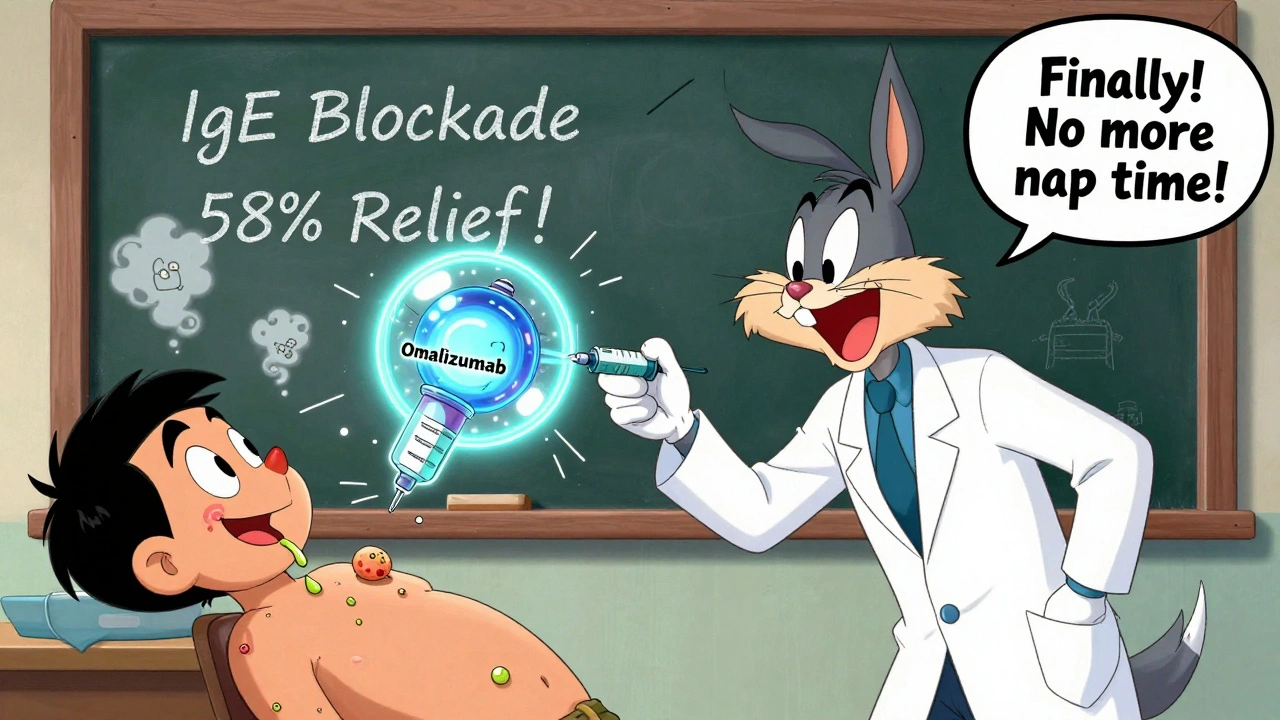
- Omalizumab (Xolair): This is an injectable biologic approved specifically for chronic hives that don’t respond to antihistamines. It works by targeting IgE, the antibody that kicks off the allergic chain reaction. In clinical trials, 58% of patients had complete symptom relief. But it costs $3,200 per shot, and you need it every four weeks. Insurance usually covers it if you’ve tried at least four times the standard antihistamine dose first.
- Ligelizumab: This new drug is coming fast. In phase 2 trials, it worked better than omalizumab-51% complete response rate versus 26%. The FDA gave it Breakthrough Therapy status in March 2023. It’s expected to be available by late 2025.
Don’t jump to cyclosporine unless your doctor says so. It suppresses your immune system and can damage your kidneys. It’s a last-resort option.
How to make antihistamines work better
Taking antihistamines isn’t just about popping a pill. Timing, consistency, and tracking matter.First, take them every day-even if you don’t have hives. A 2009 study found people who took antihistamines daily had 63% better control than those who only took them when symptoms appeared. Hives aren’t a reaction you treat after they start-they’re a storm you prevent.
Second, track your triggers. Use a simple notebook or a free app like Hive Wise. People who tracked their symptoms for just two weeks found patterns: 32% noticed NSAIDs like ibuprofen made hives worse, 28% saw stress spikes trigger outbreaks, and 24% got hives after hot showers or exercise.
Third, take them at the same time each day. Pharmacokinetic studies show cetirizine reaches peak levels in your blood exactly one hour after ingestion. If you take it at 7 a.m. one day and 11 a.m. the next, your protection dips. Set a phone reminder.
Who needs to be extra careful?
Some people need to talk to their doctor before starting or increasing antihistamine doses:- People with kidney or liver disease-your body clears these drugs slower.
- Those with heart rhythm issues-high doses of cetirizine or fexofenadine can rarely affect the QT interval.
- People with autoimmune conditions like Hashimoto’s thyroiditis-studies show they’re 3.2 times more likely to have treatment-resistant hives.
- Pregnant or breastfeeding women-loratadine and cetirizine are considered low-risk, but always check with your OB-GYN.
And never mix antihistamines with alcohol, sleeping pills, or certain antibiotics like erythromycin. That’s when drowsiness turns dangerous.
What’s next for hives treatment?
The future is personal. Researchers are starting to test genetic markers to predict who responds to which antihistamine. A 2024 study found that 22% of people have a gene variation (CYP2C19) that makes them metabolize cetirizine slower-meaning they might need less, not more. Blood tests for high-sensitivity CRP (hs-CRP) are also being used. If your hs-CRP is above 3 mg/L, you’re 78% more likely to need something stronger than antihistamines.Meanwhile, new mast cell stabilizers are in clinical trials. These drugs stop mast cells from releasing histamine in the first place-no blocking needed. If they work, they could be game-changers with fewer side effects.
For now, though, second-generation antihistamines are still the foundation. They’re safe, cheap, and effective for nearly half of all hives sufferers. The key isn’t finding the perfect drug-it’s using the right one, at the right dose, consistently, and knowing when to ask for help.
Can I take two different antihistamines at the same time for hives?
Yes, under medical supervision. Combining cetirizine and fexofenadine is a common strategy when one drug isn’t enough. They work on slightly different parts of the histamine pathway and don’t interfere with each other. But never combine two first-generation antihistamines like Benadryl and hydroxyzine-that increases drowsiness and risk without added benefit.
Is it safe to take antihistamines every day for months?
Second-generation antihistamines like cetirizine, loratadine, and fexofenadine are safe for daily, long-term use. Studies have followed patients for over five years with no major safety concerns. The main risk comes from high-dose escalation (four times the standard dose), which should be monitored by a doctor due to rare heart rhythm changes. Regular check-ups are advised if you’re on high doses for more than three months.
Why do my hives come back even when I take Zyrtec every day?
Chronic hives are often not caused by allergies you can avoid. In most cases, they’re autoimmune-your body mistakenly attacks its own skin cells. That’s why antihistamines help but don’t cure. If standard doses stop working, you’re not doing anything wrong. It’s the nature of the condition. Dose escalation or adding another treatment like omalizumab is the next step, not a sign of failure.
Can stress cause hives to get worse?
Yes. Stress doesn’t cause hives, but it makes them flare more often and harder to control. Cortisol, the stress hormone, can activate mast cells directly. People who track their symptoms often notice outbreaks after major life events, work deadlines, or sleep loss. Managing stress with sleep, exercise, or mindfulness can reduce flare frequency-even if you’re still on medication.
Are natural remedies like quercetin or vitamin C effective for hives?
There’s no strong evidence that supplements like quercetin, vitamin C, or nettle extract reliably control hives. Some people report minor relief, but these aren’t proven treatments. Relying on them instead of FDA-approved antihistamines or biologics can delay effective care. If you want to try them as a supplement, talk to your doctor first-some can interact with medications.
When should I see a specialist for hives?
See an allergist or dermatologist if: your hives last more than six weeks, standard antihistamines don’t help after four weeks, you need more than four times the standard dose, or you have other symptoms like swelling of the lips/tongue, difficulty breathing, or dizziness. These could signal a more serious condition like angioedema or systemic mastocytosis.
Antihistamines for hives aren’t one-size-fits-all. The right choice depends on your body, your lifestyle, and how your hives behave. Don’t settle for drowsiness. Don’t give up when the first pill doesn’t work. There’s a path forward-starting with the right dose of the right drug, and knowing when to ask for more.


Courtney Black
December 9, 2025 AT 09:51It’s wild how we still treat hives like a minor annoyance when they’re basically your immune system screaming into a void. We slap on Zyrtec like it’s a bandaid on a grenade and call it a day. But what if the problem isn’t the histamine-it’s the mast cells just… losing it? We’re treating symptoms like they’re the enemy. Maybe we need to ask why the system’s broken in the first place.
Richard Eite
December 10, 2025 AT 21:21Stop overcomplicating this. Benadryl works. You just gotta deal with the sleepiness. You’re not a CEO, you’re a human. Sleep is free. If you’re too lazy to nap after a pill, that’s your problem. Also, fexofenadine? Sounds like a NASA rocket fuel name. Stick to what’s been proven.
Olivia Portier
December 11, 2025 AT 10:33OMG YES. I’ve been on 40mg of cetirizine for 8 months now and my life is COMPLETELY different. I used to cancel plans because I looked like I got into a fight with a nettle bush. Now I hike, I dance, I even went to a wedding without itching. Don’t give up. Dose up. Talk to your doc. You’re not weak-you’re just not done trying. 💪🌸
Asset Finance Komrade
December 12, 2025 AT 21:37The entire premise of this article is flawed. Antihistamines are a band-aid on a systemic failure. The real issue is the modern diet, environmental toxins, and chronic stress-none of which are addressed here. The fact that we’ve normalized daily pharmaceutical suppression as a lifestyle choice speaks volumes about our medical culture. 🤔
Jennifer Blandford
December 14, 2025 AT 01:28Okay but can we talk about how Zyrtec saved my wedding day?? I broke out the night before and thought I was gonna have to wear a hat for photos. Took 10mg at 8pm, woke up smooth as a baby’s cheek. I’m basically a hives whisperer now. If you’re suffering, just try it. I believe in you!! 🌈✨
Iris Carmen
December 15, 2025 AT 00:03i took claritin for 2 years straight and never felt a thing. my friend swears by allegra but i dont get why ppl make it so hard. just pick one and stick with it. also stop drinking wine if you’re itchy. duh.
Delaine Kiara
December 16, 2025 AT 03:01Let’s be real-most of you are just using this as an excuse to talk about your autoimmune disorders. I’ve had hives since I was 12. I’ve tried everything. The truth? No one knows why this happens. The drugs help, sure. But they’re not magic. And that biologic shot? $3,200? That’s not healthcare-that’s a luxury subscription. You think your ‘chronic hives journey’ is unique? Millions of us are just trying to get through the day without scratching our skin off. Stop turning this into a TED Talk.
Ruth Witte
December 17, 2025 AT 11:59THIS. THIS RIGHT HERE. 🙌 I was on Benadryl for 3 years and felt like a zombie. Switched to fexofenadine and now I’m running marathons. If you’re still sleepy after a second-gen, try timing it right-take it at night. And YES, track your triggers. I found out spicy food + stress = hives explosion. Life-changing. You got this!! 💪❤️
Noah Raines
December 18, 2025 AT 14:50Olivia Portier’s comment is exactly why this article matters. I was skeptical too-until I tried 40mg of cetirizine. No side effects. No drama. Just quiet relief. Don’t let the naysayers scare you. Your body isn’t broken. You just haven’t found the right dose yet. And yeah, if you’re still itchy after a month? Go higher. Talk to your doctor. Don’t suffer in silence.