
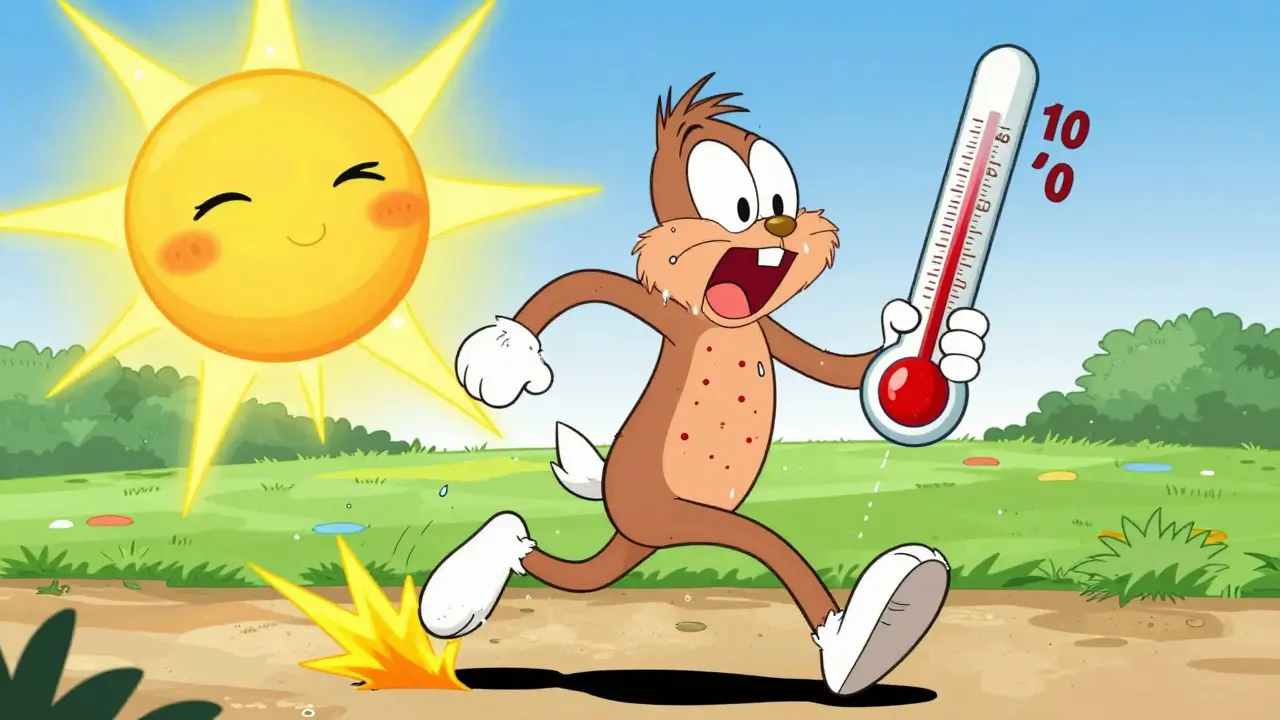
Imagine running on a cool morning, and within five minutes, your chest is covered in tiny red bumps that feel like a hundred needles poking under your skin. You stop. You cool down. Thirty minutes later, they’re gone. No allergens. No new soap. No food you didn’t eat. Just heat. If this sounds familiar, you might have cholinergic urticaria - a condition where your body overreacts to your own sweat and rising body temperature.
What Exactly Is Cholinergic Urticaria?
Cholinergic urticaria (CU) isn’t an allergy to heat. It’s your nervous system accidentally telling your skin to react when you get warm. When your core temperature rises - even just half a degree - nerve fibers around your sweat glands trigger mast cells to release histamine. That’s what causes the itchy, burning, pinpoint hives. Unlike allergic reactions to pollen or peanuts, CU has nothing to do with foreign substances. It’s your own body’s temperature that sets it off.
This condition usually starts between ages 15 and 25. About 5 to 7% of people who get hives have this form. It’s not rare, but it’s often misunderstood. Many patients are told they’re just "sensitive to heat" or "getting heat rash." But CU hives look different. They’re small - just 1 to 3 millimeters - and appear in clusters, surrounded by red, raised flares. You’ll feel them most on your chest, face, upper back, and arms. Palms and soles? Rarely affected.
How Fast Do Symptoms Show Up - And How Long Do They Last?
Timing is everything with CU. Symptoms hit fast: within 2 to 15 minutes after your body warms up. That’s why people notice them during workouts, hot showers, or even eating spicy food. The hives last 15 to 30 minutes on average. Most clear up completely within 90 minutes once you cool down. This predictability is actually helpful - it means you can test and track your triggers.
What raises your body temperature enough to trigger a flare? Common culprits include:
- Exercise (the #1 trigger for nearly 90% of patients)
- Hot showers or baths
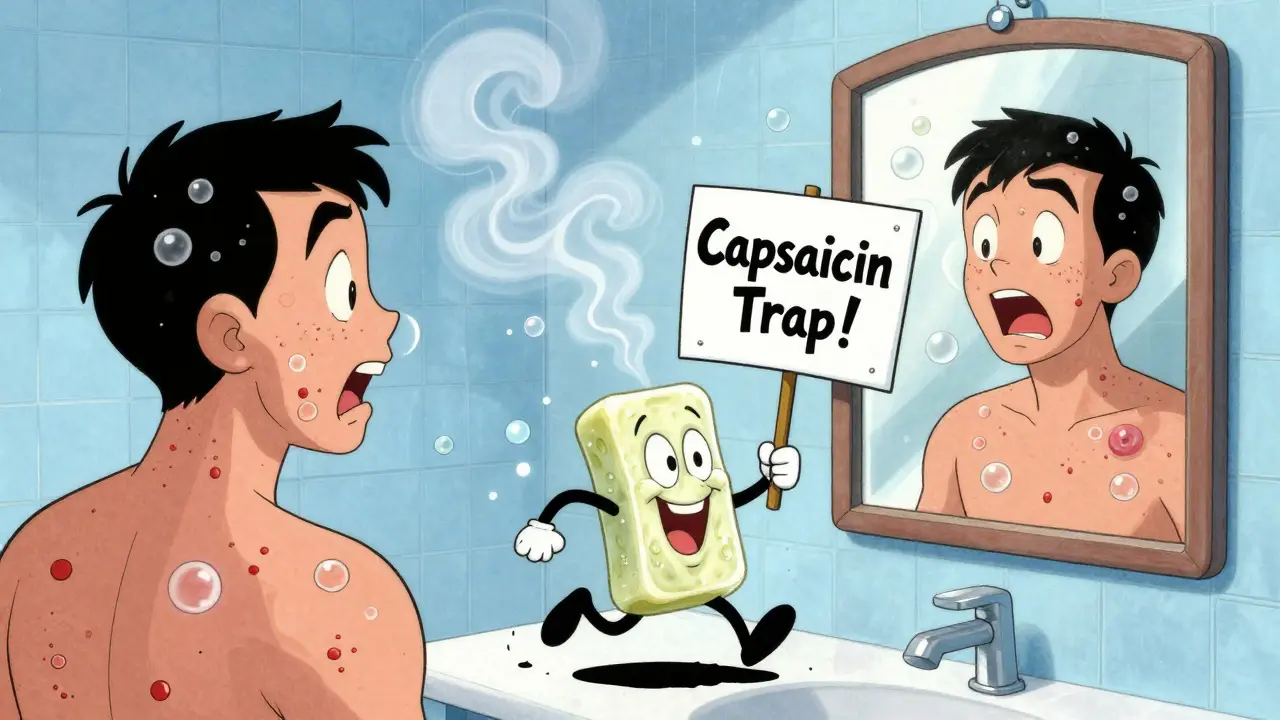
- Spicy foods (capsaicin tricks your body into thinking it’s overheating)
- Strong emotions (stress, anxiety, or even laughter can spike your temperature)
- Wearing tight or non-breathable clothing
- Hot weather or humid environments
One patient on Reddit described it perfectly: "It’s not the heat itself - it’s the sweat. Even in an air-conditioned room, if I start moving, I break out. I’ve learned to recognize the first tingle - that’s my signal to stop."
Why Is It So Hard to Diagnose?
Doctors often mistake CU for exercise-induced anaphylaxis - a far more dangerous condition. In fact, 22% of people who go to the ER with CU symptoms are misdiagnosed. The difference? Anaphylaxis causes breathing trouble, low blood pressure, and swelling in the throat. CU rarely goes that far. But in about 12% of cases, it can.
That’s why proper diagnosis matters. The gold standard test is the passive warming test. You sit in a warm room while your core temperature is slowly raised by 0.5°C. If you develop the classic small hives within minutes, it’s CU. No needles. No blood tests. Just heat and observation.
Some patients get misdiagnosed for years. One woman spent six months being treated for eczema before a dermatologist recognized the pattern: hives only after exercise, always on her chest, always gone by bedtime. That’s CU.
What Treatments Actually Work?
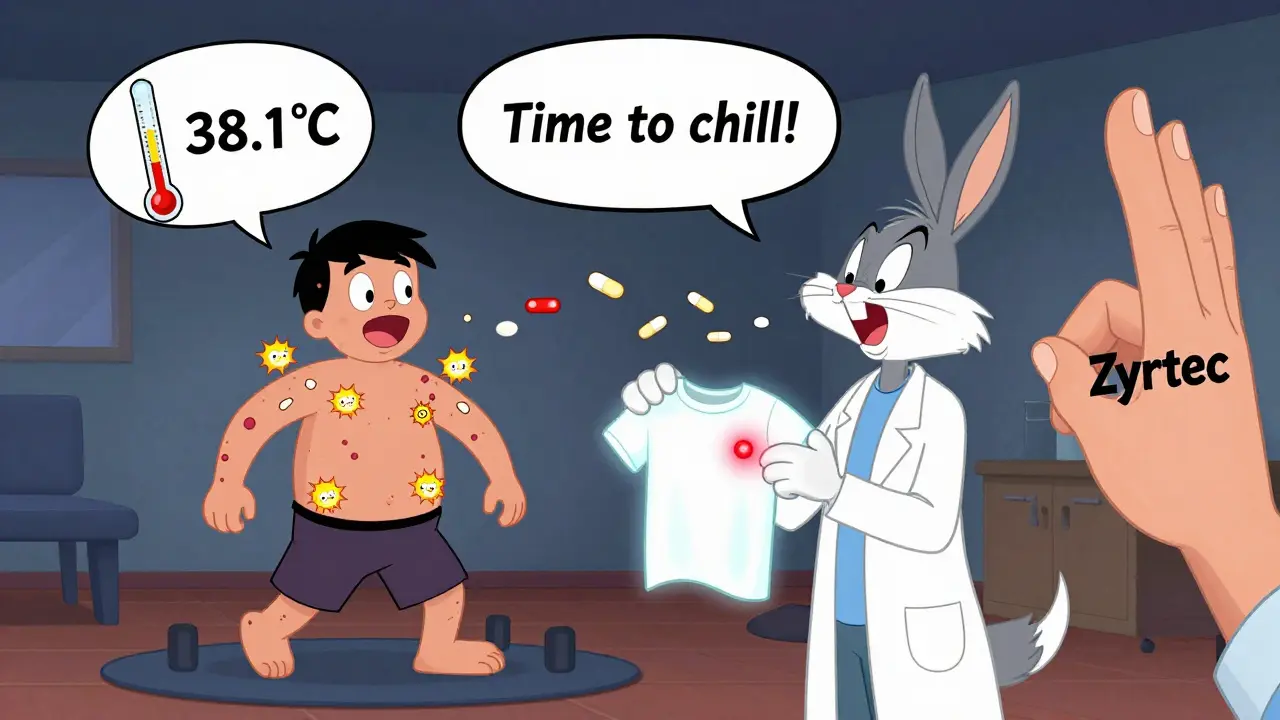
There’s no cure - but there are effective ways to control it. First-line treatment is second-generation antihistamines: cetirizine (Zyrtec) or loratadine (Claritin). These don’t cause drowsiness like older versions (like diphenhydramine). Studies show 68% of patients get good relief at standard doses (10mg daily).
But if that doesn’t work? Many patients need higher doses. Up to 40mg of cetirizine daily has helped 73% of people who didn’t respond to normal doses. That’s not off-label - it’s in the guidelines.
For stubborn cases, adding an H2 blocker like famotidine (Pepcid) 20mg twice a day helps. One Cleveland Clinic study found this combo improved symptoms in 57% of patients who had failed antihistamines alone.
In severe cases - especially if you’ve had trouble breathing or felt dizzy during flares - your doctor may prescribe an epinephrine auto-injector. About 8.7% of CU patients need this safety net.
And yes, biologics like omalizumab (Xolair) are now approved for CU in Europe and being used off-label in the U.S. It works for 78% of refractory cases. But at $3,500 a month, it’s not practical for most.
Prevention: The Real Game-Changer
Medication helps. But prevention is where most people find real freedom.
Start with temperature control. Most CU patients have a personal trigger point around 38.1°C (100.6°F) core temperature. You don’t need to be a scientist to track it. Use a smartwatch with body temperature monitoring, or just log your activities and symptoms.
Here’s what works based on patient reports:
- Work out in cool spaces. Air-conditioned gyms, early morning runs, or swimming pools cut flare frequency by up to 80% for many.
- Wear moisture-wicking clothes. Cotton traps sweat. Polyester or nylon blends pull it away and help you cool faster.
- Take breaks. If you’re exercising, pause every 10 minutes to cool down. Splash water on your neck. Use a fan.
- Avoid spicy food before activity. Chili peppers, wasabi, and hot sauces are sneaky triggers. They mimic heat stress.
- Keep your environment cool. Use fans, avoid saunas, and skip hot yoga if it’s a problem.
- Pre-medicate. Take your antihistamine 1 to 2 hours before planned activity. It doesn’t prevent flares entirely - but it reduces their severity.
One man on MyHealthTeams said: "I used to get hives after every workout. Now I take cetirizine, wear a cooling vest, and do 20-minute intervals with 5-minute breaks. I go from daily flares to once a month. That’s life-changing."
What Doesn’t Work (And Why)
Some advice you hear online is misleading:
- "Just avoid all exercise." That’s not realistic - and it’s not healthy. CU doesn’t mean you can’t move. It means you need to move smarter.
- "Antihistamines make you tired, so skip them." First-gen antihistamines (like Benadryl) do. Second-gen? Not usually. Stick to cetirizine, loratadine, or fexofenadine.
- "It’s just a rash - ignore it." CU can escalate. If you’ve ever felt your throat tighten, your heart race, or your vision blur during a flare, you need a plan. Don’t wait for an emergency.
How CU Compares to Other Types of Hives
Not all hives are the same. Here’s how CU stacks up:
| Type | Trigger | Onset Time | Location | Duration |
|---|---|---|---|---|
| Cholinergic Urticaria | Body heat, sweat | 2-15 minutes | Chest, face, upper back, arms | 15-90 minutes |
| Cold Urticaria | Exposure to cold air or water (below 4°C) | 2-5 minutes | Exposed skin (hands, face) | 1-2 hours |
| Dermatographism | Scratching or pressure on skin | Immediate | Where skin was rubbed | 30-60 minutes |
| Pressure Urticaria | Tight clothing, sitting for long periods | 6-8 hours later | Pressure points (hips, waist) | 24-72 hours |
| Solar Urticaria | UV light exposure | 1-3 minutes | Only sun-exposed areas | 30-60 minutes |
CU is unique because it’s tied to your body’s internal temperature - not external stimuli like cold, pressure, or sunlight. That’s why avoidance is so hard. You can’t stop sweating. You can’t stop your body from warming up when you move.
What’s Next for CU Treatment?
Research is moving fast. In 2023, the European Medicines Agency approved omalizumab for CU - a big step. Clinical trials are now testing new drugs that target specific immune pathways involved in CU, like IL-4 and mast cell stabilizers. By 2026, scientists hope to identify biomarkers that can diagnose CU with a simple blood test.
Wearable tech is also emerging. Companies like ThermaCare and Mayo Clinic are testing smart shirts that monitor core temperature and alert you before you hit your trigger point. Early tests show a 63% drop in flares. By 2028, this could become standard for high-risk patients.
But here’s the sobering part: climate change may make CU more common. Rising global temperatures could increase prevalence by 15-25% in temperate regions by 2040. That means more people will face this condition - and more need to know how to manage it.
Living With Cholinergic Urticaria
It’s not just about the hives. It’s about the life you lose. One patient said, "I’ve missed 14 weddings in three years because I can’t risk overheating in a suit." Another couldn’t take her kids to the zoo on warm days. A college student dropped out of track because she couldn’t run without breaking out.
But many people reclaim their lives. With the right mix of medication, smart habits, and awareness, flare-ups can drop from daily to monthly - or even less. You don’t have to give up exercise, social events, or hot showers. You just need to know your limits.
Start by tracking your triggers. Use a free app like the Urticaria Center’s tracker. Note the time, activity, temperature, and how bad the flare was. After a few weeks, patterns emerge. You’ll learn: "I’m fine at 70°F but break out at 75°F." Or, "Spicy noodles after 6 p.m. = guaranteed hives."
And if your doctor doesn’t take it seriously? Find one who does. Dermatologists and allergists who specialize in physical urticaria are out there. You’re not imagining it. This is real. And you can manage it.
Can cholinergic urticaria go away on its own?
Yes. About 30% of people see their symptoms fade completely within 7 to 10 years. It’s more common in younger patients and often improves with age. But for many, it’s a long-term condition that requires management, not just waiting it out.
Is cholinergic urticaria dangerous?
For most people, it’s uncomfortable but not life-threatening. But in about 12% of cases, it can cause systemic symptoms like low blood pressure, fast heart rate, or wheezing. In 8.7% of patients, it can progress to anaphylaxis. If you’ve ever felt dizzy, short of breath, or had a racing heart during a flare, talk to your doctor about carrying an epinephrine auto-injector.
Can I still exercise with cholinergic urticaria?
Absolutely - but you need to adjust. Work out in cool environments, wear breathable clothing, take frequent breaks, and pre-medicate with antihistamines. Many patients successfully maintain fitness routines by learning their limits. Avoid pushing through a flare - it can make symptoms worse.
Why do spicy foods trigger cholinergic urticaria?
Spicy foods contain capsaicin, which activates the same nerve pathways your body uses to sense heat. Even if your core temperature hasn’t risen, your brain thinks you’re overheating. That tricks your nervous system into triggering the histamine response - same as if you’d just run a mile.
Are there any natural remedies for cholinergic urticaria?
No natural remedy has been proven to stop CU. Some people report mild relief from cool compresses, oatmeal baths, or avoiding alcohol - but these don’t treat the root cause. Antihistamines and trigger avoidance are the only evidence-backed approaches. Be wary of supplements claiming to "cure" hives - they’re not regulated and may interact with your meds.
Can stress cause cholinergic urticaria flares?
Yes. Stress and anxiety raise your body temperature through hormonal and nervous system changes. Even without physical activity, emotional stress can trigger hives in people with CU. Managing stress through breathing techniques, meditation, or therapy can reduce flare frequency - especially when combined with other strategies.



Sarah Williams
December 21, 2025 AT 06:45Been living with this for 8 years. Took me 5 doctors and a panic attack in a hot yoga class to finally get diagnosed. Now I take 20mg cetirizine before every workout and I’m back to running marathons. It’s not perfect, but it’s manageable.
Siobhan K.
December 22, 2025 AT 01:15People who say "just don’t exercise" clearly never had to give up their passion because their skin turned into a map of angry pinpricks. I used to cry after every jog. Now I have a cooling vest, a fan, and zero shame. This condition doesn’t define me-it just requires a damn spreadsheet.
Brian Furnell
December 23, 2025 AT 06:29From a clinical perspective, the cholinergic pathway activation via sympathetic nervous system stimulation-specifically through acetylcholine release at the dermal-epidermal junction-is the key mechanistic driver. The mast cell degranulation cascade, mediated by H1 and H2 receptor upregulation, explains both the rapid onset and the efficacy of dual-antihistamine regimens. The passive warming test remains the gold standard diagnostic modality, with >92% sensitivity in controlled cohorts. Further, the emerging role of IL-4 inhibition via biologics represents a paradigm shift in refractory cases.
Christina Weber
December 23, 2025 AT 17:39There is no such thing as "natural remedies" for cholinergic urticaria. Anyone claiming otherwise is either misinformed or selling something. Antihistamines are FDA-approved, peer-reviewed, and evidence-based. Everything else is folklore wrapped in a TikTok trend. Stop Googling "turmeric cures hives" and go see a dermatologist.
Erika Putri Aldana
December 25, 2025 AT 12:20So basically... your body is just mad at you for existing? 😒 I mean, why even sweat if it's gonna turn you into a walking pimple farm? I'm just here for the drama.
Cara C
December 27, 2025 AT 03:25I know how isolating this can feel. I used to avoid parties because I didn’t want to explain why I was sitting by the AC vent with a frozen water bottle. But once I found my people-online, in support groups-I realized I wasn’t broken. Just wired differently. You’re not alone.
Jerry Peterson
December 27, 2025 AT 22:15My cousin had this. She started wearing those cooling shirts for runners and now she hikes in Arizona in July. No meds, just smart gear. It’s wild how much difference it makes. Also-spicy food is a sneaky one. Never thought about that until she called me out for making her eat tacos before a hike.
Orlando Marquez Jr
December 28, 2025 AT 02:41It is noteworthy that the prevalence of cholinergic urticaria may be subject to environmental modulation owing to anthropogenic climatic shifts. Epidemiological projections suggest a potential increase in incidence rates within temperate zones by approximately 20% by the year 2040, which warrants heightened clinical awareness and public health preparedness.
Jackie Be
December 29, 2025 AT 05:11OMG I thought I was the only one who got hives from laughing too hard at my cat. Now I know its not just me. I take zyrtec before I go to the gym and I dont cry anymore. THANK YOU FOR THIS POST. I FEEL SEEN.