
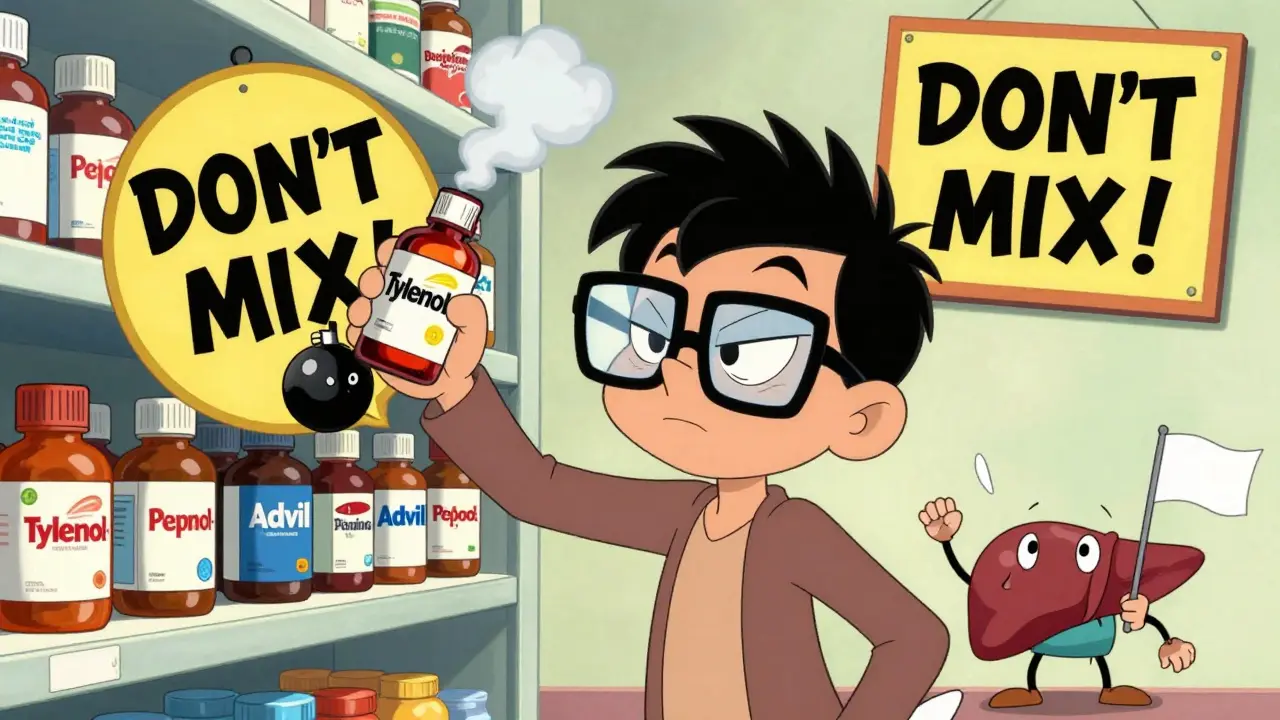
Every year, millions of people reach for an OTC medication without thinking twice. A headache, a stuffy nose, heartburn after dinner - it’s easy to grab what’s on the shelf and assume it’s harmless. But here’s the truth: OTC medications aren’t harmless. They’re powerful chemicals, and using them wrong can land you in the emergency room.
What Exactly Counts as an OTC Medication?
Over-the-counter doesn’t mean no rules. These are drugs approved by the FDA for use without a prescription because they’ve been proven safe and effective for common, self-limiting conditions. But the list is wider than you think.It’s not just painkillers and cold syrup. OTC includes:
- Acetaminophen (Tylenol) and ibuprofen (Advil, Motrin)
- Bismuth subsalicylate (Pepto-Bismol) for upset stomach
- Guaifenesin (Mucinex) for chest congestion
- Fluoride toothpaste and antifungal dandruff shampoos
- Topical antibiotic creams like Neosporin
- Wart removers with salicylic acid
- Lubricating eye drops and antihistamine nasal sprays
The FDA regulates about 800 active ingredients across more than 100,000 OTC products. That’s not just pills - it’s creams, sprays, drops, and even some toothpaste. And every single one must follow the same label format: the Drug Facts label. If it doesn’t have one, it’s not a regulated OTC medicine.
The Drug Facts Label: Your Best Friend (If You Read It)
The Drug Facts label was created in 1999 to cut through the confusion. It’s standardized. It’s clear. But only 22% of people read the whole thing. That’s a problem.
Here’s what you need to check every single time:
- Active ingredients - the actual medicine. This is the most important part. Don’t just look at the brand name. If you’re taking two products, make sure they don’t contain the same active ingredient. Taking two cold medicines that both have acetaminophen? That’s how liver damage happens.
- Purpose - what the drug is supposed to do. Is it a pain reliever? An antihistamine? A decongestant?
- Uses - what symptoms it treats. If your symptom isn’t listed, don’t use it.
- Warnings - who shouldn’t use it. Asthma? High blood pressure? Stomach ulcers? Liver disease? This section tells you if it’s dangerous for you.
- Directions - how much and how often. Never exceed the maximum daily dose. For acetaminophen, that’s 3,000 mg per day. For ibuprofen, it’s 1,200 mg. For naproxen, 660 mg. Go over, and you risk serious harm.
- Inactive ingredients - fillers, dyes, flavors. If you’re allergic to aspirin, avoid products with salicylates. If you’re sensitive to dyes, check for Red 40 or Yellow 5.
One mistake I see over and over: people think “nighttime” cold medicine is just for sleeping. It’s not. It usually contains diphenhydramine - an antihistamine that causes drowsiness. Taking it during the day? You’ll feel foggy. Taking it with another antihistamine? You could overdose.
Pain Relievers: Acetaminophen vs. NSAIDs
For most people, acetaminophen is the safest first choice for general pain or fever. It’s gentle on the stomach and doesn’t interfere with blood pressure meds. But here’s the catch: your liver processes it. Take too much - even just a few extra pills over days - and you can cause permanent damage.
Acetaminophen overdose causes 56,000 ER visits and 458 deaths every year in the U.S. That’s not a myth. That’s CDC data.
NSAIDs - ibuprofen, naproxen, aspirin - are better for inflammation. If you’ve strained a muscle, have arthritis pain, or a headache from sinus pressure, they work better than acetaminophen. But they’re harder on your body.
NSAIDs:
- Can cause stomach bleeding - especially if you’re over 65 or take blood thinners
- May raise blood pressure - risky if you already have hypertension
- Can trigger asthma attacks in 8.3% of asthma patients
- Carry a black-box warning from the FDA for increased risk of heart attack and stroke with long-term use
There’s no “better” option. It’s about matching the drug to your body and your condition. If you’re unsure, ask a pharmacist. They’re trained to spot these risks.
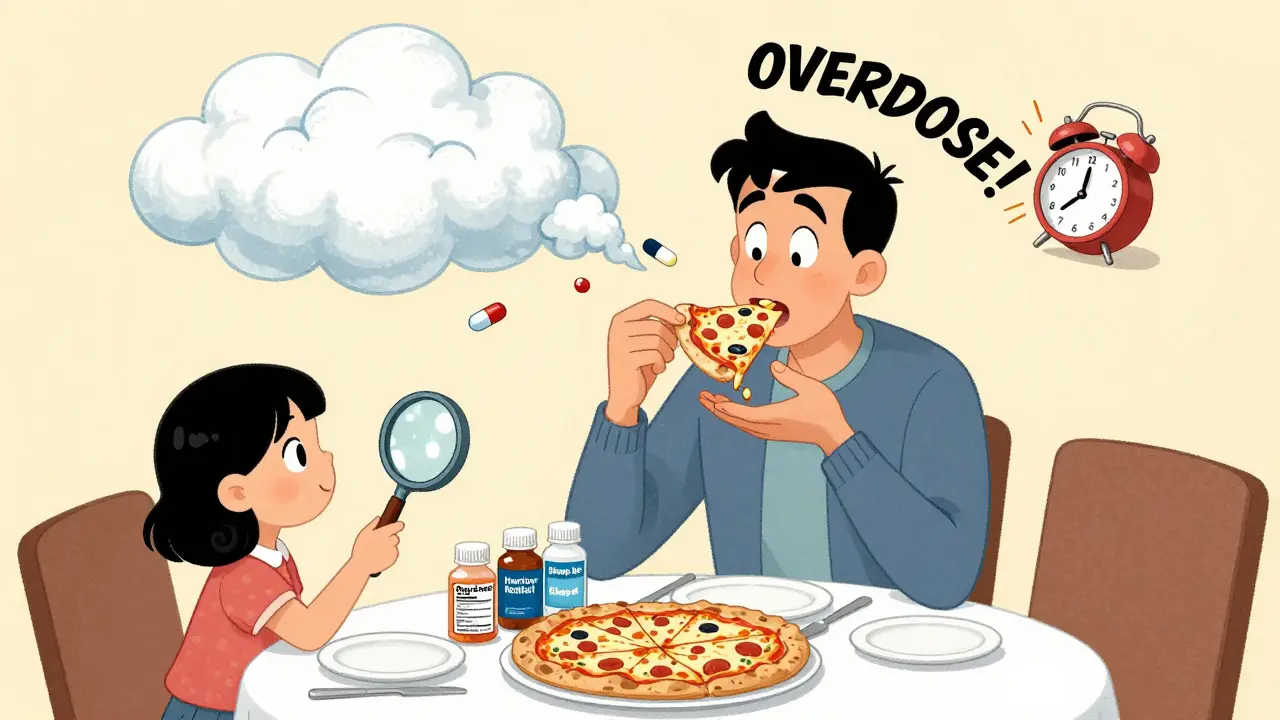
When OTC Isn’t Safe - The Hidden Dangers
People think OTC means “safe for everyone.” That’s dangerous thinking.
Take pseudoephedrine (Sudafed). It’s great for nasal congestion. But because it’s used to make methamphetamine, 37 states require you to show ID to buy it. And even then, there are daily and monthly purchase limits.
Or consider children’s liquid acetaminophen. It’s more concentrated than adult versions. A parent using the adult dropper on a child’s formula? That’s a common mistake. In 2022, children’s liquid acetaminophen overdoses rose 7.1%.
And then there’s polypharmacy - taking five or more prescription drugs. That’s true for 24% of adults over 65. Adding an OTC painkiller or antacid? You could be creating a dangerous interaction. Warfarin and ibuprofen? Bad combo. SSRIs and dextromethorphan? Risk of serotonin syndrome.
The FDA has issued 12 safety alerts on OTC products since 2020. One was for NSAID skin reactions. Another was for hidden caffeine in some energy tablets. These aren’t rare. They’re preventable.
What You Should Never Do
Here’s a short list of what not to do:
- Don’t mix OTC meds with alcohol. Acetaminophen + alcohol = liver damage. NSAIDs + alcohol = stomach bleeding.
- Don’t use expired meds. Most have a 2-3 year shelf life. After that, they lose potency. Some, like liquid antibiotics, can break down into toxic compounds.
- Don’t assume “natural” means safe. Herbal supplements like St. John’s Wort or echinacea aren’t regulated like OTC drugs. They can interfere with prescription meds and cause side effects.
- Don’t take it longer than directed. If your headache lasts more than 3 days, your cough won’t go away after 2 weeks, or your heartburn returns after 2 weeks of antacids - see a doctor. You’re masking a bigger problem.
- Don’t use someone else’s medicine. Even if they had the same symptom. Their dose, weight, or health conditions may be totally different.
How to Use OTC Medications Wisely
Safe self-care isn’t about avoiding OTC meds. It’s about using them with intention.
Follow this three-step rule before you take anything:
- Confirm the symptom matches the label. If the product says “for colds,” but you have joint pain? Don’t use it.
- Check for duplicate ingredients. Open your medicine cabinet. Is there another pill, syrup, or capsule with the same active ingredient? If yes, skip it.
- Verify the dose for your age and weight. Kids, seniors, and people with liver or kidney issues need lower doses. Read the label - don’t guess.
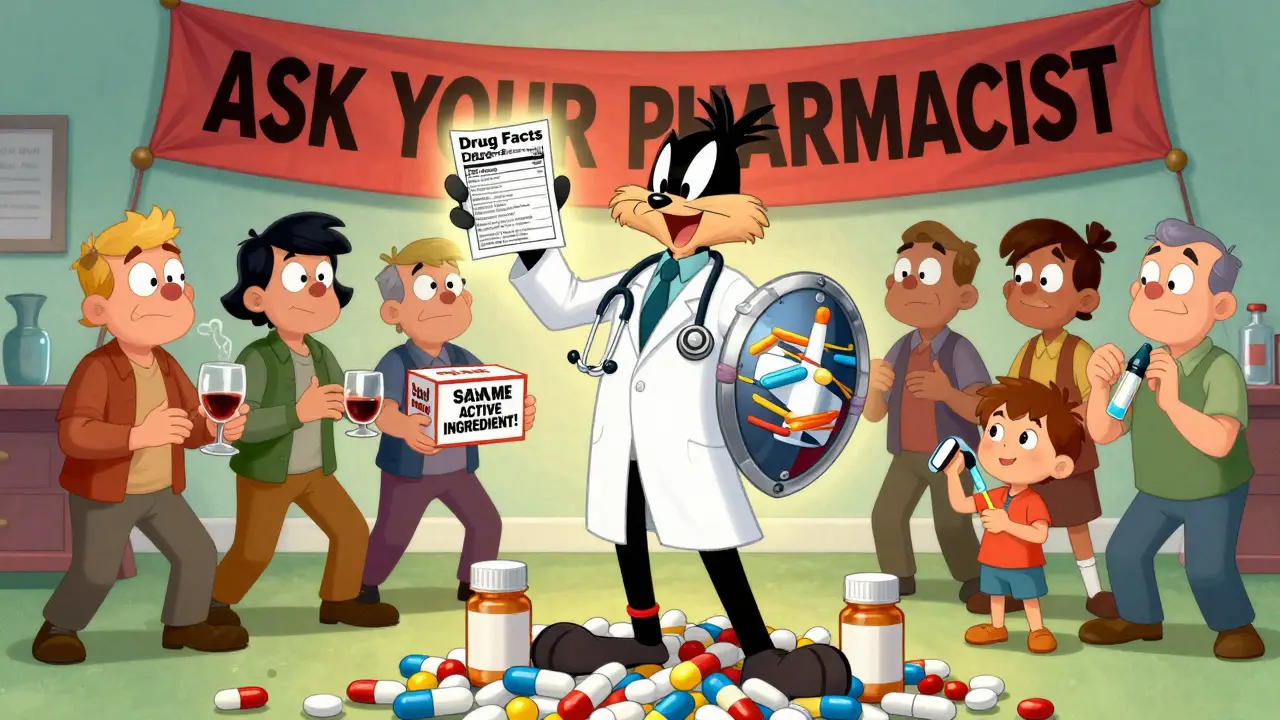
And always ask your pharmacist. They’re not just the person who hands you the box. They’re trained to catch interactions, explain confusing labels, and tell you when you should see a doctor instead.
Eighty-nine percent of chain pharmacies now offer free medication reviews. Use them. Bring in everything you take - prescriptions, vitamins, OTCs, supplements. One visit can prevent a hospital stay.
What’s Changing in the OTC World
The rules are updating. The FDA’s CARES Act of 2020 started a major overhaul of the OTC monograph system. By 2026, they plan to review 250 pending safety questions. Some products may be pulled from shelves if they can’t prove they’re safe and effective.
Also, starting in 2025, manufacturers will have to submit new safety data for every OTC product. That means fewer “me-too” products with no real benefit. It also means more clarity on what actually works.
Digital tools are growing fast. Sixty-three percent of consumers now use apps to compare OTC products. AI-powered chatbots are starting to help people choose the right one - but don’t rely on them alone. Always double-check with a human.
And yes, store brands are just as good as name brands. The active ingredient is identical. You’re paying for packaging and ads. Save your money.
When to Stop Self-Care and See a Doctor
OTC meds are for short-term relief. Not long-term fixes.
See a doctor if:
- Pain lasts more than 7 days
- Fever is over 102°F for more than 2 days
- You have chest pain, shortness of breath, or dizziness
- You notice black stools, vomiting blood, or severe abdominal pain (signs of internal bleeding)
- You’re taking 3 or more OTC meds regularly
- You’re over 65 and have multiple prescriptions
Self-care is smart. But pretending you can treat everything yourself? That’s where things go wrong.
Can I take OTC painkillers every day?
No. Daily use of OTC painkillers increases your risk of serious side effects. Acetaminophen can cause liver damage over time, even at recommended doses. NSAIDs like ibuprofen can lead to stomach ulcers, kidney damage, and increased risk of heart attack or stroke. If you need pain relief daily, talk to a doctor. There’s likely an underlying issue that needs proper diagnosis and treatment.
Are store-brand OTC meds as good as name brands?
Yes. Store brands contain the same active ingredients, in the same strength, as name brands. The only differences are in inactive ingredients (like dyes or fillers) and price. You’re paying more for branding, not better medicine. Check the Drug Facts label - if the active ingredient and dose match, it’s the same drug.
Is it safe to give my child adult OTC medicine if I cut the dose?
Never. Children’s medications are formulated with precise dosing based on weight and age. Adult formulas are not designed to be split. Even if you think you’re giving half, measuring errors are common - and dangerous. Always use the product made for children and follow the dosing chart on the label.
What should I do if I accidentally take too much OTC medicine?
Call Poison Control immediately at 1-800-222-1222. Don’t wait for symptoms. Acetaminophen overdose can cause liver damage without immediate signs. For NSAIDs, symptoms like vomiting, dizziness, or ringing in the ears can appear hours later. Time matters. Keep the medicine bottle handy when you call - they’ll need the active ingredient and amount taken.
Why do some OTC meds require ID to buy?
Products containing pseudoephedrine (like Sudafed) are restricted because they can be used to make illegal methamphetamine. The Combat Methamphetamine Epidemic Act of 2005 requires pharmacies to log purchases, limit daily and monthly amounts, and ask for photo ID. This doesn’t apply to phenylephrine, which is now the more common alternative in cold meds.
Can OTC meds interact with my prescription drugs?
Absolutely. Common examples: ibuprofen can reduce the effectiveness of blood pressure meds and increase bleeding risk with warfarin. Antacids can interfere with antibiotics like tetracycline. Even common supplements like St. John’s Wort can make antidepressants or birth control pills less effective. Always tell your pharmacist everything you take - including vitamins and herbal products.
Final Thought: Knowledge Is Your Best Medicine
OTC medications are powerful tools. They’ve helped millions manage everyday health issues without a doctor’s visit. But they’re not candy. They’re not harmless. The real safety net isn’t the label - it’s you. Knowing what’s in the bottle. Knowing your own health. Knowing when to stop and ask for help.
Read the label. Check the active ingredient. Talk to your pharmacist. And if something doesn’t feel right - don’t push through. Your body is telling you something. Listen to it.

Danielle Stewart
December 18, 2025 AT 00:15Just wanted to say this is the most helpful OTC guide I’ve ever read. I used to grab whatever was on sale without checking labels, but now I always read the Drug Facts like you said. My grandma even started doing it after I showed her. Small changes save lives.
Also, pharmacies offering free med reviews? I’m booking one this week. Thanks for the nudge.
mary lizardo
December 19, 2025 AT 22:59The assertion that OTC medications are ‘powerful chemicals’ is not only technically accurate but also grossly understated. The regulatory framework governing these substances remains woefully inadequate, particularly in light of the FDA’s inability to enforce consistent labeling across proprietary formulations. One must question the ethical implications of permitting consumers to self-administer hepatotoxic compounds without mandatory clinical counseling.
Moreover, the casual dismissal of herbal supplements as ‘unregulated’ ignores the centuries of ethnopharmacological data underpinning many botanicals. The Western medical paradigm’s dismissal of traditional knowledge is not merely arrogant-it is dangerous.
jessica .
December 20, 2025 AT 17:36THEY WANT YOU TO THINK THIS IS SAFE SO YOU’LL KEEP BUYING IT. WHY DO YOU THINK THEY MADE THE LABEL SO CONFUSING? IT’S TO HIDE THE TRUTH. ACETAMINOPHEN IS A WAR CHEMICAL THAT WAS USED IN THE 1940S TO CONTROL SOLDIERS. THE FDA IS IN BED WITH BIG PHARMA. THEY LET THIS STUFF ON SHELVES BECAUSE THEY MAKE BILLIONS.
ALSO WHY DO YOU NEED A DRUG TO FIX A HEADACHE? JUST DRINK WATER AND PRAY. THE GOVERNMENT WANTS YOU DEPENDENT.
Ryan van Leent
December 21, 2025 AT 06:19Everyone’s acting like this is news but you’re just telling people to read the label. Duh. I’ve been doing this since I was 16. Also why are we still using acetaminophen when it’s literally just poison with a good PR team? NSAIDs are way better if you’re not a walking ulcer
And who cares about store brands? I buy the cheapest thing and it works the same. Why pay extra for a logo?
Isabel Rábago
December 22, 2025 AT 01:11I used to take two Tylenol every night for my back pain. Thought it was fine because it was ‘OTC.’ Then I got liver enzymes through the roof. No symptoms. No warning. Just a blood test that said ‘you’re lucky you’re alive.’
Now I don’t touch anything without checking the dose, the interactions, and asking the pharmacist. If you’re taking more than one OTC a week, you’re not self-medicating-you’re gambling.
And yes, I know someone who died from mixing cold medicine and antidepressants. It wasn’t dramatic. It was quiet. And it was preventable.
Anna Sedervay
December 22, 2025 AT 23:52It is deeply troubling that the average consumer lacks the requisite pharmacological literacy to navigate even the most rudimentary Drug Facts label. The proliferation of ‘me-too’ OTC products-differing only in color, flavor, and price-is a textbook example of market failure driven by predatory marketing.
Furthermore, the FDA’s glacial pace in updating monographs renders the entire regulatory apparatus an anachronism. One must wonder whether the agency is institutionally compromised, given the sheer volume of products with no demonstrable efficacy beyond placebo.
And yet, despite this systemic rot, I am gratified to see the rise of AI-assisted decision tools. Even if imperfect, they represent a necessary evolution in public health literacy.
Matt Davies
December 24, 2025 AT 03:15This post is a goddamn masterpiece. I’ve been telling my mates for years: OTC meds aren’t candy, they’re like handing someone a chainsaw and saying ‘be careful.’
And the pharmacist thing? Absolute gold. I went in last month with a shopping basket full of pills-prescriptions, fish oil, turmeric gummies, and three different cold syrups. The pharmacist looked at me like I’d brought a live raccoon into the store… then spent 20 minutes untangling it all.
Turns out I was doubling up on ibuprofen and my ‘natural’ sleep aid had hidden antihistamines. I felt like a genius. And also a total idiot. Worth it.
Ashley Bliss
December 24, 2025 AT 06:40Every time I see someone casually popping pills like they’re M&Ms, I want to scream. We’ve turned medicine into a consumer good, like toilet paper or cereal. We’ve forgotten that the human body is not a vending machine. Push a button, get relief. No. It’s a cathedral. A symphony. A fragile, ancient machine that whispers before it breaks.
And we ignore the whispers. We numb the pain instead of listening to it. We don’t ask ‘why’-we just want ‘gone.’
That’s not self-care. That’s spiritual neglect dressed in pharmacy bags.
And yes-I’ve seen people die from this. Quietly. Alone. With a half-empty bottle on their nightstand and a label they never read.