
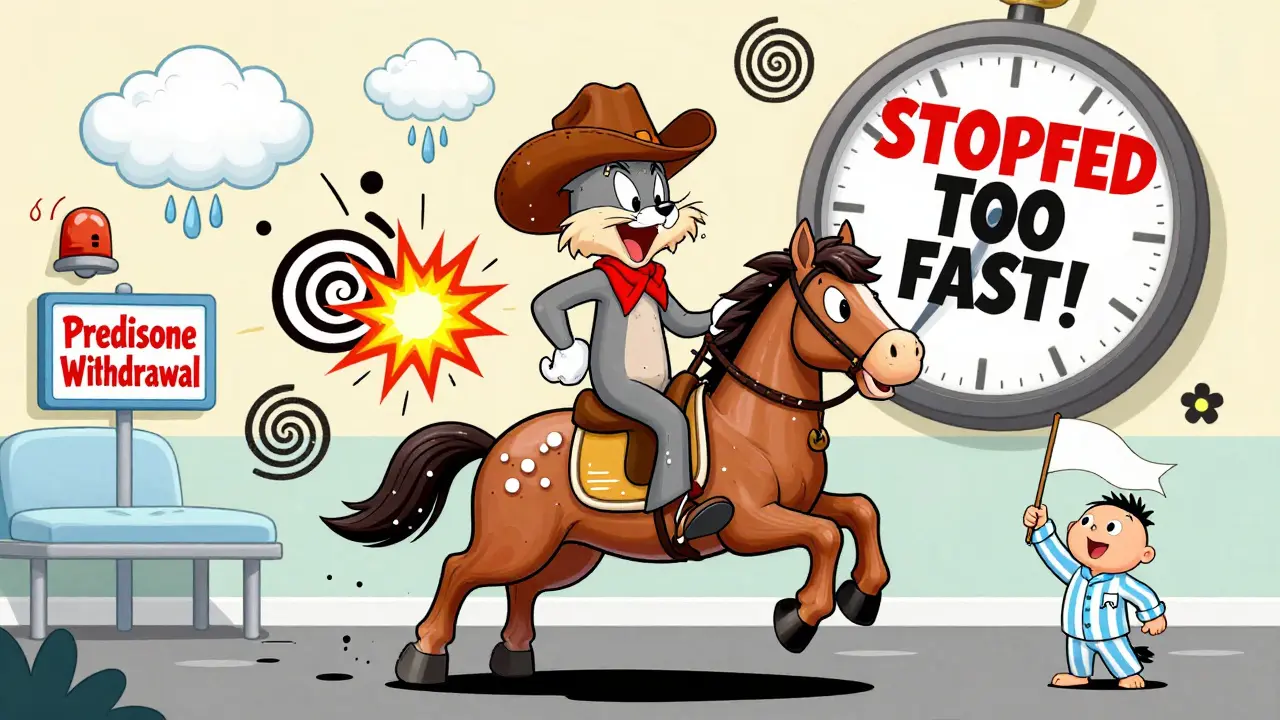
Stopping steroids like prednisone suddenly can be dangerous-even life-threatening. If you’ve been on these drugs for more than a few weeks, your body has stopped making its own cortisol. When you cut the medication too fast, your adrenal glands can’t catch up. The result? Severe fatigue, dizziness, joint pain, and worst of all, your autoimmune disease can come back harder than before. This isn’t just discomfort. It’s a medical emergency waiting to happen.
Why Steroid Tapering Isn’t Optional
Glucocorticoids like prednisone work by mimicking cortisol, the hormone your body naturally produces to control inflammation and stress. But when you take them for more than three to four weeks, your brain stops signaling your adrenal glands to make cortisol. That’s not a glitch-it’s a normal biological response. The problem? Your body doesn’t instantly restart production when you stop the pills.
Without a slow taper, you risk adrenal insufficiency. Symptoms include nausea, low blood pressure, confusion, and even collapse. In 2021, the British Journal of Clinical Pharmacology reported that improper steroid discontinuation led to hospitalization in nearly 1 in 5 patients who stopped abruptly. And it’s not just about your adrenal glands. For people with autoimmune conditions like rheumatoid arthritis, lupus, or inflammatory bowel disease, stopping steroids too fast can trigger a full-blown disease flare. Studies show these flares often require higher steroid doses than the original treatment, setting you back weeks or months.
How Fast Should You Taper?
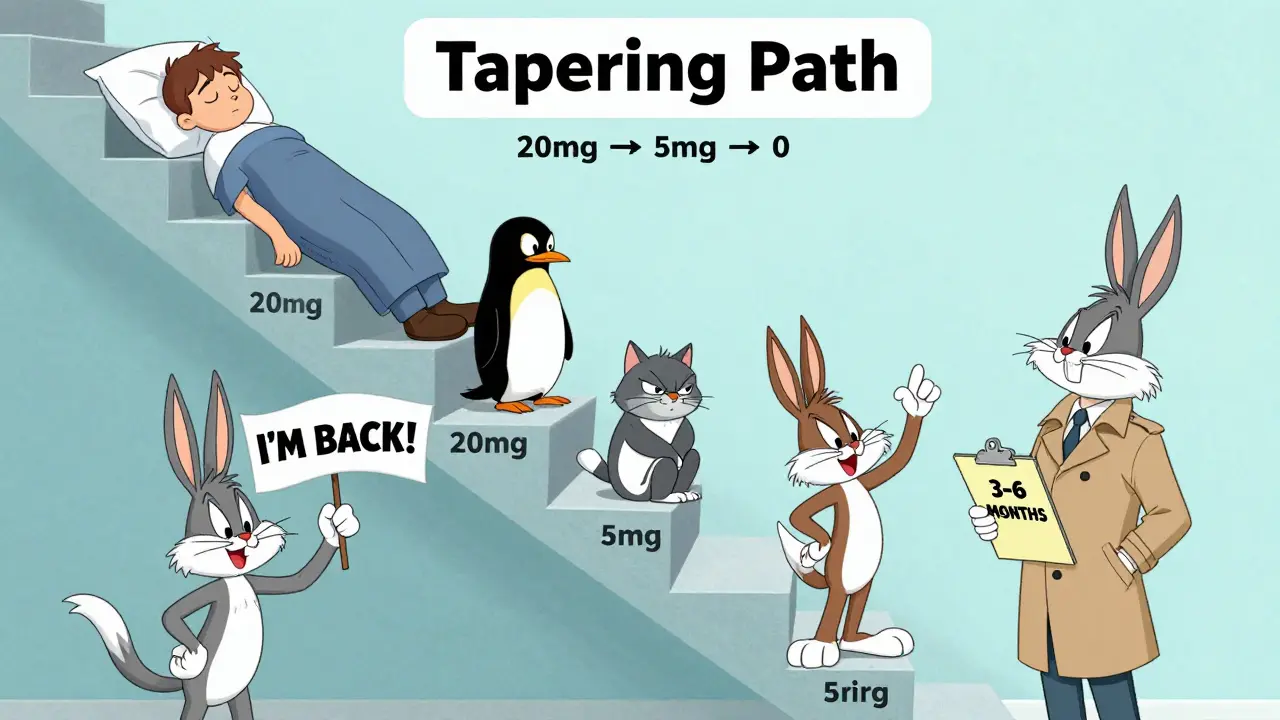
There’s no one-size-fits-all schedule. Your taper depends on how long you’ve been on steroids, your dose, and your condition. But most experts agree on a three-phase approach:
- Initial rapid taper: If you’re on more than 20-40 mg of prednisone daily, drop by 5-10 mg every week until you hit 20 mg. This phase usually lasts 2-6 weeks.
- Gradual taper: Between 20 mg and 10 mg, reduce by 5 mg every two weeks-or 2.5 mg weekly. This is where many people start feeling symptoms like muscle aches, fatigue, or trouble sleeping. Don’t panic. These are signs your body is adjusting, not necessarily a flare.
- Slow final taper: Below 10 mg, drop by 2.5 mg every two weeks until you reach 5 mg. Then, reduce by 1-2.5 mg over the next 2-4 weeks. At this point, you’re near natural cortisol levels. Some patients need to stay at 2.5 mg for weeks or even months before stopping completely.
Patients on short-term therapy (under 3 weeks) may only need a 1-2 week taper. But if you’ve been on steroids for six months or longer, expect the process to take 3-6 months. Rushing this stage is the most common reason for rebound flares.
What Withdrawal Symptoms to Watch For
Withdrawal isn’t just about feeling tired. It’s your body crying out for cortisol. Common signs include:
- Fatigue (reported by 42% of patients)
- Joint and muscle pain (37%)
- Low appetite and nausea
- Sleep problems or insomnia
- Anxiety or mood swings
- Low blood pressure causing dizziness when standing
A 2023 WebMD survey found that 68% of patients experienced at least one of these symptoms during tapering. Many call these episodes “taper tantrums”-sudden flare-ups of symptoms when reducing below 10 mg. One patient on Reddit described severe joint pain returning when dropping from 7.5 mg to 5 mg. They had to pause the taper for two weeks before continuing. That’s normal. If symptoms hit, don’t push through. Talk to your doctor about holding your dose longer.
Hydrocortisone vs. Prednisone: Does Switching Help?
Sometimes, doctors suggest switching from prednisone to hydrocortisone before the final taper. The idea? Hydrocortisone has a shorter half-life, so it may let your adrenal glands wake up faster. But here’s the catch: there’s little solid proof this works better.
The Australian Prescriber (2022) mentions this option, but the PMC article “The Glucocorticoid Taper: A Primer for Clinicians” (2023) says most patients can be weaned off prednisone directly without issue. In fact, switching adds complexity-new dosing schedules, different side effects, and more room for error. Unless you’re having persistent withdrawal symptoms at low doses, most experts recommend sticking with your current medication. Don’t switch unless your doctor specifically advises it.
What You Can Do to Make Tapering Easier
Medication is only half the battle. Lifestyle changes can cut withdrawal symptoms by up to a third.
- Movement over rest: Bed rest makes stiffness worse. Gentle walks-10 to 15 minutes twice a day-reduce joint pain by 57% compared to staying inactive.
- Warm-water exercises: Swimming or water aerobics ease joint stress while keeping you moving. Many physical therapists recommend this for patients tapering from steroids.
- Meditation and breathing: Just 10 minutes of daily meditation lowers anxiety and symptom severity by 43%, according to a 2022 review in Medical News Today.
- Hydration and salt: Low cortisol can drop your blood pressure. Drinking more water and adding a little extra salt to meals (if your doctor approves) can help prevent dizziness.
These aren’t magic fixes, but they give your body real support while it rebuilds its natural hormone production.
Never Skip the Sick Day Rules
Even after you’ve stopped steroids, your adrenal glands may still be asleep. If you get sick-flu, infection, surgery, or even a bad case of bronchitis-your body needs extra cortisol to handle the stress. But it can’t make enough.
This is where “sick day rules” save lives. If you’re feeling ill, you should temporarily increase your steroid dose back to your last effective level. For example, if you stopped at 2.5 mg and now have a fever, take 5-10 mg for 2-3 days, then resume your zero dose once you’re better. Many patients don’t know this. The Australian Prescriber found that 18% of ER visits among recently tapered patients were due to illness without dose adjustment.
Keep a written plan from your doctor. Put it on your fridge. Share it with a family member. This isn’t optional. It’s essential.
Carry a Steroid Alert Card
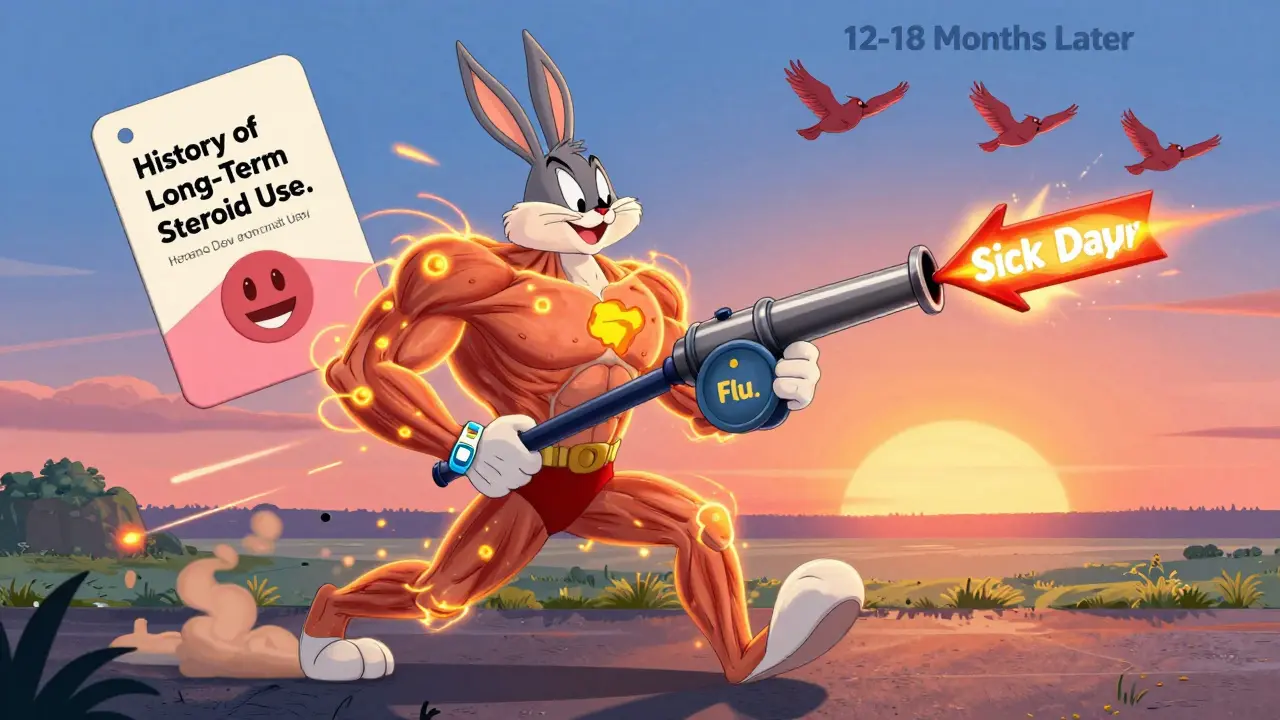
For at least 12 months after stopping steroids, carry a medical alert card or wear a bracelet that says: “History of long-term steroid use. Risk of adrenal insufficiency.”
Why? Recovery isn’t quick. In long-term users, the HPA axis can take up to 18 months to fully wake up. If you’re in an accident and rushed to the hospital, paramedics won’t know your history. Without knowing you need steroids, they might not give you the lifesaving dose you need. A simple card can prevent a crisis.
Personalized Tapering Is the Future
Old protocols used fixed schedules: “Reduce by 5 mg every two weeks.” Today, experts are moving toward disease activity-guided tapering. For example, rheumatologists now use the DAS28 score-a measure of joint swelling and inflammation-to decide when to reduce. If your score stays low, you can taper faster. If it creeps up, you hold.
Emerging tools like CRH stimulation tests (which measure adrenal responsiveness) can predict success with 89% accuracy, according to a 2023 study in the Journal of Clinical Endocrinology & Metabolism. And apps like the Prednisone Taper Assistant (launched in 2023) use AI to adjust your schedule based on daily symptom logs. Pilot data shows 82% better adherence.
But these tools aren’t everywhere yet. Most primary care doctors still feel unsure about managing complex tapers. A 2023 study in the Annals of Internal Medicine found 37% lack confidence. That’s why you need to be your own advocate. Bring research. Ask questions. Demand a clear plan.
What If You Messed Up?
If you stopped cold and now feel awful-fatigued, dizzy, in pain-don’t panic. Don’t restart without talking to your doctor. But don’t wait either. Call your provider immediately. You may need a short course of steroids to stabilize, then restart the taper more slowly. Many patients recover fully with proper medical support. The key is acting fast.
Can I stop prednisone cold turkey if I’ve only been on it for two weeks?
If you’ve been on prednisone for less than three weeks, you likely don’t need a full taper. Your body probably hasn’t fully shut down cortisol production. Still, it’s safest to reduce by 2.5-5 mg over a few days rather than stopping abruptly. Always check with your doctor-even short courses can cause rebound inflammation.
Why do I feel worse when I lower my dose even though my disease is under control?
This is glucocorticoid withdrawal syndrome (GWS), not a disease flare. When you lower the dose, your body is still adjusting to making its own cortisol. Symptoms like fatigue, joint pain, and nausea are common and usually pass with time. Slowing the taper, staying active, and managing stress can help. If symptoms are severe, hold your dose for 1-2 weeks before continuing.
Do I need blood tests during tapering?
Routine cortisol tests aren’t needed for most people. Morning cortisol levels can be misleading because they fluctuate. Testing is usually reserved for high-risk patients-those with long-term use, history of adrenal problems, or clear withdrawal symptoms. Your doctor will decide if testing is necessary based on your symptoms and history, not just numbers on a chart.
Is it safe to taper during pregnancy?
Steroid tapering during pregnancy requires extreme caution. Some autoimmune conditions worsen during pregnancy, and sudden withdrawal can harm both mother and baby. Never adjust your dose without close supervision from both your rheumatologist and OB-GYN. In many cases, a very slow taper or maintaining the lowest effective dose is recommended until delivery.
Will I ever feel like myself again after stopping steroids?
Yes, but it takes time. Many patients report energy, sleep, and mood improving over 3-6 months after stopping. The fatigue and brain fog aren’t permanent-they’re signs your adrenal glands are relearning how to work. Patience, movement, and stress management are key. Most people fully recover their natural hormone balance within 12-18 months, even after years of use.
Final Thought: This Is a Marathon, Not a Sprint
Steroid tapering isn’t about speed. It’s about listening-to your body, to your doctor, and to the science. The goal isn’t to get off steroids as fast as possible. It’s to get off safely, without losing the progress you’ve made. Every reduction matters. Every symptom you report helps. Every step you take to move gently, sleep well, and stay hydrated supports your body’s recovery. You’ve done the hard part-getting your disease under control. Now, give yourself the time and care to heal the rest.


Joseph Charles Colin
February 8, 2026 AT 13:17Adrenal suppression is a well-documented HPA axis phenomenon, and the tapering protocol outlined here is aligned with current endocrine guidelines. The key is monitoring for cortisol deficiency via clinical biomarkers rather than relying on subjective symptoms alone. A morning serum cortisol <3 µg/dL with ACTH >100 pg/mL strongly suggests relative insufficiency, warranting dose stabilization. Many clinicians underestimate the time required for HPA axis reactivation-up to 18 months in chronic users. The 2023 JCEM study on CRH stimulation testing provides the most robust predictive model I've seen-89% accuracy is clinically significant.
John Sonnenberg
February 10, 2026 AT 09:09This is why so many people end up in the ER with adrenal crisis. No one tells you this stuff until it's too late. You think you're fine because your RA symptoms are gone but your body is screaming for cortisol and you're too busy scrolling to notice. It's not a myth. It's not exaggeration. It's physiology. And the system doesn't care if you're busy. You think you're smart for stopping early? You're just another statistic.
Joshua Smith
February 11, 2026 AT 01:59I appreciate how thorough this is. I’ve been tapering for 5 months now, down from 30mg to 5mg. The fatigue at 10mg was brutal, but I stuck with the 2.5mg weekly drops. The water aerobics helped more than I expected-didn’t realize movement could reduce joint pain so dramatically. Still waiting to hit zero, but I feel like I’m on track. Thanks for the clear breakdown.
Jessica Klaar
February 11, 2026 AT 19:56I’ve seen so many people panic when they hit the 7.5mg to 5mg drop. It’s not a flare-it’s withdrawal. I had to pause for two weeks when my hands started aching, and I’m so glad I did. My rheumatologist said it’s like retraining a muscle. You don’t force it. You coax it. The meditation app I started using-Insight Timer-cut my anxiety in half. I didn’t think breathing exercises would help, but they did. You’re not weak for needing time. You’re human.
PAUL MCQUEEN
February 12, 2026 AT 11:50Let’s be honest-most of this is common sense. Why is this even a thing? Doctors should’ve been teaching this since the 70s. And why does everyone act like hydrocortisone is some miracle cure? It’s just a different steroid. The ‘taper tantrums’ thing sounds like a meme someone made up. Also, 68% of patients experience symptoms? So what? That’s just biology. We’re not fragile.
glenn mendoza
February 14, 2026 AT 10:14This is one of the most clinically accurate and compassionate summaries I have encountered on this topic. The emphasis on patient agency, lifestyle support, and the recognition of adrenal recovery timelines reflects a nuanced understanding of endocrine physiology. I particularly commend the inclusion of sick-day protocols and steroid alert cards-these are life-saving measures that remain underutilized in primary care settings. Thank you for elevating the discourse.
Kathryn Lenn
February 14, 2026 AT 23:23Who funds this? Big Pharma wants you scared so you keep taking meds. Cortisol isn’t some magic hormone-it’s your body’s natural response. They made you dependent so they could sell you more pills. The ‘adrenal insufficiency’ scare? It’s a myth engineered by drug reps. I went off prednisone cold turkey in 2020. No hospital. No crisis. Just a little tired. They want you to believe you’re broken so you’ll keep paying them.
John Watts
February 16, 2026 AT 19:23You’re not alone. I’ve been there-tapering for 14 months after 3 years on prednisone. The fatigue, the joint pain, the brain fog… it felt endless. But here’s the thing: every step you take-walking, drinking water, meditating-it’s rebuilding you. Not just your adrenals. Your whole system. I’m 10 months out now. I’m sleeping through the night. I’m hiking again. It takes time. But you’re stronger than you think. Keep going. You’ve got this.
Randy Harkins
February 18, 2026 AT 11:13Thank you for this. I’ve been tapering for 8 months and the hydration + salt tip changed everything. I used to get dizzy just standing up. Now I drink 3L of water and add 1/2 tsp sea salt daily. No more fainting. Also, the 10-minute meditation before bed? Game-changer. I didn’t believe it at first, but the data is real. This isn’t just medical advice-it’s self-care science. Well done.
Tori Thenazi
February 19, 2026 AT 08:20So… the ‘steroid alert card’ is just a band-aid? What about the fact that hospitals don’t even know what to do? I asked my ER doctor last year if they’d give me hydrocortisone if I collapsed. He said, ‘We’ll give you fluids and see.’ That’s it? No protocol? No training? No one even knows. And now they want us to carry a card? Like a loyalty punch card? This system is broken. They don’t care. They just want you to survive long enough to pay for the next test.
Joseph Charles Colin
February 21, 2026 AT 02:59Response to 7557: The HPA axis suppression mechanism is empirically validated in over 40 clinical studies since 1990. CRH stimulation testing, ACTH assays, and 24-hour urinary free cortisol measurements are standard in endocrinology. The notion that this is a ‘myth’ reflects a fundamental misunderstanding of neuroendocrine physiology. Cortisol is not a ‘drug’-it’s a vital steroid hormone produced by the zona fasciculata. Suppressing its endogenous production via exogenous glucocorticoids is a well-characterized feedback loop, not a corporate conspiracy. Dismissing this as ‘Big Pharma’ is dangerously reductive.