
Why Your Family Needs a Medication Routine
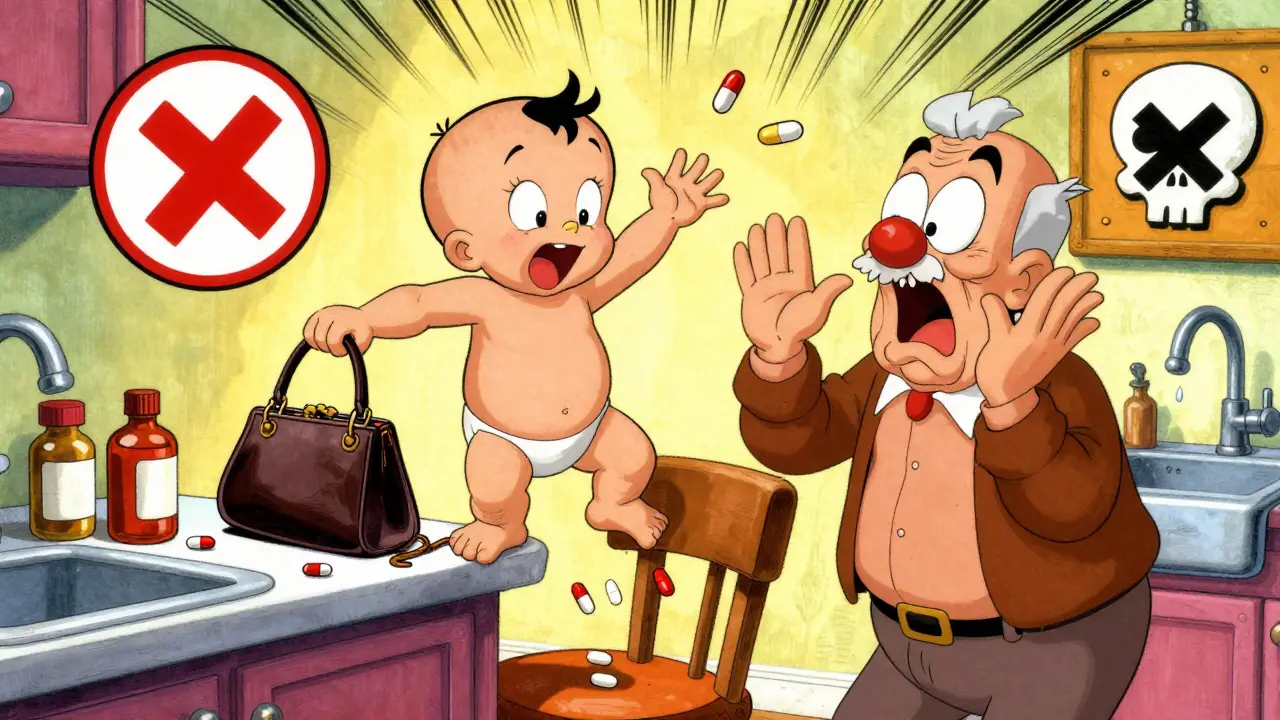
Every year, over 60,000 kids in the U.S. end up in the emergency room because they got into medicine they weren’t supposed to. Most of these accidents happen at home-when a grandparent leaves a pill bottle on the counter, when a toddler climbs up to reach a purse, or when a caregiver mixes up doses because the labels are faded. This isn’t rare. It’s common. And it’s preventable.
A safe medication routine isn’t just about keeping pills out of reach. It’s about creating a system so simple and reliable that mistakes don’t happen. Whether you’re managing prescriptions for an elderly parent, giving daily vitamins to a toddler, or juggling multiple medications for yourself, a clear routine cuts down confusion, reduces risk, and gives everyone peace of mind.
Store Medications Up and Away-And Locked
The old advice-"keep meds on a high shelf"-isn’t enough anymore. Kids are climbers. They pull down bags, climb on chairs, and open cabinets. According to Children’s Hospital Los Angeles, 25% of accidental ingestions happen because meds were left in purses, bags, or on countertops.
Here’s what actually works: lock your medications away. Use a locked cabinet, a medicine lockbox, or even a simple combination lock on a drawer. Keep them at eye level or higher, but only if they’re locked. The CDC’s "Up and Away" campaign found that households using locked storage saw a 34% drop in pediatric exposures.
Also, avoid storing meds in the bathroom. Humidity from showers and sinks can weaken pills and liquids. A bedroom closet, kitchen cabinet away from the sink, or even a high shelf in a home office is better. And if you have opioids in the house-like oxycodone or fentanyl-keep naloxone (Narcan) nearby. Signs of overdose include slow breathing, tiny pupils, and extreme drowsiness. Having Narcan ready could save a life.
Use Original Containers and Child-Resistant Caps
Never transfer pills into unmarked containers like candy jars, spice bottles, or plastic bags. Even if you think you’ll remember what’s inside, someone else might not. In fact, 22% of medication errors happen because people confuse similar-looking pills.
Always keep medications in their original bottles with child-resistant caps. The Poison Prevention Packaging Act requires these caps on over 200 prescription drugs and 40 OTC medicines. But here’s the problem: only 55% of parents actually snap them shut after use. That’s like locking your door and then leaving the key in the lock.
Make it a habit: after every use, turn the cap until you hear the click. Test it yourself-try opening it like a child would. If it’s too easy, your cap might be worn out. Replace it. And if your bottle doesn’t have a child-resistant cap, ask your pharmacist for one. They’re required to give it to you.
Know the Five Rights of Medication Administration
When giving medicine to a family member, follow the "Five Rights"-a standard used by hospitals and now recommended for homes:
- Right person-Is this medicine for the person you’re giving it to? Double-check the name on the bottle.
- Right medication-Does the name match what the doctor prescribed? Generic and brand names can be confusing.
- Right dose-Are you giving the exact amount? Don’t guess. Use an oral syringe for liquids, not a kitchen spoon.
- Right route-Is it meant to be swallowed, applied to the skin, or inhaled? Don’t mix them up.
- Right time-Is it morning, night, with food, or on an empty stomach? Timing matters.
For kids, dosing errors are the most common. A 2022 study in Pediatrics found that using oral syringes instead of cups reduced dosing mistakes by 47%. Always use the syringe that came with the medicine. If you lost it, ask your pharmacy for a new one-free of charge.
Keep a Master Medication List
Most families don’t have a complete list of what everyone is taking. That’s dangerous. A 2022 JAMA study found that 68% of older adults take five or more medications daily. Add in vitamins, supplements, and OTC painkillers, and it’s easy to lose track.
Create a master list for each person. Include:
- Medication name (brand and generic)
- Dosage and frequency
- Purpose (e.g., "for high blood pressure")
- Start date
- Side effects to watch for
- Prescribing doctor’s name
Put a printed copy on the fridge. Keep a digital copy on your phone. Bring it to every doctor visit. Every six months, do a "brown bag" check: gather every bottle, pill, and supplement in the house and take them to your pharmacist. They’ll spot duplicates, interactions, or drugs you no longer need.
For seniors, this is critical. The American Geriatrics Society warns that anticholinergic drugs-often found in sleep aids, allergy meds, and bladder treatments-can increase fall risk by 50%. Many older adults don’t realize they’re on one. A pharmacist review can help you stop what’s unnecessary.
Use Pill Organizers and Digital Reminders
One of the biggest complaints from caregivers? Forgetting doses. A 2023 AARP survey found 35% of caregivers miss doses at least once a week. The fix? Structure.
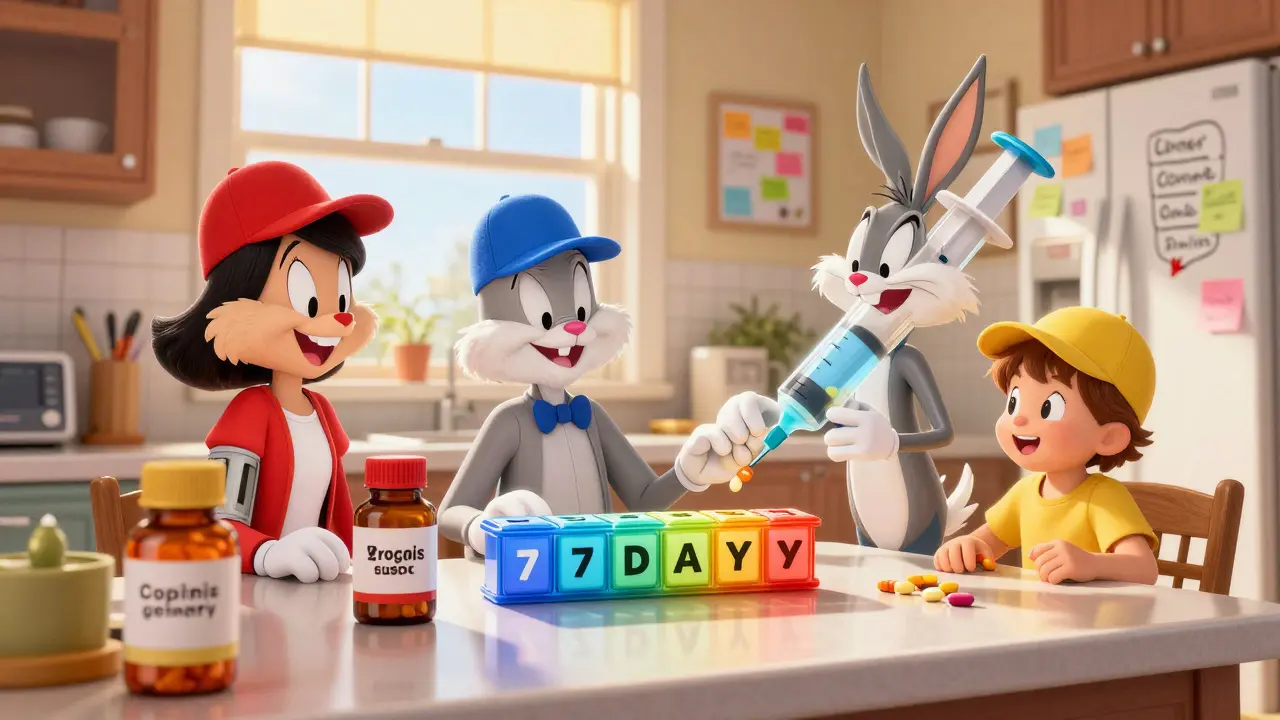
Use a 7-day pill organizer. It’s simple, cheap, and works. Choose one with morning/afternoon/evening slots. Fill it weekly. Set a reminder on your phone. Or better yet, use an app like Medisafe or MyTherapy. These apps send alerts, track adherence, and even notify a family member if a dose is missed.
But not everyone’s tech-savvy. If an older relative shuts down digital tools after a few weeks, go analog. Tape a printed schedule to the bathroom mirror. Use a whiteboard on the fridge. Color-code bottles with painter’s tape-red for morning, blue for night. One Reddit user reported a 60% drop in errors after doing this in a household with four people on meds.
What to Do When You Miss a Dose
It happens. You’re late. You’re distracted. You forget.
Don’t panic. Don’t double up. HealthyChildren.org gives clear guidance: if you miss a dose, give it as soon as you remember. Then give the next dose at the regular time. Never give two doses together unless your doctor says so.
For example, if someone takes blood pressure medicine at 8 a.m. and you remember at 2 p.m., give it then. The next dose is still at 8 a.m. the next day. Doubling up can cause dangerous drops in blood pressure or liver damage.
Keep a note next to each medication on your list: "If missed, give within 4 hours. If later, skip. Do not double." This prevents guesswork during stressful moments.
Dispose of Unused or Expired Meds Properly
Old antibiotics, leftover painkillers, expired vitamins-they shouldn’t sit in your cabinet. They’re a risk. The CDC says 60% of households don’t know how to dispose of meds safely.
Don’t flush them. Don’t throw them in the trash. Don’t pour them down the sink.
Use a drug take-back program. Many pharmacies, hospitals, and police stations have drop-off boxes. In the UK, you can return unwanted meds to any pharmacy. If there’s no program nearby, mix pills with used coffee grounds or cat litter, seal them in a plastic bag, and toss them in the trash. Remove or black out labels first.
And if you’ve been prescribed opioids, dispose of them immediately after use. Don’t wait. The risk of misuse or accidental ingestion isn’t worth keeping them around.
Prepare for Emergencies
Keep a small card in your wallet or phone with:
- Emergency contact numbers (Poison Control: 1-800-222-1222)
- Each family member’s medications and allergies
- Primary doctor’s name and number
- Any chronic conditions (diabetes, asthma, heart disease)
Teach older kids how to call 999 if someone collapses or stops breathing after taking medicine. Keep this card near the phone, on the fridge, and in your purse. In an emergency, seconds matter.
Review and Update Every 3 Months
A medication routine isn’t a one-time setup. It’s a living system. People get new prescriptions. Stop taking things. Switch brands. Add supplements.
Set a quarterly reminder on your calendar. Every three months, sit down with your family and:
- Check the master list against current bottles
- Ask: "Is this still needed?"
- Remove anything expired or unused
- Update the list
For seniors, this step alone can prevent hospital visits. The American Medical Association says 15% of hospital admissions for older adults are caused by inappropriate or unnecessary meds. A simple review can cut that risk.
Start Small. Stay Consistent.
You don’t need to fix everything overnight. Pick one thing to start: lock the meds. Or make the master list. Or get a pill organizer.
Once that’s in place, add the next step. In two to three weeks, it’ll feel normal. In a month, you’ll wonder how you ever managed without it.
Medication safety isn’t about perfection. It’s about reducing risk. One locked cabinet. One clear list. One syringe instead of a spoon. These small steps keep kids safe, prevent overdoses, and help your family stay healthy-not just today, but for years to come.

Celia McTighe
December 29, 2025 AT 10:09Ryan Touhill
December 29, 2025 AT 21:42Teresa Marzo Lostalé
December 31, 2025 AT 14:32ANA MARIE VALENZUELA
December 31, 2025 AT 21:07Julius Hader
January 1, 2026 AT 23:36Vu L
January 2, 2026 AT 06:50James Hilton
January 3, 2026 AT 14:00Mimi Bos
January 4, 2026 AT 00:04Payton Daily
January 4, 2026 AT 05:56Kelsey Youmans
January 6, 2026 AT 02:30Sydney Lee
January 6, 2026 AT 22:39oluwarotimi w alaka
January 7, 2026 AT 03:32Debra Cagwin
January 9, 2026 AT 01:27Hakim Bachiri
January 10, 2026 AT 04:48