
Drug Holiday Safety Checker
Is Your Medication Safe for a Drug Holiday?
This tool helps you determine if a supervised break from your medication is medically appropriate based on the article's guidelines. Always consult your doctor before making changes to your medication.
What if stopping your medication - even for a few days - could actually make you feel better? It sounds counterintuitive. But for some people, a carefully planned drug holiday isn’t about quitting treatment. It’s about managing the very side effects that make staying on the medicine hard.
Drug holidays aren’t a new idea. They’ve been used for decades in psychiatry, neurology, and even in early HIV care. But here’s the catch: not all drugs are made equal. What works for one person might put another in the hospital. And doing it without medical guidance? That’s where things go wrong.
What Exactly Is a Drug Holiday?
A drug holiday is a planned, temporary pause in taking a prescribed medication - done under a doctor’s supervision. It’s not the same as skipping pills because you forgot, felt lazy, or thought you didn’t need them anymore. This is a strategy. A tool. Used for specific reasons: to reduce side effects, reset your body’s response to the drug, or see if you still even need it.
For example, someone on an SSRI antidepressant like fluoxetine (Prozac) might take a 48-hour break every weekend to ease sexual side effects - a common complaint. A child with ADHD might go off stimulants like methylphenidate during summer break to help with appetite or growth. These aren’t random decisions. They’re based on how the drug behaves in your body, your symptoms, and your life.
The key word here is supervised. A drug holiday without medical oversight is just medication discontinuation - and that’s risky.
Which Medications Can You Take a Break From?
Not all drugs can be paused safely. Some have dangerous withdrawal effects if stopped suddenly. Others lose their effectiveness fast. So the choice depends on the medicine’s chemistry - especially its half-life.
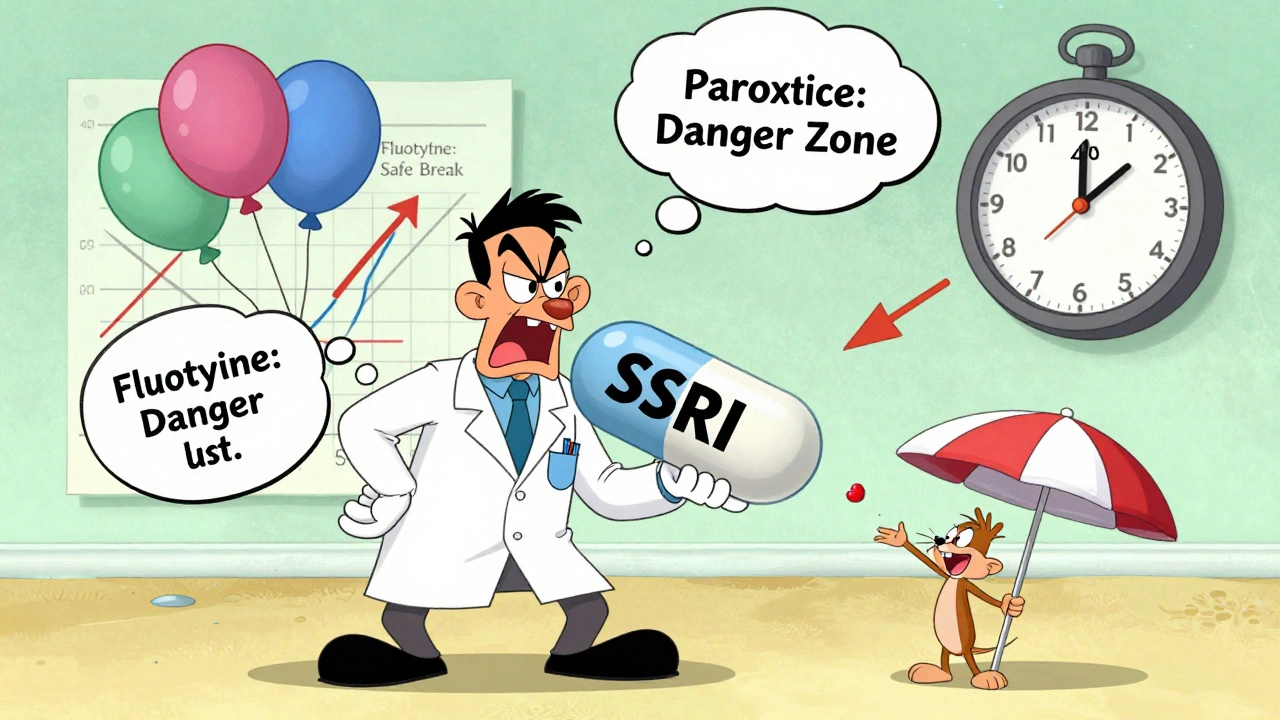
SSRIs (like fluoxetine, sertraline): Fluoxetine has a long half-life (4-6 days), meaning it sticks around in your system longer. That makes short breaks - like a weekend off - more manageable. Studies show up to 65% of people report improved sexual function after a 48-hour break, with little to no mood dip. Paroxetine, on the other hand? Short half-life (21 hours). Skipping even one day can cause brain zaps, dizziness, or nausea.
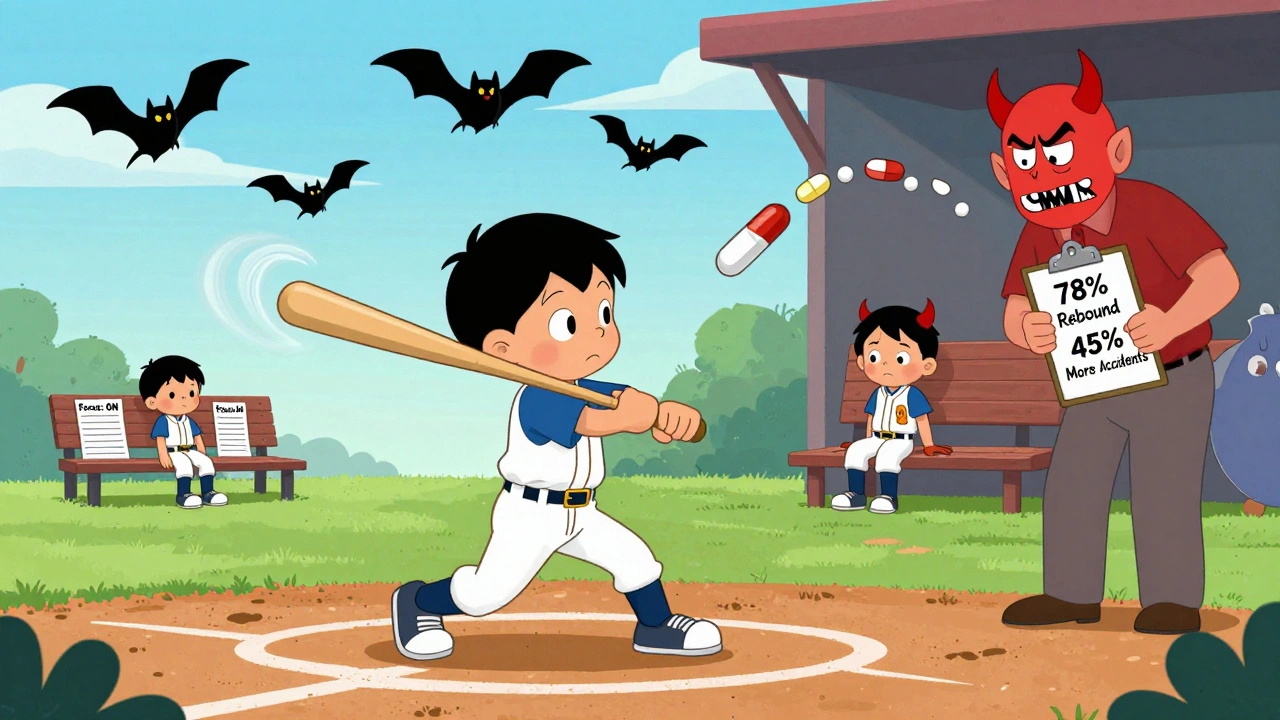
ADHD stimulants (methylphenidate, amphetamines): These are often paused during summer or school breaks. But here’s what the data shows: 78% of children experience symptom rebound. That means increased impulsivity, emotional outbursts, trouble sleeping, and trouble in social settings like camps or family gatherings. One study found accident rates jumped 45% during medication-free periods. Parents report chaos - not relief.
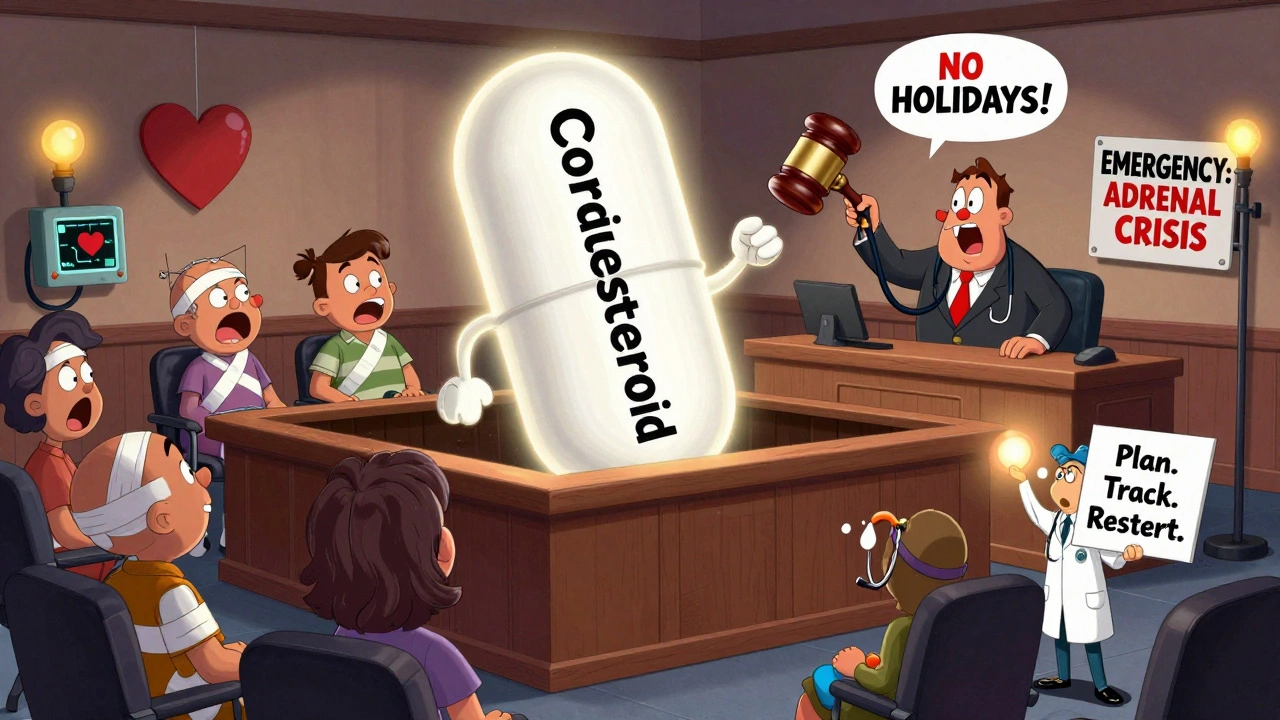
Anticonvulsants, beta-blockers, corticosteroids: These are absolute no-go zones. Stopping them suddenly can trigger seizures, heart attacks, or adrenal crisis. No exceptions.
Parkinson’s meds: Used to be common to take breaks to “reset” dopamine receptors. Now? Abandoned. The rebound symptoms were too severe - 22% more hospitalizations. Modern treatment avoids this entirely.
Why Do People Try Drug Holidays?
People don’t do this because they want to quit. They do it because the medicine is making life harder.
For adults on SSRIs, sexual side effects - like low libido or trouble reaching orgasm - can strain relationships. A weekend break can restore intimacy without triggering depression. On patient forums like PatientsLikeMe, 78% of users said weekend SSRI holidays improved their quality of life.
For kids with ADHD, stimulants can suppress appetite and slow growth. Some doctors and families try summer breaks to let weight and height catch up. But the trade-off? Behavioral regression. Teachers report kids struggle to focus. Coaches say they can’t follow team rules. One mother told the Child Mind Institute her son’s baseball coach asked her to restart meds - not because he was failing academically, but because he was getting benched for acting out.
And then there’s the emotional toll. A parent on Reddit wrote: “My 10-year-old’s summer vacation became three ER visits. No meds = no impulse control. We lost weeks to chaos.”
When Drug Holidays Backfire
Not all stories are positive. In fact, the biggest danger isn’t the break itself - it’s the lack of planning.
Unsupervised breaks are behind 61% of emergency visits related to medication misuse, according to CDC data. People stop because they’re tired of side effects. They don’t know how to restart. They don’t recognize early signs of relapse.
Depression can return within 14 days after stopping an SSRI - especially if you’ve had multiple episodes before. A 2020 meta-analysis found 33% of patients relapsed that fast. Brain zaps, dizziness, insomnia - these aren’t just annoyances. They’re withdrawal symptoms that can make someone feel like they’re losing their mind.
And for HIV? The SMART trial in 2006 followed over 5,000 people. Those on intermittent therapy had a 50% higher risk of opportunistic infections and a 64% greater chance of heart problems. The lesson? For some diseases, there’s no safe break.
How to Do a Drug Holiday Right
If you’re considering one, here’s how to do it safely:
- Wait until you’re stable. Don’t try this if you’ve just started the drug or had a recent flare-up. The American Psychiatric Association recommends at least 6 months of consistent symptom control before even thinking about a break.
- Track your symptoms. Keep a daily journal for 4-8 weeks before starting. Note mood, sleep, energy, side effects. This helps your doctor decide if a break is even appropriate.
- Choose the right drug. Long half-life = safer. Short half-life = high risk. Fluoxetine? Maybe. Venlafaxine? No.
- Plan the duration. Weekend breaks for SSRIs. Summer for ADHD. Never go longer than your doctor recommends.
- Set clear return triggers. What will make you restart? Mood drops? Sleep loss? Irritability? Write it down. Share it with your family.
- Have an emergency plan. Who do you call if things go wrong? What’s the fastest way to restart? Keep your prescription handy. Don’t wait until you’re in crisis to find it.
Some doctors use a taper - reducing the dose by 25% per week - before a full break. That lowers withdrawal risk. Others use apps or EHR tools (like Epic or Cerner) that now have built-in holiday trackers to remind patients and providers when to restart.
The Bigger Picture: Trends and New Tech
Drug holidays aren’t disappearing - they’re evolving.
The FDA approved a new extended-release form of bupropion in 2023 with a built-in “holiday window” designed to reduce sexual side effects without full discontinuation. That’s innovation responding to patient needs.
The NIH’s 2024 SPRINT trial is testing personalized drug holidays using genetic testing. If your DNA shows you metabolize SSRIs slowly, maybe you can take longer breaks. If you’re a fast metabolizer? Maybe no break at all.
Telehealth companies like Cerebral and Done report 40% year-over-year growth in consultations for structured medication pauses. More people are asking. More doctors are listening.
But here’s the reality: 78% of major electronic health record systems now track medication holidays - not because it’s trendy, but because unsupervised breaks are costing hospitals money and lives.
Who Should Avoid Drug Holidays Altogether?
If you have any of these, don’t even consider it without your doctor’s green light:
- History of severe depression or suicidal thoughts
- Seizure disorder or epilepsy
- Heart condition on beta-blockers
- Adrenal insufficiency on corticosteroids
- History of substance abuse or addiction
- Recent change in medication or dosage
For these people, the risks far outweigh any potential benefit. There’s no “quick fix” that’s worth a relapse, hospitalization, or worse.
Final Thought: It’s Not About Quitting - It’s About Managing
A drug holiday isn’t a vacation from your illness. It’s a pause in your treatment to fix a side effect - not the disease itself. It’s a tool, not a solution.
For some, it brings back intimacy, appetite, or peace of mind. For others, it brings chaos, danger, and regret.
The difference? Planning. Monitoring. Communication. And above all - never doing it alone.
If you’re thinking about a break, talk to your doctor. Bring your journal. Ask: “Is this safe for me? What’s the plan if things go wrong?”
Your health isn’t something you pause. But sometimes, the side effects of staying on the medicine are just as heavy as the illness itself. The goal isn’t to stop. It’s to find a way to live better - with or without the pill.
Can I take a weekend break from my antidepressant to fix sexual side effects?
For some people on long-acting SSRIs like fluoxetine (Prozac), a 48- to 72-hour weekend break can reduce sexual side effects without triggering withdrawal or relapse. Studies show about 65% of users report improved intimacy. But this only works if you’ve been stable on the medication for at least 6 months, and you never skip doses mid-week. Never try this with short-acting SSRIs like paroxetine - the risk of brain zaps and dizziness is high.
Is it safe to stop ADHD meds during summer break?
It’s sometimes done to help with appetite or growth, but it’s risky. Research shows 78% of children experience behavioral rebound - increased impulsivity, emotional outbursts, and trouble in social settings. Accident rates jump 45% during these breaks. The American Academy of Child and Adolescent Psychiatry says the benefits are only worth it if your child has serious growth delays and you’re closely monitoring their behavior. Never do it without a clear plan to restart.
What are the signs I should restart my medication after a drug holiday?
Watch for early warning signs: mood swings, trouble sleeping, irritability, racing thoughts, or loss of focus. For depression, even mild sadness lasting more than 3 days can signal relapse. For ADHD, forgetfulness, disorganization, or emotional outbursts returning mean it’s time to restart. Always have a written trigger list with your doctor before starting the break.
Can I do a drug holiday on my own if I feel fine?
No. Feeling fine doesn’t mean you’re safe. Many people stop because they think they don’t need the drug anymore - only to have symptoms return worse than before. Over 60% of emergency visits related to medication misuse involve unsupervised breaks. Even if you feel okay, your body may not be. Always consult your doctor before stopping any prescription.
Are drug holidays covered by insurance or telehealth services?
Many telehealth platforms like Cerebral and Done now offer structured medication holiday consultations as part of their mental health packages. Insurance coverage varies, but if your doctor documents the holiday as a medically necessary strategy to manage side effects (like sexual dysfunction or growth suppression), it’s often covered under mental health or chronic disease management plans. Check with your provider and ask for a treatment plan code to submit.
Next steps: If you’re considering a drug holiday, start by scheduling a 30-minute appointment with your prescriber. Bring your symptom log. Ask: “Is this safe for me? What’s the exact plan? What are the red flags?” Don’t guess. Don’t rely on online forums. Your health is too important for trial and error.

Ibrahim Yakubu
December 7, 2025 AT 07:15Let me tell you something-this whole 'drug holiday' thing is a trap wrapped in medical jargon. I’ve seen it happen: guy stops his SSRI for a weekend, feels 'refreshed,' then comes back with suicidal ideation so bad he called 911. You think you're in control? Your brain doesn't care about your weekend plans. The data? It’s not suggesting this-it’s screaming warning signs. Don’t be the statistic.
Chris Park
December 7, 2025 AT 22:57Of course the FDA approved a 'holiday window' for bupropion-because Big Pharma needs you to believe you can outsmart pharmacology. The SMART trial? Suppressed. The 64% increased heart risk? Buried in supplemental tables. They don’t want you to know that 'drug holidays' are a gateway to polypharmacy. They profit from relapse. They profit from your confusion. This isn’t medicine-it’s a business model dressed in white coats.
Ashish Vazirani
December 8, 2025 AT 06:19India has been doing this for decades-without all this Western panic. My uncle took his antihypertensives only on workdays-said weekends were for 'natural healing.' He lived to 89. You think your Western algorithms know better than 5,000 years of Ayurvedic intuition? You’re not 'managing' anything-you’re outsourcing your body to a Silicon Valley app. I don’t trust your EHR trackers. I trust my pulse.
Karen Mitchell
December 10, 2025 AT 02:17It is profoundly irresponsible to even suggest that individuals without clinical supervision should consider discontinuing psychotropic medications. The notion that a 'weekend break' could be 'safe' for SSRIs is not only scientifically unsound-it is ethically indefensible. The APA guidelines exist for a reason. To promote otherwise is to endanger lives under the guise of empowerment.
Nava Jothy
December 11, 2025 AT 00:47OMG I JUST HAD THE SAME EXPERIENCE 😭 I took a 3-day break from sertraline because my libido was GONE and my bf was about to leave me… and then I got brain zaps so bad I thought I was having a stroke. I cried in the shower for an hour. Then I restarted. Now I just take it at night. I’m not ‘fixed’… but I’m not dead either. 💔💊
brenda olvera
December 12, 2025 AT 12:49I just want to say thank you for writing this. My daughter’s ADHD meds were killing her appetite and she was shrinking before my eyes. We did a summer break with her pediatrician’s guidance and she gained 8 pounds. Yes she acted out. But she laughed again. She played outside. That’s worth more than perfect focus. I’m not scared of the chaos. I’m scared of her disappearing.
Priya Ranjan
December 13, 2025 AT 05:46Anyone who thinks a drug holiday is a good idea hasn’t lived through withdrawal. You think you’re 'resetting'? You’re destabilizing your entire neurochemistry. I’ve seen patients go from stable to suicidal in 72 hours. This isn’t a lifestyle tweak. It’s medical malpractice waiting to happen. Stop romanticizing this. It’s not ‘empowerment.’ It’s ignorance with a wellness influencer aesthetic.
Kay Jolie
December 13, 2025 AT 09:52As a clinical pharmacologist, I’ve reviewed the 2024 SPRINT trial data-genetic metabolism is the future. Slow metabolizers? Longer holidays. Fast? None. This isn’t guesswork anymore. We’re moving from population-based prescribing to precision pauses. The tech exists. The algorithms are validated. What’s missing? Clinician buy-in. And that’s the real bottleneck-not the science.
Billy Schimmel
December 13, 2025 AT 13:24So… you’re telling me someone’s gonna risk a seizure because they’re tired of their antidepressant making them numb? Man. I get it. I’ve been there. But if you’re gonna do it, at least have the decency to not make it a TikTok trend. This ain’t a detox. It’s a minefield.
Shayne Smith
December 13, 2025 AT 16:00I took a 4-day break from my ADHD med last summer. My dog got scared of me. My cat started hiding. I yelled at a barista for giving me the wrong oat milk. I restarted on day 5. My therapist said I was ‘a walking emotional grenade.’ Fair.
Max Manoles
December 14, 2025 AT 20:49One thing the article doesn’t mention: the psychological burden of planning a drug holiday. You’re not just managing side effects-you’re managing guilt, fear, and the constant anxiety of relapse. The EHR trackers? They’re not just for doctors. They’re for patients who need to feel like they’re not alone in the dark. I use mine every day. It’s my lifeline.
Mayur Panchamia
December 16, 2025 AT 03:42Listen here-you think America invented medicine? We in India have been doing ‘medication holidays’ since before your grandparents were born. My father took his BP pills only on days he went to market. He lived to 92. You think your ‘FDA-approved protocols’ are better than ancestral wisdom? You’re not smarter-you’re just louder. And more afraid.