Remember the last time you waited in a crowded pharmacy line just to pick up a refill? That frustration is fading fast. By 2026, the way we get our generic medications has shifted from brick-and-mortar counters to our smartphones and doorsteps. The digital pharmacy sector isn't just growing; it's exploding. With the market projected to hit $35.33 billion this year, driven by a 14.42% annual growth rate, the old rules are being rewritten. For patients, this means faster access, lower prices, and fewer headaches. But with great convenience comes new complexities around privacy, regulation, and trust.
This guide breaks down what’s happening right now in 2026, where the technology is heading, and how these changes affect your wallet and your health. We’ll look at the real data behind the hype, compare the major players, and address the concerns that keep many people hesitant to switch fully online.
The Rise of Telehealth-Integrated Fulfillment
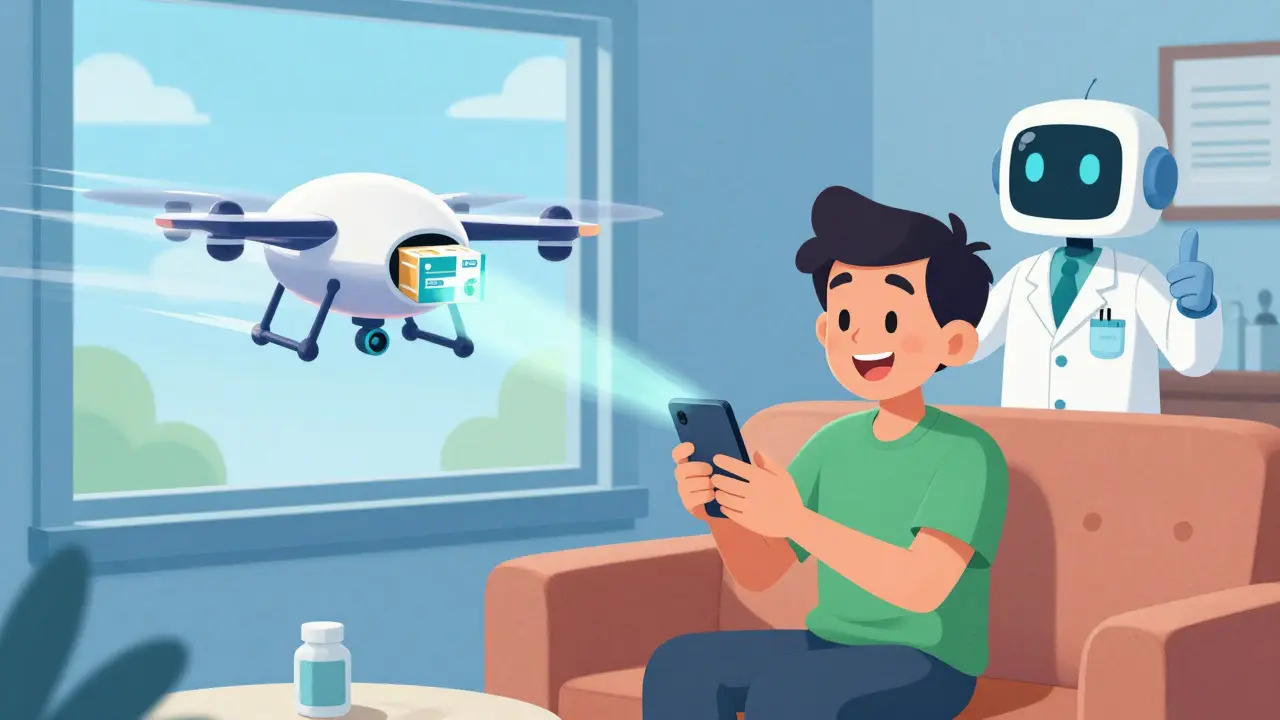
The biggest shift in 2026 isn’t just ordering pills online; it’s how seamlessly the consultation connects to the delivery. During the pandemic, telepharmacy services jumped by 212%, but that was just the start. Today, platforms like Truepill process over 10,000 prescriptions daily through systems that link virtual doctor visits directly to fulfillment centers. You don’t just call a doctor and then go to a store. The system checks your insurance, verifies the prescription, and ships the meds in one fluid motion.
This integration solves a massive problem: friction. In traditional setups, a patient might visit a doctor, get a script, drive to a pharmacy, wait in line, and only then find out their insurance won’t cover the specific brand or generic. Digital systems use API-integrated platforms to check eligibility before you even leave the virtual exam room. According to Deloitte’s 2024 benchmarking, AI algorithms now predict medication demand with nearly 90% accuracy. This means stockouts are rarer, and delays are minimized. For someone managing chronic conditions like hypertension or diabetes, this reliability is life-changing.
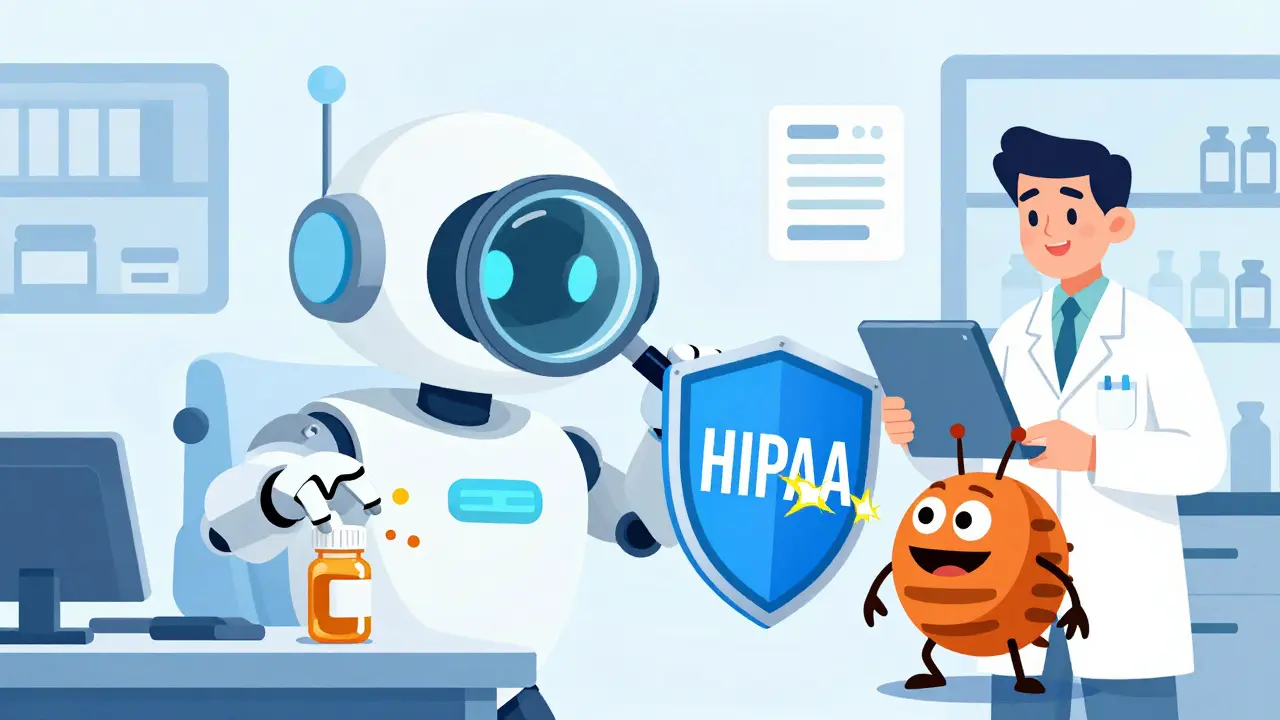
However, this smoothness depends on robust infrastructure. These systems run on cloud-based architectures with AES-256 encryption to keep your health data safe. They must comply with HIPAA regulations while supporting mobile apps on iOS 15+ and Android 10+. If any part of this chain fails-like an insurance verification glitch-the whole experience falls apart. Currently, about 18.4% of initial transactions still face insurance hurdles, so while the tech is advanced, human oversight remains crucial.
AI and Automation: Speed vs. Safety
Artificial intelligence is the engine driving modern digital pharmacies. It handles inventory management, predicts seasonal flu spikes, and even assists with prior authorizations. By 2025, AI is expected to handle more than half of all prior authorization reviews for generics, cutting processing times from days to under four hours. This speed is incredible for patients who need immediate relief.
But there’s a catch. Automation brings risks. Dr. Michael Cohen from the Institute for Safe Medication Practices (ISMP) warns that automation without proper human oversight can increase substitution errors. In 2023, the FDA issued a safety communication regarding incorrect dosing of levothyroxine generics due to auto-substitution errors in a digital platform, affecting 217 patients. While rare, these incidents highlight why "set it and forget it" isn’t always safe.
Digital platforms excel at routine maintenance meds, boasting a 94.2% success rate for single-generic prescriptions. However, when regimens get complex-involving multiple drugs with potential interactions-error rates climb to 8.7%, compared to just 3.2% in traditional pharmacies. This gap shows that while AI is powerful, it’s not yet ready to replace the clinical judgment of a pharmacist for complicated cases. Most experts agree that the future model is hybrid: AI handles the logistics and basic checks, while pharmacists focus on high-touch care and complex therapy management.
Cost Savings and Price Transparency
Let’s talk money. One of the main reasons people switch to digital pharmacy services is cost. GoodRx’s 2024 Price Transparency Report shows that digital generic delivery systems provide average savings of 22.7% on generic medications compared to retail prices. For a family buying multiple chronic meds, this adds up quickly. Add in the saved gas and parking fees-estimated at $17.30 per prescription for rural patients-and the value proposition becomes clear.
Price transparency is also higher online. You see the final price before you click buy. No surprises at the counter. Trustpilot reviews from May 2024 show that "price transparency" was mentioned in 63.2% of positive reviews for digital pharmacy services. Patients appreciate knowing exactly what they’re paying, especially when navigating confusing insurance copays.
However, savings aren’t universal. Some users report nightmares when digital platforms auto-substitute a generic that their insurance doesn’t cover, leading to unexpected bills. User 'PharmaPatient87' on Reddit shared saving $83 monthly on blood pressure meds but facing issues when an unapproved generic was shipped. Always double-check the specific manufacturer or NDC (National Drug Code) if your plan has strict formulary rules.
| Feature | Traditional Brick-and-Mortar | Digital Pharmacy (2026) |
|---|---|---|
| Average Fulfillment Time | 48 hours | 5.2 hours (same-day options available) |
| Order Accuracy Rate | 87.6% | 92.3% |
| Patient Satisfaction | 72.1% | 85.4% |
| Generic Cost Savings | Baseline | ~22.7% lower on average |
| Complex Regimen Support | High (89% offer MTM) | Moderate (43% offer comprehensive MTM) |
Market Leaders and Competitive Landscape
In 2026, three types of players dominate the space. First, integrated retailers like CVS Health and Walgreens. CVS captured 28.4% market share in 2024, leveraging its existing physical stores as local fulfillment hubs for faster delivery. Second, pure digital players like Ro and Honeybee Health, which operate entirely online and often partner with telehealth providers. Third, specialty platforms like Blink Health, which focus heavily on price transparency and wholesale pricing.
Amazon Pharmacy holds 19.7% market share, benefiting from its logistics network. However, independent digital platforms are gaining ground by offering more personalized customer service. The choice depends on your needs. If you want same-day delivery and have a CVS nearby, their integrated model works well. If you prefer a fully remote experience with a dedicated care team, a pure-play digital provider might be better.
Adoption varies by age. AARP’s 2024 report shows 68.4% of patients aged 18-44 use digital generic delivery, compared to only 22.7% of those aged 65+. This digital divide persists because 24% of seniors report difficulty using these platforms. Companies are responding with simpler interfaces and phone support, but accessibility remains a challenge.
Regulatory Hurdles and Privacy Concerns
Digital pharmacy operates in a patchwork of state laws. As of 2024, 28 states require pharmacists to be licensed in the patient’s state of residence for telepharmacy services. This limits cross-state efficiency. The FDA’s 2023 Digital Health Innovation Action Plan aims to standardize these rules, but progress is slow. Meanwhile, 17 states have introduced specific legislation governing digital generic substitution practices.
Privacy is another major concern. The HHS reported 378 pharmacy-related data breaches in 2023, affecting 14.2 million patients. Digital platforms accounted for 63% of these incidents. While companies invest heavily in cybersecurity, the risk remains. Users should verify that their chosen platform uses end-to-end encryption and complies with HIPAA. Look for clear privacy policies and avoid sharing unnecessary personal information.
Cybersecurity vulnerabilities are a top risk for long-term viability. As more health data moves online, pharmacies become targets for ransomware attacks. Choosing established providers with strong security track records is essential. Check for certifications and read recent security audits if available.
User Experience: Convenience Meets Complexity
For most users, the experience is positive. Haloscrips’ 2024 survey found that 78.4% of digital pharmacy users reported improved medication adherence for chronic conditions. Why? Because reminders, auto-refills, and easy reordering remove barriers. Smart pill dispensers, which integrate with these apps, have shown a 28% higher adherence rate for chronic meds.
But convenience doesn’t mean perfect. Common complaints include insurance coordination issues (41.3% of negative reviews) and lack of personalized counseling (37.8%). Many users miss talking to a pharmacist face-to-face. While chatbots and video calls help, they don’t always replicate the nuance of in-person advice. If you have complex health needs, consider a hybrid approach: use digital tools for refills but visit a local pharmacist for consultations.
Support quality varies widely. CVS Health reports 92% first-contact resolution for technical issues, while smaller startups may struggle. Before switching, test the customer support. Call them with a question. See how responsive and helpful they are. This simple step can save you headaches later.
What’s Next? Trends for 2027 and Beyond
Looking ahead, personalization will deepen. PwC’s 2025 Pharma Trends report predicts that 74% of digital generic delivery platforms will incorporate pharmacogenomic data by 2026. This means your genetic profile could influence which generic version of a drug you receive, optimizing efficacy and reducing side effects. Imagine getting a generic statin tailored to your liver enzyme activity. That’s the future.
AI will also expand into therapeutic equivalence assessments. CVS Health’s SmartDUR™ system, rolling out in late 2024, uses AI to evaluate whether a generic is truly equivalent to a brand-name drug for each individual patient. This reduces trial-and-error prescribing.
However, reimbursement models face pressure. CMS reduced Medicare Part D mail-order reimbursement rates by 8.2% in 2024. This may force some digital providers to raise prices or limit services. Sustainability depends on balancing cost savings with fair compensation for pharmacists and tech developers.
Despite challenges, the trajectory is clear. Deloitte predicts digital pharmacy channels will capture nearly half of all generic medication dispensing by 2027. The key is staying informed. Understand the trade-offs between speed and safety, cost and complexity. Use these tools wisely, and you’ll benefit from the best of both worlds: modern convenience and reliable care.
Is digital pharmacy safe for generic medications?
Yes, for most routine prescriptions. Digital platforms maintain high accuracy rates (92.3%) and use secure encryption. However, for complex multi-drug regimens, error rates are slightly higher than in traditional pharmacies. Always verify your provider’s licensing and security practices.
How much can I save with online generic delivery?
On average, you can save 22.7% on generic medications compared to retail prices. Additional savings come from reduced transportation costs, especially for rural residents. Always compare prices across platforms and check your insurance coverage.
Which digital pharmacy is best for seniors?
Larger integrated retailers like CVS Health often offer better support and easier interfaces for seniors. Look for platforms with phone support, simple apps, and optional home delivery assistance. Avoid purely app-based services if you’re uncomfortable with technology.
Will my insurance cover digital pharmacy orders?
Most major insurers do, but coverage varies. About 18.4% of initial transactions face insurance verification failures. Always confirm with your insurer that the digital pharmacy is in-network and that the specific generic is covered.
How does AI improve generic medication delivery?
AI speeds up prior authorizations, predicts inventory needs, and helps identify therapeutic equivalents. It reduces wait times from days to hours. However, human pharmacists still review complex cases to ensure safety.