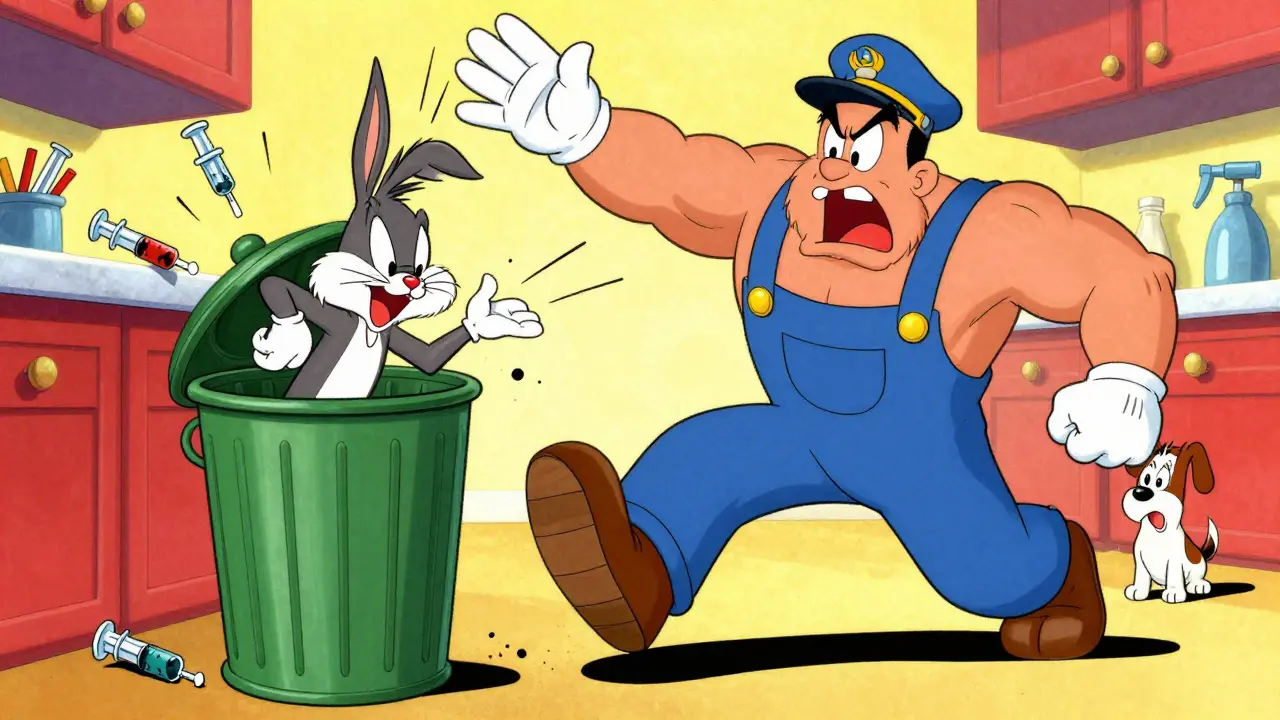
Throwing a used needle into the regular trash bin is a gamble you shouldn't take. It puts sanitation workers, your family, and even pets at risk of serious infections like Hepatitis B or HIV. If you manage diabetes, blood clotting disorders, or chronic pain with injectable medications, handling those sharp objects safely isn't just good hygiene-it's a legal requirement in many places and a critical health practice.
You don't need a degree in environmental science to get this right. You just need the right container and a clear plan for where it goes when it's full. This guide breaks down exactly how to store, seal, and dispose of sharps so you can protect yourself and your community without the stress.
What counts as a 'sharp'?
A sharp is any object that can puncture or cut skin. This includes needles, syringes (even if the needle is removed), lancets for blood sugar testing, auto-injectors (like EpiPens), capillary tubes, and dental wires. If it has a point or a blade, treat it as a sharp.
The Golden Rule: Use an FDA-Cleared Sharps Container
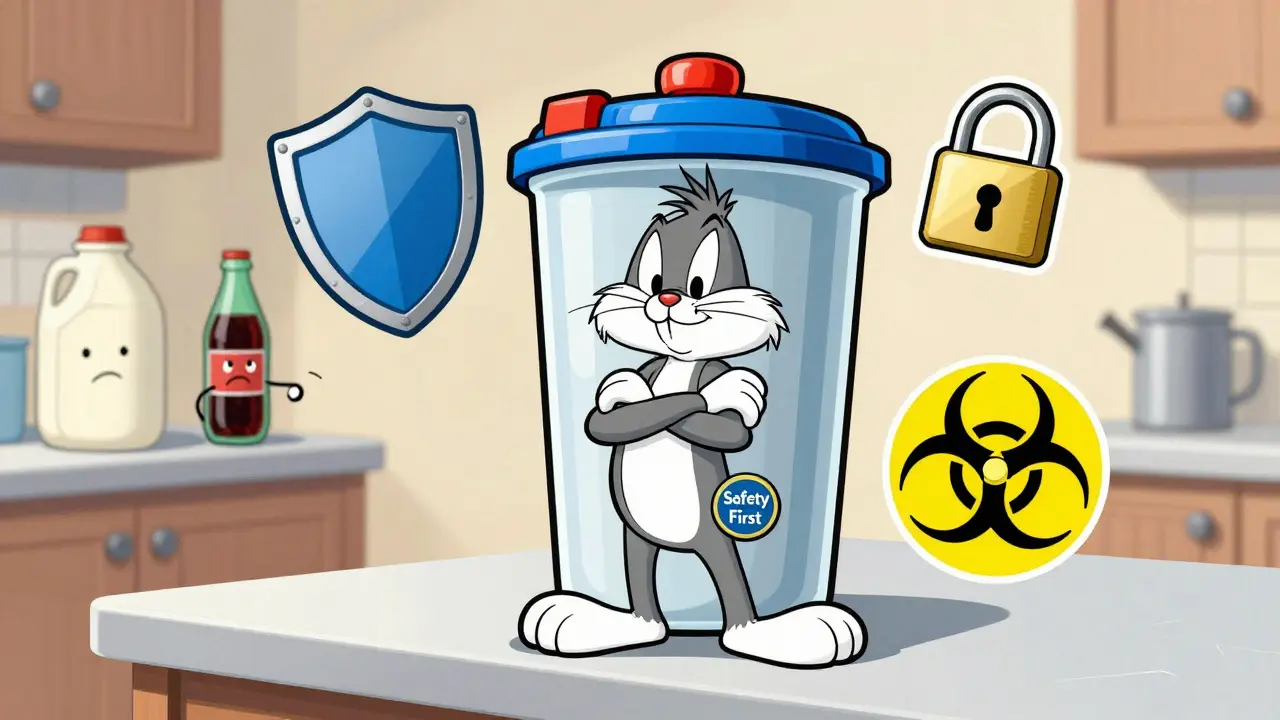
The safest way to handle used needles is to put them immediately into a purpose-built Sharps Container that meets FDA safety standards. These aren't just plastic buckets; they are engineered medical devices designed to prevent leaks and punctures.
When you buy a sharps container, look for these specific features:
- Puncture-Resistant Material: The walls must be thick enough (at least 0.04 inches) to stop a needle from poking through.
- Tight-Fitting Lid: The lid should snap shut securely and withstand pressure without opening.
- Biohazard Label: It must have a clear biohazard symbol printed on it. This warns anyone handling the waste that it contains hazardous materials.
- Stability: It needs a wide base so it doesn't tip over easily.
You can find these containers at most pharmacies, medical supply stores, or online. Prices vary, but a standard 1.5-gallon countertop container usually costs between $9 and $13. While it might feel like an extra expense, consider that treating a needlestick injury can cost thousands of dollars in medical care. The container is a small price for peace of mind.
What Not to Do: Common Mistakes to Avoid
Even with the best intentions, people make mistakes that create danger. Here are the biggest errors to avoid:
- Recapping Needles: Never try to put the cap back on a used needle. This is the leading cause of accidental needlesticks. If you must recap for transport (which is rare), use a one-handed "scoop" technique, but ideally, just drop the uncapped needle directly into the container.
- Overfilling the Container: Every container has a fill line, usually marked at three-quarters full. Once you hit that line, stop. Do not force more needles in. An overfilled container is a ticking time bomb.
- Using Household Bottles: Old milk jugs, soda bottles, or laundry detergent containers are not safe. They are not puncture-resistant, they don't have secure lids, and they often lack warning labels. Sanitation workers won't know what's inside, putting them at risk.
- Crushing or Breaking Needles: Don't try to bend or break needles by hand. This can cause shards to fly out or expose you to bloodborne pathogens.
Storage Safety at Home
Where you keep your sharps container matters just as much as the container itself. You want it close enough to use conveniently after every injection, but far enough away from curious hands.
Place the container within arm's reach of where you typically inject-perhaps on a counter near your medication fridge. However, ensure it is out of reach of children and pets. A wall-mounted unit is great for saving space, but make sure it is installed high enough that a toddler can't climb up to it. If you have small kids, consider keeping the container in a locked cabinet or using a model with a child-resistant lock.
Keep the container upright. Tipping it can cause needles to shift toward the lid, increasing the risk of leakage or puncture. Check the container regularly to ensure it remains stable and hasn't been knocked over.
Disposal Options: Where Does the Full Container Go?
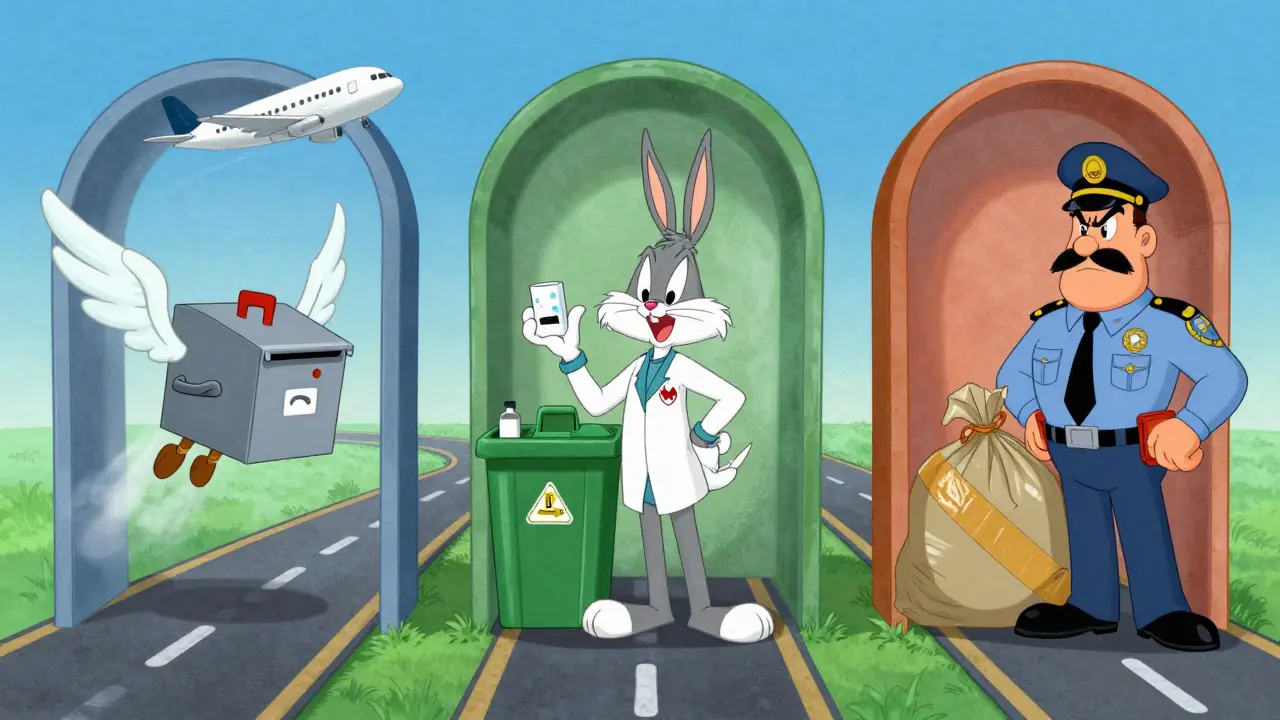
Once your sharps container reaches the fill line, you need to dispose of it properly. You cannot throw it in your regular household trash or recycling bin. Here are the three main ways to do it safely:
1. Mail-Back Programs
This is often the most convenient option for home users. Companies provide pre-paid shipping boxes and prepaid postage. You simply seal your full sharps container in the box, tape it shut, and drop it in the mailbox. The company then transports and incinerates the waste professionally. Services like Sharps Compliance or Stericycle offer these kits. Expect to pay around $10-$20 per kit, depending on the size.
2. Community Drop-Off Sites
Many hospitals, police stations, fire departments, and pharmacies accept sharps containers for free or a small fee. Check with your local health department or hospital website for a list of authorized drop-off locations. Some pharmacies, like Walgreens, have specific collection programs. Call ahead to confirm their hours and whether they accept home-generated sharps, as policies vary by location.
3. Household Trash (Only If Allowed)
In some areas, local regulations allow you to dispose of sealed sharps containers in your regular trash if no other options exist. To do this safely:
- Ensure the container is FDA-cleared and clearly labeled with the biohazard symbol.
- Seal the lid tightly with heavy-duty duct tape to prevent it from popping open.
- Place the container inside a second sturdy bag or box to add another layer of protection.
- Write "Biohazard - Sharps" on the outside so sanitation workers are warned.
Note: Always check your local city or county regulations first. In places like California or New York, throwing sharps in the trash is illegal.
Comparison: Proper vs. Improper Disposal
| Feature | FDA-Cleared Container + Proper Disposal | Improvised Container (e.g., Plastic Bottle) |
|---|---|---|
| Safety Level | High (Puncture-resistant, leak-proof) | Low (Easy to puncture, no seal) |
| Legal Compliance | Complies with OSHA/FDA standards | Often violates local health codes |
| Risk to Others | Minimal (Clear labeling protects workers) | High (Hidden hazard for sanitation staff) |
| Cost | $10-$20 per container/kit | $0 (but high liability risk) |
| Disposal Options | Mail-back, drop-off, or regulated trash | Limited (often rejected by facilities) |
Traveling with Sharps
If you're going on a trip, you still need to manage your sharps safely. For air travel, the TSA allows sharps containers in both carry-on and checked baggage. Keep your sharps container in your carry-on luggage so you can monitor it. Make sure the container is sealed and labeled. You may also want to carry a doctor's note explaining your medical condition and the need for injectable medications, though this isn't always required.
For road trips, bring a small, portable sharps container. When you arrive at your destination, check if your hotel or vacation rental has a disposal plan, or locate a nearby pharmacy for drop-off. Never leave loose needles in a car glove compartment or suitcase.
Environmental Impact
Proper disposal isn't just about human safety; it's about protecting the environment too. When sharps end up in landfills improperly, they can leach contaminants into soil and water. Professional disposal services use high-temperature incineration or autoclaving to neutralize pathogens and recycle the plastic components where possible. By using approved methods, you help reduce the environmental footprint of medical waste.
Can I reuse a sharps container?
No. Most FDA-cleared sharps containers are single-use only. Once the lid is closed, it is designed to stay closed permanently. Reusing a container compromises its integrity and safety features. Always buy a new one when the old one is full.
What if I accidentally stick myself with a used needle?
Wash the area immediately with soap and water. Do not squeeze the wound. Contact your healthcare provider or go to the emergency room right away. They will assess the risk of infection and may recommend post-exposure prophylaxis (PEP) for HIV or Hepatitis B.
Do I need a prescription to buy a sharps container?
No. Sharps containers are available over-the-counter at pharmacies, medical supply stores, and online retailers. No prescription is needed.
How long does it take for a sharps container to fill up?
It depends on your dosage frequency. A typical 1.5-gallon container holds approximately 100-150 needles. If you inject insulin twice daily, it might last a few months. If you inject less frequently, it could last a year or more. Monitor the fill line regularly.
Are there free sharps disposal programs?
Yes. Many communities offer free drop-off sites at hospitals or police stations. Some pharmaceutical companies also provide mail-back kits for patients using their specific medications. Check with your doctor or pharmacist for resources in your area.
Next Steps for Safe Management
Start by assessing your current setup. Do you have an FDA-approved container? Is it accessible but safe from children? If not, order one today. Then, map out your disposal plan: identify the nearest drop-off site or sign up for a mail-back service. By taking these simple steps, you ensure that your health management routine remains safe, legal, and responsible.