
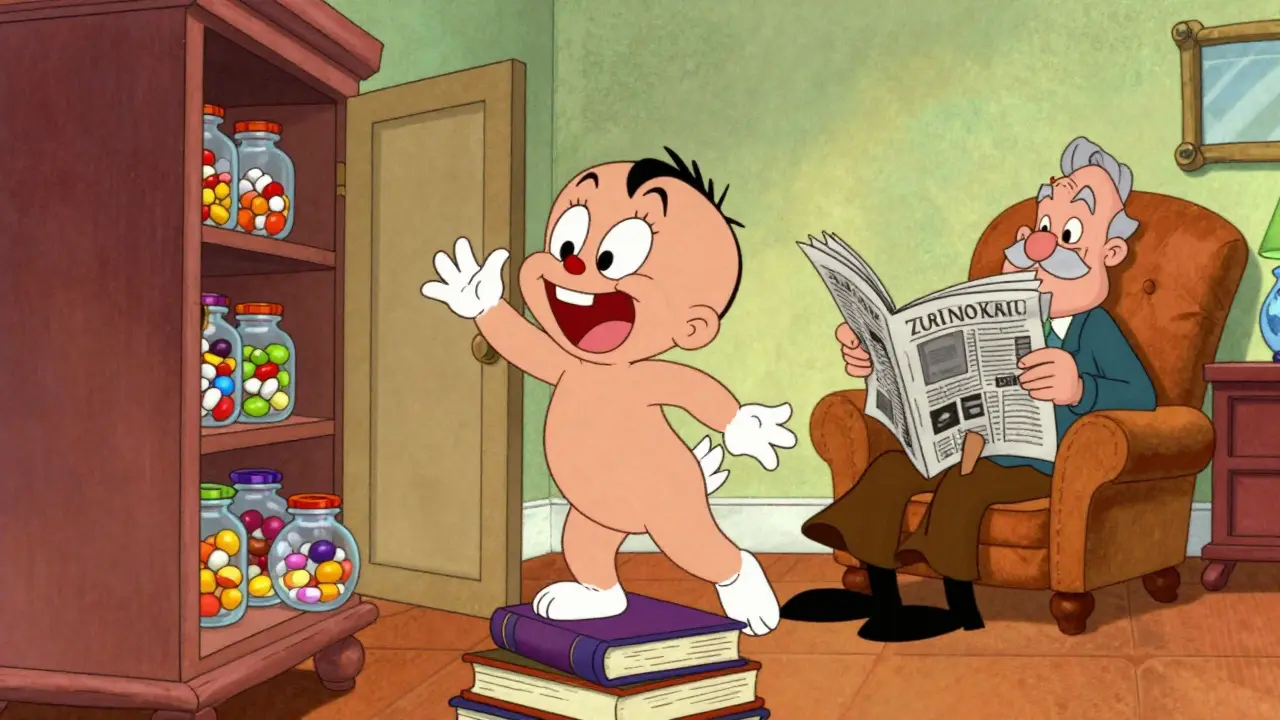
Every year, nearly 60,000 children under the age of five end up in emergency rooms because they swallowed something they shouldn’t have. The culprit isn’t usually household chemicals or plants-it’s medicine. And while we often think of parents as the primary gatekeepers of home safety, a startling statistic changes the picture: grandparents are involved in 38% of all pediatric medication poisonings. This doesn’t mean grandparents are careless. It means that with older adults taking more prescriptions than ever before, and spending more time caring for grandchildren, the risk profile has shifted dramatically.
If you are a parent who relies on your parents or other caregivers to watch your kids, this is not just a matter of trust-it’s a matter of logistics. Involving grandparents in pediatric medication safety requires a specific approach that respects their experience while updating their habits for today’s medical realities. Here is how you can bridge that gap without causing offense or confusion.
The Hidden Risk: Why Grandparents Are at Higher Risk
To solve the problem, you first have to understand why it exists. The data from the United States Consumer Product Safety Commission and subsequent studies published in PMC (PMC5690368) shows a clear trend. Older adults make up only about 13% of the U.S. population, but they account for 34% of all prescription medication use. When you add the fact that 34% of grandparents take daily prescriptions, the volume of pills in their homes is significantly higher than in the average household.
The danger compounds when grandchildren visit. According to Poison Control reports, millions of grandparents now provide regular childcare. The issue isn’t malice; it’s habit and perception. Many grandparents grew up when medicine was kept in open jars or on kitchen counters. They also tend to overestimate the effectiveness of child-resistant packaging. Research indicates that 36% of grandparents believe these caps are sufficient protection, whereas only 12% of parents share that belief. In reality, Consumer Product Safety Commission testing shows that 30% of four-year-olds can defeat these mechanisms in under five minutes.
Furthermore, polypharmacy-the use of multiple medications-is common among seniors. A caregiving grandparent might be managing an average of 4.7 medications daily compared to 2.1 for younger parents. More bottles mean more opportunities for error, especially if those bottles are stored in accessible places like nightstands, dressers, or purses.
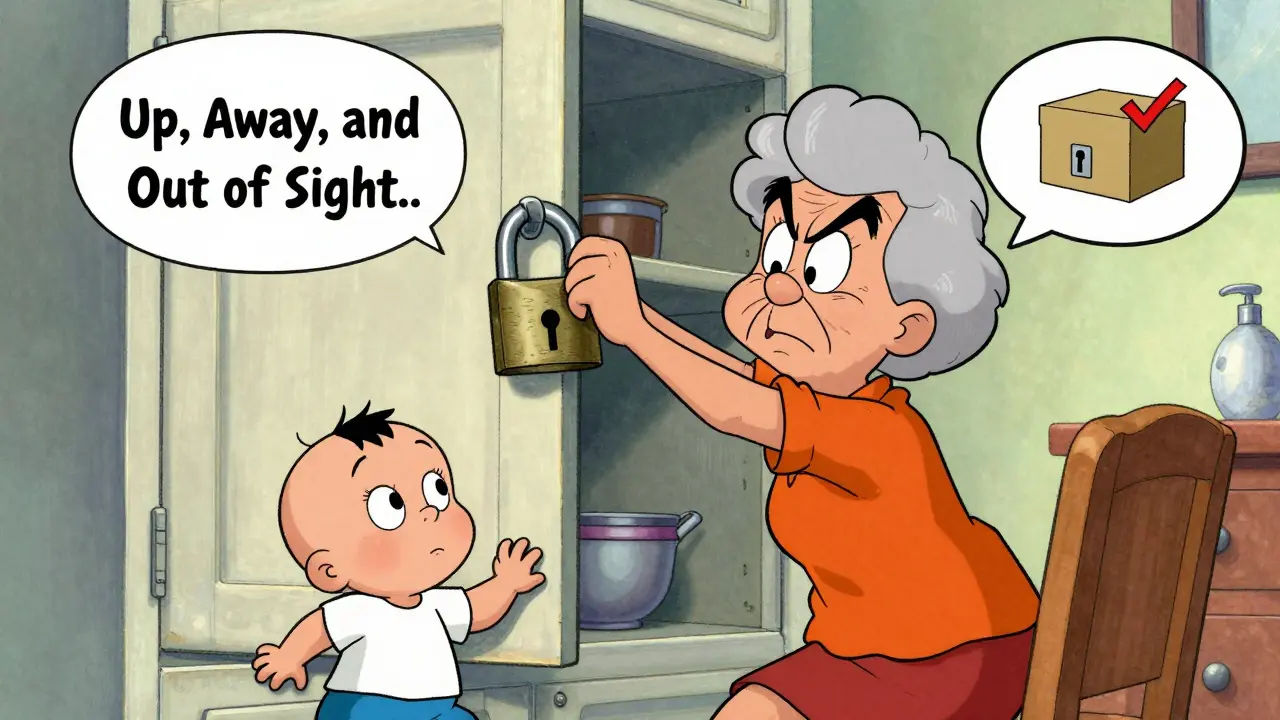
Storage Strategies: Up, Away, and Out of Sight
The gold standard for medication safety comes from the PROTECT Initiative, a collaboration between the Centers for Disease Control and Prevention (CDC) and the Consumer Healthcare Products Association Educational Foundation. Their campaign focuses on three simple rules: store medicines up, away, and out of sight.
Implementing this with grandparents requires concrete steps rather than vague advice. Here is what effective storage looks like:
- Height matters: Medications should be stored at eye level or higher, ideally above 4 feet. This makes them harder for small children to reach even if they climb.
- Lock it down: Use cabinets with latches that require at least 15 pounds of force to open. This exceeds the physical capability of 95% of children under five.
- Original containers only: Never transfer pills to weekly sorters or non-childproof containers for long-term storage. While pill organizers are great for personal use, they lack child-resistant features. Keep the original bottles locked away and fill the organizer daily.
- No purses or bags: A surprising 31% of grandparents keep medications in purses or handbags. These are easily accessible to curious toddlers who view bags as treasure chests.
A study by the NIH demonstrated that a single 15-minute educational session based on these principles improved safe storage practices from 39% to 78% among grandparents within 90 days. The key was showing them exactly where the risks were-bathroom cabinets, kitchen counters, and bedrooms-and providing the tools to fix them.
| Practice | Parents (Ages 30-49) | Grandparents (Caregivers) |
|---|---|---|
| Daily Prescription Use | 42% | 74% |
| Proper Safe Storage | 68% | 52% |
| Use Locked Storage Consistently | 58% | 22% |
| Transfer to Non-Childproof Containers | 8% | 29% |
| Believe Child-Resistant Caps Are Enough | 12% | 36% |
Communication Without Judgment
The hardest part of improving safety isn’t buying a lockbox; it’s having the conversation. Many grandparents feel defensive when their caregiving abilities are questioned. Data from qualitative research suggests that 41% of grandparents initially deny medication risks when approached directly. To avoid this, frame the discussion around shared goals rather than individual failures.
Use phrases like “Let’s make sure our home is as safe as possible for the kids” instead of “You need to stop leaving pills on the counter.” Involve the grandchildren in the process. The CDC recommends a simple “Safety Talk” that includes three messages:
- Medicine is not candy.
- Only adults give medicine.
- If you find medicine, tell an adult immediately.
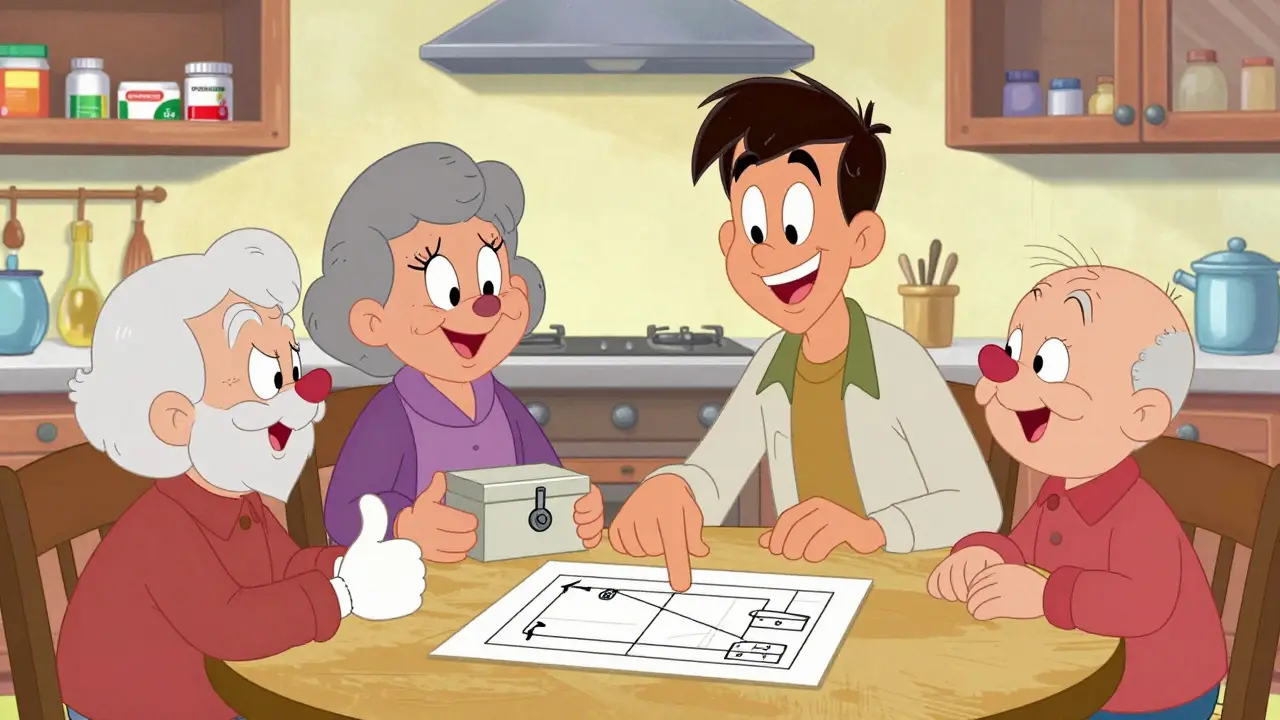
You can reinforce this by having the kids draw “medicine safety” posters or playing games that teach them to stay away from medicine cabinets. This turns safety into a positive family activity rather than a lecture. Additionally, establish clear communication protocols between parents and grandparents. Only 38% of families consistently discuss medication locations and emergency procedures. Make it a routine part of every visit to confirm where the meds are stored and who has access to the locks.
Overcoming Physical and Practical Barriers
Sometimes, the barrier to safety is physical. Arthritis, vision impairment, or mobility issues can make child-resistant caps difficult to open. About 19% of grandparents report physical limitations that prevent proper storage or handling. If a grandparent struggles with the twist-and-push caps, don’t let them remove the cap entirely. Instead, ask their pharmacist for assistance devices or consider asking a local pharmacy to provide pre-filled blister packs that are easier to manage but still secure.
Technology can also help, though adoption varies. The CDC launched the “Grandparent Guardian” digital toolkit in early 2024, featuring multilingual videos on proper storage. For tech-savvy caregivers, apps that send reminders during high-risk periods (like holiday visits) can serve as useful prompts. However, for those less comfortable with digital tools, simple printed magnets with emergency numbers or visual aids demonstrating locked cabinets are highly effective. The goal is to meet them where they are, whether that’s via a smartphone app or a fridge magnet.
Disposal and Maintenance
A cluttered medicine cabinet is a dangerous one. Expired medications lose potency and can sometimes become toxic. Alison Bryant, PhD, Senior Vice President of Research at AARP, advises going through medications every few months to discard anything expired or no longer needed. Don’t flush them unless instructed; most communities have drug take-back programs or designated drop-off boxes at pharmacies.
Regular maintenance reduces the overall volume of pills in the house, which lowers the statistical probability of an accident. Encourage grandparents to schedule annual medication reviews with their doctors. This not only ensures their own health but also clears out old bottles that might look like candy to a toddler.
What is the safest place to store medicine in a grandparent's home?
The safest place is a locked cabinet or drawer that is located above eye level (at least 4 feet high). Avoid bathroom cabinets, which are often humid and accessible, as well as nightstands and dressers. If a dedicated locked cabinet isn't available, a portable lockbox placed in a closet or high shelf is an excellent alternative.
Are child-resistant caps enough to protect my grandchildren?
No, they are not enough on their own. Testing shows that 30% of four-year-olds can open child-resistant caps in under five minutes. These caps are designed to delay access, not prevent it permanently. They must be combined with proper storage-up, away, and out of sight-to be effective.
How do I talk to my parents about medication safety without offending them?
Focus on the shared goal of keeping the children safe rather than criticizing their habits. Use neutral language like “Let’s update our safety plan” or “I found some helpful tips from the CDC we should try.” Offering to buy them a lockbox or helping them organize their medicine cabinet together can make the process collaborative rather than confrontational.
What should I do if a grandchild swallows a pill?
Call Poison Control immediately at 1-800-222-1222 or go to the nearest emergency room. Have the medication bottle ready to provide details on the drug name, dosage, and approximate amount ingested. Do not induce vomiting unless instructed by a medical professional.
Can grandparents use weekly pill organizers for safety?
Weekly pill organizers are convenient for administration but are generally not child-resistant. They should be used only for the day’s dose and kept out of reach when not in immediate use. Long-term storage should always remain in the original, locked, child-proof containers.