

Every year, Medicare beneficiaries get the chance to review their medications through a Medicare Annual Medication Review a structured consultation mandated by the Medicare Modernization Act of 2003 that requires all Medicare Part D insurers to provide Medication Therapy Management (MTM) services. This process, also called a Comprehensive Medication Review (CMR), is your opportunity to ensure all your medications work safely together. Without proper preparation, you might miss critical issues like dangerous drug interactions or unnecessary prescriptions. Real beneficiaries have saved money and avoided health risks simply by bringing their pill bottles and writing down questions beforehand.
Step 1: Gather All Your Medications
Start by collecting every medication you take. This includes prescription drugs, over-the-counter (OTC) pain relievers, herbal supplements like St. John’s Wort, and vitamins. Bring the original containers-pharmacists need to see the labels to confirm doses and expiration dates. It might take 20-30 minutes, but it’s worth it. One Reddit user shared: "I brought my fish oil capsules and found out they interacted with my blood thinner." Without the actual bottles, the pharmacist can’t verify what you’re taking.
Step 2: Document Your Medication Concerns
Before the review, write down specific issues you’ve noticed. Are you having side effects? Do you forget doses? Is a medication too expensive? For example, note things like "I feel dizzy after taking my blood pressure pill" or "I can’t afford my insulin." This takes about 15-20 minutes. According to the Medicare Rights Center, beneficiaries who bring written concerns have 78% higher satisfaction with their review. If you use a pill organizer, list each compartment’s contents too. Many people forget they’re taking OTC medications like antacids or sleep aids, so include those.
Step 3: Review Recent Health Changes
Think about any new health issues in the last few months. Did you have a hospital visit? A fall? Changes in your blood sugar or blood pressure? Write these down. Also check recent lab results, like kidney function tests, which can affect medication safety. This step takes 10-15 minutes. For instance, if you started a new heart condition, your pharmacist might adjust your blood pressure meds. Medicare’s 2025 guidelines say this information is crucial for identifying medication-related problems.

Step 4: Prepare a List of Questions
Write down specific questions you have. Common ones include: "Is this medication really necessary?", "Can I switch to a cheaper version?", or "What should I do if I miss a dose?" For complex regimens, ask about interactions between all your meds. A 2023 study by the National Community Pharmacists Association found that beneficiaries who brought 3-5 clear questions had 40% fewer follow-up appointments. Example: "I take warfarin and aspirin-should I keep both?"
Step 5: Bring a Helper
Medication reviews can be overwhelming. Bring a family member or friend to take notes and ask questions. They might catch details you miss, like a medication you forgot to mention. The Medicare Rights Center recommends this for 90% of seniors with 5+ medications. One beneficiary said: "My daughter remembered I took a herbal tea for sleep-I had no idea it interacted with my heart meds."
How CMR Differs from Regular Pharmacy Consultations
| Aspect | CMR | Standard Pharmacy Consultation |
|---|---|---|
| Scope | Reviews all medications including OTC, supplements, and herbs | Usually focuses on one prescription at a time |
| Documentation | Provides a written summary with action plan | No formal written summary required |
| Eligibility | Requires meeting Medicare criteria (3+ chronic conditions, etc.) | Available to anyone, no eligibility requirements |
| Duration | 45-60 minutes minimum | 5-10 minutes for a refill check |
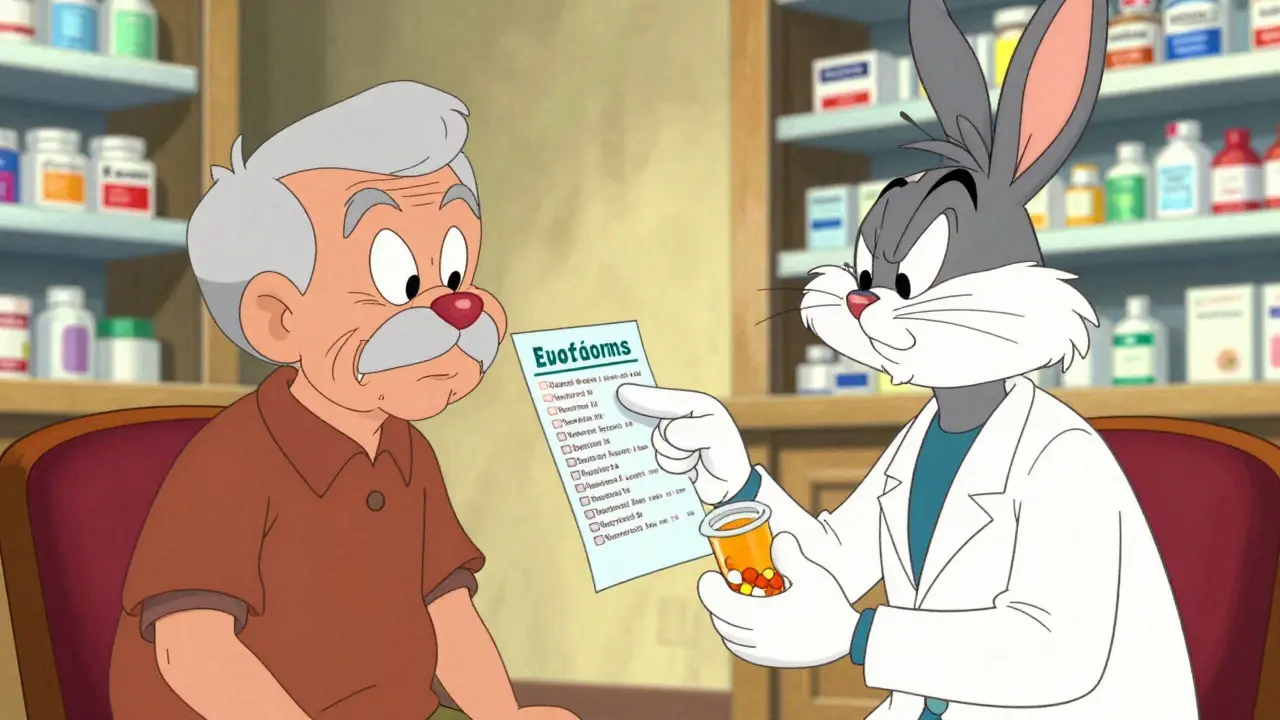
Common Mistakes to Avoid
Many beneficiaries skip the CMR because they don’t prepare properly. Here’s what not to do:
- Don’t rely on memory-bring physical pill bottles. A 2024 Medicare.gov review found 65% of beneficiaries forgot at least one medication when using memory alone.
- Avoid vague questions like "Is this okay?" Instead, ask "What side effects should I watch for with this new medication?"
- Don’t skip the review if you think your meds are fine. Studies show 30% of seniors with "stable" regimens have hidden drug interactions.
- Never assume your pharmacist knows all your medications. They only see what’s in your Part D claims data, not OTC or supplements.
What Happens During the Review
Your pharmacist will go through each medication, checking for duplicates, interactions, and adherence issues. They’ll explain how to take each drug safely and suggest cost-saving alternatives. For example, they might switch you to a generic version of a brand-name drug or adjust doses based on your kidney function. The review ends with a Medication Action Plan a CMS-mandated written summary of changes and next steps and a Personal Medication List an updated list of all medications for your records. This happens in person or via telehealth. The entire process takes 45-60 minutes.
After the Review: Next Steps
Follow up on any changes your pharmacist recommends. If they suggest a new medication, ask for a trial period. For cost issues, check if your plan has a low-cost alternative. Keep the Personal Medication List in your wallet or phone. Update it whenever you start or stop a medication. Remember, this isn’t a one-time fix-medications change as your health does. Schedule your next review early: CMS requires it every 365 days, but many beneficiaries wait too long. In 2025, the cost threshold for eligibility dropped to $1,623 in annual out-of-pocket expenses, making more seniors eligible.
Who qualifies for a Medicare Annual Medication Review?
As of 2025, you qualify if you have at least three chronic conditions (like diabetes or heart disease), take eight or more Part D-covered medications, and spend over $1,623 out-of-pocket on medications annually. However, CMS updated eligibility in 2024 to include beneficiaries with two chronic conditions in high-risk groups. Check with your Part D plan for specifics.
Can I do the review over the phone?
Yes! Medicare allows telehealth CMRs. Your pharmacist will call you for a 45-minute conversation. Bring your pill bottles nearby so you can show them during the call. Many seniors prefer this option for convenience, especially if traveling or with mobility issues. Just ensure you have a quiet space and all medications ready to discuss.
What if I miss my scheduled review?
Contact your Part D plan immediately. They must offer the review within 60 days of enrollment. If you miss it, they’ll reschedule within 30 days. Don’t wait-delaying could mean missing critical medication adjustments. For example, a 2023 study found 22% of missed reviews led to preventable hospitalizations due to unaddressed drug interactions.
Do I need to pay for this review?
No. The Medicare Annual Medication Review is a free benefit under Part D. Your plan covers it entirely. You won’t pay a copay or deductible. This is part of the Medicare Modernization Act of 2003, which requires insurers to provide this service at no cost to eligible beneficiaries.
How often should I update my medication list?
Update your Personal Medication List every time you start, stop, or change a medication. Keep it in your wallet or phone for emergencies. During the review, your pharmacist will verify and update it. A 2024 Medicare Rights Center report found that beneficiaries who updated their list monthly had 35% fewer medication errors than those who updated it yearly.



Johanna Pan
February 6, 2026 AT 18:59Bringing all pill bottles is cruical.
I once forgot my fish oil and it caused issues with my blood thinner.
Always check with a pharmacist.
Jenna Elliott
February 8, 2026 AT 14:50This is all wrong Medicare is not doing enough People are getting hurt Stop ignoring the problem The system is broken
Elliot Alejo
February 9, 2026 AT 22:26Bringing pill bottles is key.
I had a similar experience where a supplement caused issues.
Always check with a pharmacist.
lance black
February 10, 2026 AT 06:52Bring your bottles and stay safe.
Laissa Peixoto
February 12, 2026 AT 00:15Medication reviews are more than just checking pills.
It's about understanding how each drug affects your body.
Many people overlook this.
It's important to think holistically.
Samantha Beye
February 13, 2026 AT 06:03Bringing pill bottles is a small step but it makes a big difference.
I've seen many people benefit from this.
Take the time to prepare.
Georgeana Chantie
February 13, 2026 AT 14:44This is all a scam.
Medicare is just trying to save money.
People are being taken advantage of. 😡
Carol Woulfe
February 15, 2026 AT 06:42The government is hiding something.
This review is a way to control our medications.
I've read about it.
It's all part of the plan.
But I know better.
Kieran Griffiths
February 16, 2026 AT 04:06Bringing your meds is crucial.
I've seen many seniors benefit.
Always prepare.
Brendan Ferguson
February 17, 2026 AT 20:06It's important to check for interactions.
I had a friend who had issues with OTC meds.
Always bring everything.
jan civil
February 19, 2026 AT 16:07Bring pill bottles.
OTC meds can interact.
Check with a pharmacist.
Simple steps save lives.