
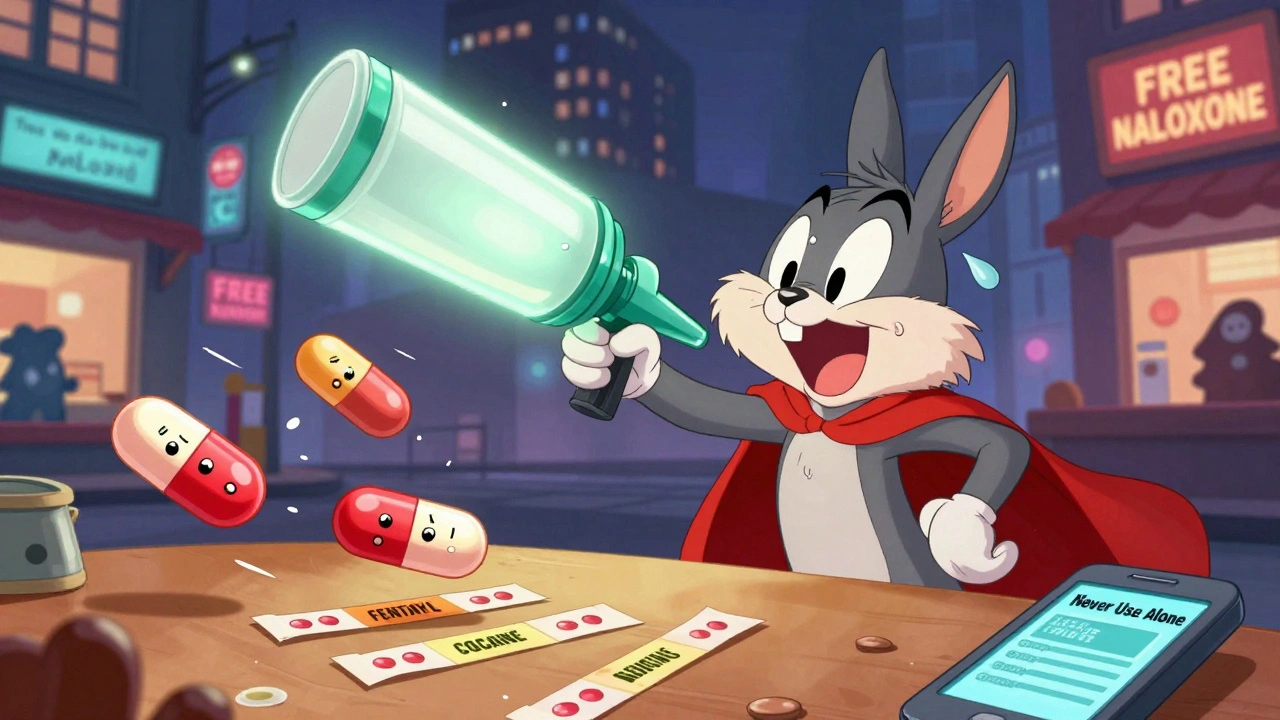
Every year, more than 70,000 people in the United States die from drug overdoses. Most of these deaths are preventable. The biggest killer? Fentanyl - a synthetic opioid so powerful that just two milligrams can stop someone’s breathing. And it’s not just in heroin anymore. It’s in fake pills, cocaine, meth, and even glittery party drugs sold on social media. If someone you care about has a substance use disorder, knowing how to prevent an overdose isn’t just helpful - it’s life-or-death.
Know the Signs of an Overdose
An overdose doesn’t always look like someone collapsing. Sometimes it’s subtle. Look for these signs:- Slow, shallow, or stopped breathing
- Blue or purple lips and fingernails
- Unresponsiveness - shaking them won’t wake them up
- Gurgling or snoring sounds (like they’re drowning)
- Pinpoint pupils
Keep Naloxone On Hand - It’s Not Just for Opioids Anymore
Naloxone is the only medication that can reverse an opioid overdose. It’s safe, fast, and works even if you don’t know exactly what the person took. Since most overdoses now involve fentanyl - which is 50 to 100 times stronger than morphine - having naloxone nearby is like carrying a fire extinguisher in your house. There are two main types:- Intranasal spray (Narcan, Kloxxado): Easy to use. No needles. Just spray one dose into each nostril.
- Injectable: Requires training but lasts longer and can be used if the nasal spray doesn’t work.
Use Fentanyl Test Strips Before Using
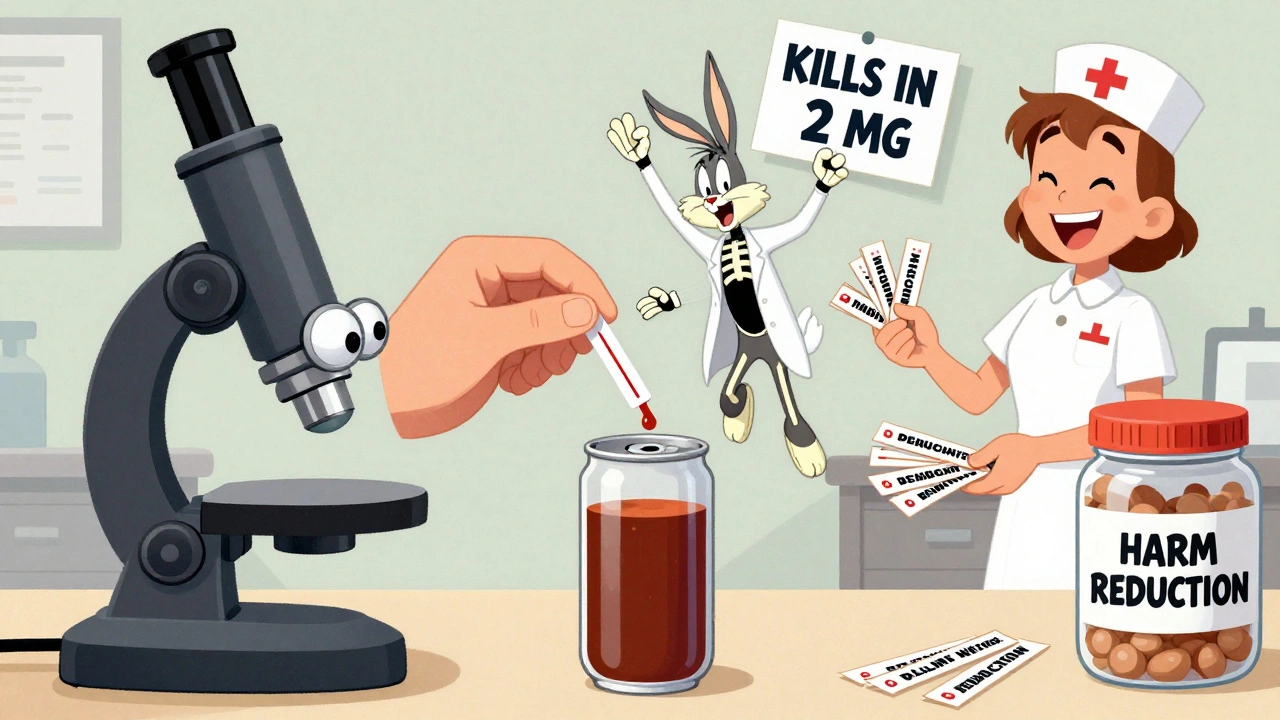
Fentanyl doesn’t smell or taste like anything. You can’t see it. It’s often mixed into drugs without the user’s knowledge. That’s why fentanyl test strips are one of the most powerful tools for harm reduction. Here’s how they work:- Dissolve a small amount of the drug in water (about the size of a grain of rice).
- Dip the strip in for 15 seconds.
- Wait 5 minutes.
- One line = fentanyl detected. Two lines = no fentanyl.
Medication-Assisted Treatment (MAT) Is the Most Effective Long-Term Solution
The best way to prevent overdose isn’t just reacting - it’s treating the disorder itself. Medication-Assisted Treatment (MAT) combines FDA-approved medications with counseling and behavioral therapy. Three medications are proven to work:- Methadone: Taken daily in clinics. Reduces cravings and withdrawal. Has been used since the 1940s.
- Buprenorphine: Available as a pill or film under the tongue. Can be prescribed by trained doctors in offices. Less risk of misuse than methadone.
- Naltrexone: A monthly shot or daily pill. Blocks opioids from working. Best for people who are already detoxed.
Never Use Alone - And Know the Hotline
Most fatal overdoses happen alone. People are afraid to call 911 because they fear arrest, shame, or losing custody of their kids. That’s why the “Never Use Alone” hotline exists. It’s free, anonymous, and staffed 24/7 by trained volunteers. Here’s how it works:- Call or text the number before using.
- Someone stays on the line while you use.
- If you stop responding, they call emergency services and send your location.
- Always have naloxone nearby.
- Use with someone who knows how to respond.
- Have the “Never Use Alone” number saved in your phone.
- Keep your door unlocked so help can get in.
Be Aware of New Threats Like Xylazine
A new drug called xylazine - often called “tranq” - is showing up in drug supplies. It’s not an opioid. It’s a veterinary sedative. Naloxone doesn’t reverse it. But it can cause severe wounds, slow breathing, and unconsciousness. If someone is passed out and you can’t wake them, even after naloxone, assume xylazine might be involved. Call 911 anyway. Emergency responders now know to treat xylazine overdoses with supportive care: oxygen, IV fluids, and monitoring until the drug wears off. The DEA found xylazine in 23% of fentanyl powder and 7% of fake pills seized in 2022. It’s spreading fast. If you’re testing for fentanyl, assume xylazine could also be there.Help Someone Access Treatment - Without Judgment
Stigma kills. Forty-one percent of people with substance use disorders don’t seek help because they’re afraid of being judged. If someone you care about is struggling, don’t say, “Just stop.” Say, “I’m here. Let’s find help.” Offer to drive them to a clinic. Help them call a helpline. Sit with them while they wait for an appointment. Recovery isn’t linear. Relapse doesn’t mean failure - it means the treatment needs adjusting. The CDC says the most effective prevention strategy is combining MAT with access to naloxone and harm reduction services. Not one. All of them.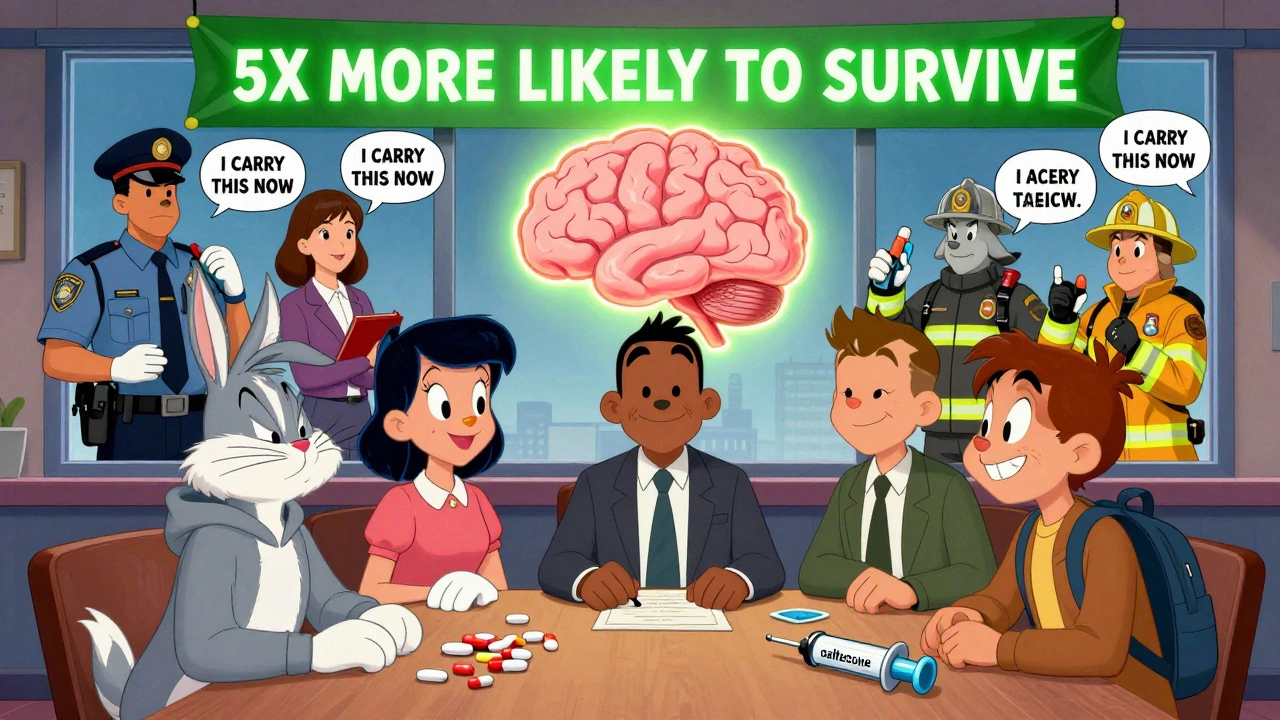
What to Do If Someone Overdoses
If you think someone is overdosing:- Call 911 immediately. Say, “I think someone is overdosing.” Don’t wait to see if they wake up.
- Give naloxone if you have it. Use the nasal spray first. If no response in 2-3 minutes, give a second dose.
- Start rescue breathing if they’re not breathing. Tilt their head back, pinch their nose, and give one breath every 5 seconds.
- Stay with them until help arrives. Even if they wake up, they need medical care. Naloxone wears off faster than most opioids - they can overdose again.
Where to Get Help Right Now
- Naloxone: Available at most pharmacies without a prescription. Ask for Narcan or Kloxxado.
- Fentanyl test strips: Order free ones from harmreduction.org or get them at local syringe exchanges.
- Medication-Assisted Treatment: Call SAMHSA’s National Helpline at 1-800-662-HELP (4357). Free, confidential, 24/7.
- Never Use Alone: Text or call 1-800-484-3731.
- MyNarcan App: Free app that shows nearby naloxone locations and gives step-by-step overdose response instructions.
What’s Changing in 2025
The federal government is pushing hard to expand access. By 2025, the goal is to increase naloxone distribution by 50%. More pharmacies will stock it for free. More schools and public buildings will have it on the wall. New laws are making it easier for police, firefighters, and even teachers to carry it. There’s also a new medication called nalmefene - approved in 2022 - that lasts 4 to 8 hours, compared to naloxone’s 30 to 90 minutes. It’s especially useful for people who use long-acting opioids or take multiple drugs. But the biggest change? More people are talking about it. More families are keeping naloxone in their homes. More workplaces are training staff. Prevention is no longer seen as just a medical issue - it’s a community responsibility.Can naloxone be used on someone who didn’t take opioids?
Yes. Naloxone only works on opioid receptors. If someone didn’t take opioids, it won’t hurt them - but it also won’t help. It’s safe to use if you’re unsure. The risk of giving it to someone who didn’t overdose is zero. The risk of not giving it when they did? Death.
Is fentanyl only a problem for people who use heroin?
No. Fentanyl is now found in fake prescription pills (like oxycodone or Xanax), cocaine, methamphetamine, and even MDMA. Many people don’t know they’re taking it. That’s why test strips are critical - even if you’ve never used opioids before.
Can I get arrested for carrying naloxone or fentanyl test strips?
In most states, no. Naloxone is legal to carry without a prescription. Fentanyl test strips are not classified as drug paraphernalia in over 30 states. Even where laws are unclear, federal guidelines support harm reduction. If you’re worried, check your state’s harm reduction laws - most now protect people who carry or use these tools.
Why doesn’t MAT work for everyone?
MAT isn’t a magic cure - but it’s the most effective tool we have. Some people can’t access it because of cost, stigma, or lack of providers. Others need more support - like housing, therapy, or job training - to stay in treatment. MAT works best when it’s part of a full recovery plan, not a standalone fix.
What if I give naloxone and the person doesn’t wake up?
Call 911 immediately. Give a second dose of naloxone if you have it. Start rescue breathing. Don’t stop until paramedics arrive. Even if naloxone doesn’t work, they may have taken xylazine, alcohol, or another sedative. Emergency responders have tools to help - but only if they’re called.
Is it true that overdoses are rising again?
Yes. After a brief drop during the pandemic, overdose deaths rose again in 2023, mostly due to fentanyl and xylazine. Polysubstance use - mixing drugs - is now involved in 78% of all overdose deaths. Prevention strategies need to evolve. That’s why having naloxone, test strips, and access to MAT is more important than ever.

sean whitfield
December 6, 2025 AT 03:41Mellissa Landrum
December 7, 2025 AT 02:08Manish Shankar
December 8, 2025 AT 00:59luke newton
December 9, 2025 AT 13:42Lynette Myles
December 10, 2025 AT 18:35Carole Nkosi
December 11, 2025 AT 05:10ashlie perry
December 12, 2025 AT 21:54Juliet Morgan
December 14, 2025 AT 02:17Harry Nguyen
December 14, 2025 AT 12:42Deborah Jacobs
December 16, 2025 AT 01:45Kylee Gregory
December 18, 2025 AT 00:01Lucy Kavanagh
December 19, 2025 AT 19:45