

Mixing medications is one of the most dangerous things you can do to your health, yet millions of people walk into clinics without telling their doctor everything they take. According to recent data, adverse drug reactions cause over 100,000 deaths annually in the United States alone. That number includes preventable errors that happen simply because providers didn't have the full picture. If you see multiple specialists, which many of us do as we age, your safety relies on you carrying a Complete Medication List A comprehensive record containing every prescription, over-the-counter product, vitamin, and supplement a patient uses, including dosage and timing details. . Without it, you risk severe interactions that could end up on your death certificate or leave you hospitalized.
We need to move away from thinking that only big-name prescriptions matter. The real danger lies in the gaps-those vitamins your mother gave you or that anti-inflammatory cream you bought at the store. Sharing this list isn't just about bureaucracy; it is the single most effective way to stop a hospital admission before it happens.
What Actually Belongs on Your List?
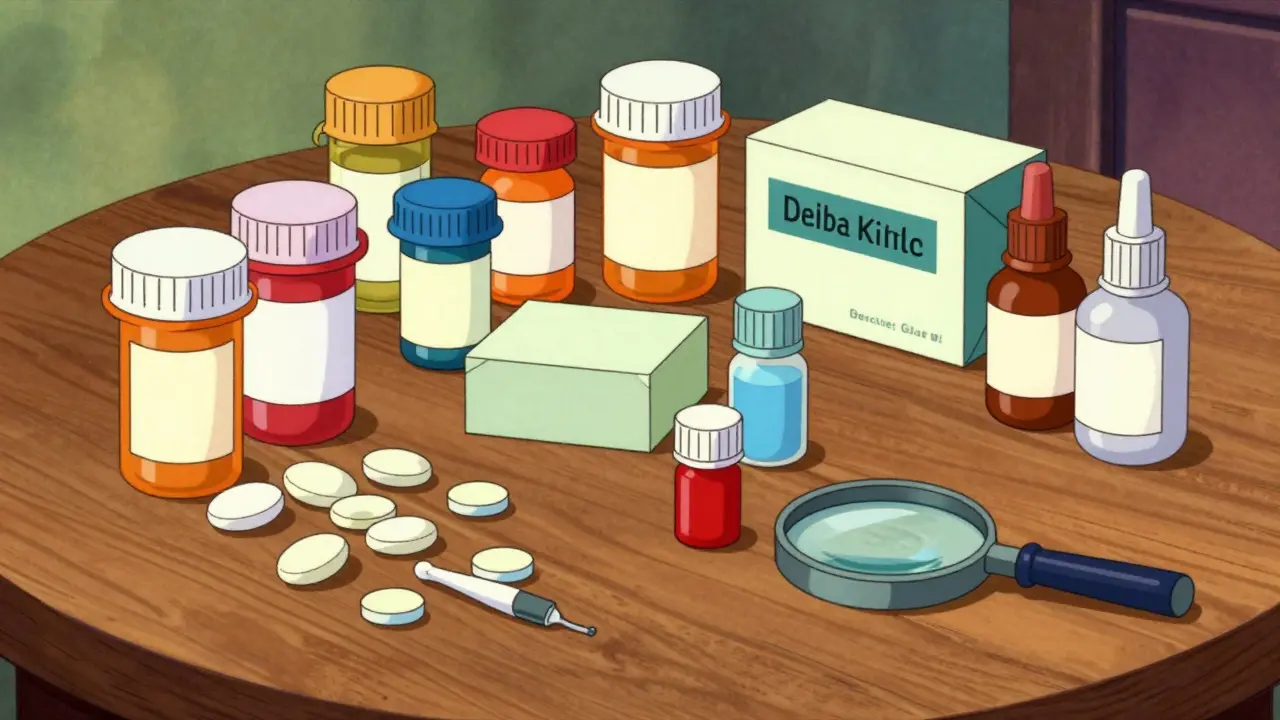
Most people make the mistake of listing only the drugs prescribed by their general practitioner. A truly complete list is much broader. It needs to capture every substance entering your body that has a chemical effect. Start with your prescription medications. Write down the exact name (both brand and generic), the strength (like Lisinopril 10 mg), and exactly how often you take it.
- Prescriptions: Include start dates and who prescribed them.
- Over-the-Counter (OTC) Products: Tylenol, ibuprofen, antihistamines.
- Vitamins and Minerals: Vitamin D, Calcium, Iron complexes.
- Herbal Supplements: St. John's Wort, Ginseng, Turmeric extracts.
- Allergies: Specify the reaction, such as "Penicillin causes hives."
If you take heart medication, note whether you need to take it with food or on an empty stomach. For example, thyroid hormones like levothyroxine work differently if taken alongside breakfast. The Merck Manuals specify that understanding the condition each medication treats is also vital context for your new specialist. They don't need to treat your back pain again, but they need to know you took the previous medicine for pain so they understand your history.
| Component | Specific Details Needed |
|---|---|
| Medication Name | Brand and Generic (e.g., Metformin / Glucophage) |
| Dosage | Strength and Frequency (e.g., 500mg twice daily) |
| Administration Route | Oral, Inhaler, Cream, Patch |
| Indication | The specific condition being treated |
| Supplements | All vitamins and herbal products |
Digital Tools Versus Physical Lists
In 2026, technology offers powerful ways to track your health data, but relying solely on one method creates risks. Electronic Health Records (EHR) maintained by your primary care provider are excellent, but studies show they often miss over-the-counter drugs and supplements. A 2023 NIH study found that electronic records captured only 52% of non-prescription items accurately.
This means your personal system must bridge that gap. Smartphone health apps are convenient; however, 23% of adults over 65 face accessibility barriers due to device complexity. The most robust strategy combines digital convenience with physical backup. Use a dedicated app like Medisafe to track adherence, but keep a printed summary card in your wallet for emergencies. Paper lists show 62% accuracy in emergency rooms, whereas phone batteries die or get locked.
A Clinical Pharmacist A healthcare professional specialized in the science of medicines and providing optimal pharmacotherapy to patients. remains your most critical ally here. Independent pharmacies utilize screening technology that detects 92% of major interactions automatically. If you fill all prescriptions at one pharmacy, their computer flags conflicts immediately. Do not split your prescriptions between five different stores. This consolidation is one of the highest-value habits you can adopt for personal safety.
The Mechanics of Sharing Your List
Holding the list is useless if you don't present it effectively. Many patients wait for the doctor to ask, but statistics indicate 63% of providers do not routinely request it. You must hand it to the receptionist or the doctor at the very beginning of the visit. Do not put it in the chart folder silently. Explicitly say, "This is my current list, please cross-check these new prescriptions against what I am already taking."
Timing matters significantly during appointments. If you are starting a new therapy, ask specifically about timing windows. Statins, for instance, interact differently depending on whether you take them in the morning or evening. Ask questions like, "Could this interact with my grapefruit juice intake?" or "Should I space this out from my morning coffee?" These inquiries force the provider to run through an interaction check with fresh eyes rather than relying on outdated memory.
When you visit a hospital or urgent care, especially in an emergency situation, having your list ready saves lives. An Emergency Room physician cannot access your home pharmacy records instantly in every jurisdiction. Providing the physical wallet card ensures immediate verification of your allergies and anticoagulants. This prevents accidental administration of blood thinners to someone who is already bleeding internally.

Avoiding the Most Common Mistakes
The biggest failure point in medication safety is the assumption that old medications are no longer active. If a doctor stops a pill in June, you shouldn't remove it from your list until you confirm it is truly gone. The Institute for Safe Medication Practices notes that failing to document discontinued meds accounts for 28% of errors. Instead of deleting the line, mark it with a red pen as "STOPPED [Date]" and bring the updated version next month.
Polypharmacy-the use of five or more medications-is rampant, with 40% of older adults affected. As your regimen grows complex, the risk of interaction skyrockets. Patients on five or more drugs experience 87% more interaction risks compared to those on fewer. Regular reviews become essential. Schedule a monthly check-up of your own supplies. Throw away expired boxes and update your master document. If you notice duplicates, such as taking two different brands of the same NSAID, speak to your GP immediately.
Another frequent error involves missing allergy documentation. Simply saying "Allergic to Codeine" is vague. Documenting "Codeine causes difficulty breathing" provides actionable data. Vague labels allow clerks to accidentally substitute a drug with a similar ingredient. Precision in your wording protects you when you are too confused to speak for yourself.
Keeping Your List Accurate Over Time
Updating your medication record is an ongoing process, not a one-time task. Guidelines suggest updating the list within 24 hours of any change. If you visit a specialist for a knee injury, you might pick up a short-term steroid. When that course finishes, you must update your primary record. Leaving "temporary" meds on your permanent list confuses future doctors who will think you still require them.
The FDA's "My Medicine Record" form provides a free, standardized template that works well for this purpose. Digital platforms are improving rapidly. By 2026, interoperability standards are making it easier for pharmacies to share data across systems. However, you remain the project manager of your own health. Don't rely solely on the system to be perfect. Verify that your electronic portal matches your physical bottles. Discrepancies between the app and the bottle label are common warning signs of administrative error.
Should I include vitamins and supplements on my medication list?
Yes, absolutely. Many natural supplements interact powerfully with prescription drugs. St. John's Wort, for example, can interfere with birth control and blood thinners. Listing them prevents the pharmacist from missing a critical chemical conflict.
Who is responsible for updating my medication list?
While doctors update electronic records, you hold the ultimate responsibility. Doctors may not know about OTC drugs or supplements. Keep your own master copy and carry it to every appointment.
Is there a penalty for omitting an OTC drug?
It can lead to serious harm. Missing OTC medications contribute to 30% of serious drug interactions reported to safety agencies. Always include cold and flu remedies.
How often should I review my list?
Review your list every month. Medical guidelines recommend doing this within 24 hours of any medication change to ensure accuracy.
Does my doctor really check this list?
Not always. Studies show 63% of providers do not ask for the list unless the patient offers it. Proactive sharing is required to trigger a safety check.


Michael Kinkoph
March 30, 2026 AT 11:47The sheer negligence displayed by individuals who fail to maintain such documentation is utterly staggering!! One truly wonders how society functions without basic diligence!!!
Kendell Callaway Mooney
March 31, 2026 AT 22:13This guide makes keeping track much easier for families managing elderly relatives who struggle with complex dosages and schedules.
RONALD FOWLER
April 1, 2026 AT 18:29Good advice, we all need to keep our medicine lists updated and share them with every doctor we visit.
Adryan Brown
April 2, 2026 AT 08:31It is absolutely crucial that everyone understands the gravity of medication mismanagement in modern healthcare systems today. We see so many people walking into clinics without proper documentation of what they are currently consuming on a daily basis. The statistics regarding preventable deaths due to adverse drug interactions are genuinely alarming to anyone paying attention. You have to consider that your primary care physician is often overwhelmed by patient volume during standard consultations. Consequently, they simply cannot remember every single supplement or over-the-counter item you took last month. If you do not provide a comprehensive written record yourself then you are putting yourself directly at risk for severe health complications. It is not enough to rely solely on electronic health records because those systems frequently lack data on non-prescription items. Many digital tools fail to capture herbal supplements which are known to interact dangerously with common blood thinners. A physical wallet card serves as a robust backup method when technology inevitably fails during emergency situations. Patients must take ownership of their medical data by treating it as a living document that requires monthly updates. Ignoring temporary prescriptions after they are discontinued can lead to confusion months down the line for future specialists. Pharmacists are often the unsung heroes who catch these interactions before harm occurs if all prescriptions are filled at one location. Consolidating your pharmacy use is one of the most effective safety strategies available to the general population right now. Emergency room doctors need immediate access to accurate allergy information to prevent fatal allergic reactions during triage procedures. Every patient should view themselves as the project manager of their own personal health outcomes and safety protocols. Taking control of this administrative task could save your life when you are unable to communicate clearly to medical personnel.
Charles Rogers
April 3, 2026 AT 02:16People like you always think you know better than everyone else even though you probably cant even read a prescription label properly yourself.
Christopher Curcio
April 3, 2026 AT 19:50Polypharmacy represents a significant clinical challenge within geriatric populations requiring rigorous pharmacovigilance protocols to mitigate iatrogenic events.
Ruth Wambui
April 4, 2026 AT 07:51Big Pharma wants us confused so we keep buying more pills while the big data collection continues behind the scenes unchecked.
sanatan kaushik
April 4, 2026 AT 09:03Just listen to him he knows stuff and you need to stop ignoring the warnings.
Jonathan Alexander
April 5, 2026 AT 09:34I found myself completely shocked reading that earlier response because it lacks any real understanding of the situation.
Vikash Ranjan
April 6, 2026 AT 14:08All this jargon doesn't change the fact that patients are still dying from these preventable errors despite all the fancy words.
Angel Ahumada
April 7, 2026 AT 20:01ordinary people shouldn't expect to understand these things anyway its too complex for the masses who just follow orders
dPhanen DhrubRaaj
April 8, 2026 AT 06:55we should all focus on learning together instead of fighting about who knows best about safety measures