
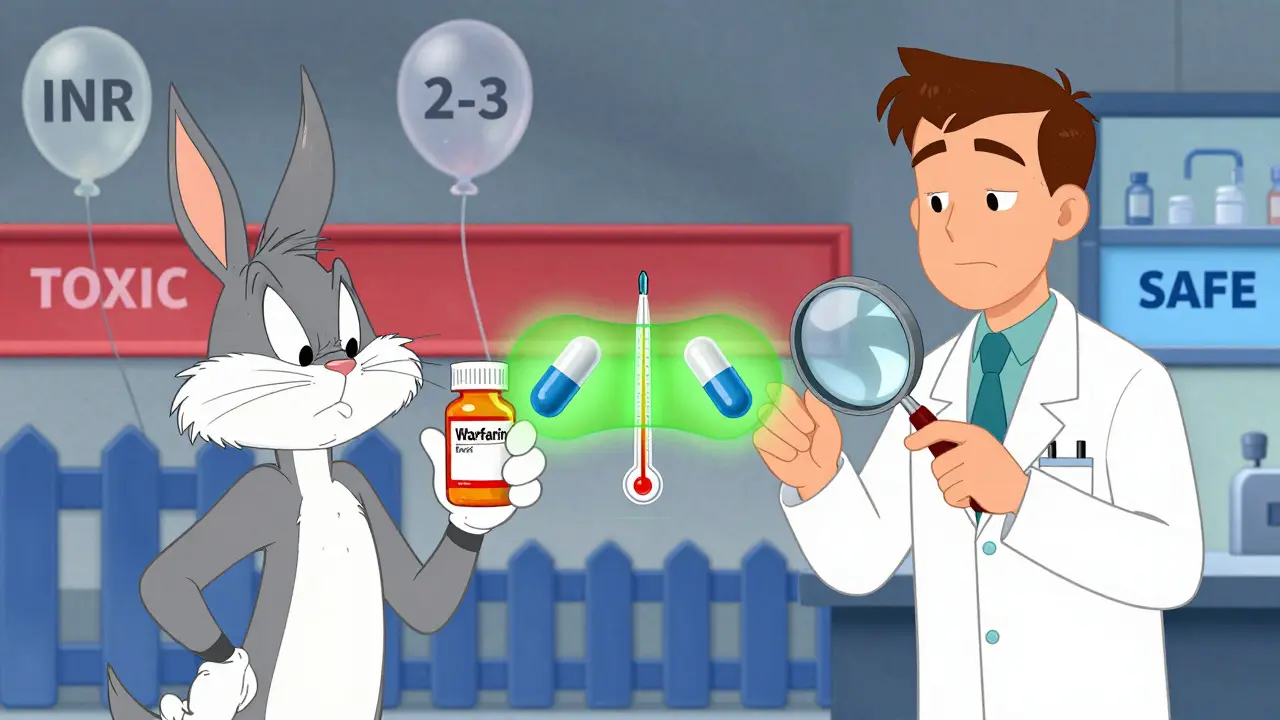
When a patient is switched from a brand-name drug to a generic version, most people assume it’s just a cost-saving change. But for drugs with a narrow therapeutic index (NTI), that assumption can be dangerous. These aren’t ordinary medications. A tiny change in dose - even as small as 5% - can mean the difference between treatment working and something going seriously wrong. Think seizures returning, blood clots forming, or heart rhythm problems. That’s why how you talk to patients about switching NTI generics isn’t just important - it’s critical.
What Makes NTI Drugs Different?
NTI drugs have a very small window between the dose that works and the dose that harms. It’s not like taking an antibiotic, where you can miss a pill and still be okay. With NTI drugs, if your blood level drops too low, the treatment fails. If it rises too high, you risk toxicity. There’s no room for error. Examples include:- Warfarin - used to prevent blood clots. The target INR is 2-3. Too low? Clot risk. Too high? Bleeding risk.
- Phenytoin - an anti-seizure drug. Levels below 10 mcg/mL may not control seizures. Above 20 mcg/mL? Toxicity, including dizziness, nausea, and even coma.
- Levothyroxine - for thyroid replacement. Even small changes can cause fatigue, weight shifts, or heart palpitations.
- Digoxin - for heart failure. Therapeutic range is 0.5-0.9 ng/mL. A slight increase can cause life-threatening arrhythmias.
- Valproic acid and carbamazepine - both used for epilepsy and mood disorders. Small fluctuations can trigger seizures or mood crashes.
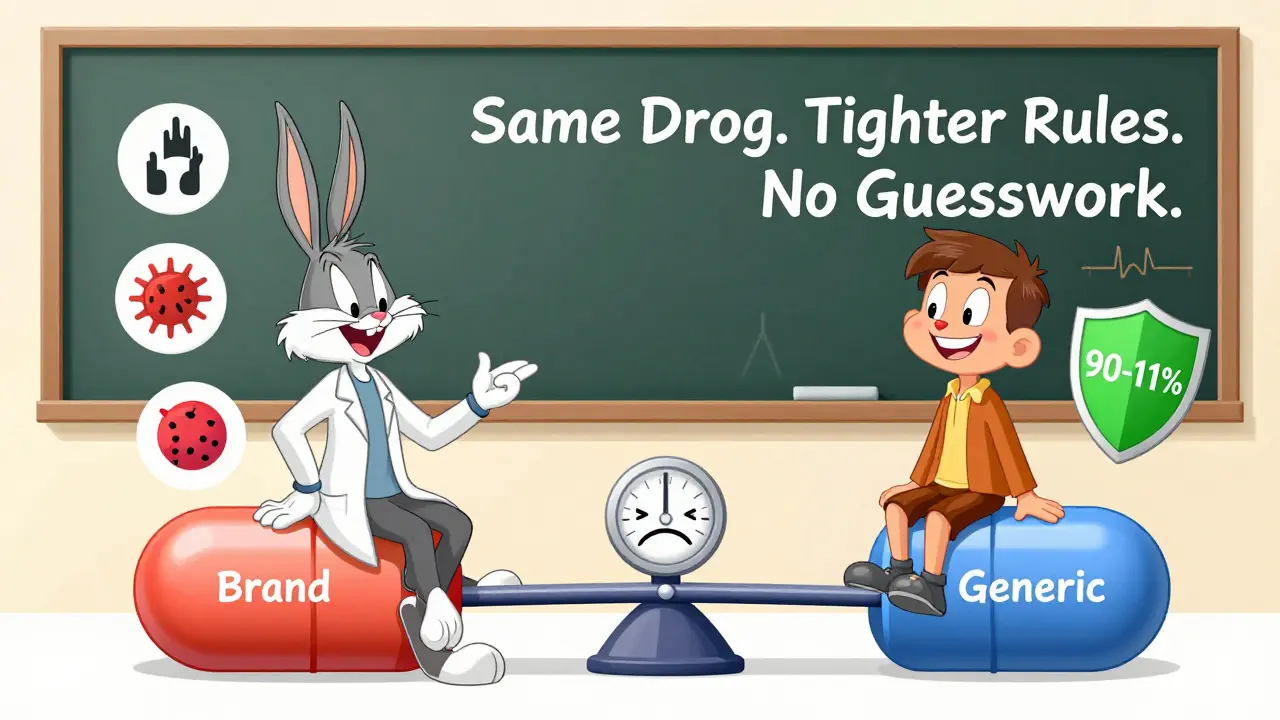
The FDA requires stricter testing for these generics. While regular generics must match the brand within 80-125% of the original drug’s absorption, NTI generics must stay within 90.00%-111.11%. That’s a tighter range. But even with this, confusion lingers.
Why Do Patients and Providers Still Worry?
A 2017 survey of pharmacists showed that 87% believed generic NTI drugs were just as effective. Yet only 60% consistently substituted them. Why? Because patients and even some doctors remember stories - a seizure returned after switching, an INR spiked, someone had to go to the ER. The truth? Most of these events aren’t caused by the generic itself. Studies show that when patients are properly monitored after a switch, outcomes are nearly identical to staying on the brand. But the fear sticks. And that’s where communication breaks down. Many providers say: “It’s the same drug.” But that’s not enough. Patients aren’t just asking about chemistry. They’re asking: “Will this hurt me? Will I get sick? Will I end up back in the hospital?”What You Must Say - And How to Say It
Don’t just inform. Educate. And do it with trust, not jargon. Here’s what works:- Start with empathy: “I know you’ve been stable on your current medication. Switching anything can feel risky - and you’re right to be cautious.”
- Use clear comparisons: “This generic has the exact same active ingredient. It’s not a different medicine. It’s been tested to release the same amount of drug into your bloodstream as the brand - within 90% to 111%.”
- Be honest about monitoring: “Because this is an NTI drug, we’ll check your blood levels in 5-7 days. That’s not because we think it won’t work - it’s because we want to make sure it works perfectly for you.”
- Lead with authority: “I prescribe this same generic to my own family. I trust it. And I’ll be monitoring you closely.”
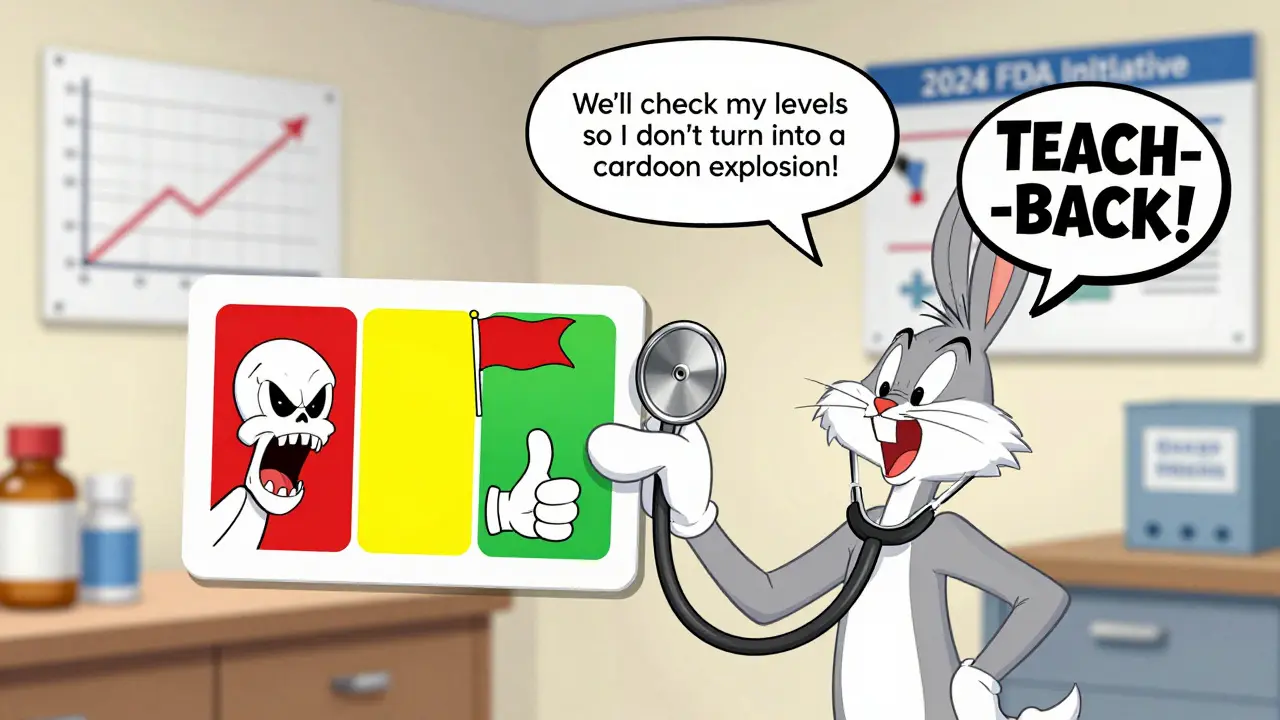
A 2020 study found that patients who received personalized counseling from pharmacists had 28% fewer medication-related problems. Visual aids helped too - showing a graph of the therapeutic window, or a simple chart comparing brand and generic absorption rates. One pharmacy in Birmingham started using a laminated card with a red zone (toxic), green zone (safe), and yellow zone (monitor). Patients kept it in their wallet. Adherence jumped 42%.
What to Check Before Switching
Before you even mention a switch, ask yourself:- Is this drug on the FDA’s NTI list? Check the official list - it includes warfarin, levothyroxine, phenytoin, digoxin, and others.
- What does your state require? In 27 U.S. states, pharmacists can’t switch NTI drugs without written patient consent. Fourteen states require you to get that consent before dispensing. In others, you can switch automatically - but you still need to counsel the patient.
- Who is the patient? Elderly patients? Those with kidney or liver issues? On multiple meds? These groups are more sensitive to changes. Monitor them extra closely.
- Is this the first switch? If the patient has switched before and had a problem, document it. Don’t assume the same outcome will happen again - but don’t ignore it either.
What to Document
Don’t rely on memory. Write it down - clearly and specifically. Use this template:- Patient counseled on therapeutic equivalence of generic [drug name] to brand version.
- Advised that blood monitoring (e.g., INR, serum level, TSH) will be performed within [X] days of switch.
- Written educational materials provided (FDA patient guide or pharmacy handout).
- Patient verbalized understanding using teach-back: “So you’ll check my blood in 5 days to make sure it’s still in the safe range?”
This isn’t just paperwork. It’s protection - for the patient and for you.
What Not to Say
Avoid these phrases - they sound dismissive:- “It’s the same thing.”
- “Don’t worry, it’s FDA-approved.”
- “The brand isn’t better.”
These shut down conversation. They don’t build trust. Instead:
- Use “we” language: “We’ll watch your levels together.”
- Use “you” language: “Your safety matters to us.”
- Use data: “Studies show that with proper monitoring, outcomes are the same.”
What’s Changing Now
In 2024, the FDA launched the NTI Drug Communication Initiative. It includes:- Standardized patient handouts in 12 languages.
- Counseling checklists for 15 high-risk NTI drugs.
- Recommendations for a minimum 10-minute discussion before any substitution.
- Use of teach-back: “Tell me in your own words what you’ll do after the switch.”
By 2025, the FDA plans to use real-world data from 12 million patients to track outcomes after NTI switches. This isn’t about proving generics are safe - we already know they are. It’s about proving we’re doing everything right when we switch them.
Bottom Line
Switching NTI generics isn’t a pharmacy decision. It’s a clinical one. And it demands more than a stamp on a prescription.Patients aren’t resisting generics because they’re irrational. They’re resisting because they’ve been given incomplete information. Your job isn’t to convince them. It’s to guide them - with clarity, with care, and with evidence.
When you explain why the switch is safe - and what you’ll do to protect them - they don’t just accept it. They trust it.
Are all generic drugs the same, even for NTI medications?
No. Generic drugs for narrow therapeutic index (NTI) medications must meet stricter standards than regular generics. While most generics must be within 80-125% of the brand’s absorption, NTI generics must stay within 90.00%-111.11%. This tighter range ensures blood levels stay within the safe and effective window. The FDA has specific guidelines for drugs like warfarin, levothyroxine, and phenytoin, requiring more precise testing before approval.
Can I switch my patient from brand to generic without monitoring?
No. Even though FDA-approved NTI generics are therapeutically equivalent, monitoring is required after any switch. For warfarin, check INR within 3-5 days. For phenytoin or levothyroxine, check serum levels or TSH within 7-10 days. This isn’t optional - it’s standard practice. Skipping monitoring increases the risk of undetected changes in drug levels that could lead to treatment failure or toxicity.
Why do some pharmacists refuse to substitute NTI generics?
Some pharmacists avoid substitution due to state laws requiring patient consent, fear of liability, or outdated beliefs. A 2017 survey found pharmacists with over 20 years of experience were 37% less likely to substitute NTI generics than newer pharmacists. This isn’t because generics are unsafe - it’s because communication gaps and inconsistent policies have created lingering doubt. The FDA and American Pharmacists Association now recommend standardized counseling to reduce these barriers.
What states have special rules for NTI drug substitution?
As of 2024, 27 U.S. states have specific laws about NTI drug substitution. Fourteen of them require written patient consent before switching. Others limit substitution to certain situations or require prescriber authorization. For example, in California and New York, pharmacists must notify the prescriber if they switch an NTI drug. Always check your state’s pharmacy board rules - they override federal guidelines.
What should I do if a patient refuses a generic NTI switch?
Respect their decision. But don’t leave it at that. Ask why. Is it fear? A bad past experience? A misunderstanding? Provide clear, written materials from the FDA or your pharmacy. Offer to call the prescriber together. If they still refuse, document the refusal and keep them on the brand. Never pressure. Your goal isn’t to save money - it’s to keep them safe and informed.
Do NTI generics cost less than brand-name drugs?
Yes - but not always as much as non-NTI generics. Because of stricter manufacturing and testing requirements, NTI generics cost 15-30% less than the brand, compared to 70-80% savings for regular generics. Still, that’s significant savings for patients on long-term therapy. For example, a month’s supply of brand-name warfarin might cost $40, while the generic is $12. That’s still a 70% drop - even if it’s not as deep as with other drugs.
How do I know if a drug is on the FDA’s NTI list?
The FDA publishes product-specific guidance documents for NTI drugs. As of 2024, 37 drugs are confirmed as NTI and require enhanced bioequivalence standards. Common ones include levothyroxine, warfarin, phenytoin, digoxin, valproic acid, and carbamazepine. You can find the full list on the FDA’s Office of Generic Drugs website. Many pharmacy systems now flag NTI drugs automatically - but always double-check if you’re unsure.

Caleb Sciannella
February 20, 2026 AT 02:42When discussing NTI drug switches, it's imperative to recognize that therapeutic equivalence is not merely a pharmacological concept-it's a clinical covenant with the patient. The FDA's tightened bioequivalence criteria for NTI generics (90.00%-111.11%) reflect a nuanced understanding of pharmacokinetic variability, yet many providers still default to the oversimplified assertion that 'it's the same drug.' This is not just inaccurate; it's ethically negligent. Patients aren't resisting because they're irrational-they're resisting because they've been given incomplete narratives. Proper counseling must include explicit acknowledgment of their lived experience, not just regulatory benchmarks. The 2020 study showing 28% fewer medication-related problems with pharmacist-led counseling underscores that trust is built not through authority, but through transparency. We must shift from informing to co-creating safety plans-with monitoring schedules, clear warning signs, and documented teach-backs. This isn't bureaucracy; it's bioethics in motion.
Oana Iordachescu
February 20, 2026 AT 20:40Let’s not pretend this is about patient safety-this is about corporate cost-cutting disguised as medical progress. The FDA’s ‘stricter standards’ for NTI generics? A PR stunt. The real data? Hidden in proprietary bioequivalence studies that never see public light. And don’t get me started on how the same labs that approve these generics also audit the brand-name manufacturers. Conflict of interest? More like a revolving door with a velvet rope. I’ve seen patients crash after switching-yes, it’s anecdotal, but so is the ‘evidence’ pushing this. Who benefits? Not the patient. Not the doctor. The pharmacy benefit managers. Always the PBMs. Read the 2023 Senate subcommittee report on generic drug pricing. It’s not a conspiracy-it’s a spreadsheet.
James Roberts
February 22, 2026 AT 01:26Okay, so we’re all agreed that NTI drugs are high-stakes, right? But here’s the thing: we’re treating patients like lab rats with a 5% tolerance window. Meanwhile, the system still lets pharmacists switch these without telling the prescriber in half the states. That’s not safety-it’s chaos with a checklist. I love that you mentioned the Birmingham pharmacy’s laminated card. That’s genius. Why isn’t that in every ER? Why aren’t we printing these on patient wristbands? Why are we still using 1990s-style consent forms? I’ve had patients bring me handwritten logs of their INR values from the last 18 months. They’re not just compliant-they’re invested. So why are we still talking about ‘educating’ them like they’re children? They’re the ones keeping themselves alive. Let’s stop talking at them and start talking with them. And maybe, just maybe, let them design the damn handouts.
Irish Council
February 23, 2026 AT 16:01Jayanta Boruah
February 25, 2026 AT 09:58It is a matter of profound concern that the medical community continues to understate the pharmacodynamic variability inherent in NTI drug substitutions. The assumption that bioequivalence equates to clinical equivalence is a fallacy rooted in reductionist pharmacology. The human body is not a test tube. Interindividual variability in hepatic metabolism, renal excretion, and protein binding renders even minor pharmacokinetic deviations clinically significant. Furthermore, the FDA’s 90.00%-111.11% criterion, while statistically rigorous, fails to account for polypharmacy interactions, circadian rhythms, and genetic polymorphisms in CYP450 enzymes. A 10% fluctuation in phenytoin concentration may be statistically insignificant in a cohort, but for a patient with a CYP2C9*3 allele, it may precipitate status epilepticus. We must move beyond population-based guidelines and embrace individualized therapeutic monitoring as the gold standard-not as an afterthought.
Hariom Sharma
February 25, 2026 AT 15:42Bro this is sooo important. I work in a clinic and I’ve seen patients freak out over switching from brand to generic-even when it’s totally safe. The key? Don’t just say ‘it’s the same.’ Say ‘we’re gonna check your numbers together’ and mean it. I had a guy on warfarin who refused the switch until I sat down with him, showed him the chart, and said ‘I’m gonna call you in 3 days, no matter what.’ He cried. Not because he was scared-because someone actually cared. That’s the difference. It’s not about the drug. It’s about the human. And yeah, the cost savings? Huge. But the trust? Priceless. Let’s stop treating patients like numbers and start treating them like people. 💪❤️
Nina Catherine
February 26, 2026 AT 16:45okay so i just switched my dad from brand to generic levothyroxine and i was so nervous! i read all this and then i printed out the FDA handout and we went over it together. he said he felt way better after the switch-no more brain fog! i didn’t know you were supposed to check levels in 5-7 days though 😅 so i called his doc and they said yes, totally do that. also the pharmacy gave us this little card with the green/yellow/red zones and he carries it in his wallet like a lucky charm. i just want to say thank you for writing this. it saved me from panicking. ps: typo on the 2nd paragraph: ‘it’s not like taking an antibiotic, where you can miss a pill and still be okay’ - i think you meant ‘you can miss a pill and still be okay’? just a tiny thing! 🙏
Taylor Mead
February 27, 2026 AT 11:08Real talk: I’ve been on carbamazepine for 12 years. Switched generics three times. Never had an issue. But I get why people freak out. I used to too-until my neurologist sat me down, showed me the graphs, and said ‘I’d give this to my kid.’ That’s when it clicked. It’s not about the pill. It’s about the person holding the clipboard. If your provider treats this like a routine change, patients will too. If they treat it like a life-or-death moment-because it is-then patients will trust the process. We don’t need more regulations. We need more honest conversations. And maybe a damn laminated card for everyone.
Amrit N
February 28, 2026 AT 14:46so i work in a rural pharmacy and we switch like 20-30 nti generics a week. most patients are cool once you explain it in plain english. no jargon. just ‘this is the same medicine, just cheaper, and we’ll check your blood in a few days to make sure you’re good.’ the ones who freak out? usually older, on 5+ meds, scared of change. we give ‘em a phone number and say ‘call anytime.’ no judgment. one lady came back a week later with a handwritten note saying ‘thank you for not making me feel stupid.’ that’s all it takes. also-yes, the cost difference matters. $12 vs $40? yeah. that’s rent money.
Courtney Hain
March 1, 2026 AT 13:44Let me tell you what’s really going on here. The FDA doesn’t care about patient safety-they care about corporate profits. The NTI guidelines? A smokescreen. The real issue? The manufacturers of brand-name drugs are lobbying hard to keep their monopoly. They fund fear campaigns, pay ‘independent’ doctors to write scary articles, and even bribe state legislatures to block generic substitution. I’ve seen the emails. I’ve seen the contracts. This isn’t about science-it’s about money. And you think the pharmacist who refuses to switch is being cautious? No. They’re being paid. The ‘studies’ showing equivalence? Funded by generic manufacturers. The ‘fear’ stories? Paid for by Big Pharma. Wake up. This is a multi-billion dollar game, and patients are the pawns. The FDA’s ‘NTI Drug Communication Initiative’? A PR stunt to distract you from the real corruption. Read the 2022 whistleblower report. It’s all there.
Robert Shiu
March 2, 2026 AT 03:55I’ve been a nurse for 18 years. I’ve seen patients die because we didn’t monitor after a switch. I’ve also seen patients thrive because we did. It’s not about the drug. It’s about the follow-up. If you switch a patient on warfarin and don’t check their INR within 72 hours, you’re not being cost-conscious-you’re being reckless. The real hero here isn’t the generic manufacturer. It’s the pharmacist who calls the patient the day after the switch. It’s the PA who schedules the follow-up before the patient leaves the clinic. It’s the RN who prints out the chart and says ‘I’ll be here when you call.’ That’s the infrastructure of care. Not the pill. Not the label. The human connection. And if you’re not building that-you’re not doing your job.
Scott Dunne
March 2, 2026 AT 23:28Irrespective of the FDA’s guidelines, the Irish Medicines Board has consistently maintained that substitution of NTI agents without explicit prescriber authorization constitutes a breach of professional duty. The American model, with its laissez-faire approach to pharmacy-level substitution, is fundamentally flawed. In Ireland, we require prescriber consent for all NTI switches, regardless of FDA equivalence. This is not an obstacle-it is a safeguard. To presume that a patient’s safety can be entrusted to a pharmacist’s discretion, without direct clinical oversight, is not merely negligent-it is an affront to the Hippocratic Oath. The FDA’s initiative, while well-intentioned, is an American exception, not a global standard. We do not compromise on clinical governance for the sake of cost efficiency. The patient’s life is not a balance sheet.