
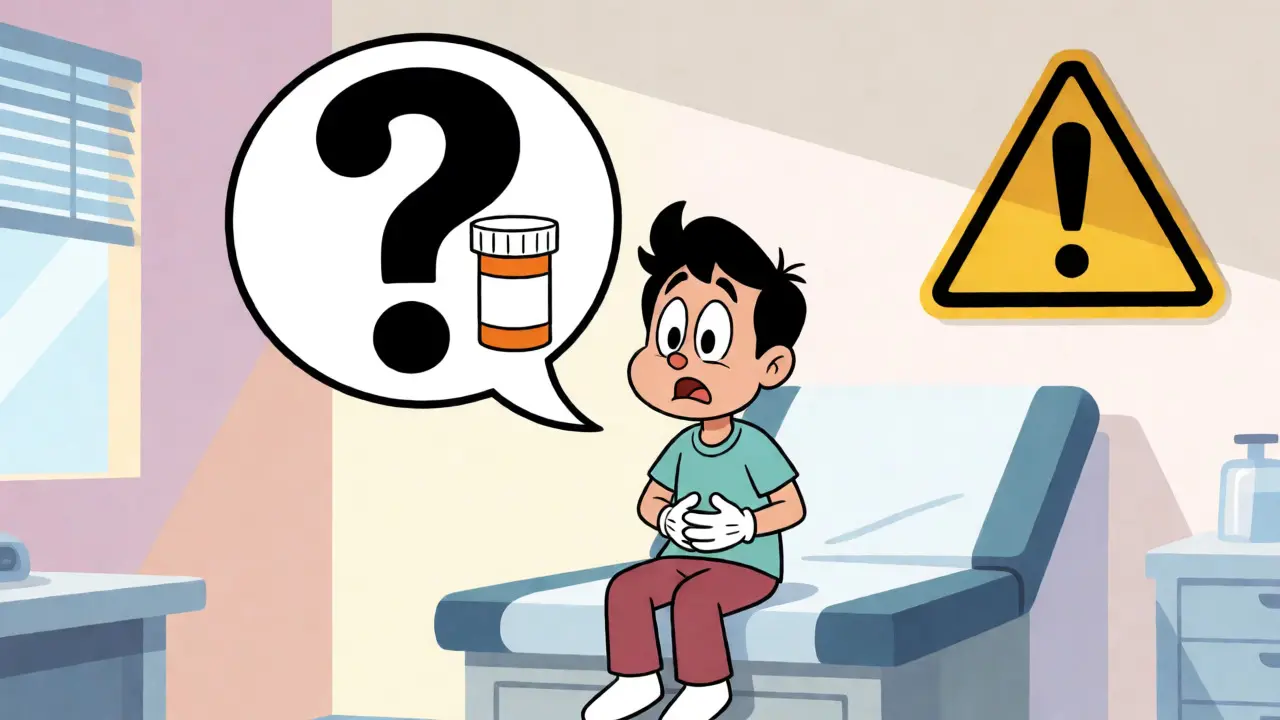
You take an antibiotic. An hour later, your stomach churns, and you feel dizzy. You panic. "I'm allergic," you think, and swear off that medication forever. But here is the twist: you probably aren't allergic at all. You just experienced a side effect. This confusion happens constantly. In fact, studies show that up to 10% of people claim a penicillin allergy, but when doctors test them, 90-95% can actually take it safely. Mislabeling a side effect as an allergy limits your treatment options, forces you onto broader-spectrum antibiotics, and increases healthcare costs. Knowing the difference isn't just academic; it’s a matter of getting the right care without unnecessary restrictions.
The Core Difference: Immune System vs. Pharmacology
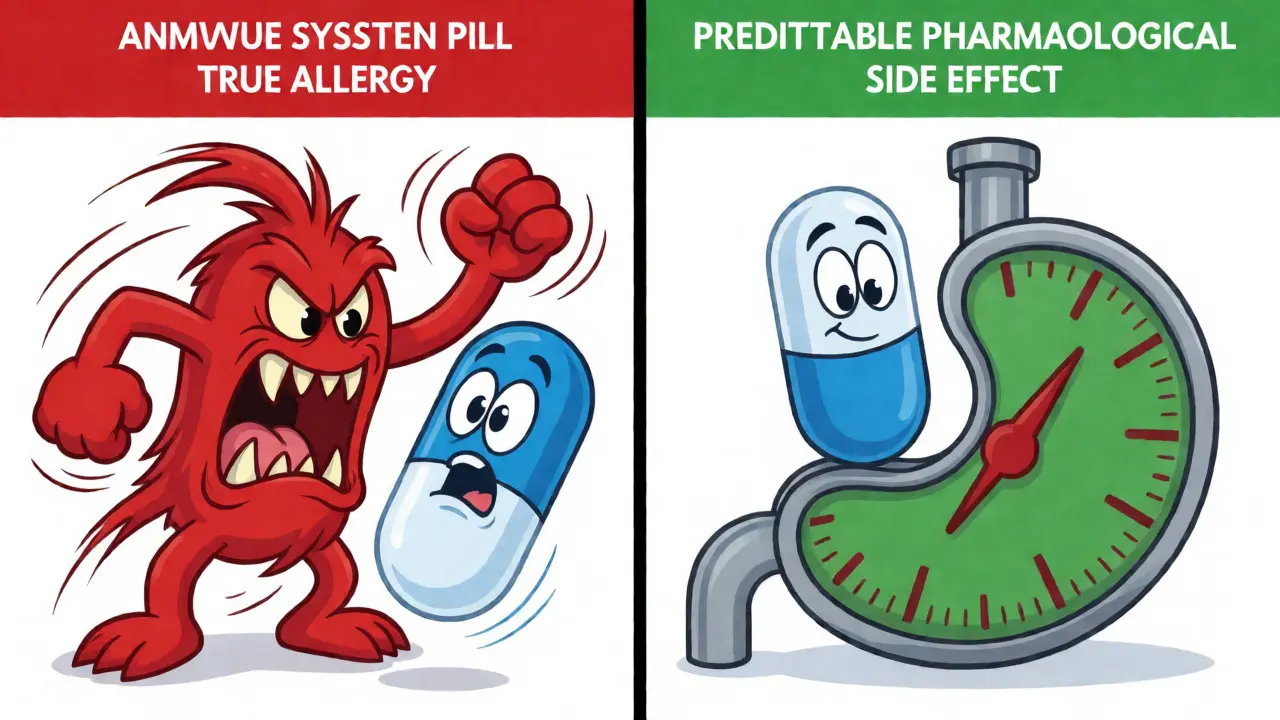
To tell these two apart, you need to understand what is happening inside your body. A true Drug Allergy is an immune system mistake. Your body identifies the medication as a foreign invader-like a virus or bacteria-and launches an attack. This involves specific antibodies, such as Immunoglobulin E (IgE), or T-cells reacting to the drug. It is unpredictable and can happen even if you have taken the drug before without issue. If you are exposed again, the reaction often gets worse, faster, and more severe.
A Side Effect, on the other hand, is a known pharmacological consequence. It is not an immune response. Instead, it results from the drug doing exactly what it was designed to do, but in places you didn't intend. For example, blood pressure meds lower pressure everywhere, which might make you dizzy when you stand up quickly. This is predictable. It depends on the dose, affects many people who take the drug, and usually doesn't get worse with repeated exposure unless you increase the dose.
Timing Tells the Tale
When did the symptoms start? This is one of the biggest clues. Immediate hypersensitivity reactions, which are true allergies, typically strike within minutes to one hour after taking the medication. If you break out in hives 15 minutes after swallowing a pill, that screams allergy. Delayed allergic reactions can appear days or even weeks later, but they still follow an immune pattern.
Side effects also have a timeline, but it looks different. Nausea from painkillers or drowsiness from antihistamines often starts shortly after the drug peaks in your bloodstream. However, some side effects, like gastrointestinal upset, might only happen when you first start the medication and fade as your body adjusts. If the symptom vanishes after a few days of continued use, it was likely a side effect, not an allergy. Allergies don't typically "get used to"; they tend to persist or escalate upon re-exposure.
Symptom Patterns: Skin, Gut, and Beyond
Look at where the symptoms hit. True allergies love the skin and respiratory system. Hives (urticaria), itching, swelling of the lips or eyes (angioedema), and wheezing are classic signs. About 80-90% of allergic reactions involve cutaneous (skin) symptoms. If you have trouble breathing or feel your throat tightening, treat it as a potential emergency. These are immune-mediated responses.
Side effects prefer the gut and the head. Nausea, vomiting, diarrhea, headache, and dizziness are the most common complaints. A 2022 study found that 68% of patients who claimed a penicillin allergy were actually experiencing gastrointestinal side effects. While nausea can accompany an allergic reaction, it is rarely the *only* symptom in a true allergy. If you have nausea alone, it is almost certainly a side effect. If you have nausea plus a rash and difficulty breathing, suspect an allergy.
| Feature | True Drug Allergy | Side Effect |
|---|---|---|
| Mechanism | Immune system activation (IgE or T-cells) | Pharmacological action on non-target tissues |
| Predictability | Unpredictable; idiosyncratic | Predictable; dose-dependent |
| Common Symptoms | Hives, swelling, wheezing, anaphylaxis | Nausea, headache, dizziness, dry mouth |
| Response to Re-exposure | Often worsens or occurs faster | May diminish as body adjusts |
| System Involvement | Multi-system (e.g., skin + lungs) | Usually single-system (e.g., GI tract) |
The Danger of Over-Labeling
Why does this distinction matter so much? Because incorrect labels stick. Once you are marked "Penicillin Allergic" in your medical record, doctors hesitate to prescribe beta-lactam antibiotics. They switch to broader-spectrum drugs like vancomycin or fluoroquinolones. These alternatives are often less effective for specific infections, carry higher risks of side effects themselves, and contribute to antibiotic resistance. Research indicates that patients with unverified penicillin allergies have a 69% higher rate of Clostridium difficile infection-a nasty gut bug-because their normal flora is disrupted by stronger antibiotics.
In Australia, and globally, hospitals are pushing hard for "de-labeling." This means going back to patients who report allergies and testing them properly. The goal is to remove the false label. If you can tolerate penicillin, you should know it. It opens up cheaper, safer, and more effective treatment options for future infections.
How Doctors Diagnose It
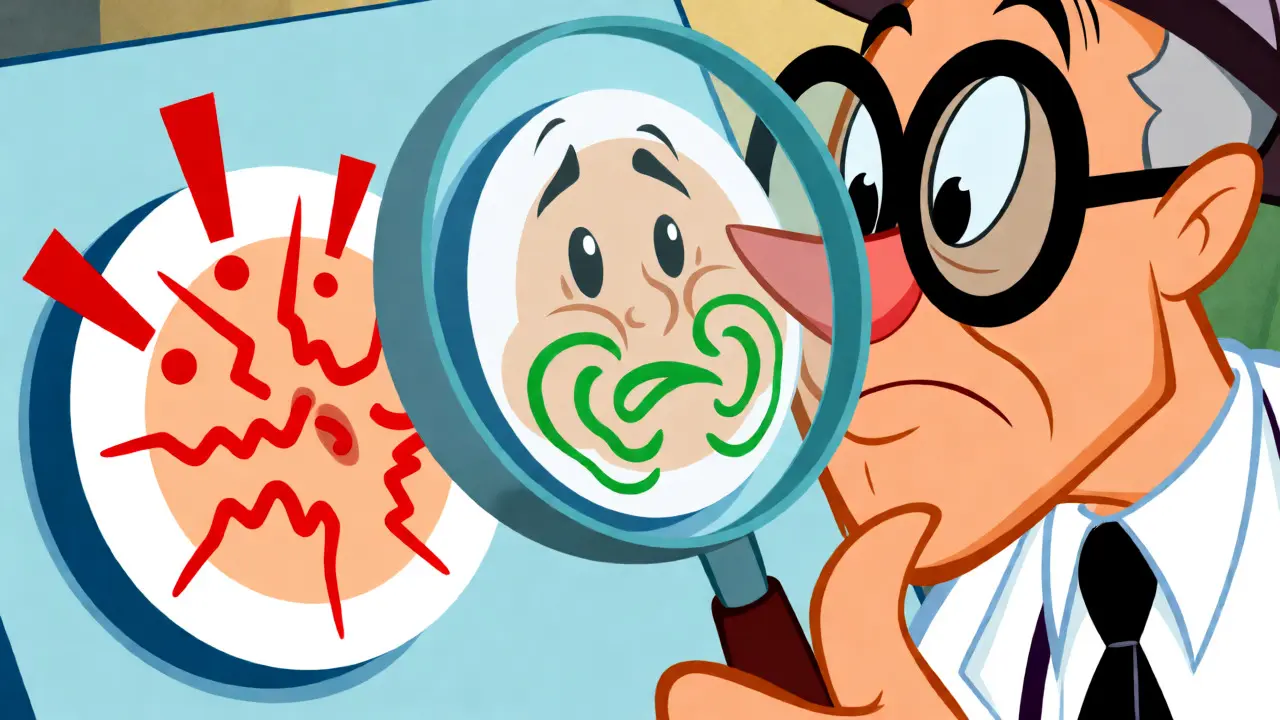
If you suspect an allergy, don't guess. See an allergist. They use specific tools to confirm immune involvement. For immediate reactions, skin prick tests or intradermal tests introduce tiny amounts of the drug to see if IgE antibodies react. A positive result confirms an allergy. Blood tests can measure specific IgE levels, though they are less sensitive than skin tests.
For delayed reactions, diagnosis is trickier. Patch tests apply the drug to the skin under a bandage for 48 hours to check for T-cell mediated responses. Sometimes, the gold standard is a graded oral challenge. Under medical supervision, you take increasing doses of the drug. If nothing happens, you are cleared. This process is safe in controlled settings and provides definitive answers.
What To Do If You Think You Have an Allergy
First, stop taking the medication immediately if you experience signs of a severe reaction like swelling or breathing difficulties. Call emergency services if needed. For milder symptoms, contact your doctor. Do not simply avoid the drug forever without evaluation. Keep a detailed log: What did you take? When did symptoms start? What exactly happened? Did it happen every time?
Ask your pharmacist or doctor about referral to an allergy specialist. Bring your medication list and any records of past reactions. Be honest about whether the symptoms were scary (swelling, trouble breathing) or just unpleasant (nausea, headache). This history guides the diagnostic path. Remember, accurate labeling protects you from both dangerous reactions and unnecessary avoidance.
Can I be allergic to a drug if I took it before without issues?
Yes. Sensitization takes time. Your immune system may recognize the drug as foreign only after repeated exposures. The first few times you take it, you might feel fine. On the fourth or fifth time, your body might launch an allergic attack. This is why prior tolerance does not guarantee future safety.
Is nausea a sign of a drug allergy?
Rarely. Nausea is one of the most common side effects of medications, affecting up to 22% of users. Unless nausea is accompanied by hives, swelling, or respiratory issues, it is almost always a side effect caused by the drug's impact on the digestive system, not an immune response.
How long does a drug allergy last?
It varies. Some allergies, especially those to penicillin, can fade over time. Studies suggest that many people lose their sensitivity after 10 years. Other allergies, like those to certain NSAIDs or sulfa drugs, may persist for life. Regular re-evaluation with an allergist can determine if you have become tolerant.
What is DRESS syndrome?
DRESS stands for Drug Reaction with Eosinophilia and Systemic Symptoms. It is a severe, delayed allergic reaction that typically appears 2-6 weeks after starting a new medication. Symptoms include fever, widespread rash, swollen lymph nodes, and organ involvement (liver, kidneys). It requires immediate medical attention and discontinuation of the offending drug.
Should I avoid all medications in the same class if I am allergic to one?
Not necessarily. Cross-reactivity between drugs in the same class is often overstated. For example, cross-reactivity between penicillins and cephalosporins is low (less than 2-5%). An allergist can help determine which related drugs are safe for you through testing, rather than assuming you must avoid the entire family.
Sarah Kinch
September 1, 2026 AT 23:59ugh finally someone said it. i was told i was allergic to penicillin when i was 7 because i got a tummy ache and now im stuck taking way stronger meds that make me feel like garbage. its bs honestly, the system is broken.
fred eden
September 2, 2026 AT 23:36This is such important info! 🌟 I always thought nausea meant allergy too. 😭 It’s scary how many people avoid safe meds just because of a bad stomach. Thanks for sharing this! 💊❤️
Pearl Richardson
September 4, 2026 AT 12:49The pharmaceutical industry benefits from misdiagnosis. If everyone knew the truth about side effects vs allergies, they would lose billions in unnecessary prescriptions. They keep us confused on purpose so we buy their expensive alternatives. 🤨📉
larry williams
September 6, 2026 AT 07:44I think it's really great that you're bringing attention to this issue because so many of us carry these labels around like badges of honor without even realizing that our bodies might actually handle the medication perfectly fine if given the chance, and it's wonderful that there are ways to get tested and de-labeled so we can have more options when we're sick instead of being forced into broader spectrum drugs that might not be as effective or could cause other issues down the line, so kudos to you for educating people on this crucial distinction that affects our healthcare journey every single day.
Stephen Horn
September 7, 2026 AT 19:28While the data presented is anecdotal at best, one must consider the epistemological implications of self-diagnosed pharmacological intolerance versus verified immunological response. The average consumer lacks the requisite medical literacy to distinguish between IgE-mediated hypersensitivity and simple gastrointestinal distress caused by microbiome disruption. Furthermore, the push for 'de-labeling' ignores the complex socio-economic structures that incentivize diagnostic inertia within modern clinical settings. One should approach these statistics with extreme skepticism until peer-reviewed longitudinal studies confirm the generalizability of these findings across diverse genetic populations.
Sarah Leitschuh
September 9, 2026 AT 01:34Love this breakdown. It’s so validating to hear that my “allergy” was probably just my gut hating antibiotics.
We need to stop shaming people for having reactions, though. Even if it’s just a side effect, it still sucks. But yeah, getting tested is key. 🧘♀️✨
Marshall Stephens
September 10, 2026 AT 00:49Good post. Clear and concise. This is exactly what my GP failed to explain to me years ago. Now I know better.
Kristina Rhodes
September 11, 2026 AT 02:03Oh, the irony of needing an education on your own body’s signals.
We spend so much time fearing the immune system’s ‘mistakes’ that we forget it’s often just doing its job-fighting off what it thinks is an invader, even if that invader is a harmless pill.
It’s a philosophical conundrum, really: where does the drug end and the self begin?
But seriously, go get tested. Your future self will thank you for not living in fear of a simple amoxicillin.
And to those who say ‘but what if I’m wrong?’-well, isn’t life just a series of educated guesses anyway?
Be kind to yourself, but also be brave enough to question the label.
The universe doesn’t care about your medical chart, but your doctor might. 😉