
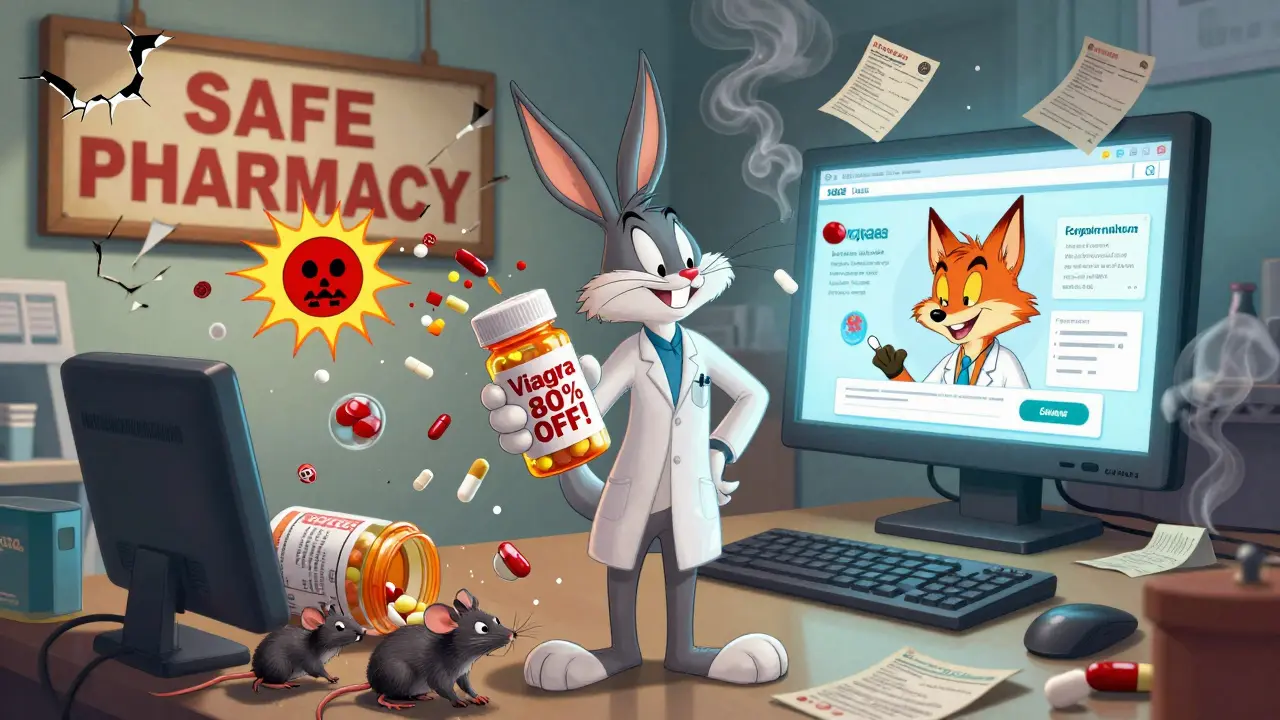
Ordering medication from abroad might seem like a smart way to save money, but for many, it’s a dangerous gamble. What looks like a legitimate online pharmacy could be a front for criminals selling fake, toxic, or ineffective drugs. Every year, millions of people buy pills from websites that don’t exist in the real world-no licensed pharmacists, no inspections, no accountability. And when those pills arrive, you won’t know if they contain the right medicine, the right dose, or something deadly.
What Exactly Are Counterfeit Drugs?
Counterfeit drugs aren’t just fake brand names. They’re dangerous imposters. Some contain no active ingredient at all. Others have too much-or too little-of the real drug. Some are laced with rat poison, battery acid, or industrial chemicals. The World Health Organization estimates that 1 in 10 medicines in low- and middle-income countries are substandard or falsified. But this isn’t just a problem overseas. In 2025, INTERPOL’s Operation Pangea XVI seized over 50 million doses of counterfeit drugs across 90 countries, including the UK, US, Canada, and Australia. These weren’t random finds-they were part of a global network targeting everyday medications.Commonly counterfeited drugs include erectile dysfunction pills, weight-loss supplements, antibiotics, cancer treatments, and even insulin. A 2024 report from the Pharmaceutical Security Institute found that criminal groups specifically targeted high-value biologics and oncology drugs. Why? Because they’re expensive, hard to replicate, and patients will do anything to get them. The profit margins are insane-some counterfeit drugs yield up to 9,000% profit for criminals.
How Do You Even Know You’re Buying Fake?
The truth? You often don’t. Counterfeiters are getting better. They copy websites perfectly-same logos, same layouts, even fake seals from regulatory agencies. You might see a site that looks just like your local pharmacy. It has testimonials, secure payment badges, and a "pharmacist on call" chat feature. But none of that means it’s legal.Real pharmacies don’t sell prescription drugs without a valid prescription. They don’t ship from PO boxes. They don’t avoid phone calls. If a website offers "no prescription needed" or "cheaper than your local pharmacy," it’s a red flag. A 2024 study found that only 3% of online pharmacies meet all safety standards set by regulators. And yet, 18% of Americans admit to ordering prescription drugs from abroad. Most didn’t check if the site was legitimate.
Visual signs can help, but they’re not foolproof. Fake pills might have slightly off colors, blurry text, or odd shapes. Packaging might look cheap, have typos, or lack a lot number. But many counterfeits are so well-made that even pharmacists can’t tell without lab tests. One Reddit user ordered "Viagra" from a site offering 80% off. The pills looked normal. They didn’t work. Then, after taking a second dose, he spent hours in the ER with vision loss and chest pain. Lab tests later showed his "Viagra" contained 198% of the labeled sildenafil-enough to cause a stroke.
What Happens When You Take Fake Medicine?
The consequences aren’t theoretical. They’re deadly.Take antibiotics. If they’re fake and contain too little active ingredient, they won’t kill the infection. Instead, they let bacteria survive and grow stronger. That’s how antimicrobial resistance spreads. The WHO estimates counterfeit anti-malarial drugs contribute to over 116,000 deaths each year. Fake insulin? It can send diabetics into coma. Counterfeit cancer drugs? They might be filled with chalk or sugar-leaving patients with no treatment while the disease spreads unchecked.
Even "harmless" supplements can be lethal. A 2025 investigation in Australia found that 93% of seized online pharmaceuticals had no approval from health authorities. Some contained banned stimulants like methylone or synthetic cathinones-drugs linked to heart attacks and psychosis. One woman ordered "modafinil" to stay awake for work. She ended up in intensive care with a seizure and kidney failure. The pills were laced with an unregulated chemical used in industrial cleaners.
And it’s not just physical harm. Fake drugs can destroy trust in real healthcare. When people believe their medication doesn’t work, they stop taking it. When they lose faith in doctors, they turn to more dangerous sources. It’s a cycle that weakens entire health systems.
Where Are These Drugs Coming From?
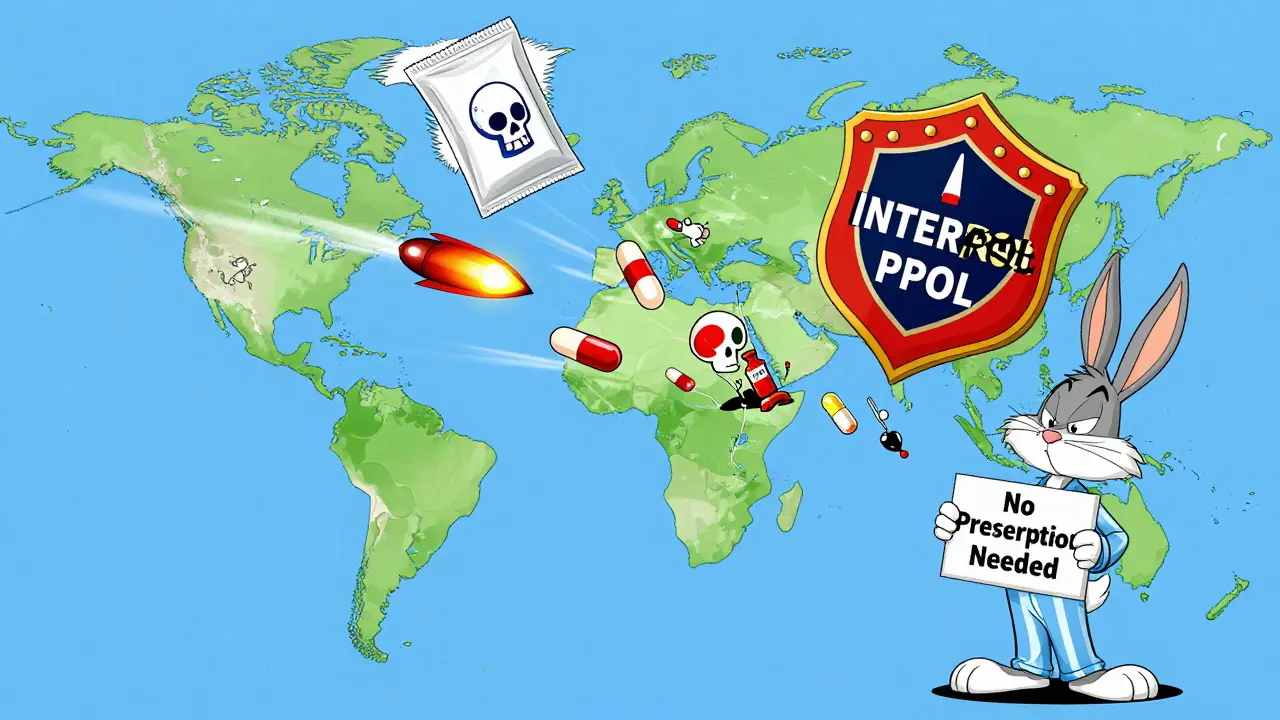
Most counterfeit drugs are manufactured in unregulated labs, often in Southeast Asia, India, or China. These facilities don’t follow safety rules. No sterile environments. No quality checks. No traceability. The pills are then shipped through complex networks-sometimes hidden in legitimate packages, sometimes sent via postal services that don’t screen for pharmaceuticals.Online marketplaces and social media make it easy. A single Instagram post can direct thousands to a fake pharmacy. Cryptocurrency payments hide the buyers. Encrypted messaging apps let sellers coordinate logistics without leaving a trail. INTERPOL shut down over 13,000 websites and social media pages in 2025 alone. But for every one taken down, ten more pop up.
Even countries with strong regulations aren’t immune. The UK’s Medicines and Healthcare products Regulatory Agency (MHRA) reported a 23% increase in counterfeit drug seizures between 2023 and 2024. The same happened in the US, Canada, and across Europe. Criminals know where the money is-and they’re exploiting gaps between countries’ laws.
How to Stay Safe: What You Can Do
If you need medication from abroad, there’s a safe way-but you have to be smart.- Only use verified pharmacies. Look for certification from trusted programs like the Verified Internet Pharmacy Practice Sites (VIPPS) in the US or the Canadian International Pharmacy Association (CIPA). These sites are audited and require a valid prescription.
- Check the website. Does it have a physical address and phone number? Can you speak to a licensed pharmacist? If it only has a chatbot or no contact info, walk away.
- Don’t trust discounts. If a drug costs 70% less than your local pharmacy, it’s fake. Legitimate pharmacies don’t undercut prices that drastically.
- Verify the drug. Use the WHO’s "Be Medicinewise" checklist: Does the pharmacy require a prescription? Is there a real pharmacist? Is there a physical address? If any answer is "no," don’t buy.
- Report suspicious sites. If you find a fake pharmacy, report it to your national health authority. In the UK, that’s the MHRA. In the US, it’s the FDA’s BeSafeRx program. Every report helps shut them down.
LegitScript, a verification service, has reviewed over 2.1 million online pharmacies since 2010. Only 14% passed their standards. That tells you everything you need to know.
Why This Isn’t Just a "Foreign Problem"
You might think, "I’m in the UK. This doesn’t affect me." But it does. Fake drugs enter supply chains everywhere. A shipment meant for Brazil might be rerouted through a warehouse in Manchester. A fake painkiller sold in Poland could be shipped to your doorstep. The global supply chain is interconnected, and criminals exploit every weak link.Even if you never order online, you’re still at risk. Counterfeit drugs have been found in legitimate pharmacies, hospitals, and clinics. In 2024, the EU Falsified Medicines Directive required safety features on all prescription drugs. But many countries still lack the systems to enforce them. That means fake drugs can slip through-even in places with strong laws.
What’s Being Done?
Governments and health agencies are fighting back. INTERPOL’s Operation Pangea XVI was the largest global crackdown ever, with 769 arrests and 50 million doses seized. The WHO is building a global tracking system to monitor fake drugs in real time. The EU requires unique identifiers on every prescription package. Pfizer has prevented over 302 million counterfeit doses since 2004.But technology alone won’t fix this. Criminals adapt faster than regulations. Blockchain, QR codes, and serialization help-but counterfeiters are already learning to forge them. The real solution? Public awareness. Education. Enforcement. And most of all, people refusing to buy from untrusted sources.
Final Warning
Saving money on medication isn’t worth risking your life. There are legitimate ways to reduce drug costs-patient assistance programs, generic alternatives, insurance negotiation. But if you’re tempted by a website that promises miracles for pennies, remember: if it sounds too good to be true, it is. And in this case, the cost isn’t just financial. It’s measured in hospital visits, lost years, and lives.Can I get in trouble for ordering counterfeit drugs online?
Typically, individuals buying small amounts for personal use aren’t prosecuted. But the packages will be seized at customs, and you may receive a warning letter from health authorities. More importantly, you’re exposing yourself to serious health risks. Law enforcement targets the sellers-not the buyers-but that doesn’t make the drugs safe.
Are all international pharmacies illegal?
No. Pharmacies certified by programs like VIPPS (US) or CIPA (Canada) are legal and safe. These pharmacies are licensed, require prescriptions, and ship from regulated facilities. The problem is that 97% of online pharmacies aren’t certified-and many mimic legitimate ones. Always verify before ordering.
What should I do if I think I took a fake drug?
Stop taking it immediately. Contact your doctor or go to the emergency room. Save the packaging and pills. Report the pharmacy to your national health agency-for example, the MHRA in the UK or the FDA in the US. Even if you feel fine, fake drugs can have delayed effects. Testing the product can help authorities track the source.
Why can’t governments just shut down all these websites?
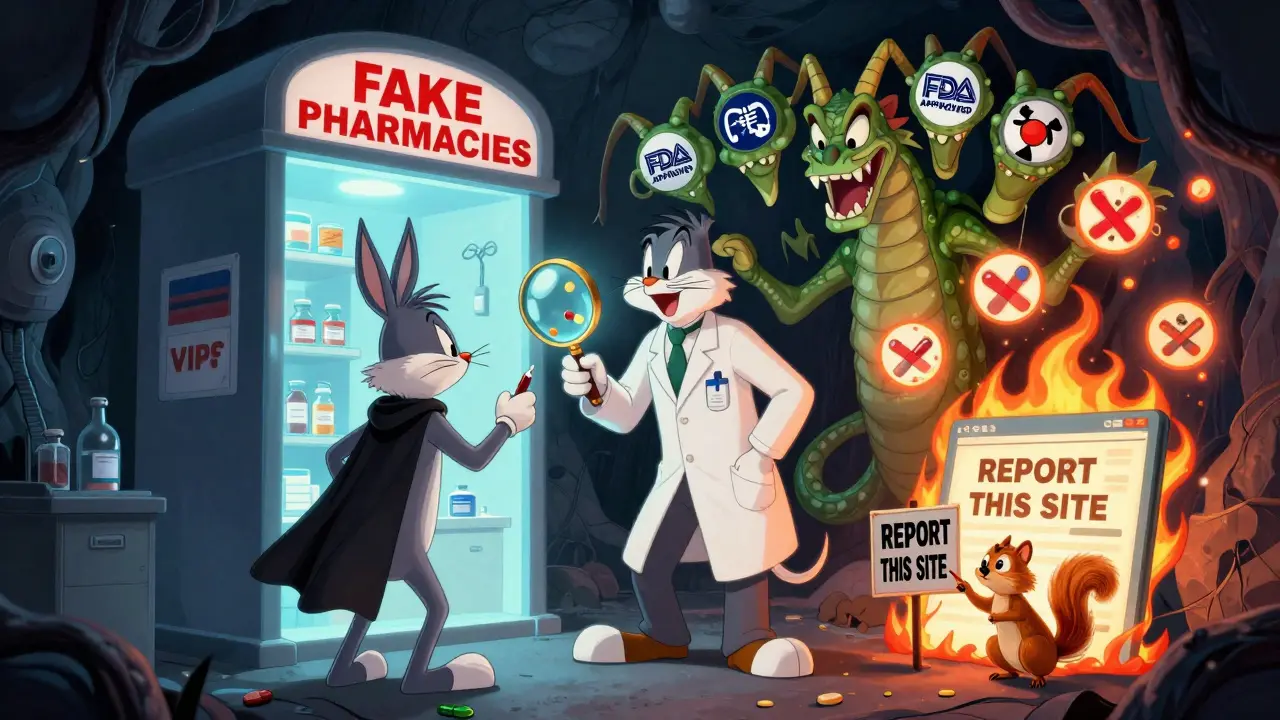
They try. But counterfeiters operate across borders, use encrypted platforms, and change domains daily. Shutting down one site is like cutting off one head of a hydra-ten more pop up. It’s a cat-and-mouse game that requires global cooperation, advanced tech, and public vigilance. No single country can solve it alone.
Is it safer to buy from a pharmacy in another country than from a local one?
Only if the foreign pharmacy is verified and licensed. A local pharmacy in the UK, US, or EU is regulated and monitored. An unverified pharmacy overseas-even if it’s in a wealthy country-isn’t. The location doesn’t matter; the certification does. Always check for official approval before buying.
Jonathan Noe
February 11, 2026 AT 12:23Let me tell you something real quick - I used to buy my dad’s blood pressure meds from a "Canadian" site because it was half the price. Looked legit, had all the seals, even a live chat with a "pharmacist." Turns out, the pills were just lactose and food coloring. He ended up in the ER with a stroke. No joke. That’s not a risk - that’s a death sentence waiting to happen. Don’t be dumb.
Jim Johnson
February 12, 2026 AT 03:33Man, I get it - meds are crazy expensive here. But I learned the hard way. Ordered "adderal" once, thought I was saving cash. Ended up with heart palpitations and a 3-day hospital stay. The real ones? Still pricey, but at least I know what’s in ‘em. If you’re thinking of buying online, just call your doc. They got programs. They wanna help. Don’t gamble with your life.
Vamsi Krishna
February 13, 2026 AT 17:14You think this is bad? Wait till you hear what’s really going on. The FDA? They’re in bed with Big Pharma. They don’t want you to know that generics from India are 100% safe - but they’re scared of losing profits. You ever see how many people die from brand-name drugs with side effects? Zero coverage. But fake meds? Ohhh, now it’s a crisis. It’s all a distraction. The real villains? The ones who make you pay $500 for insulin while they sit on a beach in Monaco.
Brad Ralph
February 14, 2026 AT 15:50So… the internet is bad. Got it. 🤡
christian jon
February 16, 2026 AT 10:16THIS IS WHY AMERICA IS DYING. PEOPLE AREN’T TAKING RESPONSIBILITY. YOU WANT TO SAVE $50 ON MEDS? THEN WORK A SECOND JOB. DON’T BE A COWARD AND ORDER FROM A WEBSITE THAT’S PROBABLY RUN BY A RUSSIAN CRIMINAL ORGANIZATION. I SAW A GUY ON YOUTUBE WHO TOOK "VIAGRA" FROM A "PHARMACY" IN BAHRAIN - HE HAD A HEART ATTACK AND LOST HIS VISION. AND NOW HE’S ON SOCIAL SECURITY. YOU THINK THAT’S FAIR? NO. IT’S A TRAGEDY. AND IT’S YOUR FAULT.
Suzette Smith
February 16, 2026 AT 17:15Actually, I’ve bought from a few international sites and never had an issue. I double-check everything - certifications, reviews, even called the pharmacy. My thyroid med came from Germany. Worked fine. Maybe the problem isn’t buying abroad - it’s not doing your homework?
Autumn Frankart
February 18, 2026 AT 06:53They’re using this to push the vaccine agenda. Did you know the WHO is funded by Bill Gates? And Gates owns patents on every major drug? This whole "counterfeit" thing? It’s a cover. Real meds are being pulled off shelves so they can force you to buy their overpriced versions. The FDA doesn’t want you to have access to cheaper alternatives - they want you dependent. I’ve seen the documents. It’s all connected.
Pat Mun
February 19, 2026 AT 03:24I want to say thank you for writing this. I’m a nurse, and I’ve seen too many patients come in with fake meds. One woman thought she was saving money on her diabetes pills - turned out they were just powdered chalk. She had a diabetic coma. We had to dialyze her for three days. I’ve held people’s hands while they cried because they couldn’t afford their meds. This isn’t about being lazy or greedy - it’s about a broken system. If you can’t afford your medicine, please, please talk to someone. A social worker. A clinic. A friend. You’re not alone. There are people who want to help - even if the system doesn’t.
Sophia Nelson
February 20, 2026 AT 04:46Wow. What a waste of time. Everyone already knows this. You just wrote a 5,000-word essay on "don’t buy drugs off the internet." Congrats. You’re the first person to figure this out. Now can we move on?
Skilken Awe
February 21, 2026 AT 21:45Let’s cut through the noise. The term "counterfeit" is a regulatory construct designed to maintain monopolistic pricing. The active pharmaceutical ingredients in Indian generics are identical - the excipients may differ slightly, but that’s not a death sentence. The real issue? The patent system. The FDA’s refusal to recognize foreign GMP standards. This isn’t about safety - it’s about profit control. You’re being manipulated into fear-mongering so you keep paying $1,200 for a 30-day supply of metformin.
andres az
February 22, 2026 AT 01:23Why are we even talking about this? The government knows all these sites exist. They’ve been tracking them for years. But they don’t shut them down. Why? Because they need the revenue from the legal market. It’s all a scam. You think INTERPOL seized 50 million doses? Nah. They seized 50 million placebos. The real stuff? Still flowing. The whole thing’s a distraction. Wake up.
Steve DESTIVELLE
February 22, 2026 AT 20:59Life is a journey of choices. We are all consumers in a system designed to make us feel powerless. The act of purchasing medicine from abroad is not inherently wrong - it is an assertion of autonomy. The fear of counterfeit drugs is manufactured by institutions that profit from your dependence. To fear the unknown is to surrender your freedom. The real counterfeit is the belief that you need permission to survive.
Stephon Devereux
February 24, 2026 AT 17:36I work in pharma logistics. I’ve seen how these supply chains work. Most fake drugs come from unlicensed labs - yes, but here’s the thing: the same labs often produce the "real" generic versions that are sold in Walmart. The difference? One has a fancy label and FDA paperwork. The other? Doesn’t. The system is broken. We need transparency - not fear. People should be able to access verified, affordable meds without jumping through 12 hoops. I’ve helped patients get safe meds from India through licensed channels. It’s possible. We just need better systems - not more warnings.
steve sunio
February 26, 2026 AT 14:32Another one of these fearmongering articles. People die from real drugs too. You ever heard of Vioxx? Or thalidomide? The system kills more than any fake pill. You think the FDA checks every batch? Nah. They do random audits. And even then, they miss stuff. So why are we blaming the guy who buys from India instead of the corporations that price gouge? You’re not helping. You’re distracting.
Neha Motiwala
February 27, 2026 AT 23:51My cousin died because of fake insulin. She was 29. She thought she was saving money. She didn’t know the difference. The packaging looked exactly like the real one. The pharmacy had a "verified" badge. The website had testimonials. She trusted it. She didn’t even know she was buying from China. Now her daughter has PTSD. This isn’t a "risk." It’s a crime. And if you’re still thinking about ordering online, you’re not just being cheap - you’re being selfish. Someone’s child could be next.