
Isotretinoin Risk Assessment Tool
This tool assesses your personal risk factors for mood changes while taking isotretinoin, based on information from the FDA, clinical studies, and current medical guidelines. It is not a medical diagnosis or substitute for professional medical advice.
If you experience any thoughts of self-harm or depression, stop treatment immediately and seek help.
Your Personal Risk Assessment
This tool provides general information only. Always discuss your personal health situation with your doctor.
When you’re dealing with severe acne, isotretinoin can feel like a lifeline. It clears skin that nothing else can touch-sometimes in just a few months. But for some people, the same drug that fixes their face starts to mess with their mind. The question isn’t whether isotretinoin causes depression. It’s how to spot it early, what to do if it happens, and whether the risk is real or just noise.
What Isotretinoin Actually Does
Isotretinoin is a powerful retinoid, a synthetic form of vitamin A. It shrinks oil glands, cuts sebum production by up to 90%, and stops acne from forming deep under the skin. For about 85% of people who finish a full 15- to 20-week course, the results last. No more cysts. No more scarring. No more hiding in front of mirrors. It’s not a quick fix. You take it daily, usually 0.5 to 1.0 mg per kilogram of body weight. Most people start seeing changes around week 4. By week 8, many notice major improvements. But that’s also when things can go sideways-for a small number of people.The Depression Debate: Conflicting Evidence
Here’s where it gets messy. On one side, you’ve got the FDA’s Adverse Event Reporting System (FAERS). From 2004 to 2024, over 19,000 psychiatric events were reported in people taking isotretinoin. Depression showed up in nearly half. Suicidal thoughts? Nearly 18%. Anxiety? 15%. The numbers look scary. But then you look at the bigger picture. A 2023 study in JAMA Dermatology looked at over 1.6 million people. It found no higher rate of depression or suicide in isotretinoin users compared to the general population. The absolute risk of a suicide attempt during treatment? Just 0.14%. That’s lower than the baseline rate for teens in the U.S. The risk of depression? 3.83%. Also within normal range. So why the gap? FAERS collects reports-anyone can file one. It doesn’t prove cause. The JAMA study looked at real-world outcomes. One shows signals. The other shows actual rates. The truth? Isotretinoin doesn’t cause depression in most people. But for a small group, it might trigger something already there-or make it worse.Who’s at Higher Risk?
Not everyone is equally vulnerable. If you already have a history of depression, anxiety, bipolar disorder, or suicidal thoughts, your risk goes up. Studies show these patients are more likely to have psychiatric symptoms on isotretinoin. Age matters too. Younger patients-teens and early 20s-report more mood changes. Men are more likely to report completed suicide attempts, which matches general patterns: men die by suicide more often, even if women report depression more. And here’s something counterintuitive: higher total doses of isotretinoin are linked to lower suicide risk. Why? Maybe because better skin leads to better mood. Or maybe the people who need higher doses are more likely to be monitored closely. Either way, it suggests the drug itself isn’t the main villain.What the Symptoms Look Like
It’s not always obvious. Depression on isotretinoin doesn’t always mean crying all day. For many, it’s emotional blunting-feeling nothing. No joy. No anger. Just flat. Others feel unusually irritable, angry over small things, or detached from friends and family. Red flags:- Sudden loss of interest in things you used to love
- Feeling hopeless or worthless
- Thoughts of death or suicide-even if you don’t plan to act on them
- Extreme mood swings, especially if they’re new
- Withdrawal from people, even close friends
How Doctors Are Monitoring Mental Health Now
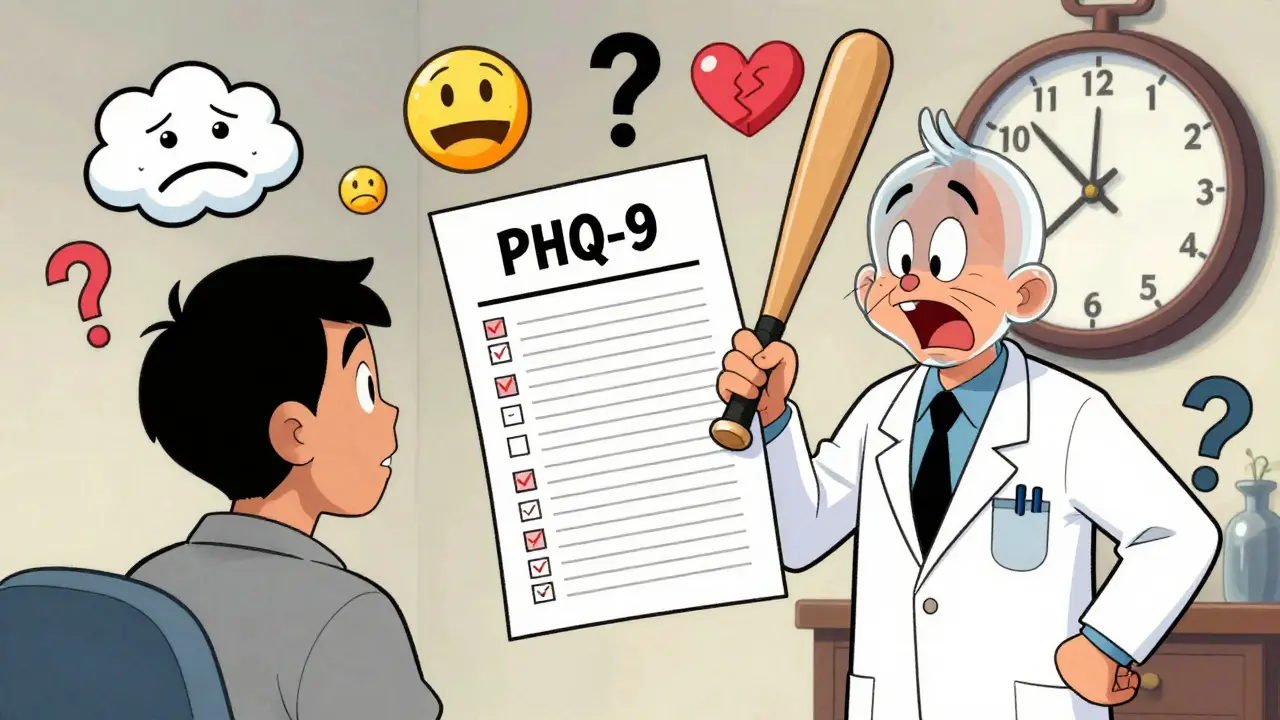
Back in 2006, the FDA launched iPLEDGE-a strict system to prevent birth defects in pregnant women. In 2020, they added mental health checks. Now, every patient on isotretinoin must get a depression screening every month using the PHQ-9 questionnaire. But smart clinics go further. At UCSF, every patient gets a mandatory in-person check-in at week 8. No phone call. No form. Face-to-face. If the doctor senses something off, treatment stops until a psychiatrist evaluates them. In Australia, the TGA updated guidelines in March 2024. Doctors must document mental health screenings in writing. No more just ticking a box. The American Academy of Dermatology recommends:- Baseline screening before starting: ask about personal and family psychiatric history
- Weekly check-ins for the first 8 weeks
- Biweekly from weeks 9 to 16
- Monthly after that
- Use validated tools: PHQ-9 or Beck Depression Inventory
What You Should Do Before Starting
Don’t wait for symptoms. Ask these questions before you sign up:- Have I ever been diagnosed with depression, anxiety, or bipolar disorder?
- Has anyone in my immediate family had severe depression or attempted suicide?
- Have I ever felt emotionally numb or detached for more than a few days?
- Am I currently taking any other medications that affect mood-like antibiotics, steroids, or birth control?
Other Causes of Mood Changes
Before you blame isotretinoin, rule out other things. Vitamin B12 deficiency happens in nearly 1 in 5 people on the drug. Low B12 causes fatigue, brain fog, and depression-like symptoms. A simple blood test can check this. Sleep disruption from dry skin or nighttime itching? That can wreck your mood too. And let’s not forget: acne itself is a major mental health burden. Many people report their depression lifting after starting isotretinoin-not because the drug fixes their brain, but because their skin clears. They stop avoiding mirrors. They start going out again. They feel seen.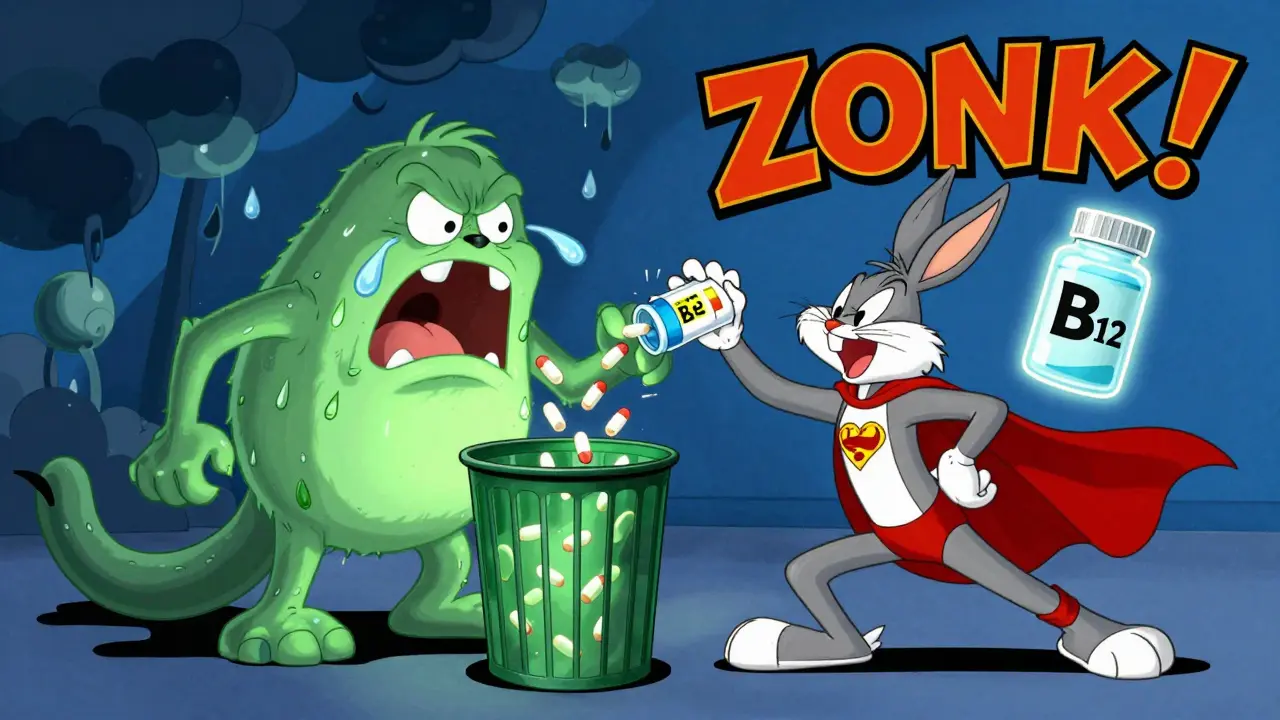
What to Do If You Feel Off
If you notice any of the red flags-especially suicidal thoughts-stop the medication immediately. Don’t wait for your next appointment. Call your doctor. Go to the ER. Text a crisis line. Do not ignore it. Symptoms usually reverse within 2 to 4 weeks after stopping isotretinoin. One Reddit user wrote: “Week 8 brought severe depression. Stopped treatment. Symptoms gone in 3 weeks.” Another said: “My depression lifted because my acne was the cause.” Both are true. There’s no shame in stopping. Your mental health is more important than clear skin.Alternatives to Isotretinoin
If you’re worried about mood changes, talk about other options:- Topical retinoids (tretinoin, adapalene): Low risk for depression, but slower results.
- Antibiotics (doxycycline, minocycline): Minocycline has a 1.7% risk of depression, per a 2017 study-lower than isotretinoin’s FAERS reports, but still real.
- Light therapy (blue/red light): Non-drug, low risk, works for mild to moderate acne.
- Hormonal therapy (for women): Spironolactone or birth control pills can help if acne is hormone-driven.
The Bottom Line
Isotretinoin is not a mood-altering drug for most people. But for a small number, it can trigger or worsen depression. The absolute risk is low. The consequences can be high. The key isn’t avoiding isotretinoin. It’s monitoring smartly. Screening early. Listening to your body. And knowing when to stop. If you’re considering it, don’t just ask your doctor: “Is it safe?” Ask: “How will we watch for changes in my mood?” And make sure you have a plan. Your skin matters. But your mind matters more.Does isotretinoin cause depression?
Isotretinoin doesn’t cause depression in most people. Large studies show no higher rate of depression or suicide compared to the general population. But for a small group-especially those with a history of mental health issues-it can trigger or worsen symptoms. The risk is low, but the impact can be serious, so monitoring is essential.
How soon do mood changes happen on isotretinoin?
Most psychiatric symptoms appear between weeks 4 and 12, with the highest risk around week 8. That’s why many clinics require a mandatory in-person check-in at that point. If you feel off before then, don’t wait-reach out.
What should I do if I feel depressed while on isotretinoin?
Stop taking the medication immediately and contact your doctor or go to the nearest emergency room. Suicidal thoughts, no matter how mild, require urgent attention. Symptoms usually improve within 2 to 4 weeks after stopping isotretinoin. Never ignore changes in your mood.
Can I still take isotretinoin if I’ve had depression before?
Yes-but with extra caution. You’ll need a thorough mental health screening before starting. Your doctor may require you to see a psychiatrist first. Close monitoring every 1-2 weeks is recommended. Some patients with stable, well-managed depression do well on isotretinoin, but it’s not a one-size-fits-all decision.
Are there tests to predict who will get depression on isotretinoin?
Not yet for routine use. But early research in 2024 identified a genetic marker (BDNF Val66Met polymorphism) that may predict susceptibility with 68% sensitivity and 79% specificity. This is still experimental and not available in clinics. For now, your medical history and mental health screening are the best tools.
Can vitamin B12 deficiency cause depression on isotretinoin?
Yes. About 1 in 5 people on isotretinoin develop low B12 levels, which can cause fatigue, brain fog, and symptoms that mimic depression. Before assuming the drug is the cause, ask your doctor for a blood test. B12 deficiency is easy to fix with supplements and can resolve mood symptoms quickly.

Bennett Ryynanen
December 31, 2025 AT 21:48Look, I got isotretinoin last year and yeah, I felt like a zombie for a bit-no joy, no rage, just numb. Stopped at week 9. Two weeks later, I cried watching a dog commercial. Not because it was sad-because I could feel again. Don’t ignore the flatness. It’s not ‘just being moody.’
Deepika D
January 1, 2026 AT 13:19Hey everyone, I'm a dermatology nurse in Mumbai and I've seen this so many times. Isotretinoin isn't the villain-loneliness and shame are. Many teens start this drug because they’ve been bullied for years, and then when their skin clears, they panic: ‘Who am I now?’ That’s when depression creeps in. It’s not the drug. It’s the identity shift. Please, if you’re on this, talk to someone who’s been there. Join a Reddit group. You’re not alone. 💛
Stewart Smith
January 3, 2026 AT 09:49So the FDA reports 19k psychiatric events… but the actual suicide rate is lower than teens’ baseline? Hmm. So we’re supposed to panic because someone *reported* feeling sad on a form, but ignore the data that says ‘eh, it’s fine’? Classic. Also, my dermatologist gave me a checklist and a thumbs-up. That’s it. No one asked if I’d ever wanted to disappear. 😒
Aaron Bales
January 4, 2026 AT 02:44Baseline PHQ-9 screening is non-negotiable. If your doctor skips it, find a new one. Period. Also, B12 deficiency is underdiagnosed-get tested before week 4. Easy fix. Don’t let lazy medicine cost you your mental health.
Jenny Salmingo
January 5, 2026 AT 22:40My cousin from Nigeria started isotretinoin and got really quiet. We thought it was the dry skin. Turned out she was depressed. We got her to a therapist. She’s fine now. Skin cleared too. It’s not either/or. It’s both. Your skin and your soul need care. 🌍❤️
Darren Pearson
January 7, 2026 AT 08:16The JAMA study’s methodology is fundamentally flawed. It conflates incidence with prevalence and fails to account for confounding variables such as socioeconomic status and pre-treatment psychological distress. One cannot reasonably dismiss FAERS data without acknowledging its role as a signal detection system-however noisy. To claim isotretinoin is ‘safe’ based on population-level statistics is a gross oversimplification of clinical neuropharmacology.
Harriet Hollingsworth
January 8, 2026 AT 15:16People are dying because doctors don’t care enough. My sister took this and cried every night for three weeks. No one asked. No one checked. She tried to end it. Now she’s on disability. If you’re not doing monthly in-person check-ins, you’re not treating patients-you’re just selling pills. Shame on you.
Chandreson Chandreas
January 9, 2026 AT 10:13Life’s weird. I took isotretinoin. My acne vanished. My mood tanked. I thought it was the drug. Turns out, I was just finally seeing myself clearly. No more hiding behind clear skin. The real issue? I didn’t know who I was without the acne. Stopped the meds. Talked to a therapist. Now I’m better. Not because of the drug. Because I finally faced the real problem. 🤔✌️
Retha Dungga
January 10, 2026 AT 09:42isotretinoin is just another way society tells us to fix ourselves instead of fixing the world that makes us feel ugly in the first place 🌑✨
Robb Rice
January 11, 2026 AT 21:33While I appreciate the comprehensive overview, I must emphasize the importance of distinguishing between correlation and causation in psychiatric adverse events. The temporal association between isotretinoin initiation and depressive symptomatology does not necessarily imply a direct pharmacological mechanism. Furthermore, the confounding influence of psychosocial stressors related to acne-related stigma must be rigorously controlled for in any risk assessment. Clinical vigilance remains paramount, but fear-mongering undermines evidence-based practice.
Paul Huppert
January 13, 2026 AT 20:25Wait-so if I had depression before, I can still take it? Just with extra checks? My doc said no. Said ‘better safe than sorry.’ But I’ve been stable for 3 years. Is that really fair? Just because I’ve been sick doesn’t mean I’m broken forever.