
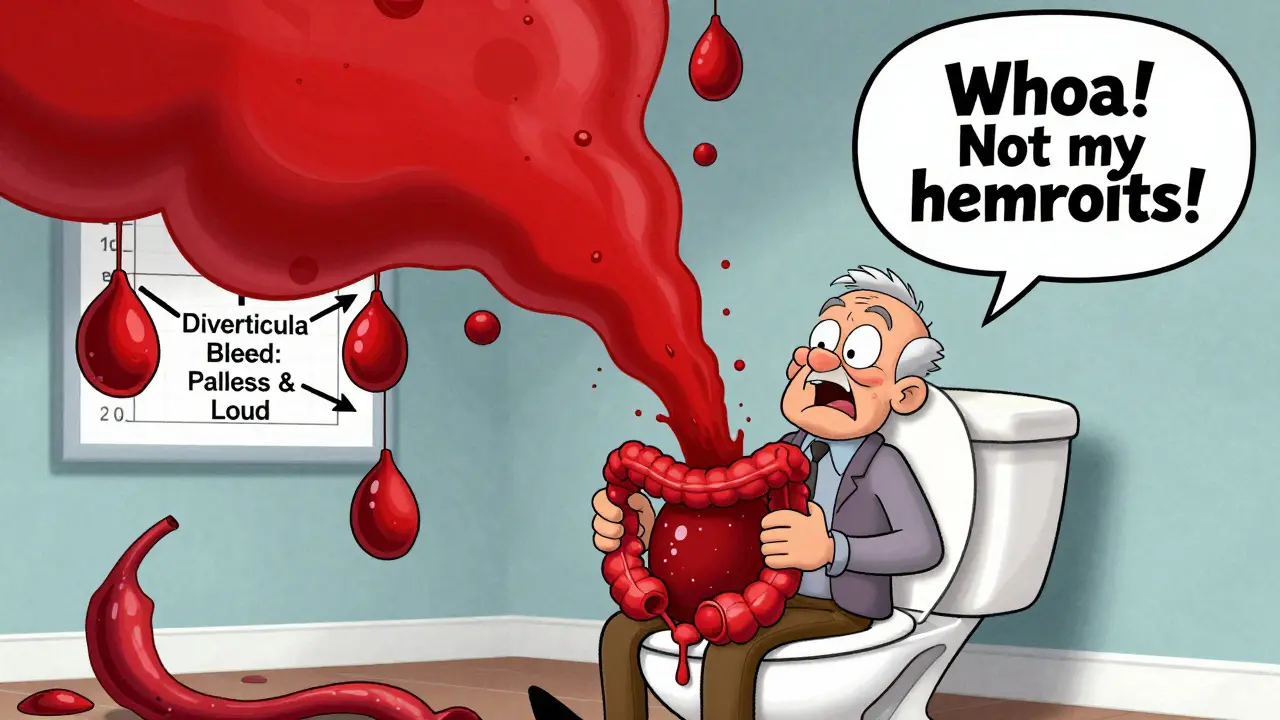
When you see bright red blood in your stool, it’s scary. Your first thought might be hemorrhoids. But if you’re over 60, or if the bleeding is heavy and sudden, it could be something more serious-like diverticula or angiodysplasia. These two conditions are the most common causes of lower gastrointestinal (GI) bleeding in older adults, and knowing the difference can save your life.
What Exactly Is Lower GI Bleeding?
Lower GI bleeding means blood is coming from somewhere in your colon, rectum, or anus-not your stomach or small intestine. It usually shows up as bright red or maroon stool (hematochezia). Sometimes it’s mixed in, sometimes it’s just on the toilet paper. If you’re seeing black, tarry stools, that’s usually an upper GI issue, but if the blood moves slowly through the gut, even upper bleeds can look like lower ones. The key is: if you’re bleeding from below the ligament of Treitz (a deep anchor point in your small bowel), it’s lower GI.About 20-33% of all GI bleeding cases come from the lower tract. And while it can happen to anyone, nearly 80% of cases happen in people over 60. The good news? Most of the time, the bleeding stops on its own. The bad news? If it doesn’t, you need to know exactly what’s causing it-and fast.
Diverticula: The Silent Bleeder
Diverticula are small, bulging pouches that form in the wall of your colon. They’re super common-about half of all people over 60 have them. Most never cause problems. But in 1 out of every 3 people with diverticula, a blood vessel near the pouch can rupture.This isn’t diverticulitis (which is inflammation and pain). This is diverticular bleeding-and it’s painless. You might be sitting quietly, then suddenly see a large amount of blood in the toilet. It can be alarming: up to a full cup or more. That’s because the blood vessels that feed the colon run right next to these pouches. When the pouch forms, the vessel gets stretched and thinned. One small tear, and it bleeds hard.
Diverticular bleeding is the number one cause of major lower GI bleeding. It accounts for 30-50% of hospitalizations for this issue. The good news? Around 80% of these bleeds stop without any treatment. Your body just clots the vessel naturally. But if it keeps bleeding, you need help.
Angiodysplasia: The Slow Leak
Angiodysplasia (also called vascular ectasia or AVM) is a tangle of abnormal blood vessels in the colon lining. They’re most common in the right side of the colon, near the cecum. Unlike diverticula, these aren’t pouches-they’re just malformed vessels that get bigger over time.Here’s the key difference: angiodysplasia doesn’t bleed hard and fast. It bleeds slowly. You might not even notice blood in your stool. Instead, you feel tired. You get dizzy when you stand up. Your lips are pale. That’s because you’re slowly losing blood over weeks or months-leading to iron deficiency anemia.
It’s the second most common cause of serious lower GI bleeding in older adults. About 3-6% of cases are from angiodysplasia, but in people over 70, that number jumps. The reason? Aging. As you get older, your blood vessels weaken. Constant pressure from normal bowel movements stretches them. In some people, especially those with aortic stenosis (a narrowed heart valve), the body’s clotting system gets damaged too, making bleeding more likely.
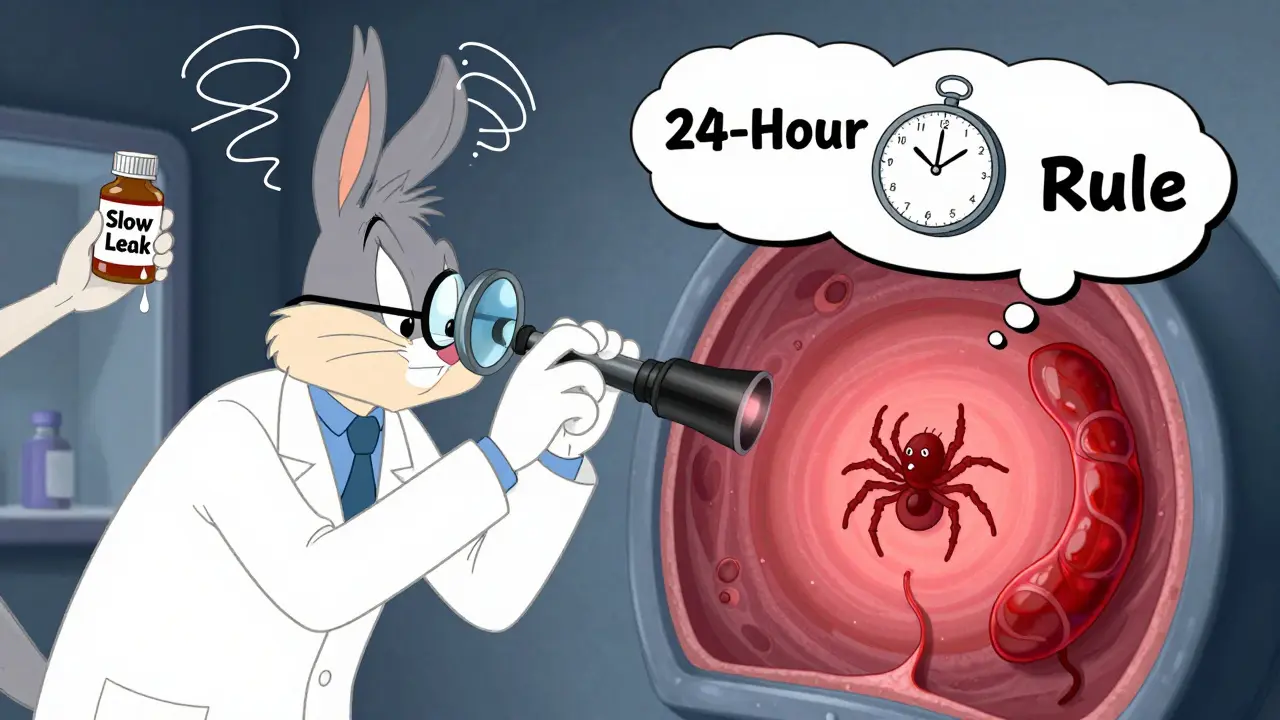
Doctors often miss angiodysplasia because the bleeding is hidden. A patient might have three negative colonoscopies before someone spots the tiny, red, spider-like lesion in the colon. That’s why experts say: if you’re over 65 and have unexplained anemia, think angiodysplasia-even if your colonoscopy looked normal.
How Do Doctors Figure Out What’s Causing the Bleed?
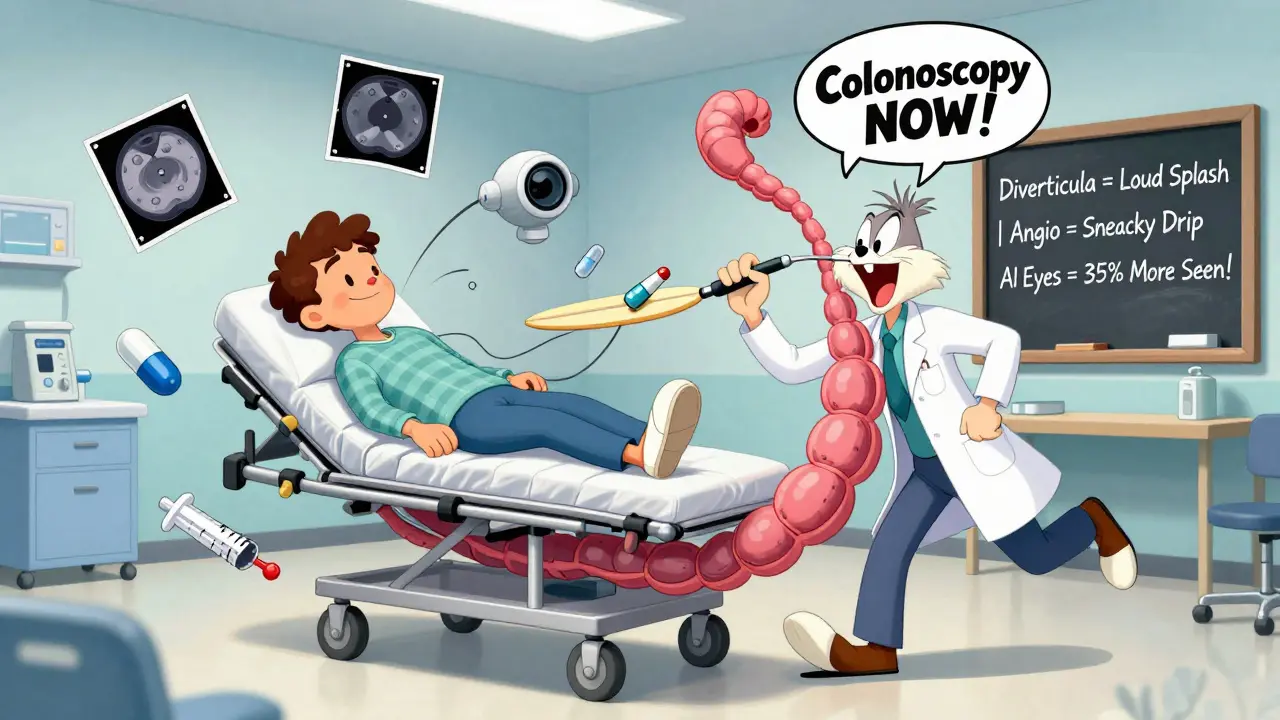
The first thing any hospital does when you show up with GI bleeding? Stabilize you. Check your blood pressure. Give you fluids. Run a blood test to see how much blood you’ve lost. If your hemoglobin is under 10 g/dL, you’re in danger. If your heart rate is over 100 or your blood pressure is below 100, you’re high-risk.Then comes the golden rule: colonoscopy within 24 hours.
It’s not just a test-it’s treatment. Studies show that doing colonoscopy within a day cuts death rates by 26% compared to waiting 2-3 days. Even if you’re still bleeding, they’ll do it. You might get an IV to help clear your bowels, and sometimes they give you erythromycin (an antibiotic) to speed up gut movement so the scope can see better.
During the colonoscopy, the doctor looks for:
- Dark red, raised patches (angiodysplasia)
- Diverticula with a clot or oozing vessel
- Polyps, tumors, or signs of inflammation
If they find a bleeding diverticulum, they can inject epinephrine (to shrink blood vessels) and use heat (thermal coagulation) to seal it. Success rate? 85-90%. But here’s the catch: about 1 in 4 people will bleed again within a year.
If it’s angiodysplasia, they use argon plasma coagulation (APC)-a kind of gentle electric burn that seals the vessels. It works 80-90% of the time right away. But rebleeding? That’s still 20-40% within a year. That’s why some patients need repeat procedures.
What If the Colonoscopy Is Negative?
Sometimes, the bleeding stops before the scope, or the lesion is too small. Or it’s in the small intestine-past where the colonoscope can reach.That’s when doctors turn to other tools:
- CT angiography: A special CT scan that looks for active bleeding. It’s 85% accurate if the bleed rate is over 0.5 mL per minute. Great for unstable patients who can’t wait for endoscopy.
- Capsule endoscopy: You swallow a tiny camera. It takes pictures as it moves through your gut. It finds the cause in 62% of cases where colonoscopy was negative. But it’s not perfect-it can get stuck if you have a narrowing (which you might not know about).
- Device-assisted enteroscopy: A longer scope that can reach deep into the small bowel. It finds the problem 71% of the time, but it’s not available everywhere and requires an expert.
Some doctors swear by capsule endoscopy as the next step. Others say wait-because of the risk of retention. The American College of Gastroenterology recommends it after colonoscopy, not before.
Treatment Beyond the Scope
If bleeding keeps coming back, it’s not just about finding it-it’s about stopping it for good.For angiodysplasia, some patients get thalidomide. Yes, that thalidomide. Used for decades for leprosy and cancer, it’s now showing promise for GI bleeding. A 2019 trial found that 100 mg daily cut transfusion needs by 70%. It’s not a cure, but it helps.
Another option: octreotide, a hormone that tightens blood vessels. Given as a shot three times a day, it works in about 60% of cases. It’s not for everyone-side effects include nausea and gallstones-but it’s a bridge until something more permanent.
For diverticula that keep bleeding in the same spot, surgery to remove that segment of colon is sometimes needed. For angiodysplasia in the right colon, removing the right side (right hemicolectomy) often ends the problem.
What Happens After the Bleed?
Most people recover. But outcomes vary.Diverticular bleeding has a 30-day death rate of 10-22%. But that’s mostly because patients are older and have heart disease, kidney failure, or diabetes. The bleed itself rarely kills you.
Angiodysplasia? Lower death rate-5-10%. But it’s the rebleeding that wears you down. One patient I spoke to had seven hospital visits over five years. Each time, they thought it was over. Each time, it came back. That’s why doctors now recommend iron supplements and regular follow-up colonoscopies every 1-2 years.
And here’s something new: AI-assisted colonoscopy. In a 2022 study, doctors using AI software spotted angiodysplasia 35% more often than those without. It highlights tiny lesions the human eye might miss. This tech is rolling out now-and it’s changing the game.
What Should You Do If You Bleed?
If you notice blood in your stool:- Don’t panic-but don’t ignore it.
- Call your doctor or go to the ER if it’s heavy, sudden, or you feel dizzy.
- Don’t take aspirin, ibuprofen, or blood thinners unless told to.
- Keep track of how much you’re bleeding and if it comes back.
- Ask if you need a colonoscopy-and insist on it within 24 hours if you’re over 60.
Most importantly: don’t assume it’s hemorrhoids. Especially if you’re older. The two conditions look similar but need totally different care.
Can diverticula bleed without causing pain?
Yes. Diverticular bleeding is typically painless. You might suddenly notice a large amount of bright red blood in the toilet or on toilet paper, with no abdominal pain, fever, or cramping. This is different from diverticulitis, which causes pain, fever, and tenderness. The bleeding happens because a small blood vessel near the diverticulum ruptures, not because of inflammation.
Is angiodysplasia only found in older people?
Almost always. Over 80% of cases occur in people aged 65 or older, with the average age at diagnosis being 72. The condition is linked to aging blood vessels and long-term pressure from bowel movements. While rare, younger people with certain conditions-like aortic stenosis or chronic kidney disease-can also develop angiodysplasia due to changes in clotting factors.
Why do I need a colonoscopy so quickly after bleeding?
Because it’s both a diagnostic tool and a treatment. Studies show that patients who get colonoscopy within 24 hours have 26% lower death rates than those who wait. During the procedure, doctors can not only find the source of bleeding but also stop it on the spot using heat, clips, or injections. Waiting too long increases the risk of rebleeding and complications.
Can angiodysplasia be cured with surgery?
Yes, in some cases. If angiodysplasia is localized to one area-like the cecum or ascending colon-removing that part of the colon (right hemicolectomy) often stops the bleeding permanently. This is usually recommended for patients with repeated bleeding despite endoscopic treatment. However, if the lesions are widespread, surgery isn’t practical, and medical therapies like thalidomide or octreotide are used instead.
What’s the best test if colonoscopy doesn’t find the cause?
CT angiography is often the next step, especially if bleeding is still active. It’s fast, accurate (85% sensitivity), and can pinpoint the location of bleeding even if it’s in the small intestine. If the bleeding has stopped, capsule endoscopy is used next-it finds the cause in about 62% of cases. Device-assisted enteroscopy is reserved for complex cases or when capsule endoscopy is inconclusive.
Do I need to change my diet after diverticula bleeding?
No, not specifically because of the bleed. Past advice to avoid nuts, seeds, or popcorn was based on myth. Current guidelines say high-fiber diets (whole grains, vegetables, fruits) help prevent new diverticula from forming, but don’t affect bleeding risk. Focus on staying hydrated and eating regularly. Avoid NSAIDs like ibuprofen if you’re prone to bleeding, as they can irritate the gut lining.
Lower GI bleeding isn’t something to brush off. Whether it’s a sudden flood from a diverticulum or a slow drip from a vascular malformation, knowing the difference-and acting fast-makes all the difference. The tools are here. The knowledge is here. What matters now is recognizing the signs and demanding the right care.


Jimmy Quilty
February 27, 2026 AT 18:22So let me get this straight - the medical establishment wants us to believe diverticula just 'rupture' outta nowhere? Lol. Ever heard of glyphosate? It's in your kale smoothie, your tap water, your damn oat milk. It weakens colon walls. Big Pharma doesn't want you to know this because they profit off colonoscopies and APC. I've been drinking apple cider vinegar and cayenne pepper for 3 years - no more 'bleeding.' They call it 'idiopathic' because they don't wanna admit it's toxins. #Truth
bill cook
February 28, 2026 AT 18:53I had this happen last year. Thought it was hemorrhoids. Went to urgent care, they were like 'eh, probably fine.' Two weeks later I passed out in the shower. ER said I was at 6.8 hemoglobin. They did the scope same day. Found a bleeding diverticulum. They cauterized it. I’m alive because I didn’t listen to 'it’s probably nothing.' Don’t be a hero. Go to the hospital. Seriously.
Byron Duvall
March 2, 2026 AT 00:22Angiodysplasia? More like 'Angio-BS.' I’ve read 3 different studies on this. Half the time it’s misdiagnosed. And why? Because doctors are lazy. They do a colonoscopy, see nothing, and say 'you’re fine.' But if you’re anemic, tired, pale - you’re bleeding. They need to start doing CT angiograms as standard after 65. Instead, we get 'eat more fiber' like we’re in 1985. Also, thalidomide? That’s a miracle drug they buried because it’s cheap. Big Pharma doesn’t sell it. They sell $2000/month infusions. Wake up.
Ben Estella
March 3, 2026 AT 22:42Look, I’m a retired ER nurse. We had a guy come in last month, 79, passed out, BP 80/50. No pain. No cramps. Just blood. We rushed him to scope. Found a bleeding angio on the cecum. Did APC. He’s home now. But here’s the thing - 80% of these cases are in men over 70 with heart disease. Why? Because their vessels are brittle. And we keep telling them to 'stay active.' Fine. But don’t ignore the signs. If you’re dizzy when you stand? That’s not 'getting older.' That’s a warning. Get checked. No excuses.
Sneha Mahapatra
March 4, 2026 AT 12:36I read this and just... cried. My mom had this. She didn’t tell anyone for months. Said she didn’t want to 'be a burden.' She was so quiet about it. Just tired. Pale. Kept saying 'I’m fine.' We didn’t realize until she collapsed. The doctors were amazing. But I wish we’d known sooner. If you’re reading this and you’re caring for an older parent - watch for tiny signs. A cup of tea with no appetite. A nap after walking to the mailbox. That’s not laziness. That’s blood loss. Love them enough to ask. ❤️
Brandie Bradshaw
March 5, 2026 AT 17:25Colonoscopy within 24 hours? Absolutely. But why is it not standard protocol everywhere? Why do rural hospitals still wait 72 hours? Why is capsule endoscopy considered 'experimental' in some states? The data is clear. The guidelines are clear. This is not a debate. This is a failure of healthcare infrastructure. And don’t get me started on insurance denials. I had a cousin denied a CT angiogram because 'no active bleeding at time of request.' But she bled for three weeks. She had to pay $4,000 out-of-pocket to get it done privately. This isn’t medicine. It’s a lottery.
Charity Hanson
March 7, 2026 AT 01:01Y’all need to chill and trust the docs a little more! 😊 I’m a nurse in Lagos and we don’t even have colonoscopes in half the clinics. But when we do, we do them FAST. And guess what? People live! We don’t have thalidomide or APC - we use basic cautery and fluids. And still, survival rates are decent. It’s not about conspiracy or big pharma - it’s about access. If you’re in the US or EU, you’re lucky. Stop complaining and get checked. Your life is worth it. 💪
Brandon Vasquez
March 8, 2026 AT 14:20My dad had diverticula bleed. Stopped on its own. Doctor said 'watch and wait.' We did. Two years later, same thing. Again. Then he had a second episode, got the APC. Now he’s fine. No surgery. No drugs. Just the scope. The key? Don’t wait for it to get worse. If you bleed once, get the scope. Don’t wait for the second time. It’s not 'maybe.' It’s 'when.' And when it happens, the window is small. I’m grateful we acted. No drama. Just facts.
Vikas Meshram
March 9, 2026 AT 07:28Correction: Diverticular bleeding accounts for 30-50% of cases, not 80%. Angiodysplasia is 3-6%, not 20%. Also, thalidomide’s 2019 trial was a phase 2, n=47. Not a cure. And AI-assisted colonoscopy? The 2022 study had a 35% increase in detection rate - but false positives rose 22%. This article is dangerously oversimplified. If you’re over 60 and bleeding, see a gastroenterologist. Not Reddit. Not TikTok. Not some guy who says 'drink vinegar.'