Mail-Order Pharmacy Safety Assessment
Evaluate Your Service
Select all features that apply to your current mail-order pharmacy experience.
Ready to Check
Select the safety features your pharmacy provides and click assess to see your risk profile.
Getting your prescriptions delivered to your door sounds convenient, but it introduces real risks that don't exist when you pick up a bag at the counter. If a package sits in a hot truck for six hours or gets lost in transit, your health could be on the line. This is especially true for sensitive medications like insulin or biologics. Understanding how mail-order pharmacy services manage temperature control, delivery timing, and package tracking is not just about convenience-it's a critical part of your safety plan.
You need to know what happens to your medicine between the pharmacy shelf and your doorstep. Most people assume the process is seamless, but data shows that temperature excursions occur in approximately 3.2% of shipments involving sensitive drugs. That might sound small, but if you rely on those meds daily, it’s a risk worth managing actively. Let’s break down exactly how these systems work and what you can do to stay safe.
The Cold Chain: Why Temperature Matters More Than You Think
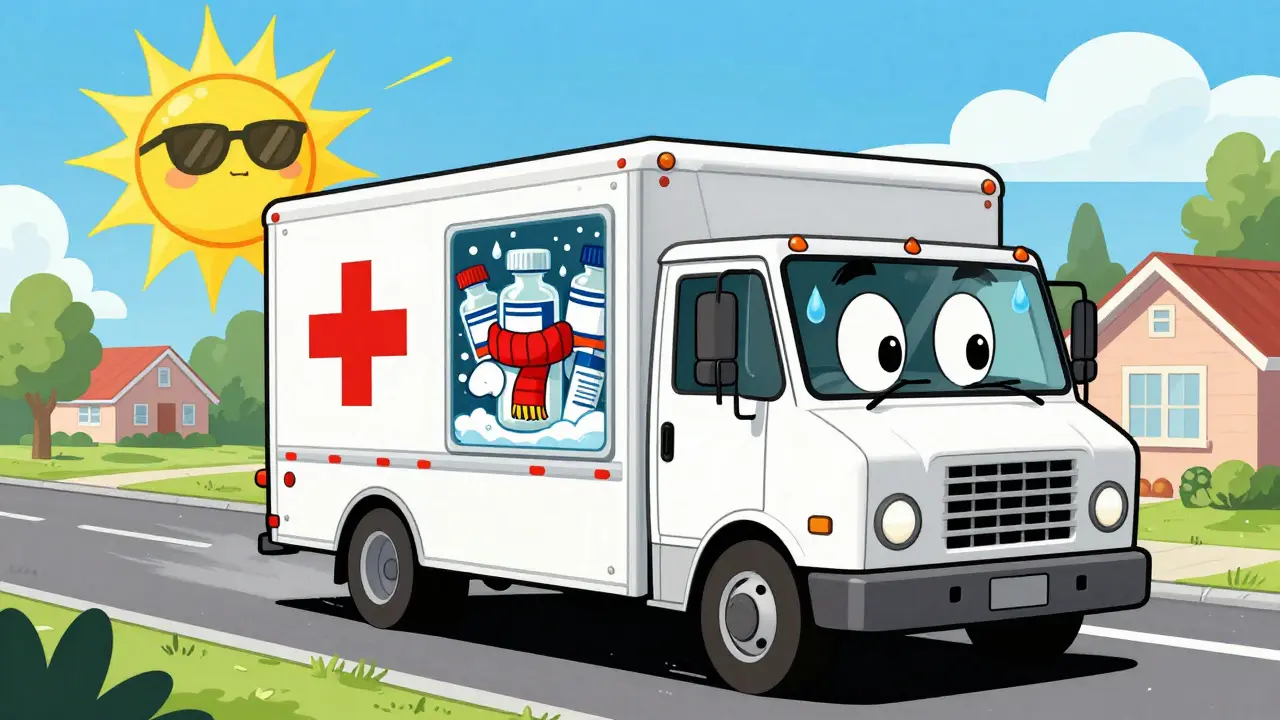
Not all medications are created equal when it comes to shipping stability. While aspirin might survive a summer heatwave in a mailbox, drugs like insulin, biologics, and certain antibiotics require strict temperature maintenance. The FDA warns that improper storage can render these treatments ineffective, meaning you’re taking a pill that does nothing while your condition goes untreated.
For most temperature-sensitive prescriptions, the "cold chain" requires keeping the drug between 2°C to 8°C (36°F to 46°F). To achieve this, reputable pharmacies use insulated containers paired with gel packs or dry ice. However, the hardware alone isn’t enough. The real safeguard is monitoring. According to guidelines from Pitney Bowes, advanced systems now use real-time temperature sensors inside the package. These devices log the temperature throughout the journey. If the box warms up too much, the system alerts both the pharmacy and the patient before the drug is administered.
In 2024, the FDA released draft guidance proposing mandatory real-time temperature tracking for all biologics and specialty medications shipped via mail. This shift acknowledges that passive cooling-just relying on ice packs-is no longer sufficient for high-risk drugs. As a patient, you should ask your provider if your specific medication requires active monitoring. If it does, ensure your pharmacy uses IoT-enabled packaging that provides proof of thermal integrity.
Timing Protocols: Avoiding the Dangerous Gap
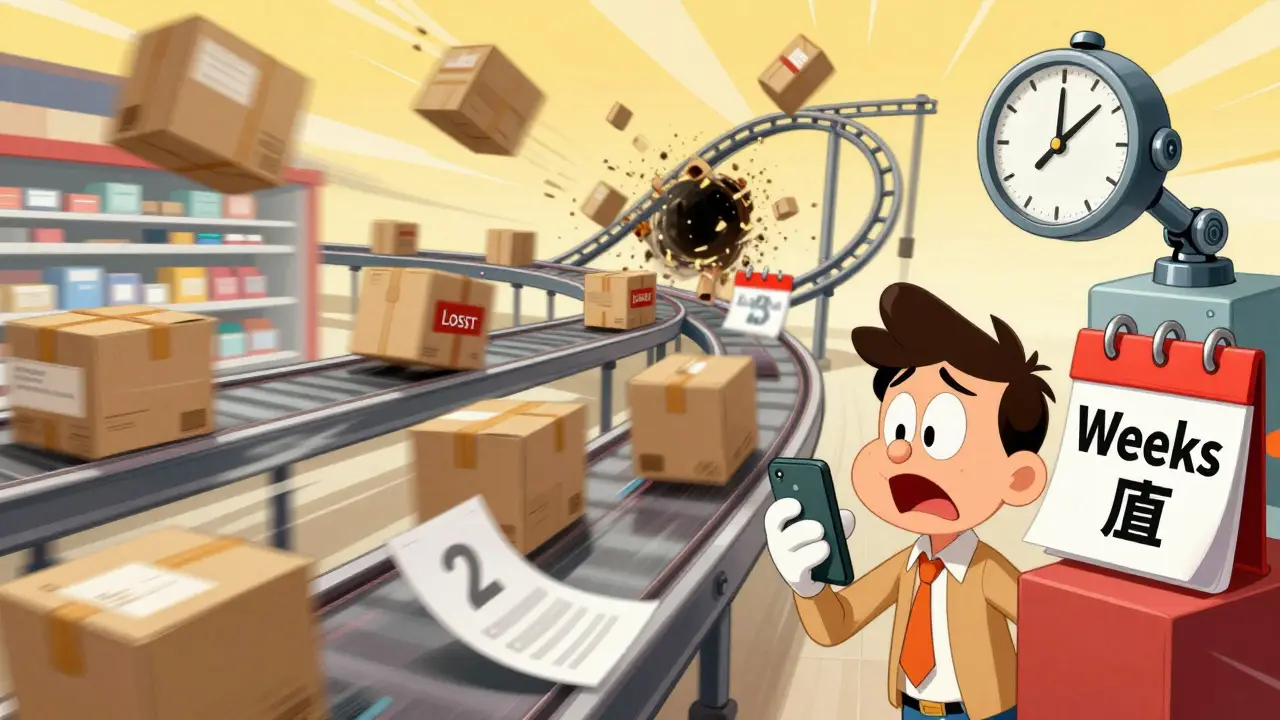
The biggest danger with mail-order isn’t always the temperature; it’s the clock. Unlike retail pharmacies where you walk in and leave with your meds, mail-order relies on logistics networks that can stall due to weather, carrier errors, or processing delays. GoodRx data indicates that 22% of users reported at least one delayed delivery in the past year. For someone managing diabetes or heart conditions, missing a dose can be life-threatening.
To mitigate this, you must adopt a proactive ordering strategy. The standard rule of thumb is to set up automatic refills at least two weeks before you run out. This buffer accounts for unexpected hiccups in the supply chain. Additionally, Medicare Part D plans now mandate that pharmacies obtain explicit confirmation from recipients or caregivers before shipping new prescriptions or refills. This step prevents situations where a package arrives to an empty house and sits outside, potentially spoiling or getting stolen.
However, automation has blind spots. If your doctor changes your dosage or switches your medication, the automated system might still send the old script unless manually updated. Communication errors account for 31% of dissatisfaction among mail-order users. Always verify that your pharmacy has received your latest prescription updates directly from your prescriber. Don’t assume the digital handoff happened smoothly.
Tracking and Security: Closing the Loop on Delivery
Visibility is your best defense against theft and loss. A reliable tracking system does more than show you a map dot moving across the country. It provides a chain of custody. This means every time the package is scanned, handed off, or delivered, there is a timestamped record. For controlled substances, the DEA requires additional security measures, including signature confirmation upon delivery.
Package theft is a growing concern, affecting an estimated 0.7% of deliveries according to industry data. To combat this, many carriers now offer "hold at location" options, allowing you to pick up your meds at a secure locker or store rather than having them left at your door. Address verification systems have also improved, reducing misdelivery risks by 47%. When you receive your tracking number, check it immediately. If the status says "delivered" but you haven’t seen the package, contact the carrier instantly-don’t wait until tomorrow.
Tamper-evident packaging is another non-negotiable safety feature. All prescription shipments must comply with USPS and DEA standards, which include seals that break if the box is opened. Before opening your medication, inspect the outer seal. If it looks compromised, do not take the medication. Contact your pharmacy immediately to report the breach and request a replacement.
Retail vs. Mail-Order: Weighing the Risks and Rewards
Is mail-order actually safer than walking into a local pharmacy? The answer depends on what you define as "safety." In terms of dispensing errors, mail-order pharmacies often perform better. The American Pharmacists Association reports that mail-order services reduce dispensing errors by approximately 15% compared to retail counters. This is largely because mail-order facilities operate with higher volume efficiency and standardized workflows, minimizing human error during counting and labeling.
Furthermore, medication adherence rates are 8-10% higher among mail-service users, according to the Academy of Managed Care Pharmacy (AMCP). Automatic refills mean fewer missed doses. However, mail-order lacks the immediate clinical interaction available at retail. An NIH study found that patients using mail-order were 5.8 percentage points less likely to undergo serum creatinine testing for kidney function when using ACE inhibitors. This suggests a gap in monitoring for persistent conditions that requires you to be more vigilant about scheduling lab tests independently.
| Safety Factor | Mail-Order Pharmacy | Retail Pharmacy |
|---|---|---|
| Dispensing Errors | Lower (~15% reduction) | Higher risk due to counter distractions |
| Temperature Control | Variable (requires cold chain tech) | Consistent (stored in climate-controlled fridge) |
| Immediate Access | Low (days for delivery) | High (minutes) |
| Theft Risk | Moderate (0.7% of deliveries) | None (picked up personally) |
| Clinical Monitoring | Lower interaction | Higher pharmacist consultation opportunity |
Mail-order is ideal for maintenance medications-drugs you take daily for chronic conditions like hypertension or cholesterol. It is generally poor for acute needs, such as antibiotics for a sudden infection, where speed matters. Use mail-order for stability and retail for urgency.
Your Action Plan: Verifying Pharmacy Legitimacy
With the rise of online purchasing, distinguishing a legitimate pharmacy from a rogue operation is crucial. The FDA emphasizes that reputable online pharmacies must always require a valid doctor’s prescription, provide a physical U.S. address, and list a working telephone number. They must also employ licensed pharmacists who are available to answer questions.
Look for the VIPPS seal (Verified Internet Pharmacy Practice Sites) or accreditation from the National Association of Boards of Pharmacy (NABP). NABP-accredited pharmacies maintain 98% complete documentation records, compared to just 76% for non-accredited services. If a site offers prices that seem too good to be true, they probably are. Counterfeit drugs are a significant risk in unregulated markets, particularly for weight-loss and erectile dysfunction medications.
Before signing up, check if the pharmacy is licensed in your state. Wolters Kluwer analysis confirms that online pharmacies must hold licenses in every state where they ship orders. You can verify this through your state’s board of pharmacy website. Don’t skip this step; operating without a license is a major red flag for regulatory compliance failures.
How do I know if my medication arrived at the right temperature?
Reputable pharmacies using cold chain protocols will include a temperature indicator card or a QR code link to a digital log. Check the card for color changes indicating heat exposure. If the service uses IoT sensors, you’ll receive an email notification confirming the temperature stayed within the safe range (usually 2°C to 8°C) throughout transit. If you suspect the med was exposed to extreme heat, do not take it and contact the pharmacy for a replacement.
What should I do if my prescription delivery is delayed?
First, check the tracking status for specific reasons for delay (weather, address issue). If the package is significantly late and you are running low, contact your pharmacy immediately. Ask if they can expedite a replacement shipment via overnight courier. In emergencies, visit a local retail pharmacy with your electronic prescription access code or photo of the label to see if they can fill a partial supply locally.
Are controlled substances safe to order via mail?
Yes, provided the pharmacy follows strict DEA regulations. Controlled substances require special packaging, tamper-evident seals, and signature confirmation upon delivery. As of 2026, the DEA requires blockchain-based chain of custody tracking for these items. Ensure your pharmacy provides a tracking number that allows you to monitor the package until it is signed for by an adult at your address.
Can I return unused medication to a mail-order pharmacy?
Generally, no. Due to safety and regulatory laws, pharmacies cannot accept returns of dispensed medications. However, many mail-order services partner with drug take-back programs. They may include a prepaid mailer in your package for you to safely dispose of expired or unused drugs. Never flush medications or throw them in the trash without checking for local disposal guidelines.
How does mail-order affect my insurance coverage?
Most insurance plans, including Medicare Part D, offer lower copays for mail-order maintenance medications, often saving an average of 32% compared to retail. However, benefits vary by plan. Some plans may exclude certain specialty drugs from mail-order pricing or require prior authorization. Always check your plan’s formulary and benefit details before switching to avoid unexpected costs.