
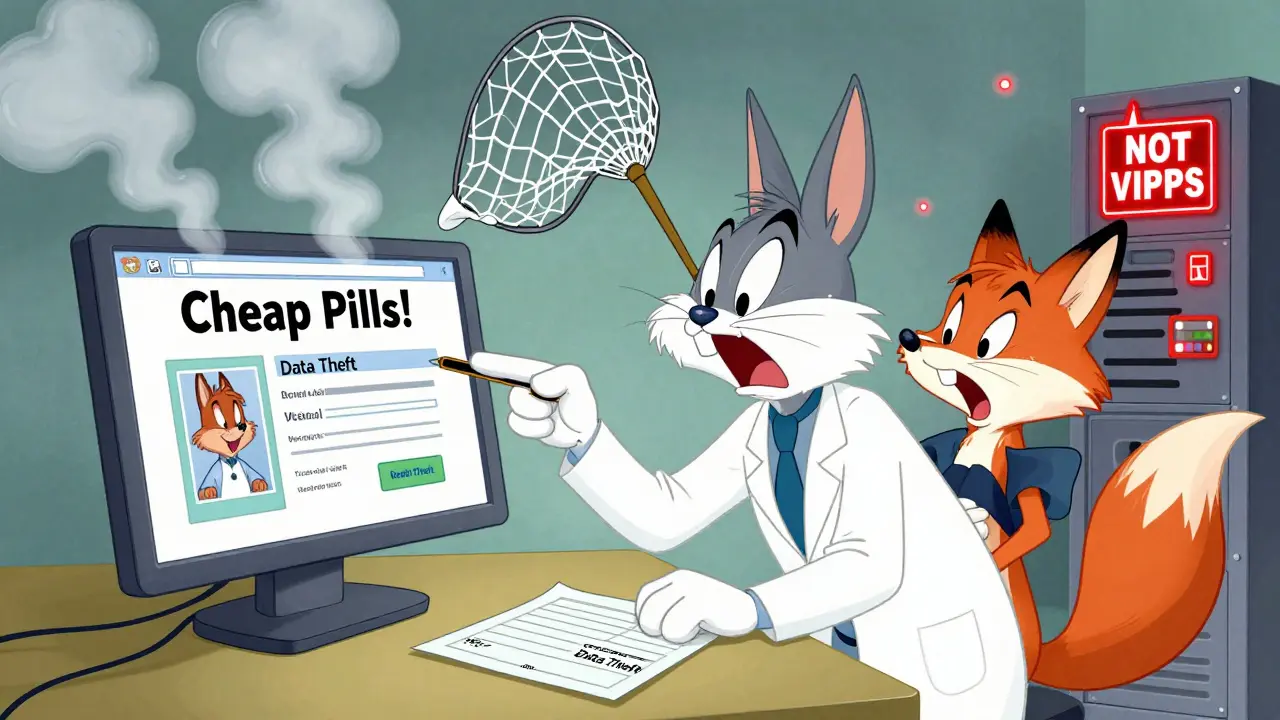
When you order medication online, you’re not just buying pills-you’re handing over your medical history, insurance details, credit card info, and sometimes even a photo of your ID. That data is valuable. And if the pharmacy isn’t secure, it’s also vulnerable. In 2026, online pharmacy security is more critical than ever. Over 14 million Americans use online pharmacies each year, but nearly 1 in 3 have experienced some form of data misuse-unsolicited calls, scam emails referencing their prescriptions, or even identity theft tied to their medical records.
Why Most Online Pharmacies Are Risky
You might think any website that sells pills is legit. It’s not. The National Association of Boards of Pharmacy (NABP) checked nearly 11,000 online pharmacy sites in 2024. Only 4% followed basic safety rules. That means 96% were breaking laws designed to protect you. These sites often operate from overseas, fake prescriptions, sell counterfeit drugs, and steal your data before you even get your medication.
Real pharmacies-brick-and-mortar ones-follow strict rules under HIPAA. They lock down patient records, limit staff access, and train employees every year. But online? Only 58% of them meet even the minimum standards. The rest? Their servers are wide open. Hackers don’t need to break into a hospital. They just wait for you to click on a site that looks like a pharmacy but isn’t.
The Only Trusted Signs You Can Rely On
Not all online pharmacies are dangerous. There’s a small group that follows the rules. And they’re easy to spot-if you know what to look for.
- .pharmacy domain: This isn’t just a fancy web address. It’s a verified seal. Only pharmacies that pass 47 checks-including proof of licensure, physical address, and compliance with U.S. and state laws-can use it. If the site ends in .pharmacy, it’s one of the few you can trust.
- VIPPS seal: Issued by NABP, this badge means the pharmacy passed 21 separate inspections on everything from prescription verification to data encryption. As of February 2026, there are only 68 VIPPS-accredited pharmacies in the entire U.S.
- Requires a valid prescription: Legit pharmacies never sell controlled substances without a real prescription from a licensed doctor. If a site says “no prescription needed,” walk away. That’s not convenience-it’s a trap.
- Physical address and phone number: Click “Contact Us.” Does it show a real street address? Can you call and speak to a pharmacist? If the address is a PO box or the phone number rings to a call center overseas, it’s a red flag.
Here’s the scary part: 39% of fake pharmacies now copy these trusted badges perfectly. They use the same fonts, colors, and logos. But they’re still fake. Always click the badge. If it links to NABP’s official site and shows a verified listing, it’s real. If it just goes to the pharmacy’s homepage? It’s a fake.
How Your Data Gets Stolen (And How to Stop It)
Most breaches don’t happen because of hackers breaking into a system. They happen because you gave your info to a site that didn’t protect it.
Here’s how it works:
- You enter your SSN, insurance ID, and prescription details on a shady site.
- The site doesn’t encrypt your data. It’s stored in plain text on a server anyone can access.
- Within hours, your info shows up on dark web marketplaces.
- Scammers use your prescription history to craft targeted phishing emails: “Your insulin order was delayed. Click here to update your billing.”
- You click. They get your credit card. Then your bank account. Then your identity.
According to Consumer Reports, 17% of online pharmacy users received scam emails that mentioned their exact medication. That’s not random spam. That’s data theft.
How to protect yourself:
- Use a burner email: Create a new Gmail account just for pharmacy orders. Don’t use your real one.
- Never use your primary credit card: Use a prepaid card or PayPal with no bank link. If the site gets hacked, your main account stays safe.
- Check the encryption: Before entering any data, look at the URL. Does it start with https://? And is the padlock icon visible? If not, close the tab. No exceptions.
- Never save your info: Even if the site offers to “remember your details,” decline. That data could be stolen later.
What the Law Demands in 2026
The rules changed in 2025-and they’re getting stricter.
Starting January 1, 2025, New York mandated that all prescriptions-controlled or not-must be sent electronically. This cut prescription fraud by 37%. But it also forced pharmacies to upgrade their systems. Now, compliant pharmacies must:
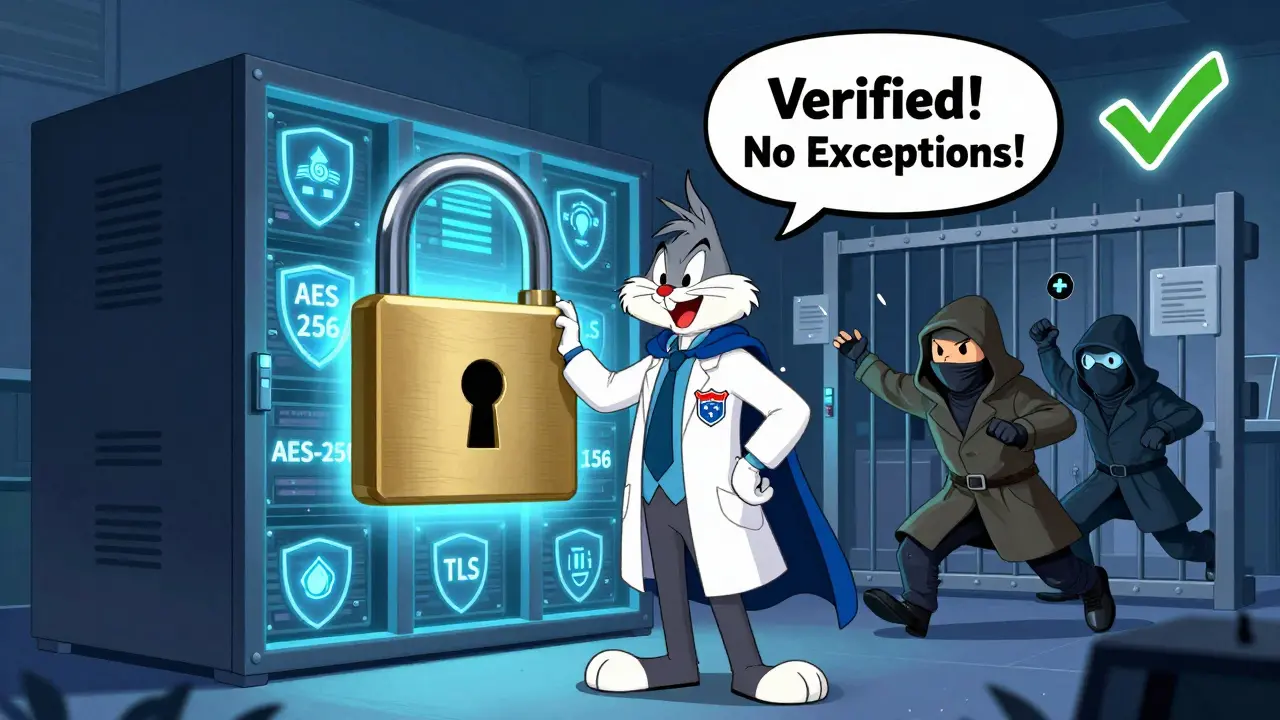
- Use 256-bit AES encryption for all stored patient data
- Use TLS 1.3 for every data transfer (not older, weaker versions)
- Require multi-factor authentication for every employee accessing records
- Keep audit logs of every login, file access, and prescription change for at least six years
And here’s what most illegal sites ignore: the DEA’s March 21, 2025 rule. Pharmacists must now verify patient identity using government-issued ID-either by uploading a photo with facial recognition or confirming ID through a live video call. If a site doesn’t do this? It’s breaking federal law.
Only 21% of online pharmacies currently meet all these standards. The rest? They’re operating illegally-and putting your data at risk.
What Happens If You Get Hacked?
If your data is stolen from an online pharmacy, it’s not just about credit card fraud. It’s medical identity theft.
Imagine someone uses your name and prescription history to get opioids, insulin, or psychiatric meds. They get the drugs. You get the bill. And your medical record? It’s filled with false entries. Insurance denies your claims. Doctors think you’re addicted. You can’t get the treatment you need.
According to Gartner, pharmacy-related data breaches cost the U.S. healthcare system $2.4 billion in 2025. Most of that came from non-compliant online pharmacies. The victims? Real people. Real patients. Real harm.
How to Choose a Safe Online Pharmacy in 5 Steps
Don’t guess. Don’t trust ads. Follow this checklist:
- Verify the domain - Must end in .pharmacy or show the VIPPS seal (click it to confirm).
- Check the prescription requirement - No legitimate pharmacy sells controlled substances without a valid, verifiable prescription.
- Find the physical address - Use Google Maps. Does it match the address on the site? Is it a real pharmacy, not a warehouse or PO box?
- Call their pharmacist - Ask if they’re licensed in your state. A real pharmacy will have no problem answering.
- Search for reviews - Look for complaints about data leaks, spam, or fake prescriptions. Avoid sites with 68% negative reviews mentioning privacy.
It takes 15 to 20 minutes to verify a site. That’s less time than it takes to order a pizza. But it could save you years of trouble.
What to Do If You’ve Already Used a Suspicious Site
It’s not too late.
- Change all passwords linked to that pharmacy account-even if you used a different email.
- Monitor your credit report and medical records. You can request a free copy of your medical history from your insurer or doctor.
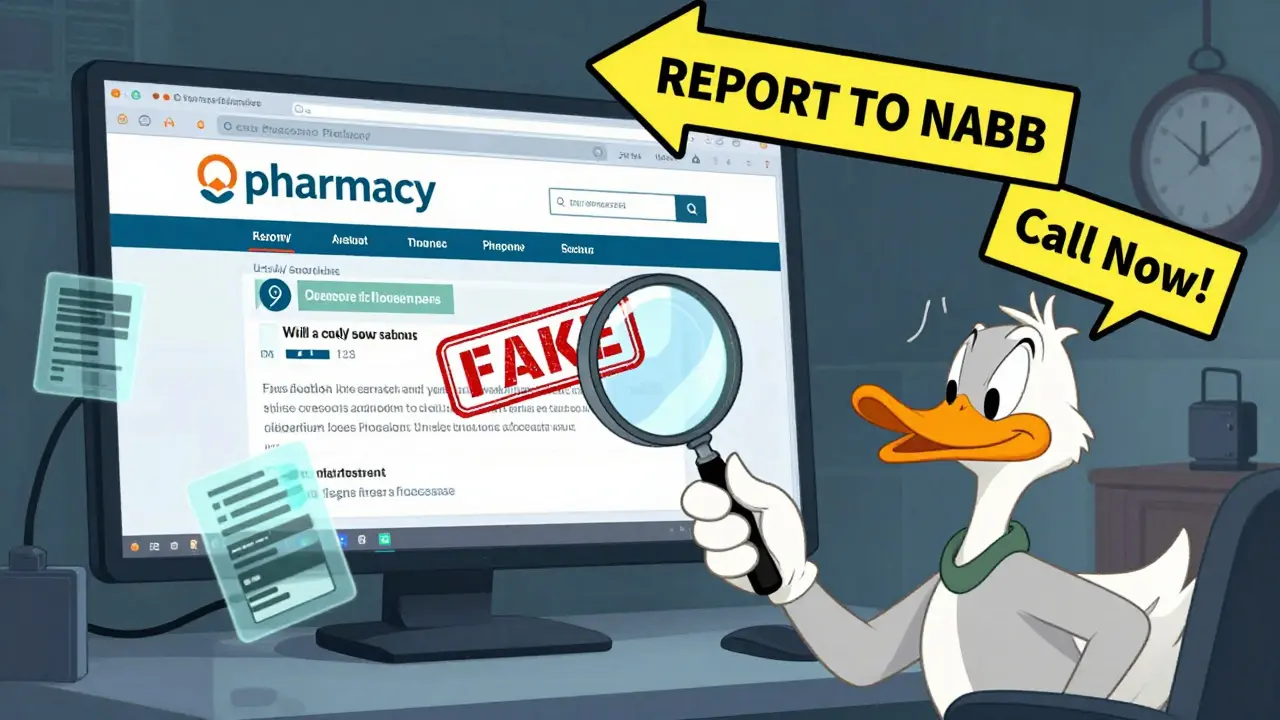
- Report the site to the NABP at www.nabp.pharmacy. They track illegal pharmacies and shut them down.
- If you got scam emails or calls, file a report with the FTC at reportfraud.ftc.gov.
Don’t wait. Data from these sites is sold within hours. The sooner you act, the less damage you’ll face.
Why This Matters More Than You Think
Convenience is great. But not when it costs you your privacy. The same site that delivers your blood pressure meds might also be selling your asthma history to advertisers-or worse, to criminals.
Real pharmacies don’t just fill prescriptions. They protect you. The law requires it. The technology exists. But only a tiny fraction of online pharmacies are doing it right.
You don’t need to avoid online pharmacies. You just need to know which ones are safe. And now, you know how to find them.


Nandini Wagh
February 22, 2026 AT 15:20So let me get this straight-we’re supposed to trust a .pharmacy domain like it’s the Holy Grail, but 39% of fakes copy it perfectly? 😂 Like, cool, I’ll just Google ‘NABP verified’ every time I need my insulin. Meanwhile, my grandma’s still ordering from ‘PharmaFast247’ because ‘it’s cheaper and ships fast.’ We’re not fixing the problem-we’re just making people feel guilty for being broke.
Brandice Valentino
February 24, 2026 AT 01:22Ugh, I just spent 45 minutes verifying a pharmacy because I didn’t want to die from fake metformin, and then I realized-my insurance *requires* me to use this one site that has ZERO .pharmacy or VIPPS badges. So I’m choosing between my health and my data? Like, congrats, America, you’ve turned healthcare into a hostage situation. 🙃
Christina VanOsdol
February 25, 2026 AT 08:51Okay, but let’s be real: if a site doesn’t require a live video ID verification, it’s not just illegal-it’s a crime scene waiting to happen. And don’t even get me started on ‘prepaid cards’-those are traceable too! The DEA rule? Too little, too late. By the time they catch one site, ten more pop up with new domains, new logos, and new ways to steal your thyroid meds. I’m not paranoid. I’m just… well-informed. 🔍💔
Maranda Najar
February 27, 2026 AT 01:43My heart is breaking. 💔 Imagine your child’s asthma inhaler-your lifeline-being sold on the dark web alongside your Social Security number and your therapist’s notes. This isn’t a ‘data breach.’ This is a soul-crushing betrayal. And who’s to blame? Corporations? Governments? Or us-for clicking ‘Proceed to Checkout’ without reading the 17-page privacy policy written in Comic Sans? I feel violated. I feel exposed. I feel like I’ve been raped by capitalism.
Dominic Punch
February 27, 2026 AT 16:48Here’s the thing nobody’s saying: if you’re using an online pharmacy, you’re already accepting risk. The real question isn’t ‘how to protect your data’-it’s ‘why are you using one at all?’ Go to CVS. Go to Walgreens. Pay the $5 extra. Your life isn’t worth the $10 you ‘saved.’ I’ve seen too many people lose everything over this. Don’t be one of them.
Khaya Street
February 28, 2026 AT 04:02Look, I get it. Online pharmacies are convenient. But if you’re ordering opioids without a prescription, you’re not saving money-you’re signing up for a felony. And if you’re using your real email and credit card? You’re basically handing your identity to a guy in a basement in Moldova. Just… don’t. It’s not worth it.
Brooke Exley
February 28, 2026 AT 07:18You’re not alone in this. Seriously. I used to order from sketchy sites too-until my mom got a scam call that said, ‘Your husband’s blood thinner order is ready.’ Turns out, they’d stolen his name, his script, and his address. We spent six months clearing his name. Don’t wait for that to happen to you. Verify. Double-check. Triple-check. You’ve got this. 💪❤️
Ashley Johnson
March 1, 2026 AT 16:28Did you know the government is using these pharmacy breaches to build a national health database? They don’t need to hack hospitals anymore. They just wait for you to hand over your records on ‘easyordermeds.com.’ Then they tag you, track your habits, and sell your data to Big Pharma. That’s why they’re pushing .pharmacy-it’s not for safety. It’s for control. Wake up. 🕵️♀️
Lillian Knezek
March 2, 2026 AT 01:45HTTPS? Pfft. That’s just for show. The real encryption? It’s all fake. I worked in IT. They use ‘TLS 1.3’ on the surface, but behind the scenes? It’s all routed through a server in Latvia that’s owned by a shell company that’s owned by a guy who used to run a vape shop in Belarus. You think your data’s safe? Nah. It’s already on Telegram. I’ve seen the spreadsheets. 😶
Kenzie Goode
March 2, 2026 AT 18:38I appreciate the effort to lay this out, but honestly? The real issue is that we’ve normalized sacrificing privacy for convenience. We do it with Amazon, with Uber, with our smart fridges. Why should pharmacies be any different? Maybe the solution isn’t more seals-it’s a cultural shift. We need to stop treating our medical data like a loyalty card.
Alfred Noble
March 3, 2026 AT 12:39So I just ordered my Zoloft from a .pharmacy site-verified the seal, called the pharmacist, used a prepaid card, and even made a burner email. Then I got an email saying ‘Your order is delayed.’ I clicked. It was a phishing link. 😅 I’m not mad. Just… surprised? Maybe I’m the problem.
Sanjaykumar Rabari
March 4, 2026 AT 18:51They say use a burner email. But what if your burner email gets hacked? Then what? They have your real name, your real meds, your real doctor. You can’t change your body. You can’t change your diagnosis. You’re stuck. So why even try? Just don’t order online. End of story.
tia novialiswati
March 6, 2026 AT 00:25Y’all are overthinking this. Just use PayPal. Don’t save info. Check the URL. Call the pharmacy. Done. You got this. ❤️💛💚
Holley T
March 7, 2026 AT 03:54Let’s not pretend the .pharmacy domain is some magic bullet-it’s a branding exercise. The real problem is that the FDA and DEA are underfunded, understaffed, and politically neutered. The 68 VIPPS pharmacies? They’re the tip of the iceberg. The rest? They’re operating under state licenses that vary from ‘strict as hell’ to ‘write your name on a napkin and we’ll ship you fentanyl.’ This isn’t a consumer issue-it’s a systemic collapse of regulatory oversight. And we’re all just scrolling through Instagram while our data gets auctioned off to the highest bidder.