
Steroid Eye Risk & Monitoring Calculator
Your Profile
Select the factors that apply to you to assess your risk.
Assessment Results
Select options above and click Analyze.
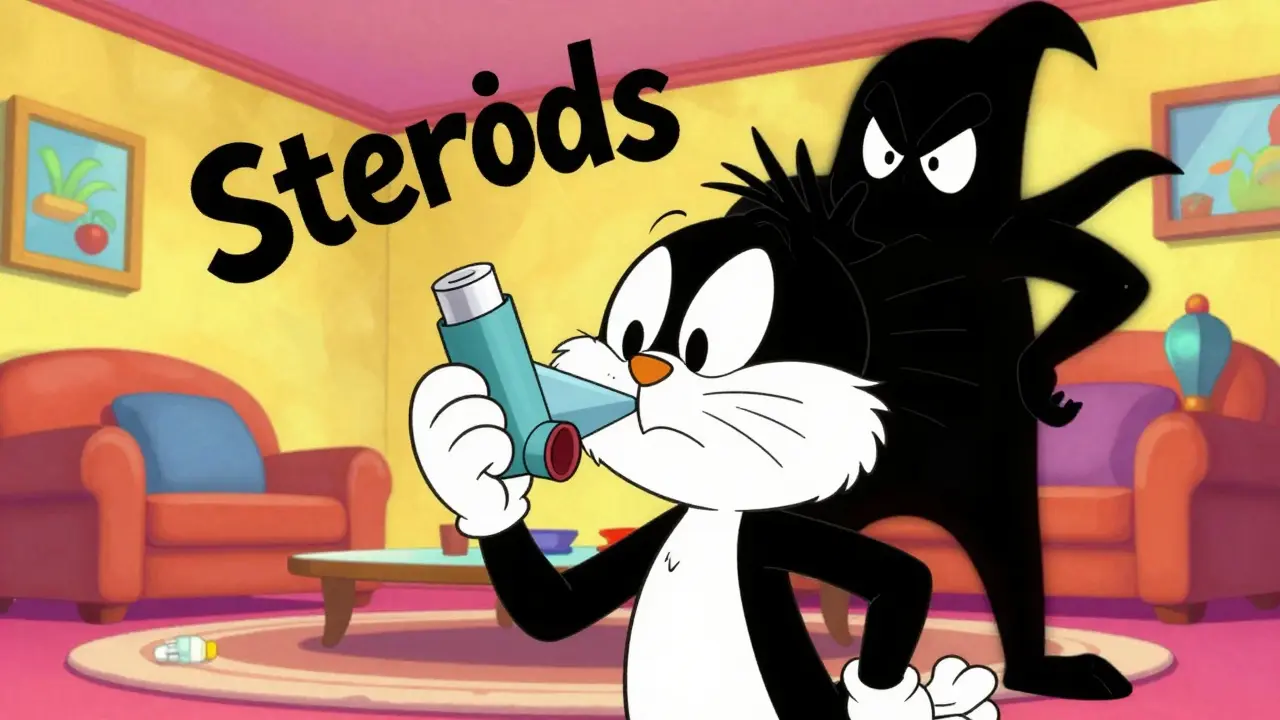
Did you know that the medicine keeping your asthma under control or soothing your skin eczema might be quietly threatening your vision? It sounds alarming, but it is a documented reality for millions of people using corticosteroids, commonly known as steroids. Whether taken as pills, inhaled via a nebulizer, injected into a joint, or applied as eye drops, these powerful anti-inflammatory drugs carry a hidden cost. Long-term use can lead to two serious eye conditions: posterior subcapsular cataracts and steroid-induced glaucoma.
You do not need to have a history of eye problems to be at risk. In fact, nearly 35% of cases of steroid-induced glaucoma occur in people with no prior history of the disease. The scary part? These conditions often develop without any pain or obvious warning signs until significant damage has already been done. Understanding how steroids affect your eyes is not just medical trivia; it is essential for protecting your sight.
How Steroids Change Your Eye Structure
To understand the risk, you first need to look at what steroids actually do inside the eye. Corticosteroids are incredibly effective at reducing inflammation, which is why doctors prescribe them for everything from rheumatoid arthritis to severe allergies. However, they do not discriminate between helpful inflammation reduction and harmful side effects on ocular tissues.
When you use steroids, even topically, the drug interacts with the biochemistry of your eye. For cataracts, the issue lies in the lens. According to research detailed in NIH StatPearls (updated February 2023), steroids trigger a non-enzymatic reaction. Specifically, the C-20 ketone group in the steroid molecule binds with nucleophilic groups in the lens proteins. This creates stable adducts-essentially clumps of protein-that form a cloudiness in the back of the lens. This specific type of cloudiness is called a posterior subcapsular cataract (PSC). Unlike age-related cataracts that start at the edges and move inward, PSCs form right in the center, directly in your line of sight.
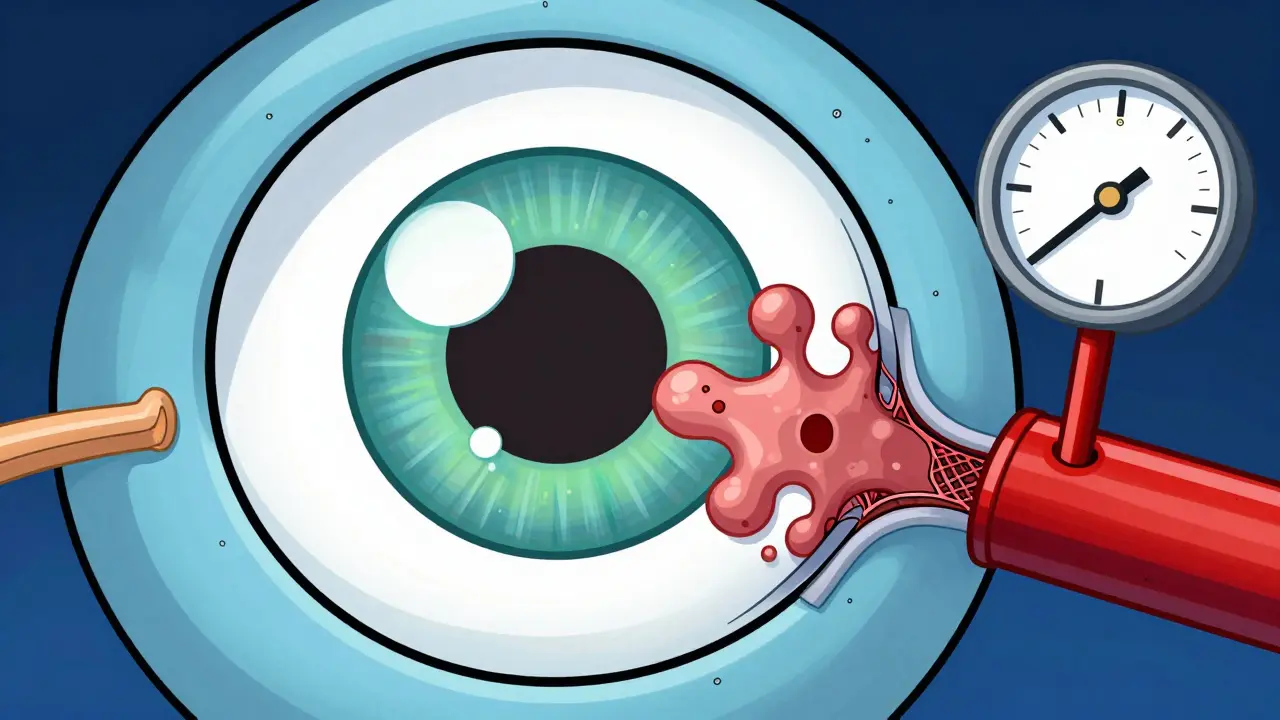
For glaucoma, the mechanism is different but equally dangerous. Steroids alter the drainage system of the eye. They cause changes in the trabecular meshwork, the tiny filter that lets fluid (aqueous humor) leave the eye. When this filter gets clogged or stiffened by steroid exposure, fluid builds up. This increases your intraocular pressure (IOP). High IOP pushes against the optic nerve. Over time, this pressure damages the nerve fibers, leading to permanent vision loss if left unchecked.
Who Is Most at Risk?
Not everyone who takes steroids will develop eye problems, but some groups are far more vulnerable than others. Medical experts categorize patients based on their "steroid response." Approximately 5% of the general population are "high responders," meaning their eye pressure spikes significantly even with low doses. About 30% to 40% are "moderate responders," showing a noticeable rise in pressure. The remaining majority show little to no change.
Your risk profile shifts dramatically if you fall into certain categories:
- Preexisting Glaucoma: If you already have glaucoma, your risk skyrockets. Studies indicate that up to 90% of glaucoma patients are steroid responders.
- Family History: Genetics play a huge role. If your parents or siblings had steroid-induced eye issues, your likelihood of developing them increases.
- Type 1 Diabetes: Diabetic patients often have compromised blood vessels in the eye, making them more susceptible to pressure changes and cataract formation.
- Recent Eye Surgery: Patients recovering from cataract surgery often receive steroid drops to prevent inflammation. Paradoxically, this treatment can sometimes trigger secondary glaucoma, a phenomenon ophthalmologist Robert Noecker, MD, notes he sees "every other week" in clinical practice.
Even if you don't fit these boxes, you are not immune. As Baganstrindenvision points out, the unpredictability of individual responses means anyone on long-term therapy needs vigilance.
Cataracts vs. Glaucoma: Spotting the Differences
While both conditions stem from steroid use, they present differently. Knowing what to look for can help you catch the problem early.
| Feature | Posterior Subcapsular Cataracts (PSC) | Steroid-Induced Glaucoma |
|---|---|---|
| Primary Symptom | Blurry vision, glare, halos around lights, faded colors | Often silent; may include eye pain, redness, or tunnel vision in late stages |
| Onset Speed | Rapid progression compared to age-related cataracts | Pressure rises quickly; nerve damage occurs slowly over months/years |
| Reversibility | Permanent once formed; requires surgery to remove | Pressure elevation is often reversible upon stopping steroids; nerve damage is permanent |
| Typical Timeline | Risk increases after 2-4 weeks of continuous use | IOP elevation can begin within weeks; significant damage takes longer |
Cataracts are easier to notice because they affect your daily visual clarity. You might find yourself squinting more in bright sunlight or struggling to read menus at night due to halos around streetlights. Glaucoma, however, is the "silent thief of sight." You likely won't feel anything wrong until the peripheral vision loss becomes severe. That is why relying on symptoms alone is a dangerous strategy.
The Critical Role of Monitoring Protocols
If you are prescribed steroids for longer than two to four weeks, passive hope is not a strategy. Active monitoring is required. The American Academy of Ophthalmology (AAO) and NIH guidelines provide a clear roadmap for keeping your eyes safe.
Here is the standard protocol you should discuss with your doctor:
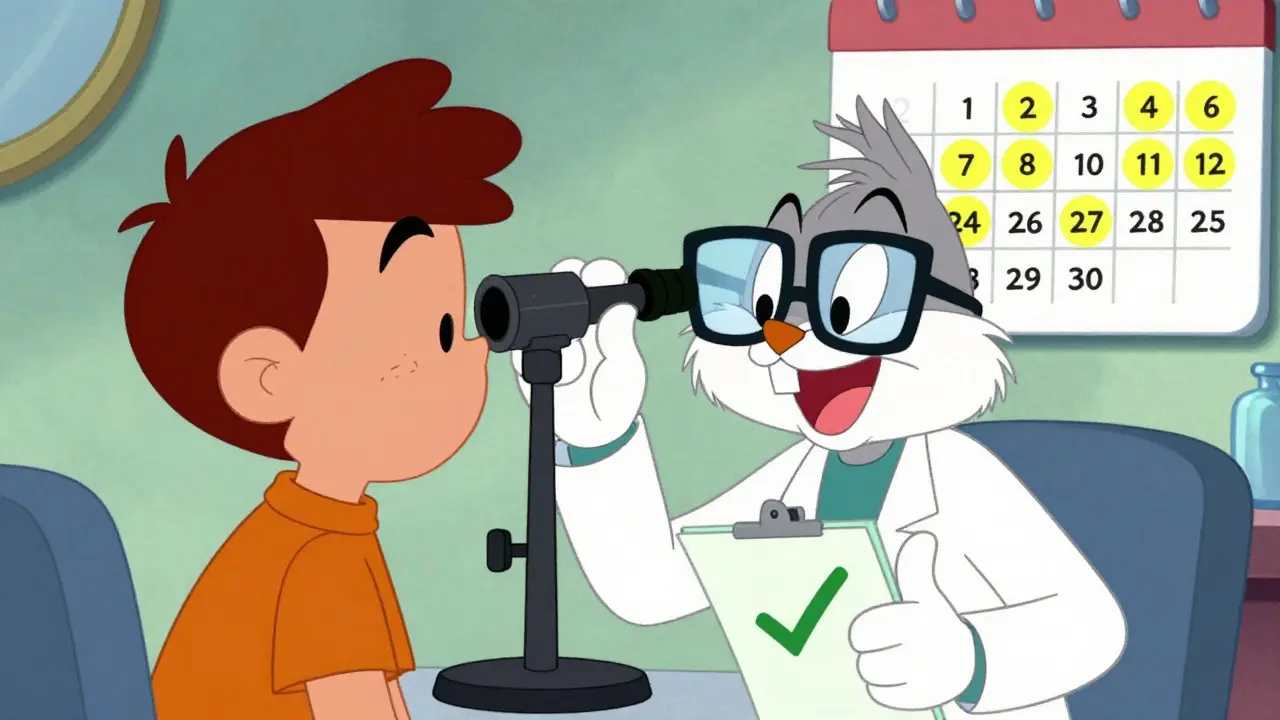
- Baseline Measurement: Before starting any steroid treatment, get a comprehensive eye exam that includes an intraocular pressure (IOP) test and a dilated fundus exam. This establishes your "normal" numbers.
- Two-Week Check: Return for a follow-up IOP check two weeks after starting medication. This catches early high responders.
- Monthly Checks (First 3 Months): If the two-week check is normal, continue checking every 4 to 6 weeks for the next three months. This is the window where most complications emerge.
- Semi-Annual Exams: If your pressure remains stable after three months, you can typically switch to checks every six months while you remain on the medication.
Why is this schedule so strict? Because data shows that steroid-induced ocular hypertension manifests differently across patients. In 66% of cases, IOP increases by less than 5 mmHg-a manageable range. But in 30% of cases, it jumps 6-15 mmHg, and in 5% of cases, it exceeds 15 mmHg. Those last two groups are at immediate risk for optic nerve damage. Without regular checks, you have no way of knowing which group you fall into.
Practical Steps to Protect Your Vision
Knowledge is power, but action saves sight. Here are concrete steps you can take right now if you are using or planning to use corticosteroids.
1. Minimize Dosage and Duration
Always ask your prescribing physician: "What is the lowest effective dose for the shortest possible time?" Steroid-sparing agents-medications that reduce inflammation without the same level of ocular risk-are often available. For example, loteprednol etabonate is a steroid alternative shown in a 2024 JAMA Ophthalmology study to have a lower risk of raising eye pressure compared to traditional dexamethasone or prednisolone.
2. Communicate Across Specialists
A major gap in care is the lack of communication between primary care doctors (who prescribe the steroids) and ophthalmologists (who monitor the eyes). Only 42% of primary care physicians consistently refer long-term steroid users for eye exams. Make sure your eye doctor knows exactly what medications you are taking, including inhalers and creams. Systemic absorption from topical applications is real and cumulative.
3. Consider Home Monitoring Technology
Emerging point-of-care IOP monitoring devices allow high-risk patients to check their eye pressure at home. While not yet standard for everyone, if you are a known steroid responder, ask your specialist if remote monitoring or home testing kits are appropriate for your case. Tele-ophthalmology programs, such as those piloted in the Veterans Health Administration, are expanding access to these tools.
4. Watch for Genetic Markers
Recent research published in the American Journal of Ophthalmology (March 2024) identified genetic markers that predict steroid responsiveness with 85% accuracy. While widespread genetic screening isn't routine yet, mentioning your family history of glaucoma to your doctor can prompt earlier and more aggressive monitoring.
When to Seek Immediate Help
While regular checkups are key, you should not wait for your scheduled appointment if you experience sudden changes. Seek immediate ophthalmic care if you notice:
- Sudden onset of severe eye pain or headache
- Redness in one or both eyes accompanied by nausea
- A sudden decrease in vision or appearance of rainbow-colored halos around lights
- Visible clouding of the pupil that wasn't there before
These could be signs of acute angle-closure glaucoma or rapid cataract progression, both of which require urgent intervention to prevent permanent blindness.
Can steroid-induced glaucoma be cured?
The elevated eye pressure caused by steroids is often reversible if you stop the medication or switch to a safer alternative. However, any damage done to the optic nerve during the period of high pressure is permanent. Early detection is crucial to preventing irreversible vision loss.
Do inhaled steroids for asthma affect the eyes?
Yes. While the risk is lower than with direct eye drops, systemic absorption from inhaled corticosteroids can still lead to posterior subcapsular cataracts and increased intraocular pressure, especially with long-term, high-dose use. Asthma patients on chronic steroids should undergo regular eye screenings.
How long does it take for steroids to cause cataracts?
Research indicates that the risk of forming posterior subcapsular cataracts begins to increase after just 2 to 4 weeks of continuous steroid use. Significant opacification often becomes clinically relevant after 4 months of uninterrupted therapy.
Is there a safer steroid alternative for eye inflammation?
Loteprednol etabonate is widely considered a safer option for long-term use because it has a lower propensity to raise intraocular pressure compared to older steroids like dexamethasone. Non-steroidal anti-inflammatory drugs (NSAIDs) may also be used in certain cases, depending on the underlying condition.
What percentage of steroid users develop eye problems?
Approximately 5% to 35% of steroid users experience ocular complications, depending on the route of administration and individual risk factors. About 30-40% of the general population are "moderate responders" to steroids, showing some rise in eye pressure, while 5% are "high responders" at significant risk.