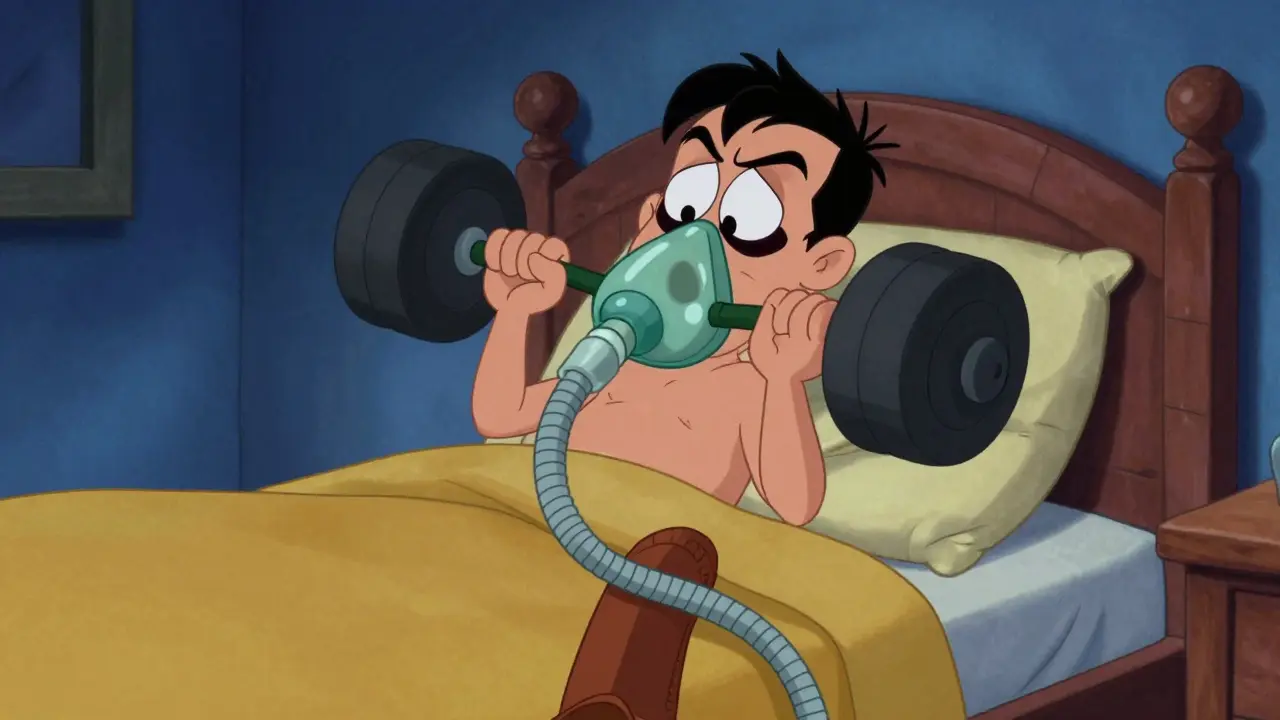
Imagine waking up exhausted, even after eight hours in bed. You’ve tried the mask, the hose, the white noise machine, but nothing fixes the gasping or the snoring that drives your partner crazy. For millions of people with obstructive sleep apnea (OSA), Continuous Positive Airway Pressure (CPAP) is the gold standard-but it’s also a nightmare for many. About half of all patients abandon CPAP because it feels uncomfortable, claustrophobic, or just plain annoying. If you’re one of those people, there is another path. It involves a small surgery and an implanted device called upper airway stimulation. This isn’t magic, but for the right candidate, it can be life-changing.
This article breaks down what upper airway stimulation actually is, who qualifies for it, how the surgery works, and whether it’s worth the hassle compared to sticking with CPAP or trying other treatments. We’ll look at the real data, the risks, and the day-to-day reality of living with an implant.
What Is Upper Airway Stimulation?
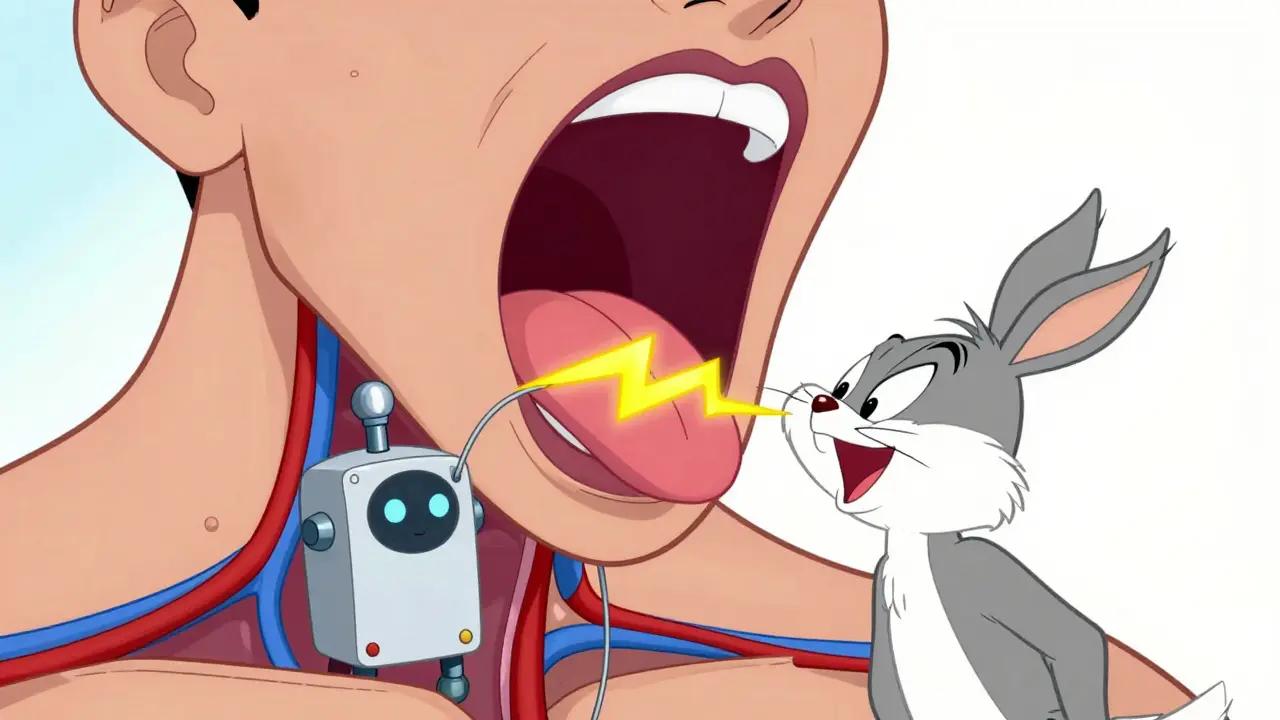
Think of your tongue as a muscle that relaxes too much when you fall asleep. In people with OSA, this relaxation causes the tongue to fall back and block the throat. Air can’t get through, so you stop breathing briefly-sometimes hundreds of times a night. CPAP forces air into your lungs to keep the passage open like a pneumatic splint. Upper airway stimulation takes a different approach. Instead of blowing air in, it gently zaps the nerve that controls your tongue.
The most common system on the market is the Inspire Upper Airway Stimulation System, developed by Inspire Medical Systems. Approved by the FDA in 2014, this device acts like a pacemaker for your airway. It monitors your breathing pattern and delivers mild electrical pulses to the hypoglossal nerve during inhalation. These pulses cause the tongue to move forward slightly, preventing the collapse that leads to apnea events. The result? You breathe normally throughout the night, no mask required.
Who Qualifies for the Implant?
You might think that if you have sleep apnea, you qualify for the implant. But UAS is not a first-line treatment. It is specifically designed for patients who have moderate to severe OSA and cannot tolerate CPAP therapy. The criteria are strict because this is a surgical procedure, and doctors want to ensure it works for you before making incisions.
Here is the checklist for eligibility based on current FDA guidelines and clinical standards:
- Age: You must be at least 22 years old.
- Apnea Severity: Your Apnea-Hypopnea Index (AHI) must be between 15 and 100 events per hour. (Note: Earlier guidelines capped this at 65, but recent approvals expanded it).
- Body Mass Index (BMI): Your BMI must be less than 35 kg/m². Some newer data supports use up to 40, but 35 remains the standard threshold for most insurance approvals.
- Central Apneas: You must have less than 25% central or mixed apneas. UAS only treats obstructive issues caused by physical blockage.
- Anatomy: A drug-induced sleep endoscopy (DISE) is required to check your throat structure. You cannot have complete concentric collapse of the soft palate. If your entire throat closes off like a shutter, the tongue movement alone won’t fix it.
- CPAP Failure: You must demonstrate documented intolerance to CPAP. This usually means you’ve tried it consistently for several weeks and failed due to comfort issues, not just laziness.
If you meet these criteria, you are a potential candidate. If you don’t, your doctor will likely steer you toward oral appliances, weight loss programs, or traditional surgeries like uvulopalatopharyngoplasty (UPPP).
How the Surgery Works
The implantation process is an outpatient surgery, meaning you go home the same day. It typically takes two to three hours under general anesthesia. Here is what happens inside the operating room:
- Incisions: The surgeon makes three small incisions. One in the upper neck to access the hypoglossal nerve, one in the lower neck to place a pressure sensor (which detects when you inhale), and one below the collarbone to create a pocket for the pulse generator.
- Lead Placement: A thin wire (lead) is attached to the hypoglossal nerve. Another lead connects to the chest wall to sense breathing patterns.
- Generator Insertion: The Implantable Pulse Generator (IPG)-about the size of a matchbox-is tunneled under the skin and connected to the leads.
The surgery is reversible. Unlike UPPP, which removes tissue permanently, UAS leaves your anatomy intact. If the device fails or you choose to stop using it, it can be removed, and the nerve function typically returns to normal.
Recovery and Daily Life with the Device
Recovery is generally quicker than traditional throat surgeries. Most patients return to normal activities within five to seven days. However, the device isn’t active immediately. You wait about four weeks to allow the surgical site to heal fully. After that, your doctor activates the device and begins titration-adjusting the stimulation strength to find the sweet spot where your airway stays open without causing discomfort.
Living with the implant requires a new nightly habit. You carry a small remote control, similar to a TV clicker. Before you go to sleep, you press a button to turn the device on. When you wake up, you turn it off. That’s it. There are no masks, no hoses, and no humidifiers to clean.
Some users report a strange sensation during the first few weeks-a tingling or pulling feeling in the tongue as it moves. This usually fades as you get used to it. One patient on a sleep forum noted, “It took about three weeks to stop noticing the sensation entirely.” Others mention forgetting to turn it on, which is why setting a phone alarm or placing the remote next to your toothbrush helps build the routine.
Effectiveness: Does It Actually Work?
The data is compelling. In the landmark STAR trial, patients saw a 68% reduction in their AHI score. On average, AHI dropped from 29.3 events per hour to 9.0 events per hour at twelve months. More importantly, 66% of participants achieved an AHI below 20, which is considered clinically significant improvement.
Long-term studies, such as the ADHERE Registry, show these benefits hold up over time. Patients with higher BMIs (up to 32-35) and more severe apnea still see substantial improvements. Beyond numbers, quality of life metrics improve dramatically. Daytime sleepiness decreases, cognitive function improves, and bed partners report significantly less snoring. In fact, 85% of partners noted little to no snoring at follow-up visits.
| Feature | CPAP | Upper Airway Stimulation (Inspire) | Oral Appliances |
|---|---|---|---|
| Invasiveness | Non-invasive | Surgical implant | Non-invasive |
| Adherence Rate | Low (29-46% abandonment) | High (>80% satisfaction) | Moderate |
| AHI Reduction | Significant if tolerated | ~68% reduction | Mild to Moderate |
| Comfort | Mask/Hose required | No mask; remote activation | Dental appliance in mouth |
| Cost (Initial) | $1,500 - $3,000 | $35,000 - $40,000 | $1,500 - $3,000 |
Risks and Complications
Like any surgery, UAS carries risks. However, major complications are rare. Real-world data shows a 99.6% major complication-free rate. Minor issues include temporary tongue weakness (reported in about 5% of patients during early trials) and minor surgical site infections (around 2%). Serious adverse events occur in less than 0.5% of cases.
Other potential side effects include changes in speech or swallowing sensations, though these are usually transient. Because the device stimulates the nerve, there is a theoretical risk of neuromuscular fatigue, but the system is programmed to limit stimulation to the inspiratory phase, minimizing this risk.
Cost and Insurance Coverage
The upfront cost of UAS is high. The procedure averages between $35,000 and $40,000, excluding surgeon fees. Compared to a $2,000 CPAP machine, this looks steep. However, consider the long-term economics. CPAP machines need replacement every three to five years, plus ongoing costs for masks, filters, and electricity. More importantly, untreated sleep apnea leads to expensive health problems like hypertension, stroke, and heart disease.
Insurance coverage has improved significantly. As of 2023, Medicare covers UAS for eligible beneficiaries, and approximately 85% of commercial insurers provide coverage. You will need to prove CPAP intolerance and meet the anatomical criteria, but once approved, the financial burden becomes manageable for most patients.

Alternatives to Consider
If you don’t qualify for UAS, or if you prefer to avoid surgery, other options exist:
- Oral Appliances: Custom-made devices that pull the jaw forward. Best for mild to moderate OSA. Less effective than CPAP or UAS for severe cases but non-invasive.
- Weight Loss: Even a 10% reduction in body weight can significantly reduce AHI scores. Often combined with other therapies.
- Positional Therapy: Devices that prevent sleeping on your back. Effective only if your apnea occurs primarily in the supine position.
- Traditional Surgery (UPPP): Removal of excess tissue from the throat. Higher risk, longer recovery, and variable success rates compared to UAS.
Frequently Asked Questions
Is upper airway stimulation painful?
The surgery itself is performed under general anesthesia, so you feel no pain during the procedure. Post-surgery, most patients experience mild to moderate soreness in the neck and chest area for about a week. The stimulation sensation during sleep is described as a gentle tingling or pulling in the tongue, which is not painful but may feel unusual at first. Most patients adapt to this sensation within a few weeks.
Can I reverse the implant if I don't like it?
Yes, upper airway stimulation is technically reversible. The device can be surgically removed if necessary, and the hypoglossal nerve typically recovers its normal function. However, removal requires another surgery. Most patients do not seek removal because satisfaction rates are high, but the option provides peace of mind compared to permanent tissue-removal surgeries.
Does insurance cover the Inspire implant?
Coverage varies by provider, but as of 2023, Medicare and approximately 85% of major commercial insurance plans cover upper airway stimulation for eligible patients. Eligibility requires documented CPAP intolerance, specific AHI and BMI ranges, and passing an airway assessment. You should contact your insurer directly to verify your specific plan's benefits and prior authorization requirements.
How long does the battery last?
The implantable pulse generator battery is designed to last several years, typically around 5 to 7 years depending on usage settings. When the battery runs low, a minor surgical procedure is required to replace the generator unit. The leads usually remain in place unless they show signs of wear or damage.
Will I still snore with the implant?
Most patients experience a dramatic reduction in snoring. Clinical studies show that 85% of bed partners report little to no snoring at follow-up visits. While some residual snoring may occur, especially if the device is forgotten or turned off, the majority of users find that their snoring is virtually eliminated, leading to better sleep for both themselves and their partners.
What happens if I forget to turn on the remote?
If you forget to activate the device, it will not stimulate your airway, and you will experience sleep apnea events as usual. There is no automatic backup mode. This is why establishing a consistent bedtime routine is crucial. Many patients place the remote next to their alarm clock or toothbrush to serve as a visual reminder. Occasional missed nights are not dangerous, but consistent use is required for health benefits.
Next Steps and Troubleshooting
If you suspect you are a candidate for upper airway stimulation, start by talking to your primary care physician or a sleep specialist. Request a referral for a comprehensive sleep study and a drug-induced sleep endoscopy (DISE). These tests determine your AHI severity and airway anatomy, which are critical for eligibility.
If you are currently using CPAP but struggling with compliance, document your efforts. Keep a log of usage hours and note specific reasons for discomfort (e.g., dry mouth, nasal congestion, mask fit issues). This documentation is often required by insurance companies to prove CPAP intolerance.
For those already implanted, regular follow-ups are essential. Titration sessions at 1, 3, 6, and 12 months help optimize stimulation levels. If you experience persistent tongue numbness, difficulty swallowing, or device malfunction, contact your surgeon or the manufacturer’s support line immediately. Remember, this technology is evolving, and staying informed about updates ensures you get the best possible outcome from your therapy.