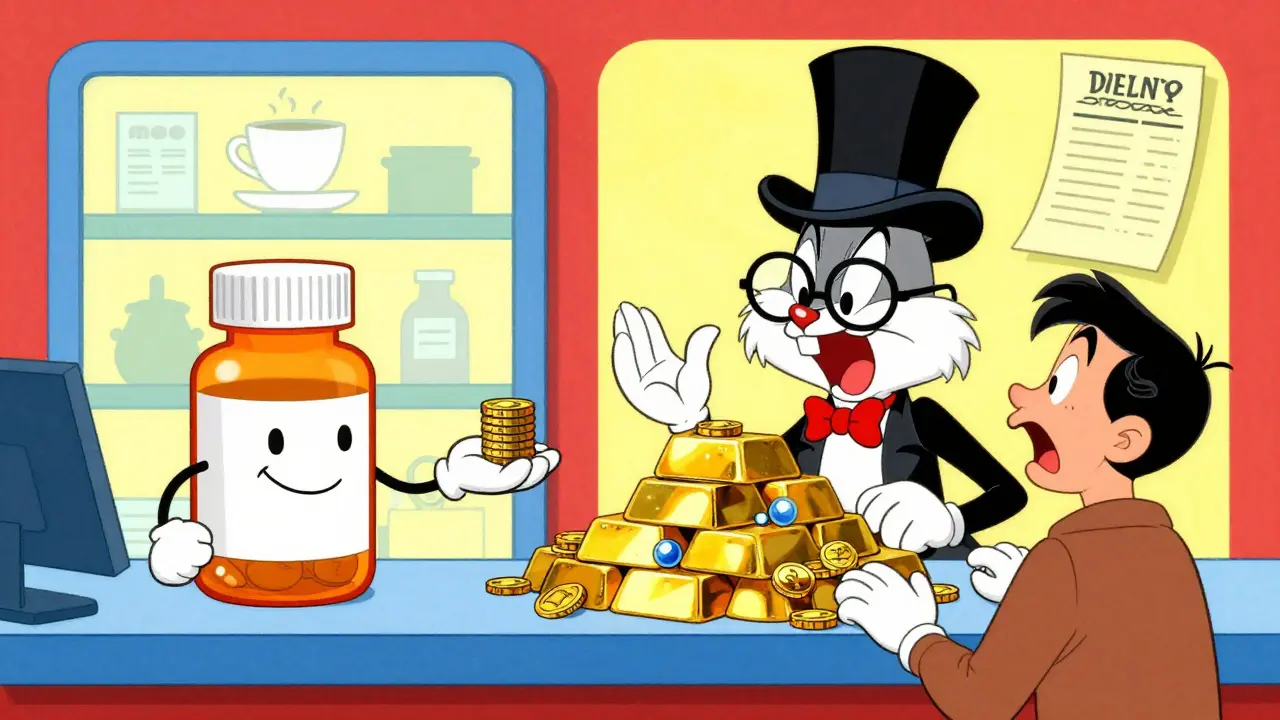
Imagine buying a bottle of blood pressure medication. In one country, it might cost you less than a cup of coffee. In another, the same pill could set you back the price of a nice dinner. This isn't just anecdotal; it is a documented reality that affects millions of patients worldwide. The question of why pharmaceutical prices vary so drastically across borders has become one of the most heated debates in healthcare policy. For years, the narrative was simple: the United States pays significantly more for drugs than any other developed nation. But recent data suggests the story is far more complex, involving generics, negotiations, and how we actually calculate "price."
If you are trying to understand your prescription bill or simply curious about global health economics, you need to look beyond the sticker price. You have to look at what is actually being compared. Are we talking about brand-name innovators or generic copies? Are we looking at the list price on the shelf or the net price after rebates? These distinctions change everything.
The Big Picture: How Much More Do We Pay?
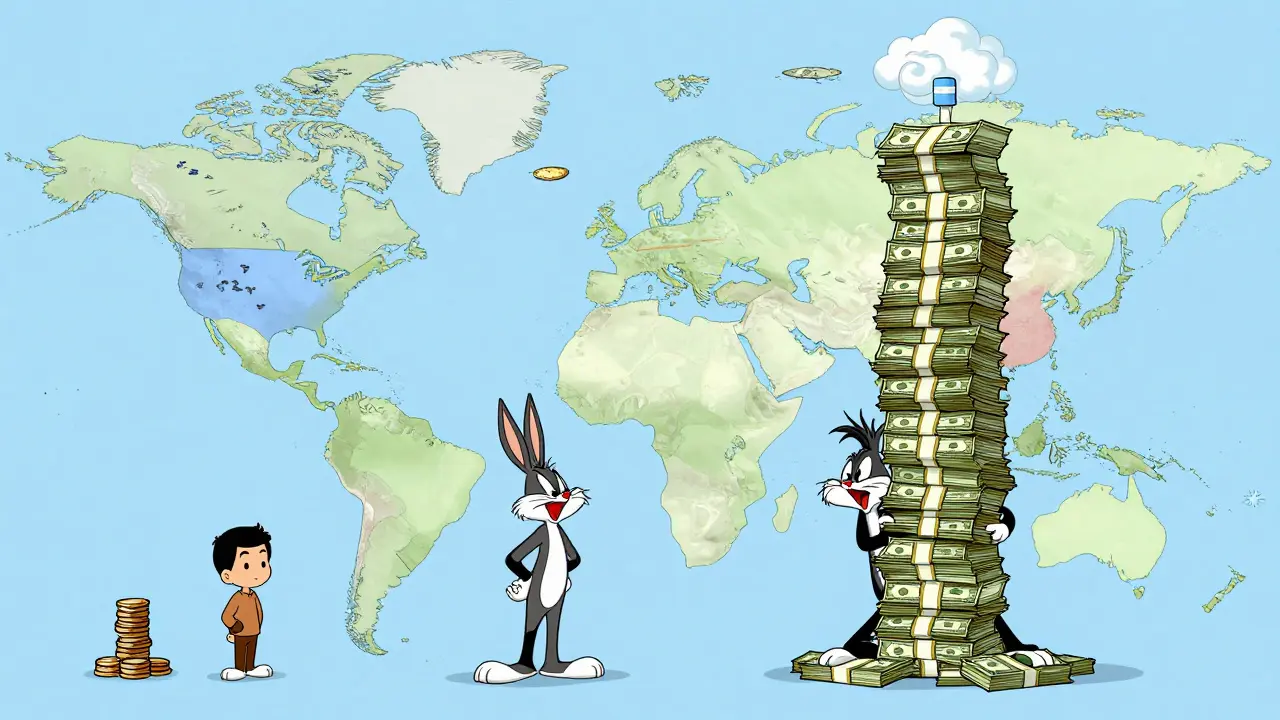
To get a sense of scale, let's look at the broadest available data. A comprehensive report by the U.S. Department of Health and Human Services' Assistant Secretary for Planning and Evaluation (ASPE) analyzed 33 Organisation for Economic Co-operation and Development (OECD) countries. The findings were stark. On average, gross prices for all drugs in the U.S. were 278 percent of the prices in those comparison countries. When focusing specifically on brand-name originator drugs-the expensive new medications developed by pharmaceutical companies-U.S. prices reached 422 percent of international prices.
This means if a specific brand-name drug costs $100 in an average OECD country, it would cost roughly $422 in the United States. This massive gap has fueled public outrage and political scrutiny for over two decades. It highlights a system where innovation comes at a premium, but also raises serious questions about accessibility and equity. However, this headline number tells only half the story. To understand the full picture, we must separate brand-name drugs from generics.
The Generic Game Changer
Here is where the narrative gets interesting. While brand-name drugs are incredibly expensive in the U.S., generic drugs often tell a different tale. According to analysis by the University of Chicago's Energy and Climate Economics Hub (ECCHC), unbranded generics are actually cheaper in the United States than in many peer nations. Specifically, U.S. generic prices sit at approximately 67 percent of international prices.
Why does this matter? Because generics make up the vast majority of prescriptions. In the United States, generics represent about 90 percent of prescription volume. In contrast, they account for only about 41 percent of volume in other comparison countries. When you factor in this high volume of low-cost generics, the average net price for public-sector prescriptions in the U.S. drops significantly. The ECCHC study found that when considering both brand and generic drugs across six developed nations (including Canada, Germany, the UK, France, and Japan), U.S. public-sector net prices were actually 18 percent lower on average than peer countries.
This discrepancy exists because most studies focus exclusively on list prices for brand-name drugs, which constitute only 7 percent of U.S. prescription sales volume. If you ignore the 90 percent of prescriptions that are cheap generics, you get a distorted view of what the average patient pays. This dual pricing system creates a unique landscape: high costs for new innovations, but competitive affordability for established treatments.
Medicare Negotiations: A New Era?
For decades, the U.S. government was barred from negotiating drug prices directly with manufacturers. That changed with the passage of the Inflation Reduction Act of 2022. This legislation authorized Medicare to negotiate prices for select high-cost drugs. The first round of negotiations covered 10 specific medications, including popular drugs like Jardiance, Entresto, Enbrel, Imbruvica, Eliquis, Xarelto, Farxiga, Stelara, and Ozempic.
Did these negotiations work? The results were mixed. An analysis by the Health System Tracker in November 2023 revealed that even after negotiation, Medicare prices remained significantly higher than international averages. Specifically, Medicare's negotiated prices were 2.8 times the average of prices in 11 comparable OECD countries (Australia, Austria, Belgium, Canada, France, Germany, Japan, Netherlands, Sweden, Switzerland, and the United Kingdom).
Let's look at some specific examples to illustrate the gap:
- Jardiance: Medicare's price was $204, compared to an international average of $52. This is 3.9 times higher.
- Stelara: Medicare paid $4,490, while the international average was $2,822. This is 1.6 times higher.
- Ozempic: This weight-loss and diabetes drug saw total spending of $4.6 billion in Medicare Part D in 2022, highlighting how high list prices drive overall expenditure concerns.
In nearly half of the cases examined, Medicare's negotiated prices exceeded international prices by over three times. Japan consistently had the lowest prices for several of these drugs, while Australia offered the lowest prices for others like Eliquis and Xarelto. Germany and Canada typically ranked as having the second-highest prices relative to Medicare. This suggests that while negotiation is a step forward, it may not be enough to align U.S. prices with global standards.

Global Variations: Who Pays What?
Pharmaceutical pricing is not uniform anywhere. A cross-sectional study published in JAMA Health Forum in 2024 analyzed data on 549 essential medicines across 72 global markets. By adjusting for purchasing power parity, the study revealed dramatic variations. Researchers used Laspeyres price indices, setting Germany's index at 100 as a baseline.
The results showed a wide spectrum:
- Lebanon: Had the lowest index at 18.1, meaning prices were just 18.1 percent of Germany's base.
- Argentina: Had the highest index at 578.6, meaning prices were approximately 5.8 times higher than Germany's.
Regionally, the Western Pacific region had the lowest median prices (index of 132.1), followed by Europe (138.7). The Americas region had the highest median index at 165.3, indicating generally higher prices in the Western Hemisphere. Beyond price, the study also noted significant availability disparities, with markets in the Eastern Mediterranean region having the lowest median availability of essential medicines. This highlights that cost is only one part of access; availability is equally critical.
How Countries Control Prices
So, how do other countries keep prices down? They use different policy tools. European countries predominantly utilize reference pricing systems. This involves two main approaches:
- Reference Group Pricing: Setting prices based on a group of similar drugs.
- External Reference Pricing: Basing domestic prices on international prices in other countries.
An Oxford Academic analysis of 140 price-negotiated innovative drugs across 15 countries confirmed that these methods create distinct market dynamics. For instance, China's national drug negotiation policy has effectively reduced prices for certain high-value medications. Meanwhile, the U.S. historically relied on private negotiations between insurers and manufacturers, a system that lacked the centralized leverage seen in countries like Japan or France.
The methodological differences in how prices are calculated also play a role. Researchers employ various indices, including Average Price Index, Laspeyres, Paasche, Fisher, and Chained Laspeyres. The choice of index can significantly alter the comparison. For example, Australia, Brazil, Canada, and France often exhibited higher Paasche indices than Laspeyres indices, while China, India, Japan, Turkey, the UK, and Italy showed the opposite pattern. This suggests that market composition-such as the mix of brand versus generic drugs-affects how prices appear in comparative studies.
The Innovation vs. Affordability Debate
Experts remain divided on whether the U.S. model is efficient or exploitative. Proponents of the current system, such as economists at the University of Chicago led by Professor Tomas Philipson, argue that the U.S. pricing pattern is "efficient." Their reasoning is that it balances affordability (through low-cost generics) with innovation incentives (through higher-priced branded drugs). The argument is that without the potential for high returns on brand-name drugs, pharmaceutical companies would have less incentive to invest in risky research and development.
Critics, however, point to the ASPE researchers' conclusion that U.S. prices for brand-name drugs remained 308 percent of prices in other countries even after accounting for rebates. They argue that the current system places an undue burden on patients and taxpayers. The Schaeffer Center at the University of Southern California noted in 2024 that Americans have "run out of patience with paying three times more for innovative medicines than other developed countries." This sentiment reflects a growing political demand for reform.
| Metric | United States | International Average (OECD) | Key Insight |
|---|---|---|---|
| Gross Brand-Name Drug Prices | 422% of international avg | Baseline | U.S. pays significantly more for new drugs. |
| Generic Drug Prices | 67% of international avg | Baseline | U.S. pays less for generic copies. |
| Generic Prescription Volume | 90% | 41% | High generic usage lowers average U.S. net costs. |
| Medicare Negotiated Prices | 2.8x international avg | Baseline | Negotiations have not yet closed the gap fully. |
Future Outlook
The landscape of pharmaceutical pricing is evolving. The IQVIA Institute's 2025 forecast projects that medicine spending will grow between 5-8 percent on a list price basis and 3-6 percent after discounts and rebates over the next five years. This suggests continued pressure on pharmaceutical pricing systems globally. As Medicare continues to release lists of drugs selected for negotiation (with the next round due by February 1, 2025), the U.S. will likely see more direct intervention in drug pricing. Whether this leads to sustained lower costs or merely shifts the burden elsewhere remains to be seen. One thing is clear: the era of passive acceptance of high drug prices is ending, replaced by active scrutiny and policy experimentation.
Why are drug prices so much higher in the United States?
Brand-name drug prices in the U.S. are significantly higher because the country lacks centralized price controls and direct government negotiation for most drugs. While generics are cheaper, brand-name innovators command premiums that fund research and development, leading to an average gross price that is 278 percent of OECD averages.
Are generic drugs cheaper in the U.S. than abroad?
Yes. Generic drugs in the U.S. are approximately 67 percent of the price in other developed nations. Since generics make up 90 percent of U.S. prescriptions, this helps lower the average net cost for public-sector prescriptions, despite high brand-name costs.
How effective is Medicare's new drug price negotiation?
Initial results show limited success in closing the international gap. Medicare's negotiated prices for the first 10 drugs were still 2.8 times higher than the average in 11 comparable OECD countries. For some drugs like Jardiance, the difference was nearly fourfold.
Which countries have the lowest drug prices?
Studies consistently show that Japan and France tend to have the lowest prices among OECD countries. Globally, Lebanon had the lowest adjusted prices in a major JAMA study, while Argentina had the highest. The Western Pacific region generally offers lower median prices than the Americas.
What is external reference pricing?
External reference pricing is a strategy used by many European countries where they set the price of a drug based on what it costs in other countries. This prevents domestic prices from exceeding international norms and helps control healthcare spending.
Does high drug pricing encourage innovation?
Some economists argue yes, stating that high returns on brand-name drugs incentivize pharmaceutical companies to invest in risky R&D. Critics counter that the current levels are excessive and that other models support innovation without such high consumer costs.
How does the Inflation Reduction Act affect drug prices?
The Inflation Reduction Act allows Medicare to negotiate prices for high-cost drugs, a power previously held only by private insurers. This marks a shift toward government intervention in pricing, though early results show negotiated prices remain higher than international averages.