
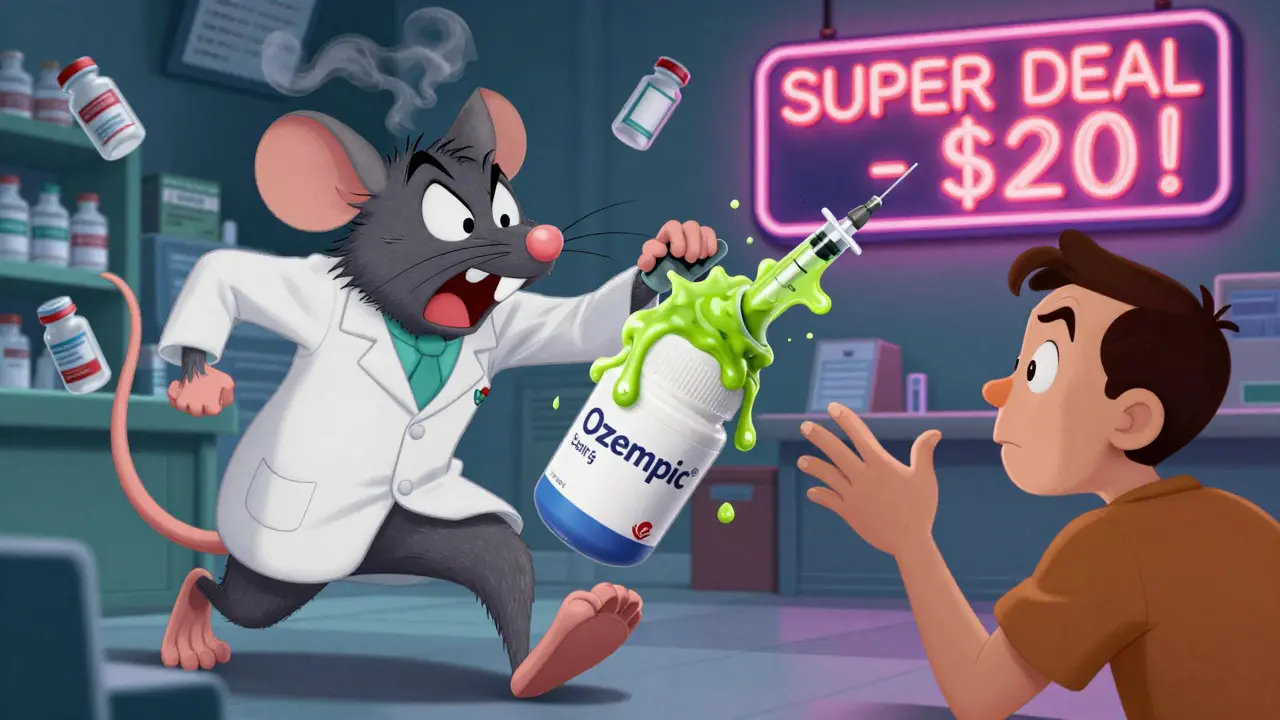
Every year, more than a million people die from counterfeit medications. These aren’t just bad drugs-they’re dangerous fakes that look real but can kill you. They might have no active ingredient, too much of one, or even toxic chemicals like rat poison or floor cleaner mixed in. And they’re getting harder to spot. Fake versions of popular drugs like Ozempic®, Xanax®, and OxyContin® are now being sold online, in social media ads, and even through unlicensed pharmacies that look legitimate. The problem isn’t going away. It’s growing.
What Exactly Is a Counterfeit Medication?
A counterfeit medication is anything that’s been deliberately mislabeled. That means it could be pretending to be a real drug but contains the wrong chemical, the wrong dose, or no active ingredient at all. The World Health Organization separates these into two types: substandard (poorly made or stored) and falsified (intentionally fake). Most of the danger comes from falsified drugs-they’re made in secret labs with no rules, no testing, and no regard for human life.These fake pills are often designed to look exactly like the real thing. Take the fake versions of Mounjaro® or Zepbound®-injectable weight-loss drugs that have flooded markets in North America and Europe. Counterfeiters copy the packaging, the color, even the shape of the vial. But inside? It might be salt water, sugar, or something far worse. The same goes for pills sold as Adderall or Percocet. They look identical. They feel the same. But they don’t work-and they can poison you.
Warning Signs You’re Holding a Fake Drug
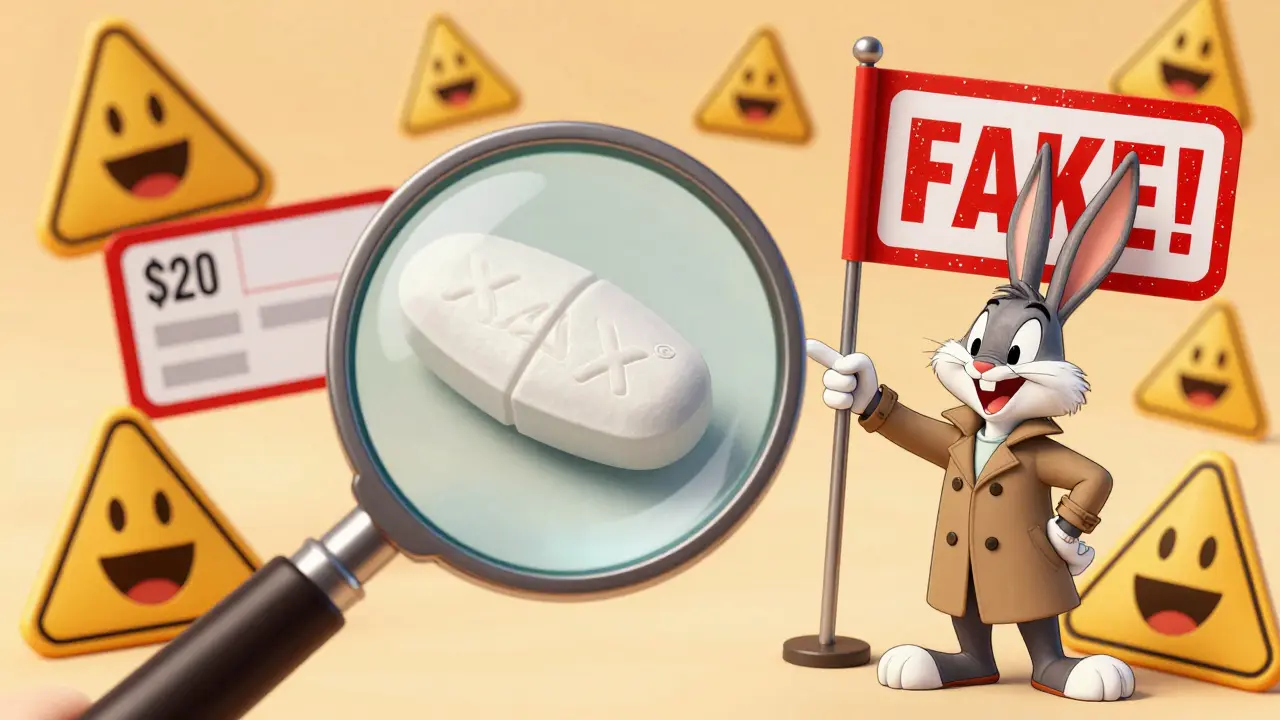
You can’t always tell a fake pill by sight, but there are clear red flags if you know what to look for. The FDA and pharmaceutical companies have listed the most common signs:- Changes in appearance: Your pill is a different color, shape, size, or marking than usual. Even a slight difference matters. If your Xanax® used to be a small white rectangle and now it’s a larger yellow oval, something’s wrong.
- Poor packaging: Spelling errors on the label, mismatched fonts, blurry printing, or faded colors. Legitimate drug packaging is made with precision. Fakes often use cheap materials and sloppy printing.
- Missing information: No lot number, no expiration date, no pharmacy name or address on the bottle. Real medications always include this.
- Strange texture or taste: Pills that crumble easily, feel sticky, smell odd, or taste bitter when they shouldn’t. Pfizer notes that fake tablets often have a bubbled or cracked coating-something you’d never see in a factory-made product.
- Unusual side effects: If you suddenly feel dizzy, nauseous, or have chest pain after taking a pill you’ve used before, stop taking it immediately. This could mean the drug contains dangerous additives.
- Too good to be true prices: If you’re buying Ozempic® for $20 instead of $1,000, it’s fake. Counterfeiters lure buyers with huge discounts, especially on social media or shady websites.
Some counterfeiters go further-they’ll reuse real bottles from expired or returned medications, scrape off the old expiration date, and print a new one. Look closely at the label: if the ink looks smudged, the font is slightly off, or the label doesn’t lie flat, it’s been tampered with.
Where Are These Fake Drugs Coming From?
The biggest source? Illegal online pharmacies. The National Association of Boards of Pharmacy (NABP) found thousands of websites selling fake GLP-1 agonists like Mounjaro® and Zepbound®. These sites look professional. They have logos, testimonials, and even fake licenses. But they don’t require prescriptions. They ship from overseas. And they don’t answer questions.Another growing channel? Social media and encrypted messaging apps. Criminal networks now use Instagram, Facebook, WhatsApp, and Telegram to sell fake pills directly to users. Ads show pictures of real pills with captions like “Same as Xanax, half the price.” Click the link, pay with cryptocurrency, and a package arrives in days. No ID check. No doctor consultation. No safety net.
Even brick-and-mortar pharmacies aren’t always safe. Some small clinics or unlicensed sellers buy bulk counterfeit drugs from black-market distributors. If you get your meds from a pharmacy that doesn’t seem to have a proper license, ask to see their state certification. If they hesitate, walk out.
How to Protect Yourself
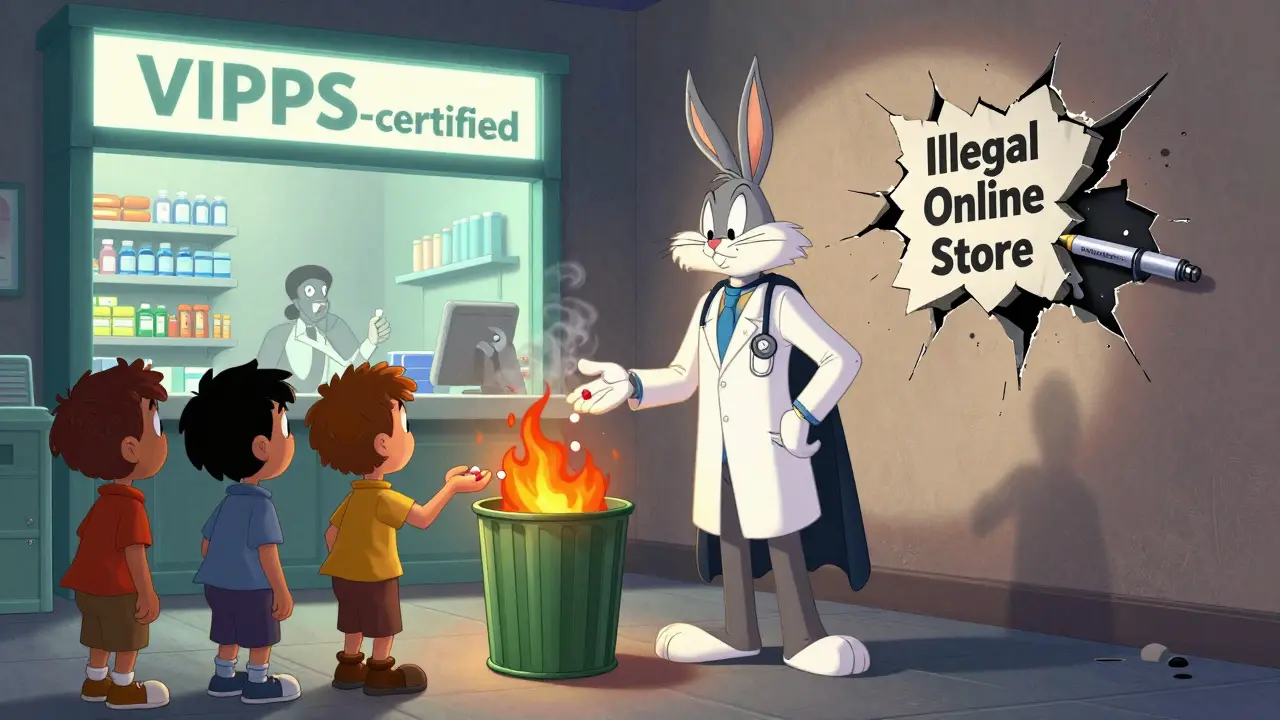
The best way to avoid counterfeit drugs is simple: only get your medications from trusted sources.- Only use licensed pharmacies. In the U.S., that means pharmacies licensed by your state’s board of pharmacy. Look for the VIPPS seal (Verified Internet Pharmacy Practice Sites) on websites. You can verify a pharmacy’s license through the NABP website.
- Never buy from social media or unknown websites. If you didn’t get the prescription from your doctor’s office or a verified online pharmacy, don’t take it.
- Ask your pharmacist. If your pill looks different, ask why. Pharmacists are trained to spot fakes. They can compare your medication to the manufacturer’s official sample or contact the supplier.
- Check the lot number. If you’re suspicious, call the drug manufacturer. Companies like Pfizer and Eli Lilly keep records of every batch. If you give them the lot number and expiration date, they can tell you if it’s real.
- Don’t share or accept meds from others. Pills from friends, family, or street dealers are never safe. Even if they say it’s “just like mine,” it could be a fake.
Also, keep your prescriptions secure. If you lose your bottle or your prescription gets stolen, report it to your doctor and pharmacy. Counterfeiters sometimes use stolen prescription information to create fake orders.
What to Do If You Think You Have a Fake
If you suspect you’ve been given a counterfeit drug, don’t throw it away. Don’t take another dose. Don’t panic-but act.- Stop using it immediately.
- Save the packaging and pill. Put it in a sealed bag. Don’t touch it more than necessary.
- Call your doctor or pharmacist. Tell them what you noticed and show them the packaging.
- Report it to the FDA. Use their MedWatch program to file a report online or by phone. This helps the agency track outbreaks and remove dangerous products.
- Contact the manufacturer. Eli Lilly, Pfizer, and other companies have direct hotlines for counterfeit reports. If you bought Mounjaro® or Ozempic® and suspect it’s fake, call the company directly. They track these reports and work with regulators to shut down operations.
Some people think, “It’s just one pill. What’s the harm?” But one fake pill can cause organ damage, allergic reactions, or even death. In 2023, the DEA reported that over 70% of fake pills tested in the U.S. contained lethal doses of fentanyl. You don’t need to take more than one to risk your life.
Why This Problem Is Getting Worse
Counterfeit drugs are booming because they’re profitable and hard to catch. A single batch of fake Ozempic® pens can sell for $50,000 on the black market. The cost to make them? Under $500. That’s a 10,000% profit margin.Technology is making it easier too. High-quality printers, 3D molds for pill shapes, and digital design tools let counterfeiters replicate packaging with near-perfect accuracy. Even the holograms and security labels on some bottles are being copied.
Meanwhile, global supply chains are complex. A drug made in India might be shipped to Dubai, repackaged in Poland, and sold in the U.S. through a fake website. By the time it reaches you, tracing it back is nearly impossible.
Regulators are fighting back. The FDA’s Drug Supply Chain Security Act (DSCSA), fully active since November 2023, requires every prescription drug to have a digital serial number that can be tracked from manufacturer to pharmacy. But this system only works if pharmacies use it-and not all do yet.
Bottom Line: Trust, But Verify
You can’t always tell a fake drug by looking at it. Even experts need lab tests to be 100% sure. But you can protect yourself by being smart about where you get your meds and what you expect them to look like.Never assume a drug is safe just because it looks right. Always check the source. Always talk to your pharmacist. Always report anything that seems off. Your life depends on it.
How can I tell if an online pharmacy is real?
Look for the VIPPS seal from the National Association of Boards of Pharmacy (NABP). Only buy from websites that require a valid prescription, list a physical U.S. address, and have a licensed pharmacist available to answer questions. You can verify a pharmacy’s license at nabp.net.
Can counterfeit pills look exactly like the real ones?
Yes. Counterfeiters use advanced printing, molds, and packaging to copy real drugs down to the color, size, and imprint. Some fake Ozempic® pens are so accurate that even pharmacists can’t tell without lab testing. Don’t rely on appearance alone.
Are generic drugs more likely to be counterfeit?
No-generic drugs are regulated just like brand-name drugs. But counterfeiters often fake generics because they’re cheaper and more commonly used. Always get generics from a licensed pharmacy, not from unknown online sellers.
What should I do if I bought fake meds from a website?
Stop using them immediately. Save the packaging and report it to the FDA through MedWatch. Also contact the manufacturer of the real drug-they track counterfeit reports and help law enforcement shut down operations. Don’t try to get a refund from the fake site; they’re scams.
Is it safe to buy medications from Canada or other countries?
Only if you’re buying from a Canadian pharmacy that’s certified by the Canadian International Pharmacy Association (CIPA) and ships directly to you. Many websites claiming to be Canadian are actually based in other countries and sell fake drugs. Always verify the pharmacy’s credentials before ordering.
Can my pharmacist help me spot a fake drug?
Yes. Pharmacists are trained to detect counterfeit medications. They can compare your pill to manufacturer samples, check for packaging inconsistencies, and contact the drug company to verify lot numbers. Always speak up if something looks off.
Kiruthiga Udayakumar
January 9, 2026 AT 10:37Wow, I can't believe people still fall for this. If you're buying pills off Instagram like they're concert tickets, you deserve whatever happens. I've seen friends lose their kidneys over fake Ozempic-this isn't a joke, it's a death sentence. Stop being lazy and go to a real pharmacy. Your life isn't a TikTok trend.
Diana Stoyanova
January 10, 2026 AT 21:22Okay, but let’s get real for a second-this isn’t just about bad actors or shady websites. It’s about systemic collapse. We’ve turned healthcare into a commodity, and now people are desperate. If you can’t afford $1,000 for a prescription, why are you surprised someone’s selling a $20 version that looks identical? The real crime isn’t the counterfeiters-it’s a system that makes medicine a luxury. We need universal access, not just better labeling. Until then, people will keep risking their lives because they have no other choice. This isn’t ignorance-it’s inequality dressed up as a public health crisis.
Elisha Muwanga
January 12, 2026 AT 07:00This is what happens when you outsource everything. America used to make its own medicine. Now we rely on labs in India and China where regulations are a suggestion. The FDA can’t even keep up. We need tariffs on foreign pharmaceuticals, mandatory domestic production quotas, and zero tolerance for imports without full traceability. This isn’t just a medical issue-it’s a national security threat. And if you’re buying pills from Telegram, you’re basically aiding the enemy.
Darren McGuff
January 13, 2026 AT 13:24I’ve worked in pharmacy for 22 years. I’ve seen fake pills that looked better than the real ones. I’ve held vials where the hologram was perfect, the label was flawless, the bottle even had the right weight. It took a lab test to prove it was just saline. The scary part? Most patients don’t even notice until they collapse. I’ve had patients come in with rashes from fake Xanax, others with kidney failure from counterfeit Ozempic. The packaging has gotten so good that even I hesitate sometimes. Always check the lot number. Always call the manufacturer. And if you’re ever unsure-don’t take it. No pill is worth your life.
Ashley Kronenwetter
January 15, 2026 AT 05:42Thank you for this comprehensive and well-researched overview. The inclusion of specific regulatory frameworks like the DSCSA and actionable steps for verification is invaluable. I encourage all readers to print this guide and keep it near their medication storage area. Patient safety begins with informed vigilance.
Heather Wilson
January 15, 2026 AT 19:20So let me get this straight-you’re telling me if I buy a pill that looks exactly like the real thing, has the right imprint, the right packaging, the right website, and the right price, I should still not take it? Because what if it’s not fake? What if it’s just a generic? Or what if the manufacturer changed the formulation? This article reads like fearmongering dressed up as public service. Where’s the data on actual incidence rates? Who’s verifying these claims? Not everyone is a fool.
Drew Pearlman
January 16, 2026 AT 11:00Hey, I know this stuff is scary-but please don’t let fear paralyze you. The good news? You have power. You can ask questions. You can call your pharmacist. You can verify lot numbers. You can report suspicious meds. You’re not powerless. Millions of people take their meds safely every day because they’re careful, not because they’re lucky. Be one of them. You’ve got this. And if you’re ever unsure? Talk to someone. Don’t suffer in silence. Your health matters.
Chris Kauwe
January 16, 2026 AT 20:16From a supply chain integrity standpoint, the proliferation of falsified pharmaceuticals represents a catastrophic failure of the GxP ecosystem. The lack of blockchain-enabled serialization at the unit-dose level, combined with insufficient DSCSA compliance among Tier-3 distributors, has created a perfect storm for counterfeit infiltration. The FDA’s current traceability framework is inherently reactive-not proactive. We need AI-driven anomaly detection in real-time logistics data, coupled with mandatory API source verification via ISO 13485-certified audits. Until then, we’re just rearranging deck chairs on the Titanic.
Lindsey Wellmann
January 18, 2026 AT 17:25