
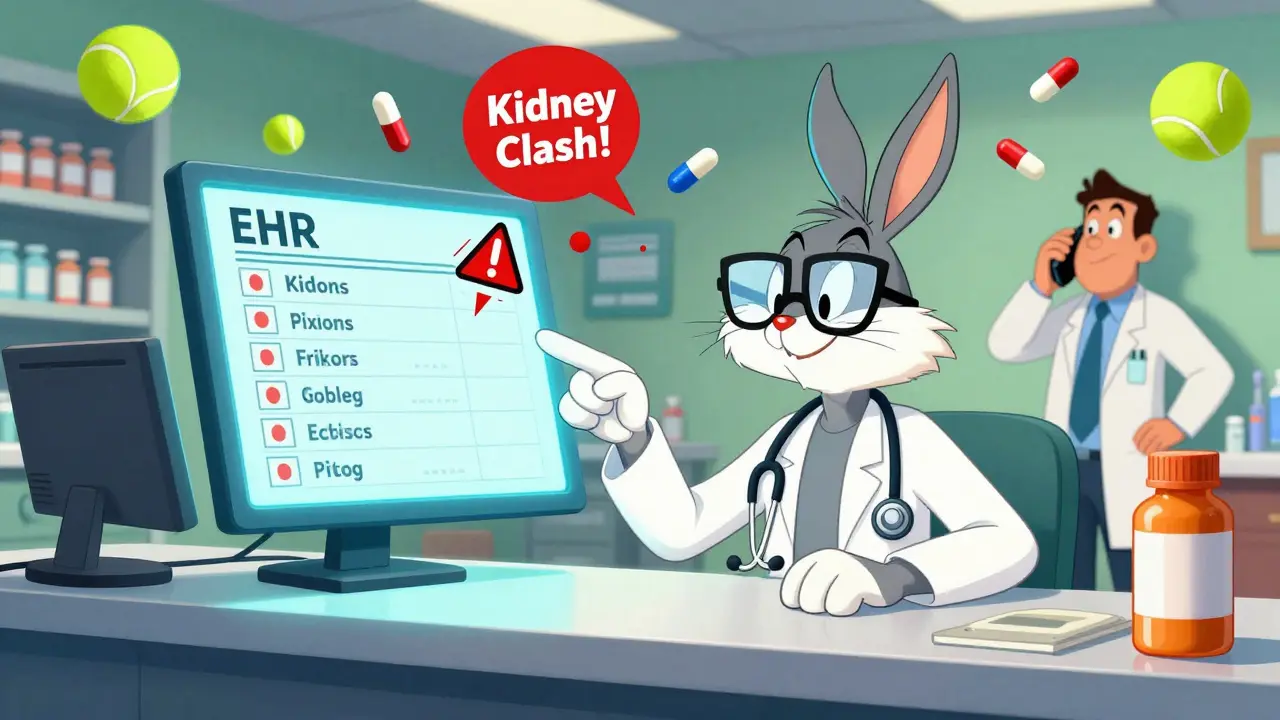
Imagine this: You walk into your local pharmacy to pick up a new prescription. The pharmacist pulls up your record, sees you’re on five different medications, notices one clashes with your kidney condition, and calls your doctor right away to swap it out. Your doctor gets the message within minutes, approves the change, and the new prescription is sent back-no phone tag, no delays, no errors. This isn’t science fiction. It’s what EHR integration makes possible today.
Why EHR Integration Matters More Than Ever
For years, pharmacies and doctors have been working in silos. Prescriptions flew through fax machines, phone calls, or paper slips. Patients got caught in the middle-missing doses, taking wrong combinations, or ending up back in the hospital because no one knew what meds they were really on. EHR integration changes that. It connects the electronic health record (EHR) systems used by doctors, nurses, and specialists with the pharmacy management systems that handle prescriptions, refills, and patient counseling. In 2026, this isn’t optional. Medicare Part D plans must now show they’re using integrated systems to manage medications, or they lose star ratings. States like California are requiring EHR integration for pharmacists to provide medication therapy management services by 2026. And the 21st Century Cures Act makes it illegal for health systems to block data sharing-so if your doctor’s system won’t send your meds list to your pharmacy, they’re breaking the law.How It Actually Works: Standards, APIs, and Data Flow
EHR-pharmacy integration doesn’t happen by magic. It runs on three key standards:- NCPDP SCRIPT 2017071-This is the language pharmacies and prescribers use to send prescriptions back and forth electronically. It replaced fax machines and phone calls with secure digital messages.
- HL7 FHIR Release 4-This is the newer, smarter system that lets pharmacies see your full medical history: lab results, allergies, diagnoses, even your care plan from your primary doctor. It’s not just about prescriptions anymore-it’s about context.
- Pharmacist eCare Plan (PeCP)-A FHIR-based format that lets pharmacists document their clinical recommendations (like changing a dose or spotting a drug interaction) and send them directly into the doctor’s EHR. No more sticky notes or voicemails.
The Real Benefits: Numbers That Matter
It’s not just theory. Real data shows how much this changes care:- 48% fewer medication errors-Automated alerts catch dangerous combinations before they reach you.
- 63% faster prescription processing-From 15 minutes down to under 6 minutes per script.
- 31% fewer hospital readmissions-Because pharmacists catch problems early.
- 4.2 medication-related problems solved per patient-Without integration, that number drops to 1.7.
- $1,250 saved per patient per year-Through fewer ER visits, better adherence, and smarter dosing.
The Big Hurdles: Why Most Pharmacies Still Don’t Have It
Here’s the problem: Only about 15-20% of U.S. pharmacies have true bidirectional EHR integration. Most still use basic e-prescribing-just sending the script, not seeing your full history. The biggest barrier? Cost. Independent pharmacies face $15,000 to $50,000 just to get started. Then there’s $5,000-$15,000 a year in maintenance. That’s a huge hit for a small business. Even worse, only 19 states have payment models that reimburse pharmacists for the time they spend reviewing EHR data and making recommendations. So even if you install the system, you can’t get paid for the work it enables. Time is another killer. Pharmacists average just 2.1 minutes per patient interaction. How are they supposed to dig through EHR data in that window? A 2021 survey found 68% of pharmacists say they simply don’t have time to use the system fully-even when it’s installed. And then there’s the tech mess. There are over 120 different EHR systems and 50 pharmacy platforms in the U.S. They don’t all speak the same language. Data mapping alone can take 20-40 hours per integration. Many pharmacies report that lab results, allergies, or diagnoses show up in weird formats-or not at all.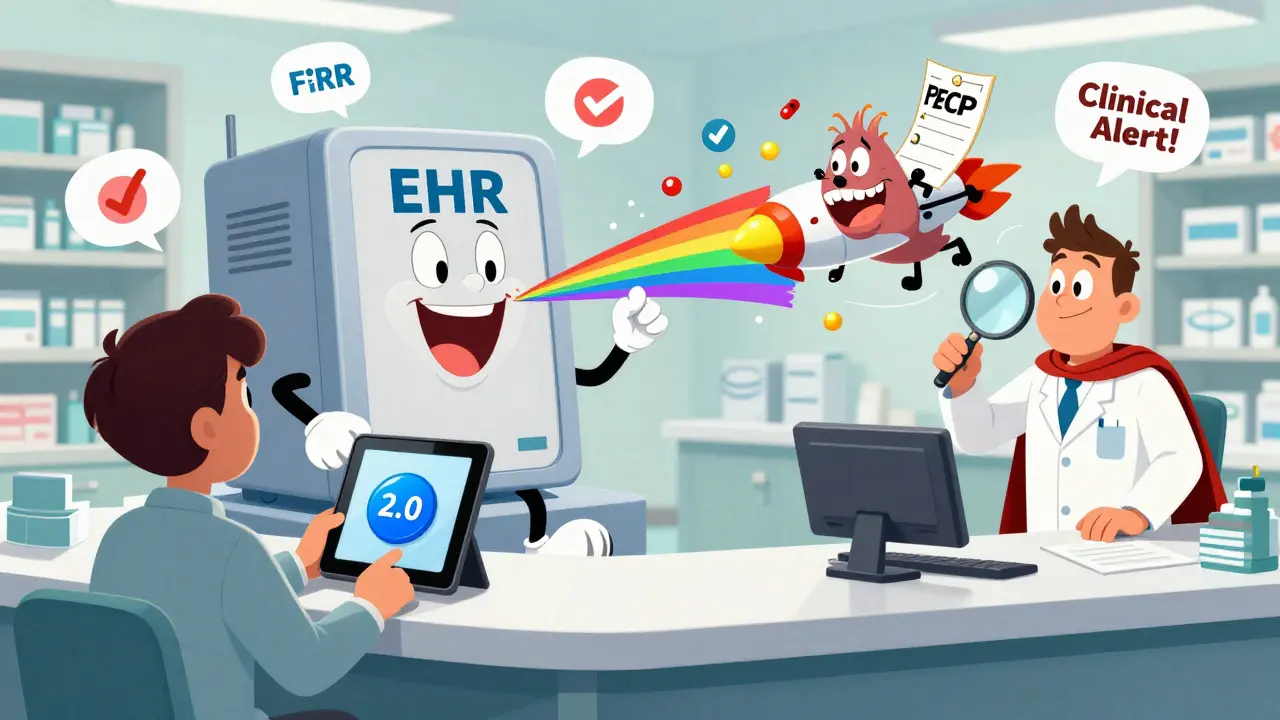
Who’s Leading the Way? Key Players in 2026
Some companies are making this easier:- Surescripts-Processes 22 billion transactions a year. Offers Medication History, Eligibility checks, and Prior Authorization-all integrated with major EHRs like Epic and Cerner. Used by 97% of U.S. pharmacies.
- SmartClinix-A pharmacy-specific EMR starting at $199/month. Praised for seamless Epic integration but criticized for a steep learning curve.
- DocStation-Focuses on billing and provider networks. Great for clinics managing multiple pharmacies, but weak on specialty drug support.
- UpToDate-Not a pharmacy system, but integrates with 40+ EHRs to give clinicians evidence-based drug info right in their workflow.
What’s Next? AI, Patients, and Policy
The next wave is coming fast:- AI-driven alerts-CVS and Walgreens are testing machine learning that scans integrated data to flag high-risk patients before they even get sick. Early results show 37% better detection of medication issues.
- Blue Button 2.0-Launched in January 2024, this lets patients download their own medication history from their insurer and send it directly to their pharmacy. No more asking for a printout.
- PeCP Version 2.0-Coming in late 2024, this upgrade adds smarter clinical decision support, like auto-suggesting alternative meds based on cost and history.
- Medicare reimbursement-H.R. 5827, passed in 2023, proposes paying pharmacists for EHR-based care coordination. If funded, it could be the game-changer.
What You Can Do: Patients, Pharmacists, and Providers
If you’re a patient: Ask your pharmacist if they can see your full medical record. If they say no, ask why. Push for access. Your safety depends on it. If you’re a pharmacist: Start small. Use Surescripts’ Medication History tool-it’s free for most pharmacies. Build your case with data: show how many errors you caught, how many readmissions you prevented. Then talk to your local health system about integration. If you’re a doctor: Don’t just send prescriptions. Ask your EHR vendor if they can receive PeCP notes from pharmacists. If they can’t, it’s time to switch. Your patients deserve better coordination.
Implementation Roadmap: Getting Started
For a pharmacy ready to integrate:- Do a readiness assessment ($2,500-$5,000). Check your current systems, staff skills, and workflow.
- Choose your integration path. Surescripts is the easiest for most. SmartClinix or DocStation if you want a full EMR upgrade.
- Get technical setup done (8-12 weeks). This includes API connections, data mapping, and security checks.
- Train staff (4-8 weeks). Focus on how to read EHR data, when to intervene, and how to document recommendations.
- Go live. Expect a 15-20% dip in productivity for the first two weeks. It’s normal.
- Track results. Measure how many errors you catch, how many scripts are processed faster, and how many patients report better outcomes.
FAQ
What’s the difference between e-prescribing and EHR integration?
E-prescribing just sends the prescription digitally from doctor to pharmacy. EHR integration goes further-it lets the pharmacy see your full medical history, lab results, allergies, and care plans, and lets them send clinical notes back to the doctor. It’s two-way communication, not just one-way transmission.
Can small independent pharmacies afford EHR integration?
It’s tough. Upfront costs range from $15,000 to $50,000, with $5,000-$15,000 in annual fees. But many can start with free tools like Surescripts’ Medication History feature. Some states offer grants for rural or independent pharmacies. And if you’re part of a pharmacy network, they may cover the cost. Don’t assume you can’t do it-start with the basics.
Why don’t all doctors share data with pharmacies?
It’s not always refusal-it’s often technical. Many EHRs don’t have built-in support for receiving pharmacist notes (PeCP). Others require custom coding. Some health systems have policies that restrict external access. The 21st Century Cures Act bans this kind of data blocking, but enforcement is still catching up.
Do patients benefit from EHR integration even if they don’t know it’s happening?
Absolutely. You’ll get fewer dangerous drug interactions, fewer hospital visits, and better medication adherence. You won’t need to remember every drug you’ve ever taken when you see a new doctor. Your pharmacist will catch mistakes before they happen. The system works silently-but the results are life-changing.
Is my data safe with EHR-pharmacy integration?
Yes, if it’s done right. All systems must use AES-256 encryption for stored data and TLS 1.2+ for data in transit. Every access is logged and audited under HIPAA and the 21st Century Cures Act. The biggest risk isn’t hacking-it’s poor implementation. Always ask your pharmacy or provider what security standards they follow.
What’s the biggest barrier to wider adoption?
Payment. Pharmacists can’t afford to spend 10 extra minutes per patient reviewing records if they’re not paid for it. Only 19 states reimburse for this work. Without sustainable funding, EHR integration will stay a luxury for big health systems-not a standard for every pharmacy.
Kiran Plaha
January 6, 2026 AT 05:06Wow, this is actually life-changing stuff. In India, we still fax prescriptions sometimes. Imagine if our pharmacists could see my dad’s kidney history before giving him that new pill. No more guesswork.
Matt Beck
January 6, 2026 AT 06:02This is 🤯🤯🤯 the future is HERE and we’re still arguing about whether to use emojis in pharmacy notes?!?!? EHR integration isn’t just tech-it’s survival. We’re talking about saving lives with APIs!!
Ryan Barr
January 6, 2026 AT 08:15Integration isn’t innovation. It’s compliance. And compliance doesn’t cure patients. People do.
Cam Jane
January 8, 2026 AT 00:59Okay, let’s be real-this is the single biggest win for patient safety in decades. I’ve seen pharmacists catch deadly interactions because they saw a lab result no doctor had time to check. It’s not magic, it’s just data talking to data. And yes, it’s expensive. But the cost of NOT doing it? A 31% drop in readmissions? That’s not a cost-it’s a refund. Start with Surescripts’ free tool. Just. Do. It. Your patients will thank you. And honestly? Your sanity will too.
Dana Termini
January 9, 2026 AT 08:36I’ve worked in three different pharmacies. The ones with integration? Calmer. More confident. Less yelling at fax machines. The ones without? Chaos. It’s not about tech-it’s about respect. Respect for the pharmacist’s time, the patient’s health, and the doctor’s brain.
Wesley Pereira
January 10, 2026 AT 15:04so uhh… 120 EHRs? 50 pharmacy systems? lol. so basically we’re all just playing telephone with medical records. and the best part? we pay for this. like, wow. thanks, capitalism. 🤡
Isaac Jules
January 12, 2026 AT 04:47Only 15-20% integration? That’s a national embarrassment. If your pharmacy can’t see my allergies, they shouldn’t be allowed to touch my script. This isn’t ‘progress’-it’s negligence dressed up as ‘cost issues.’ Fix it or get out of healthcare.
Amy Le
January 12, 2026 AT 16:50Why are we even talking about this like it’s new? Europe’s been doing this for a decade. We’re still stuck in the fax era while other countries use AI to predict drug reactions. This isn’t innovation-it’s American healthcare lagging behind again. 🇺🇸
Pavan Vora
January 13, 2026 AT 03:56So many systems, so little time… I live in India, and we still use handwritten scripts sometimes… but I saw a pharmacy in Bangalore using Surescripts last month-was amazed. Maybe we don’t need to reinvent the wheel? Just borrow the one that works?
Stuart Shield
January 13, 2026 AT 21:40It’s like finally giving the pharmacist a seat at the table instead of just a counter. They’re the last line of defense before a pill hits your body. Let them see the whole picture. It’s not just smart-it’s humane.
Indra Triawan
January 15, 2026 AT 15:40I just want to know… if this is so amazing, why do I still get calls from my pharmacy asking if I’m allergic to penicillin? Like… didn’t they just get my entire medical history? Why am I the one who has to remember?
Susan Arlene
January 16, 2026 AT 01:32my pharmacist knows my meds better than my doctor sometimes. she caught a bad combo last month. i didn’t even know it was a problem. systems like this? they’re quiet heroes.
Cam Jane
January 16, 2026 AT 18:11And for anyone saying ‘it’s too expensive’-ask yourself: how much did your last ER visit cost? One preventable interaction can cost $15K. This pays for itself in one patient. Start small. Use the free tools. Track your wins. Then show your boss the numbers. You’ve got this.