
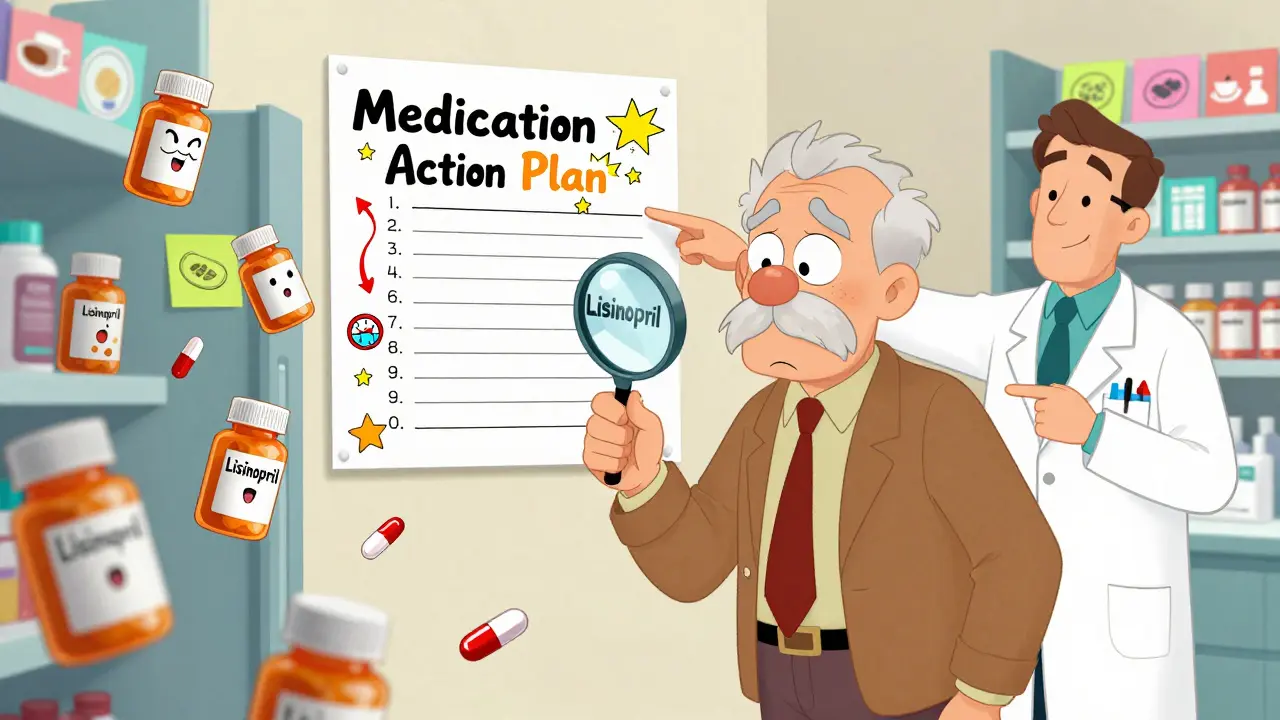
Every year, medication adherence fails for nearly half of all patients taking long-term prescriptions. Not because they don’t care - but because they’re overwhelmed. Too many pills. Too many times to take them. Too many side effects. Too many doctors giving different advice. That’s where a Medication Action Plan comes in. It’s not just a list of drugs. It’s your personalized roadmap to take your medications safely, correctly, and with confidence - made with your care team, not handed to you.
What Is a Medication Action Plan (MAP)?
A Medication Action Plan is a living document created with your pharmacist, doctor, or care coordinator that turns your medication routine into clear, doable steps. Unlike a simple prescription list, it answers: What do I need to do, when, why, and what if something goes wrong? It’s part of a broader system called Medication Therapy Management (MTM), which Medicare Part D has required since 2006 for patients taking eight or more chronic medications. But you don’t need Medicare to get one - many private insurers now offer it too.It’s not meant to replace your doctor’s notes. It’s built for you. A good MAP uses plain language, not medical jargon. It includes your exact pills, doses, times, and reasons - plus what to do if you miss a dose, feel sick, or run out early. Studies show patients who co-create these plans see a 25-40% improvement in adherence. That means fewer trips to the ER, fewer hospital stays, and more control over your health.
Why Your Care Team Is Essential
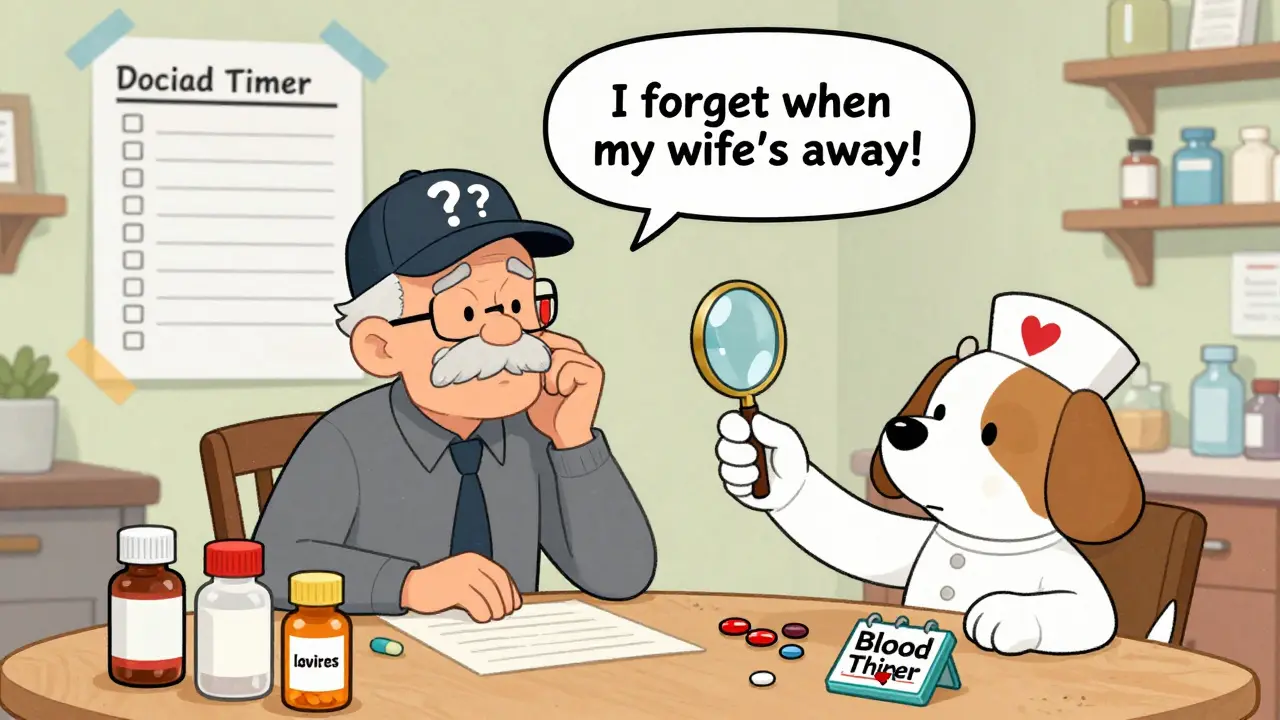
You can’t make a good Medication Action Plan alone. You need your care team because medications don’t exist in a vacuum. Your doctor knows what you’re treating. Your pharmacist knows how the drugs interact. You know your life - your schedule, your habits, your fears.For example: A 72-year-old man takes blood pressure pills, diabetes meds, and a blood thinner. His doctor prescribes them. His pharmacist spots that two of them increase his risk of bleeding. You, the patient, know you forget pills when you’re traveling or when your wife is away. Together, you build a plan that works - not just on paper, but in real life.
The German model, which has been nationwide since 2016, requires pharmacists to update the plan every time they dispense a new medication - even over-the-counter ones. That’s the standard: a plan that grows with you. In the U.S., many patients never get one. A 2022 University of Michigan study found 43% of eligible patients were never given a written plan. Don’t be one of them. Ask for it.
Step-by-Step: How to Build Your Plan
Making a Medication Action Plan isn’t complicated - but it does require preparation. Here’s how to do it right.- Gather everything you take. This includes prescription drugs, over-the-counter pain relievers, vitamins, herbal supplements, and even eye drops or patches. Bring the actual bottles. Don’t rely on memory. Many patients forget they’re taking something like melatonin or fish oil - and those can interact with your prescriptions.
- Request a Comprehensive Medication Review (CMR). This is a 30-60 minute session with your pharmacist or care coordinator. You can do it in person at a pharmacy, over the phone, or via video. Ask your doctor to refer you if you’re unsure where to start. Medicare Part D covers this for eligible patients. Many private plans do too.
- Answer these questions together:
- What is each medication for? (Not just “for blood pressure” - but “to lower your risk of stroke”)
- When and how should you take it? (With food? At bedtime? Avoid grapefruit?)
- What are the most common side effects? What should you do if you feel them?
- What happens if you miss a dose?
- Which pills can you stop or change? (Sometimes, you’re taking something no longer needed.)
- Turn answers into actions. This is the core of the MAP. Instead of “Take lisinopril daily,” write: “Take the small white pill every morning after brushing your teeth. If you forget, take it as soon as you remember - but skip it if it’s already bedtime.”
- Add visual cues. Use color codes: red for heart meds, blue for diabetes, green for pain. Add pictures of the pills. Tape a checklist to your fridge. Use a pill organizer labeled with times. One patient turned her plan into a chart with coffee cups next to morning pills and dinner plates next to evening ones - adherence jumped from 65% to 95%.
- Write down your “what if” scenarios. What if you feel dizzy after taking your blood pressure pill? What if your pills get wet in the rain while traveling? What if you run out on a weekend? Your care team should help you build simple, clear steps for these moments.
What Makes a Plan Work - or Fail
Not all Medication Action Plans are created equal. Here’s what separates effective ones from useless ones.Successful MAPs have:
- Personalization. They match your life. If you work nights, your plan shouldn’t say “take at 8 a.m.”
- Measurable goals. “Take 90% of doses this month” - not “take your meds.”
- Clear language. No “QHS” or “BID.” Say “at bedtime” or “twice a day.”
- Ownership. You helped make it. You understand why each step matters.
Failed MAPs look like:
- Pre-printed templates with generic advice.
- Lists full of abbreviations no one understands.
- Plans that don’t include OTC meds or supplements.
- Plans never updated after a doctor changed a dose.
A Johns Hopkins study found patients given generic, pre-made plans saw no improvement in adherence. Why? Because they didn’t feel like their plan. They felt like paperwork.
Who Can Help You Create One?
You don’t have to do this alone. Here’s who to involve:- Your pharmacist. They’re medication experts. They see your full history, spot interactions, and can update your plan every time you refill. Ask if your pharmacy offers MTM services.
- Your primary care doctor. They coordinate your care and can refer you to a pharmacist or care coordinator.
- A care coordinator or nurse. Many clinics and Medicare Advantage plans assign these roles to help patients manage complex regimens.
- Your family or caregiver. If you live with someone, include them. They can remind you, help read labels, or call the pharmacy if you’re confused.
For parents of children with serious conditions - like epilepsy or severe allergies - the plan is even more critical. It should be shared with schools, babysitters, and travel companions. The Parent Advocacy Coalition for Educational Rights (PAVE) recommends these plans be written in simple language and kept in a visible, accessible place.
Keep It Alive - Don’t Let It Collect Dust
A Medication Action Plan isn’t a one-time form. It’s a living tool. Every time your doctor adds, removes, or changes a medication - update the plan. Every time you have a new symptom, a new pharmacy, or a new routine - revisit it.Set a reminder: every three months, sit down with your plan and ask:
- Is this still working?
- Have I missed doses? Why?
- Did I have any side effects I didn’t mention?
- Do I understand why I’m taking each pill?
Some pharmacies now offer digital versions - apps that sync with your pill organizer and send alerts. CVS, Walgreens, and others have apps that pull from your MAP to remind you when to take your meds. If you’re tech-savvy, ask if your pharmacy offers this. If not, a simple printed copy taped to your bathroom mirror works just as well.
What If You’re Denied a Plan?
Not all providers offer Medication Action Plans - even if you’re eligible. If you’re told “we don’t do that,” push back. Say: “I’ve heard about Medication Therapy Management. Can you help me get one?”Medicare Part D beneficiaries who take eight or more chronic medications and spend over $4,430 a year on prescriptions are legally entitled to a CMR and MAP. If your plan refuses, call 1-800-MEDICARE. Many commercial insurers now offer similar services - check your plan’s website or call member services.
If you’re not on Medicare and your doctor won’t refer you, ask your pharmacist directly. Many independent pharmacies offer MTM services for a fee - or even for free if you fill prescriptions there.
Real Impact: What Happens When You Do This
People who use Medication Action Plans don’t just remember to take their pills. They feel more in control. They ask better questions. They catch side effects early. They avoid hospital visits.Centers for Medicare & Medicaid Services data shows patients with personalized MAPs have 32% fewer medication-related hospitalizations in the following year. That’s not a small number. That’s life-changing.
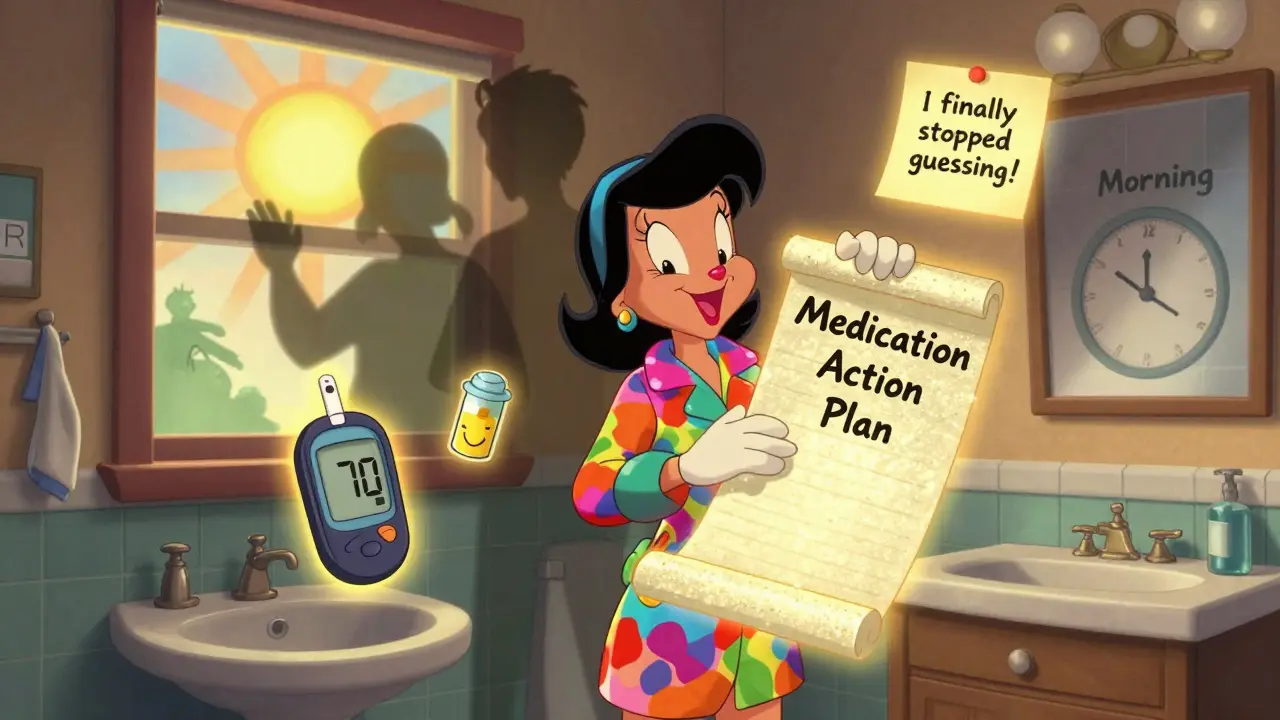
One woman in Ohio, managing diabetes, high blood pressure, and depression, had been hospitalized three times in two years for low blood sugar. Her MAP included a visual chart: “If your finger prick reads below 70, eat 4 glucose tablets - then call your doctor.” Within three months, she had zero ER visits. She said, “I finally stopped feeling like I was guessing.”
That’s the goal. Not perfection. Not memorizing every detail. Just clarity. Confidence. Control.
Your medications are meant to help you live better. A Medication Action Plan makes sure they do.



Kelly McRainey Moore
January 21, 2026 AT 00:23My grandma started using a MAP after her third ER visit last year. She now has a color-coded pill box taped to her fridge with doodles of coffee cups and dinner plates next to each time. She says it feels like she’s finally in charge instead of her meds being in charge of her. I cried when she told me that.
Amber Lane
January 22, 2026 AT 17:09As a nurse, I’ve seen too many patients drown in pill bottles. A simple MAP turns chaos into calm. It’s not magic-it’s just clarity.
Ashok Sakra
January 24, 2026 AT 11:31why do they make you do this? who even made this rule? is this part of the pharmaceutical agenda? i think they want us to feel dependent on paper so we keep buying pills
Coral Bosley
January 24, 2026 AT 11:55I used to take 17 different things a day. My brain felt like a browser with 47 tabs open. Then my pharmacist sat down with me and we cut it down to 8-and turned the rest into a visual calendar. I haven’t missed a dose in 11 months. I feel like I got my life back. Not just my health. My life.
Steve Hesketh
January 25, 2026 AT 09:31Let me tell you something real-this isn’t just about pills. This is about dignity. When you’re old, sick, or scared, nobody asks you how you feel. They hand you a list and walk away. But when you build a plan with someone who listens? That’s when you start to believe you matter. I’ve seen it change lives. Not just outcomes. Lives.
shubham rathee
January 27, 2026 AT 05:53the study says 43 percent dont get it but what about the other 57 are they just lucky or is it because they dont take enough meds to qualify or maybe they are smarter than the system
MAHENDRA MEGHWAL
January 29, 2026 AT 03:44It is imperative that healthcare providers recognize the significance of structured medication management as a cornerstone of patient autonomy and therapeutic efficacy. The integration of pharmacist-led interventions represents a paradigm shift toward patient-centered care.
Kevin Narvaes
January 29, 2026 AT 23:03so like… is this just another way for big pharma to make us feel guilty for forgetting our pills? like we’re not already stressed enough? i think the real problem is doctors keep adding shit without taking anything away
Dee Monroe
January 29, 2026 AT 23:38There’s something deeply human about turning medical complexity into something tactile, something you can touch and see and live with. It’s not just about adherence-it’s about reclaiming agency in a world that treats your body like a machine that’s supposed to run perfectly on a schedule you didn’t choose. When you write down why you’re taking a pill-not just what it’s for, but what it means to you-you’re not just managing medication. You’re telling your story. And that’s where healing begins.
Jerry Rodrigues
January 30, 2026 AT 22:32My dad’s plan is handwritten on a sticky note next to his coffee maker. Works better than any app.
Jarrod Flesch
February 1, 2026 AT 11:09Been using the Walgreens app with my MAP synced to my pill box. Got a little bell that goes off and a little sun emoji when I log it. Feels weirdly satisfying. Like I’m leveling up in life 🌞
Barbara Mahone
February 2, 2026 AT 20:54My mother-in-law refused to use a plan until her pharmacist drew pictures of the pills. She’s 84. She didn’t trust words anymore. Pictures saved her.
Andrew Rinaldi
February 3, 2026 AT 19:05I think the real win here isn’t the plan itself-it’s the conversation. The fact that someone sat down and asked, ‘What’s hard for you?’ That’s what changes things. The paper is just the echo of that moment.
Gerard Jordan
February 4, 2026 AT 12:58My sister has epilepsy. Her MAP is laminated and stuck to the fridge with magnets. School nurse, babysitter, even her dog walker have copies. We all know what to do if she has a seizure mid-dose. This isn’t paperwork. This is armor. 💪❤️
michelle Brownsea
February 4, 2026 AT 23:42Why is this even necessary? If people can’t manage their own medications, shouldn’t they be under supervision? This feels like enabling irresponsibility. Someone should be held accountable-not just handed a colorful chart and told to ‘feel better.’