
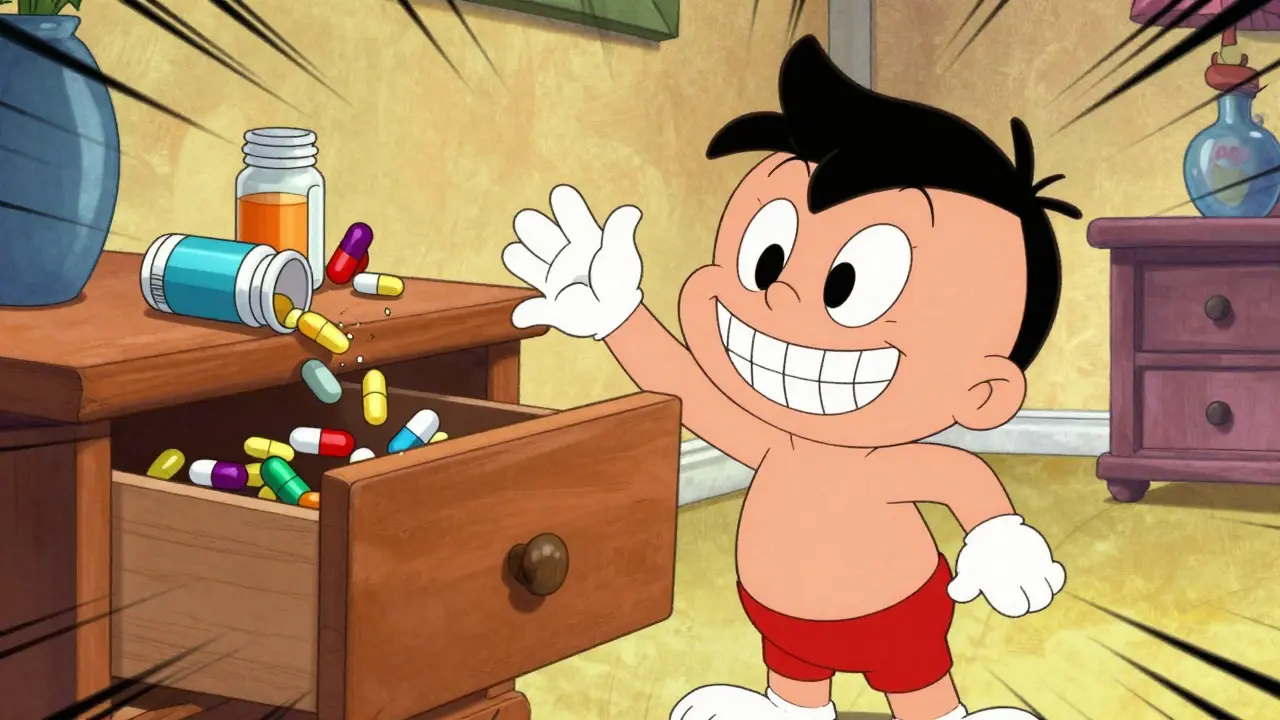
Every year, thousands of people end up in the emergency room because a pill was left within reach. It’s not always intentional misuse; often, it’s a simple mistake-like leaving a bottle on the nightstand or transferring pills into a coffee jar for convenience. When we talk about high-risk medication storage, we’re talking about protecting your family from accidental ingestion, diversion, and overdose. Whether you have opioids, benzodiazepines, or other controlled substances at home, how you store them matters more than you might think.
The stakes are real. According to the Centers for Disease Control and Prevention (CDC), nearly 2 million people are hospitalized annually due to drug-related injuries. That includes medication errors, adverse reactions, and overdoses. For prescription opioids alone, the numbers are staggering. In 2020, there were over 16,000 deaths attributed specifically to prescription opioids in the United States. But here is the good news: proper storage is one of the most effective ways to cut that risk. Let’s look at exactly how to do it right.
Why Secure Storage Matters More Than You Think
You might wonder if locking up your medicine is really necessary. The data says yes. A 2018 study published in the Journal of the American Medical Association Pediatrics found that locked storage containers reduce accidental pediatric ingestions by 87%. Yet, only 23% of U.S. households with children actually use them. Why the gap? Often, it’s habit. We treat medications like household items, storing them in kitchen cabinets or bathroom shelves where they are easy to grab but also easy for kids, pets, or even well-meaning friends to access.
Consider this: 53% of non-medical opioid users get their drugs from friends or family members’ unsecured supplies. If you leave your meds out, you aren’t just risking your own health-you’re potentially putting others at risk too. Dr. Nora Volkow, Director of the National Institute on Drug Abuse, noted that every unsecured opioid prescription creates a potential overdose risk for the entire household. It’s not just about keeping kids safe; it’s about preventing diversion.
The Gold Standard: What Experts Recommend
So, what does “secure” actually look like? The FDA and DEA have clear guidelines, but let’s break them down into practical steps you can take today.
- Keep medications in their original containers. This sounds obvious, but 68% of adults remove medications from their packaging for convenience. Don’t do this. Original containers have labels with critical information and child-resistant caps mandated by the Poison Prevention Packaging Act of 1970. Studies show these caps result in 40% fewer accidental ingestions compared to alternative containers.
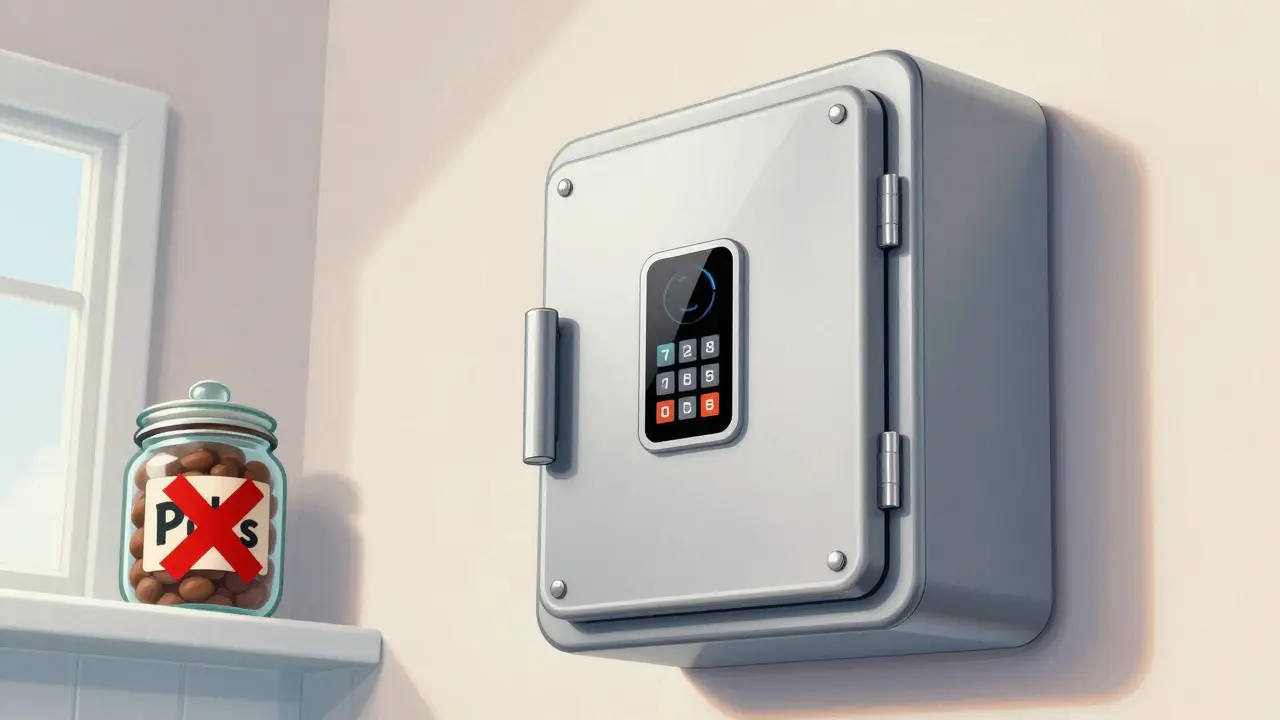
- Use a locked container. The Washington State Department of Health specifies that medications should be kept in locked cabinets or boxes tested to ANSI Grade 2 standards or higher. These can withstand forced entry attempts. Basic lockboxes start around $15, while biometric options go up to $150. The CDC notes that properly implemented lockboxes prevent 92% of unauthorized access attempts.
- Store them high up. Keep medications at least 4 feet off the ground. Children can typically reach objects up to 36 inches high. Storing meds above 4 feet reduces child access by 73% compared to locations below 2 feet.
- Control the temperature. Most medications need to be stored between 68-77°F (20-25°C). Extreme heat or cold can degrade the drug’s effectiveness. Avoid bathrooms, which tend to be humid and warm, or cars, which can become ovens in summer.
Practical Solutions for Every Home
I know what you’re thinking: “I don’t want a giant safe in my living room.” You don’t need one. There are discreet, affordable options that fit into any lifestyle.
| Storage Method | Cost Range | Security Level | Best For |
|---|---|---|---|
| Original Bottle Only | $0 | Low | Adults living alone without children or guests |
| Basic Lockbox | $15 - $30 | Medium | Families with young children, renters |
| Biometric Safe | $100 - $150 | High | Those concerned about theft or frequent visitors |
| Smart Dispenser (e.g., MedMinder) | $99 - $149 | Very High | Elderly patients, those needing adherence tracking |
If you have arthritis or limited dexterity, child-resistant caps can be frustrating. I’ve heard this complaint many times. In that case, consider a lockbox with an emergency release mechanism, like the Med-ic Safe Locking Pill Organizer ($34.99), which opens with a 4-digit code instead of a complex twist-cap. Safety shouldn’t come at the cost of accessibility for the person who needs the medication.
The Human Element: Real Stories and Common Mistakes
Guidelines are great, but real life is messy. On Reddit’s r/opiates community, user u/PainPatient2021 shared a harrowing story: “My doctor never told me to lock up my oxycodone. My 16-year-old found them in my nightstand and overdosed-thank God Narcan worked.” This isn’t an isolated incident. The Washington Poison Center reported 1,247 medication exposure cases involving children under 6 in 2022, with 89% occurring because meds were stored in accessible locations.
Another common issue is temporary access. The American Association of Poison Control Centers reports that 71% of accidental pediatric ingestions happen during dosing-when a parent is taking their own medicine and leaves it out for a moment. Be mindful. Put the cap back on immediately. Don’t set the bottle down on the counter while you answer the phone or help a child with homework.
Also, don’t ignore the social aspect. If you have friends or family who struggle with substance use, keep your medications hidden and locked. As Dr. Andrew Kolodny points out, current guidelines don’t always address the reality that many households lack secure storage options, especially low-income families. If cost is a barrier, look for local health department resources or pharmacy programs that may provide free lockboxes.
Disposal: The Final Step in Safety
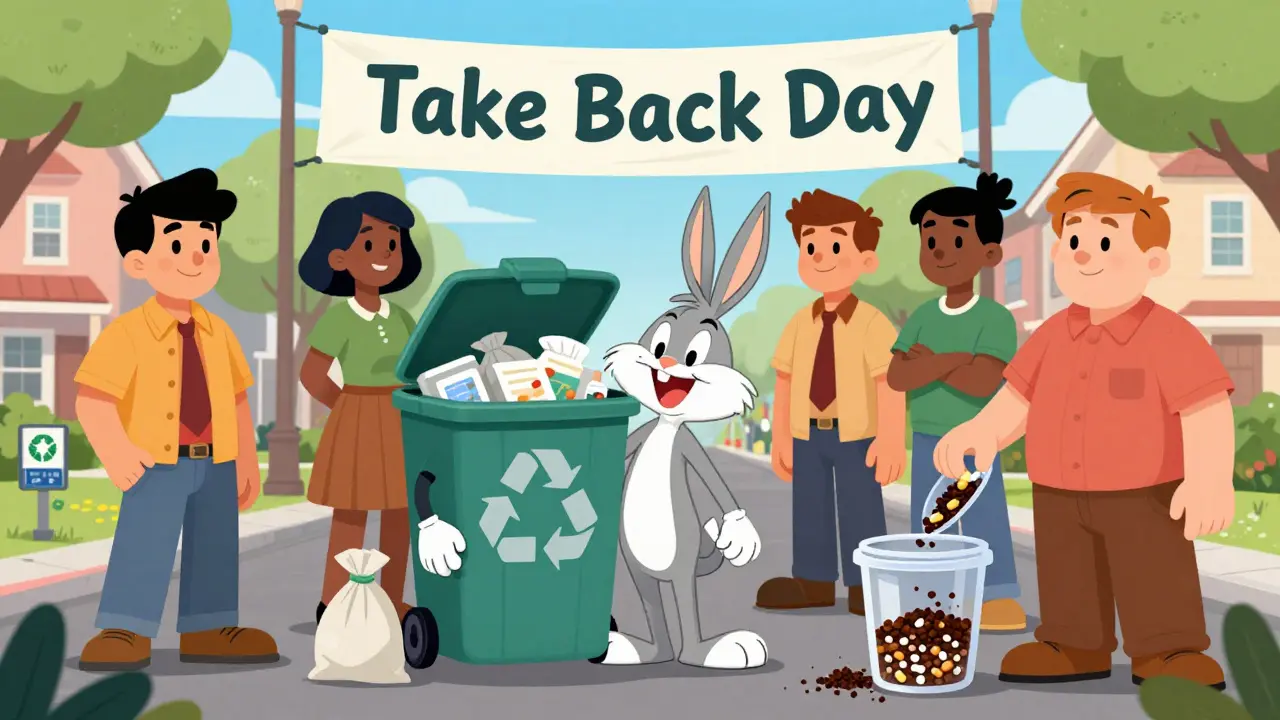
Storage isn’t just about keeping meds you’re currently using. It’s also about getting rid of ones you’re not. Hoarding unused medications is a major risk factor for overdose. The DEA’s National Prescription Drug Take Back Day collects hundreds of thousands of pounds of medication annually. In 2022, they collected over 985,000 pounds. You can also drop off unused meds at authorized collection sites, including many pharmacies and police stations. Never flush medications unless specifically instructed to do so by the label, as this can harm water supplies. Instead, mix them with an unpalatable substance like cat litter or coffee grounds, place them in a sealed container, and throw them in the trash.
Making It Stick: Daily Habits for Safety
Implementing secure storage takes time upfront but minimal effort daily. The CDC suggests a 5-step process:
- Inventory: Spend 15-20 minutes checking all your medications. Throw away expired ones.
- Transfer: Move everything to original containers with labels intact.
- Purchase: Get a lockbox or secure cabinet. This takes 10-30 minutes.
- Locate: Choose a spot that is high, dry, and out of sight.
- Track: Implement a simple log if needed, noting quantities daily. This takes 2-5 minutes.
Most people master these protocols within a week. The key is consistency. Make locking the box part of your routine, just like brushing your teeth.
What counts as a high-risk medication?
High-risk medications include opioids (like oxycodone, hydrocodone, morphine), benzodiazepines (like Xanax, Valium), stimulants (like Adderall), and certain sleep aids. These drugs have a high potential for misuse, dependence, and overdose. If your prescription has a warning about addiction or requires special handling, it likely falls into this category.
Is a child-resistant cap enough protection?
Child-resistant caps help, but they are not foolproof. Determined children or individuals with cognitive impairments can sometimes open them. For high-risk medications, experts recommend adding a second layer of security, such as a lockbox, especially if you have young children or vulnerable adults in the home.
Where should I NOT store my medications?
Avoid bathrooms (humidity and heat degrade meds), kitchens (accessible to children), nightstands (easy access for teens or guests), and cars (extreme temperatures). Also, avoid places where thieves might look, like glove compartments or obvious safes near entrances.
What if I have trouble opening child-proof caps?
If you have arthritis or limited dexterity, ask your pharmacist for alternatives. Some caps are easier to open, or you can use a lockbox with a combination code or biometric scanner. Never remove the child-resistant feature entirely if children are present, but prioritize accessibility for the patient.
How do I dispose of unused high-risk medications?
The best option is to take them to a DEA-approved collection site or pharmacy take-back program. If that’s not available, mix the pills with an unpalatable substance like dirt or cat litter, seal them in a container, and throw them in the trash. Do not flush them unless the label explicitly says to do so.
Are smart dispensers worth the cost?
For elderly patients or those with memory issues, smart dispensers like MedMinder can be invaluable. They track adherence, send alerts, and often have locking features. However, for most households, a simple lockbox is sufficient and much more affordable. Consider your specific needs before investing in high-tech solutions.
Can I store medications in a regular drawer?
No. Regular drawers are easily accessible to children, pets, and guests. High-risk medications require a locked container or cabinet. Even if the drawer is high up, it lacks the physical security needed to prevent unauthorized access.
What if someone accidentally ingests a high-risk medication?
Call Poison Control immediately at 1-800-222-1222 or seek emergency medical attention. Do not wait for symptoms to appear. Have the medication container ready to provide details to healthcare providers. If you suspect an opioid overdose and have Naloxone (Narcan), administer it as directed while waiting for help.
Nilesh Mandani
May 14, 2026 AT 07:11It is fascinating how we treat safety as an afterthought rather than a fundamental pillar of household management. The statistics mentioned here are not just numbers; they represent a collective failure to respect the potency of what we keep in our homes. We must shift our paradigm from convenience to responsibility, recognizing that every unlocked bottle is a potential tragedy waiting to unfold.
Liz and Nick
May 16, 2026 AT 06:43i mean seriously why do people leave pills on nightstands it is literally asking for trouble and i am so tired of seeing these preventable stories because everyone thinks they are special or that it wont happen to them
Brian Fibelkorn
May 16, 2026 AT 20:43The moral imperative here is undeniable yet ignored by the masses who prioritize their own comfort over the sanctity of life within their domestic sphere. To leave controlled substances accessible is to invite chaos into the ordered structure of the family unit, and those who do so are complicit in any subsequent harm that befalls their dependents or guests.
Kenny Pines
May 17, 2026 AT 17:46I bought one of those biometric safes last year and honestly it feels like I'm running a pharmacy in my living room 😅 but hey at least I know where everything is and my kids can't sneak into my stash when they visit 👍
Jake Williams
May 18, 2026 AT 15:49This whole article reeks of government overreach trying to police your private home life. You want to lock up your meds? Fine. But don't act like this is some national security issue. It's personal responsibility, not a mandate from Washington. People need to stop being so paranoid and start trusting their own judgment instead of following every new guideline that comes out of DC.
Chelsea Grdina
May 19, 2026 AT 18:51I completely understand the hesitation many feel about installing visible safes, as it can alter the aesthetic harmony of a living space, but I have found that integrating these storage solutions into existing furniture pieces offers a seamless blend of security and style that respects both safety protocols and interior design preferences without compromising either aspect significantly.
David Rangkhal
May 19, 2026 AT 19:47let's just agree that locking things up is smart and move on 🙏 no need for drama just keep your stuff safe and your family secure
Guy Birtwhistle
May 20, 2026 AT 20:59Look, I get that buying a $150 safe sounds ridiculous for a few bottles of pills, but let's be real here. If you're going to ignore basic safety protocols, you're basically inviting disaster. It's not about paranoia; it's about common sense. Keep your shit locked up or don't complain when someone else gets hurt because you were too lazy to buy a box.