
Accidental overdoses often happen not because of malicious intent, but because of simple mistakes. You might take a dose too soon, forget what you already took, or mix substances without realizing the cumulative effect on your body. In these high-stakes moments, memory is unreliable. Stress, fatigue, and the effects of medication itself can blur the line between "I took this an hour ago" and "I haven't taken anything yet."
This is where a medication log becomes your most critical safety tool. It is not just a list; it is a real-time record that bridges the gap between prescription instructions and actual consumption. By documenting exactly what you take, when you take it, and how your body reacts, you create a physical barrier against error. This guide breaks down how to build and use a log that actually works, drawing from professional monitoring standards and harm reduction best practices.
Why Memory Fails and Logs Succeed
We tend to trust our brains to remember complex schedules. But when managing multiple medications, especially those affecting the central nervous system, cognitive load increases. The CDC emphasizes that clinicians must check Prescription Drug Monitoring Programs (PDMPs) before prescribing opioids to avoid dangerous interactions. While you cannot access these state-run databases in real-time, you can replicate their core function: accurate, timestamped data.
A personal medication log serves as an external hard drive for your health decisions. It removes guesswork. Instead of asking yourself, "Did I take my second pill?", you look at the paper or app. If there is no entry, you know you haven't. If there is an entry, you know you have. This binary clarity prevents double-dosing, which is one of the most common causes of accidental overdose.
| Feature | Prescription Drug Monitoring Program (PDMP) | Personal Medication Log |
|---|---|---|
| Data Source | Pharmacy fills (prescribed amounts) | Actual consumption (what you really took) |
| Update Speed | 24-72 hours delay | Real-time |
| Primary User | Doctors and Pharmacists | You (the patient) |
| Key Limitation | Does not track non-prescribed use or timing | Relies entirely on user honesty and consistency |
The key difference here is reality versus intention. A PDMP shows what was prescribed. Your log shows what happened. Since crushing pills, altering doses, or taking extra medication for breakthrough pain happens outside the pharmacy system, only your log captures the true risk profile.
Essential Elements of an Effective Medication Log
To be effective, your log needs specific data points. Vague entries like "took meds" are useless in an emergency. You need precision. Based on guidelines from SAMHSA and clinical best practices, every entry should include the following attributes:
- Medication Name: Use the generic name if possible (e.g., Oxycodone instead of just "painkiller").
- Dosage Amount: Be exact. "5mg" is clear; "a little bit" is dangerous.
- Time Taken: Include both date and time (e.g., June 2, 10:30 AM).
- Method of Administration: Swallowed, injected, or smoked? The route affects absorption speed and overdose risk significantly.
- Concurrent Substances: Did you drink alcohol? Take benzodiazepines? These combinations depress the respiratory system and drastically increase overdose potential.
- Observed Effects: Note pain relief levels, sedation, or side effects. This helps you titrate safely later.
If you are using test strips for fentanyl or xylazine, add a column for "Test Results." Knowing the purity and composition of a substance allows you to adjust your starting dose accordingly. The SAMHSA toolkit advises a "start low and go slow" approach. Your log is the tool that tracks whether you are sticking to that plan.
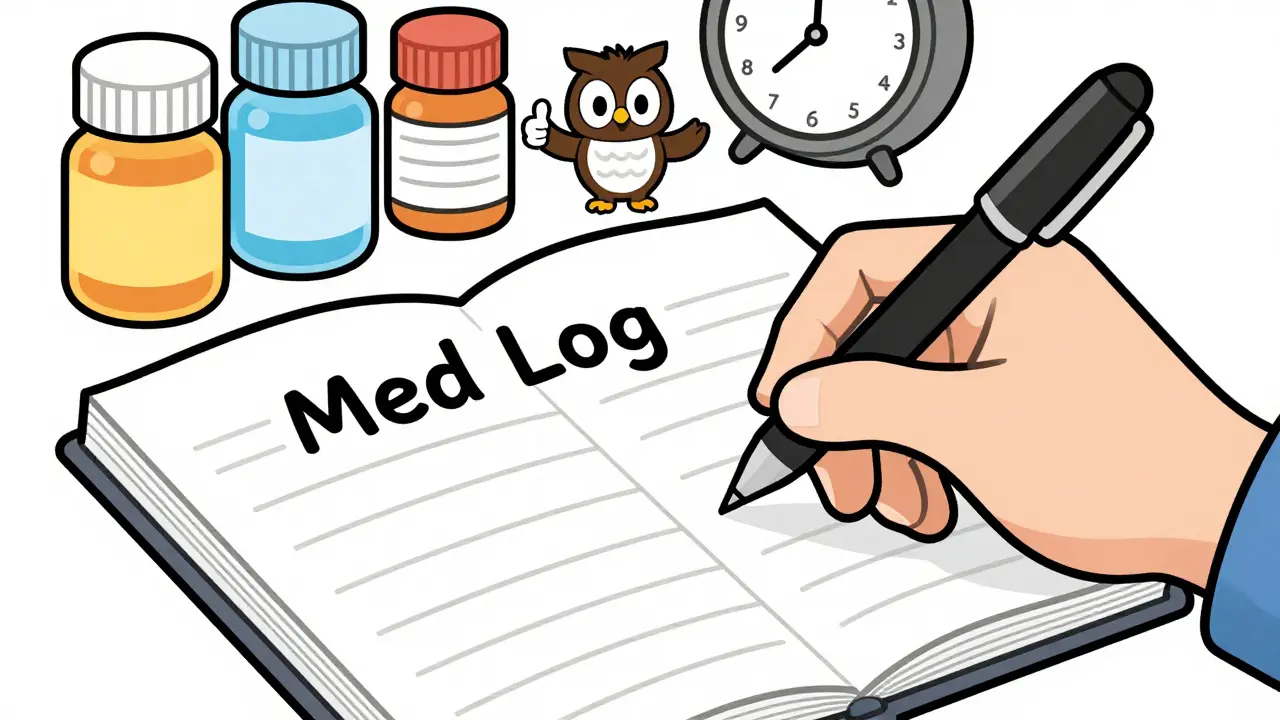
Choosing Your Format: Paper vs. Digital
There is no single right way to keep a log, but the best format is the one you will actually use consistently. Both paper and digital options have distinct advantages.
Paper Logs: A small notebook or a printed template kept near your medication supply is foolproof. It requires no battery, no internet, and no login credentials. In a crisis, a piece of paper is instantly accessible. Many people find the physical act of writing reinforces the decision-making process, creating a mental pause before taking the next dose.
Digital Apps: Smartphone apps offer reminders and historical trends. They can alert you if you attempt to log a dose too soon after the previous one. However, they require discipline to open the app every time. If you lose your phone or it dies, you lose your data unless backed up. For many, a hybrid approach works best: a quick note in a phone's memo app for immediate recording, transferred to a more structured format weekly.
Implementing Safety Protocols with Your Log
Having the log is step one. Using it to change behavior is step two. Here is how to integrate the log into a broader safety strategy:
- The Pre-Dose Check: Before taking any medication, force yourself to look at the last entry. Calculate the time elapsed. Does it match the recommended interval? If the gap is shorter than expected, wait.
- Share Access: Harm reduction experts emphasize never using alone. Share your log with a trusted friend, family member, or caregiver. If you become unresponsive, they can look at the log to tell paramedics exactly what you took and when. This information speeds up treatment and saves lives.
- Review Weekly: Set aside time once a week to review your entries. Look for patterns. Are you increasing doses frequently? Are you combining substances more often? These trends are early warning signs of tolerance buildup or dependency issues.
- Emergency Contact Info: Keep your log near your naloxone kit. Write your emergency contact numbers on the first page. In an overdose scenario, seconds count, and having this info visible reduces chaos.
Common Pitfalls to Avoid
Even well-intentioned users make mistakes with their logs. Avoid these common errors:
- Retroactive Logging: Never fill in the log after you've already taken the medication. By then, the safety check has failed. The entry must happen before or immediately upon ingestion.
- Vague Language: Avoid terms like "normal dose" if your dose changes. Always write the specific milligram amount.
- Hiding the Log: Do not treat the log as something shameful. It is a medical document. Keeping it hidden makes it less likely you'll use it and harder for others to help you in an emergency.
- Ignoring Non-Prescription Meds: Over-the-counter sleep aids, antihistamines, and alcohol also interact with prescription drugs. Log everything that enters your system.
When to Seek Professional Help
Your medication log is a monitoring tool, not a treatment plan. If your log shows a consistent increase in dosage requirements to achieve the same effect, or if you find yourself frequently missing doses and then "catching up," these are red flags. Discuss these patterns with your healthcare provider. They can adjust your prescription, switch medications, or refer you to support services. Transparency with your doctor, supported by the data in your log, leads to safer care.
Can a medication log prevent all types of overdoses?
No, but it significantly reduces the risk of accidental overdoses caused by confusion, double-dosing, or poor timing. It does not protect against intentional overdose or unknown contaminants in illicit substances, which is why testing and community support remain essential.
Should I share my medication log with my doctor?
Yes. Bringing your log to appointments provides your doctor with accurate data on how you are actually using your medication, rather than just what was prescribed. This helps them make better-informed decisions about your treatment plan.
What if I forget to log a dose immediately?
Log it as soon as you remember, but clearly mark it as "retroactive." However, recognize that the safety benefit is lost for that instance. Use this slip-up as a cue to improve your routine, perhaps by placing the log directly next to your medication bottles.
Is there a specific app recommended for medication logging?
Many general health apps work well, such as MyTherapy or Medisafe. Look for features that allow custom notes, reminders, and history views. However, a simple notebook is equally effective if it ensures you log every dose without fail.
How does a personal log differ from a pharmacy record?
A pharmacy record shows what you were dispensed. A personal log shows what you consumed. You may have leftover pills, lost doses, or varying usage patterns that the pharmacy doesn't know about. Your log reflects your actual physiological exposure.