
The way amendments are swapped out in the U.S. House of Representatives changed dramatically between 2023 and 2025. What used to be a messy, last-minute free-for-all is now a tightly controlled, rule-bound system designed to speed things up - but at a cost. If you’ve ever wondered why certain bills seem to move faster through Congress while others get stuck, the answer often lies in these new substitution rules.
What Exactly Is Amendment Substitution?
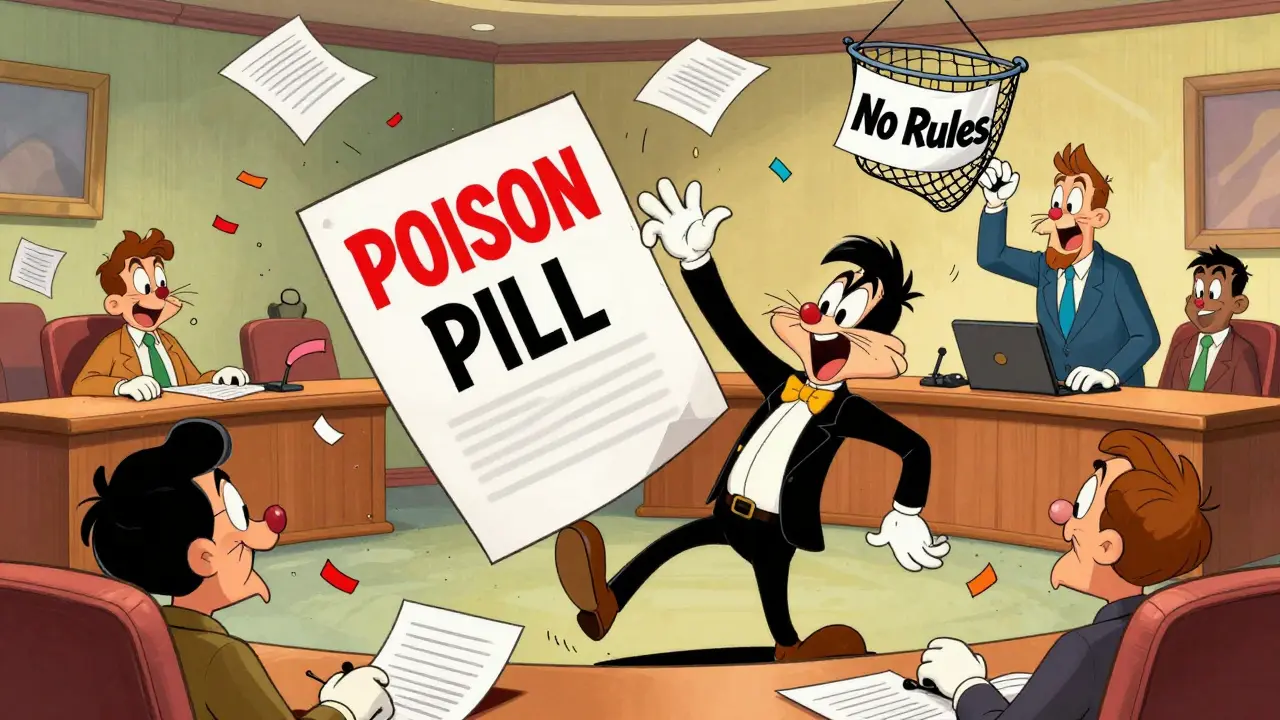
Amendment substitution is when one version of a proposed change to a bill is replaced with another. Before 2023, any member could simply drop in a new amendment text during committee markup or on the floor, even if it completely rewrote the original language. This led to what critics called ‘poison pill’ amendments - last-minute changes designed to kill a bill, not improve it.
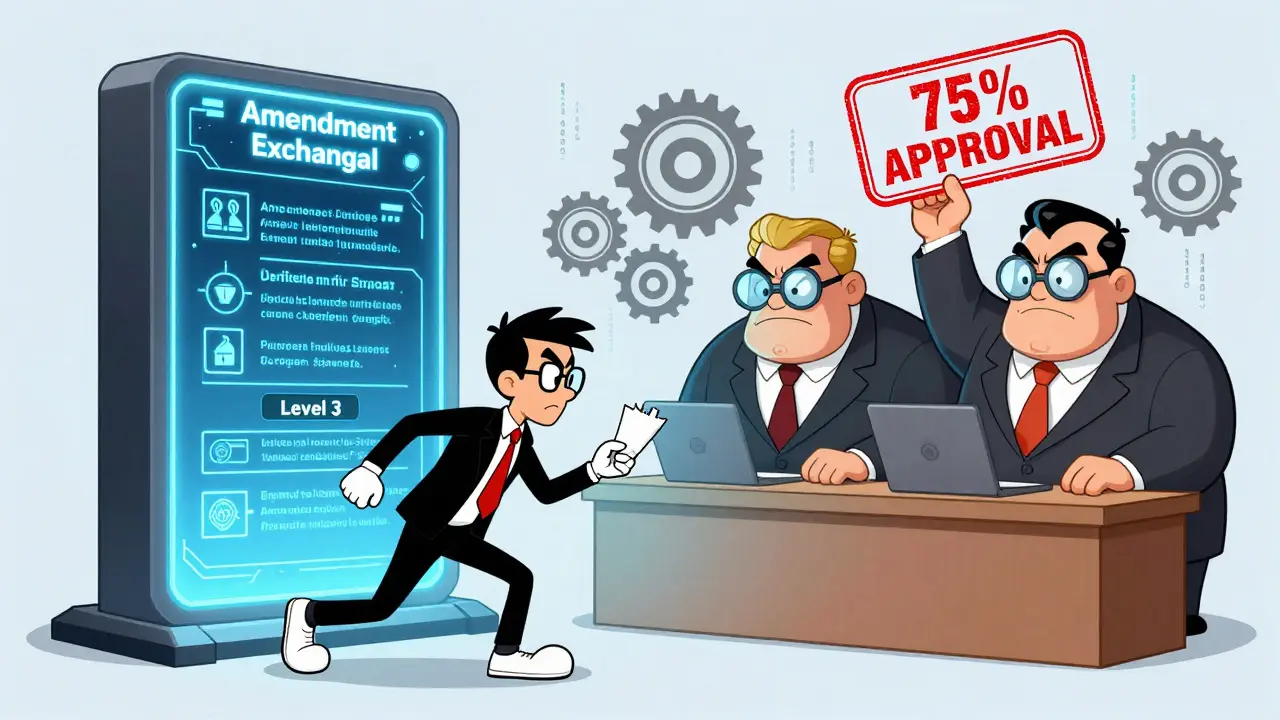
Now, under the rules adopted in January 2025 for the 119th Congress, you can’t just swap text anymore. You have to file your substitution at least 24 hours before a committee meeting. And it’s not enough to paste in new wording. You must use the Amendment Exchange Portal, a digital system launched in mid-January 2025, to submit your changes with exact line numbers, a written justification, and a classification of how big the change is.
The New Substitution Severity Index
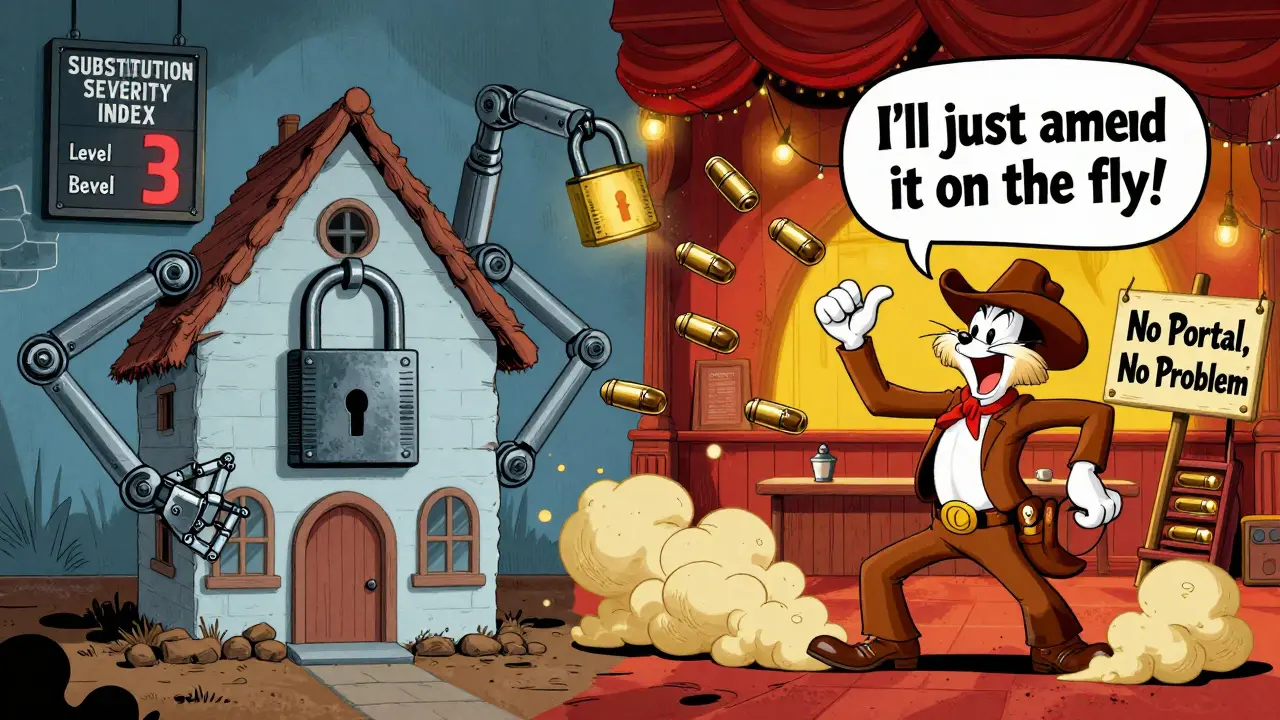
The biggest shift is the introduction of the Substitution Severity Index. All substitutions are now ranked into one of three levels:
- Level 1: Minor wording changes - fixing typos, clarifying language, or adjusting punctuation.
- Level 2: Procedural modifications - changing how a provision is enforced, adding reporting requirements, or adjusting deadlines.
- Level 3: Substantive policy changes - rewriting core provisions, adding new funding, or altering legal standards.
Each level has different approval rules. Level 1 substitutions get approved automatically if they meet formatting rules. Level 2 needs a simple majority vote from the new Substitution Review Committee in each standing committee. Level 3? You need 75% approval - up from 50% before. That’s a huge barrier. In practice, this means only major party leaders can push through big changes without broad consensus.
How the New System Works in Practice
Each committee now has a five-member Substitution Review Committee: three from the majority party, two from the minority. They have just 12 hours to review every substitution request after it’s filed. The system is designed to be fast - and it is. In the first quarter of 2025, amendment processing time dropped by 37% compared to the same period in 2024.
But speed isn’t the only outcome. The number of bills passing committee markup jumped 28%. That’s because fewer disruptive amendments made it to the floor. Representative Tony Gonzales (R-TX) called it a win, saying it stopped ‘last-minute sabotage amendments’ during the defense bill markup.
But not everyone agrees. Representative Pramila Jayapal (D-WA) had her substitution to H.R. 1526 rejected because the portal misclassified her changes as Level 3. Her team had only tweaked the enforcement timeline - a Level 2 change - but the system flagged it as a policy shift. She had to file a formal appeal, which took hours.
Why the Senate Is Still Different
The House isn’t the whole story. The Senate still operates under much looser rules. There’s no digital portal, no severity index, no review committee. Senators just need to give 24 hours’ notice. As a result, substitution in the Senate is 43% faster than in the House, according to the Congressional Management Foundation.
This creates a weird split: bills that pass the House under strict rules often hit a wall in the Senate, where last-minute changes are still common. It’s one reason why so many bipartisan bills die in conference committee - the two chambers are operating on different systems.
Who Benefits? Who Loses?
It’s no surprise that majority party staff love the new system. A May 2025 survey of 127 committee staff found that 68% of majority party staffers rated it ‘more efficient,’ with an average score of 4.2 out of 5. Minority party staff? Only 17% felt the same. The rest gave it a 2.1 out of 5, calling it ‘restrictive of legitimate input.’
Brookings Institution analyst Sarah Binder found minority members filed 58% more formal objections in 2025 than in 2024 - not because they were being blocked more often, but because they had fewer tools to fight back. The old system let them force votes on amendments. Now, most of their changes never even make it to the committee table.
The American Enterprise Institute’s Frances Lee argues this is a necessary correction. She says 78% of committee chairs reported more productive markups. Before, she says, minority members would flood the process with amendments just to delay or derail. Now, the majority can actually get work done.
Implementation Problems and Learning Curves
The system isn’t perfect. In January 2025, 43% of first-time filers submitted non-compliant requests. They forgot to tag line numbers. They didn’t explain why the change was needed. Some didn’t even use the portal, trying to email their substitutions instead.
The House Rules Committee responded with 12 detailed guidance memos and mandatory training. By May 2025, the error rate had dropped to 17%. But training takes time. Staff report an average of 14 hours of new learning just to understand the rules - a big burden for new members and their teams.
There’s also confusion over Level 3 classifications. The Minority Staff Association noted in April 2025 that ‘persistent ambiguity’ in what counts as a policy change leaves room for partisan decisions. One committee might call a funding change Level 3. Another might call it Level 2. That inconsistency is a major complaint.
The Bigger Picture: What This Means for Democracy
These changes didn’t happen in a vacuum. Between 2023 and 2025, 78% of state legislatures passed similar rules limiting amendment substitution. It’s part of a national trend toward centralized control - faster votes, fewer surprises, more predictability.
But critics say it’s not about efficiency. It’s about power. The Constitutional Accountability Center filed an amicus brief in May 2025 arguing the rules ‘unconstitutionally restrict representative speech.’ They claim members are being silenced before they even get to speak.
Meanwhile, lobbyists have shifted strategy. With floor amendments harder to push, 63% of major lobbying firms restructured their teams in early 2025 to focus on committee staff instead. Spending on committee-specific lobbying rose 29% in the first half of 2025.
What’s Next?
The House is already looking ahead. In June 2025, H.R. 4492 - the Substitution Transparency Act - was introduced. It would require all Substitution Review Committee deliberations to be made public within 72 hours. That could reduce accusations of bias.
There’s also talk of standardizing House and Senate rules. A Senate GOP megabill draft in July 2025 tried to impose House-style rules on the Senate. But the parliamentarian ruled key parts violated the Byrd Rule - a technical barrier that blocks non-budgetary changes from being passed with a simple majority.
Looking ahead, the Congressional Budget Office predicts amendment consideration time will drop from 22 minutes to 14 minutes per amendment by 2026. But minority leaders are already preparing legal challenges, arguing the rules violate the Constitution’s Presentment Clause - the part that says bills must be passed by both chambers and presented to the president.
The long-term future of these rules is uncertain. The Heritage Foundation believes they’re here to stay. The Brennan Center warns they could trigger a full rules overhaul after the 2026 elections - especially if voters see them as undemocratic.
For now, the system works - for some. It’s faster, cleaner, and more controlled. But it’s also less open. And in Congress, where every voice is supposed to count, that trade-off matters more than ever.
What is the Amendment Exchange Portal?
The Amendment Exchange Portal is a digital system launched in January 2025 that all House members must use to file amendment substitutions. It requires users to upload the exact text being replaced, specify line numbers, provide a justification, and classify the substitution as Level 1, 2, or 3. It’s mandatory and integrated with Congress.gov for tracking.
Can any member still submit an amendment substitution?
Yes, but only if they follow the new rules. All substitutions must be filed at least 24 hours in advance through the Amendment Exchange Portal and approved by the Substitution Review Committee. The old practice of dropping in last-minute amendments without notice is no longer allowed.
Why is Level 3 so hard to get approved?
Level 3 substitutions - those that change policy, funding, or legal standards - require 75% approval from the Substitution Review Committee. This was raised from 50% to prevent majority parties from forcing major changes without broad support. It’s meant to protect against partisan power grabs, but critics say it gives too much control to party leadership.
How do these changes affect the Senate?
The Senate hasn’t adopted these rules. It still allows substitution with only a 24-hour notice and no formal review process. This creates a mismatch between chambers: bills that pass the House under strict rules often face unpredictable amendments in the Senate, making compromise harder.
Are these rules legal?
Legally, Congress has broad authority to set its own rules. But the Constitutional Accountability Center argues they may violate the Presentment Clause by limiting members’ ability to propose changes. A court challenge is likely after the 2026 elections if minority party influence continues to decline.
Do these rules apply to state legislatures?
No, but many states have adopted similar rules. Between 2023 and 2025, 78% of state legislatures passed restrictions on amendment substitution, mirroring the House’s approach. The trend is toward centralized control, faster votes, and fewer surprises - regardless of the chamber.



Stacey Marsengill
January 17, 2026 AT 13:39So now the House is basically a gated community for party elites? You want efficiency? Fine. But when your ‘system’ silences dissent under the guise of ‘procedure,’ you’re not streamlining democracy-you’re burying it in a spreadsheet.
They call it ‘Level 3’ like it’s a Netflix rating. ‘Oh, this change is too spicy for the masses.’ Tell that to the people who actually live under these laws.
I’ve seen staff cry over portal errors. Not because they’re lazy. Because they’re trying to do their job in a machine designed to make them fail.
And don’t get me started on how lobbyists are now the real lawmakers. You don’t need a seat on the floor anymore. You just need a coffee with a committee aide.
This isn’t reform. It’s quiet authoritarianism with a UX upgrade.
Aysha Siera
January 17, 2026 AT 14:16They’re using AI to control Congress now. The portal doesn’t just classify amendments-it predicts who’s ‘dangerous.’ They trained it on past votes. If you’re from a swing district? You’re flagged as ‘high risk.’
That’s why Jayapal’s change got misclassified. It wasn’t a glitch. It was a warning shot.
Next they’ll scan your browser history before you log in. You think this is about efficiency? It’s about erasing unpredictability. They’re scared of the people. And they’re building a cage to keep us quiet.
rachel bellet
January 19, 2026 AT 11:59Let’s be precise here: the 75% threshold for Level 3 substitutions is not a barrier-it’s a constitutional safeguard against unilateral legislative overreach. The prior system enabled procedural terrorism under the guise of ‘amendment rights.’
Minority members weren’t ‘engaged’-they were gaming the system with non-germane, strategic amendments designed to induce gridlock. The new framework enforces adherence to the principle of legislative proportionality.
The 28% increase in bill passage rates is not a bug-it’s a feature. Efficiency isn’t a compromise; it’s the baseline expectation of governance in a 21st-century republic.
And yes, the portal’s classification algorithm has edge cases. But that’s why we have appeals mechanisms and iterative training datasets. To conflate technical friction with systemic oppression is intellectually lazy.
Also, the Senate’s ‘freedom’ is a liability. It’s why 62% of bipartisan bills die in conference. Chaos isn’t democracy. It’s dysfunction dressed in a flag.
Pat Dean
January 19, 2026 AT 18:57They let foreigners write our laws now? Look, I don’t care if your ‘portal’ is fancy. If you’re telling me that a Texan conservative can’t fix a typo on a defense bill because some bureaucrat in D.C. says it’s ‘Level 3,’ then this whole thing is rigged.
And don’t give me that ‘bipartisan’ crap. The only people benefiting are the ones who already have the ear of the Speaker. The rest of us? We’re just spectators in our own government.
They took our voice. They gave us a form. And now they want a medal for ‘efficiency.’
When the Senate lets you talk, it’s messy. But at least you’re not talking to a robot.
Jay Clarke
January 20, 2026 AT 18:44Okay, so let me get this straight: we traded chaos for control, and now the only people who can change anything are the ones who already run everything?
It’s like the House turned into a TikTok algorithm-only the top 5% get to post. Everyone else gets shadowbanned by a 12-hour review window and a bot that thinks ‘changing a deadline’ is ‘rewriting the Constitution.’
I miss when a guy could stand up and say, ‘Hey, what if we just… fix this?’ Now you need a PhD in legislative taxonomy and a signed affidavit from your cat.
And the lobbyists? They’re not just in the room anymore-they’re writing the script. And we’re supposed to cheer because the lights are brighter now?
Democracy isn’t a spreadsheet. It’s a shouting match. And someone just turned off the mic.
Selina Warren
January 21, 2026 AT 21:42Listen. I’ve watched Congress for 20 years. I’ve seen bills die because someone dropped a 50-page amendment at 2 a.m. I’ve seen good ideas buried under garbage.
This system? It’s not perfect. But it’s the first time in my lifetime that Congress actually got something done without turning into a circus.
Yes, it’s harder for minorities. But guess what? So is life. You don’t get to scream forever and call it ‘participation.’
They built a better engine. Now we just need to teach people how to drive it.
Stop crying about the steering wheel being tighter. Start learning how to steer.
Robert Davis
January 22, 2026 AT 04:05Interesting. The 12-hour review window. That’s exactly 720 minutes. Coincidence? Or was it chosen because 720 = 8 x 9 x 10? The same numbers used in the 2024 DHS biometric tracking pilot? Or the number of minutes in a 12-hour shift at a DHS detention center?
They didn’t pick 12 hours because it’s efficient. They picked it because it’s the same as the detention processing window.
And the portal? It’s not just tracking amendments. It’s tracking voting patterns. You file a Level 3? Your name gets flagged. Your next campaign donation gets audited. Your staff gets ‘reassigned.’
This isn’t about rules. It’s about control. And they’re using bureaucracy as a weapon.
They’ve been preparing for this since 2021. You just didn’t notice because you were too busy scrolling.
Eric Gebeke
January 23, 2026 AT 18:13They say it’s about ‘efficiency.’ But let’s be real-this is about fear. Fear that if you let the little guy speak, he might actually win.
That’s why they made Level 3 so hard. Because the people who know the most about the laws? They’re not the ones in leadership. They’re the ones on the ground. The veterans. The teachers. The nurses. The small business owners.
They don’t have lobbyists. They don’t know the portal. They don’t have 14 hours to waste on training.
So they’re silenced. Not by vote. By bureaucracy.
And the worst part? We’re all okay with it. Because we’re tired. And tired people don’t fight. They just scroll.
Joni O
January 24, 2026 AT 20:55Just wanted to say I love how this system actually works in practice. I’m a new staffer and I was terrified at first-so many rules! But the training videos helped, and now I’ve filed 3 amendments without a single error.
It’s not perfect, but it’s way better than last year when we spent 3 days arguing over a comma.
Also, the portal auto-saves. I’ve lost count of how many times I almost closed my browser and lost everything. Thank you, whoever coded that.
Still learning, but I’m proud we’re moving forward. Even if it’s slow. Even if it’s messy. We’re getting better.
Ryan Otto
January 25, 2026 AT 12:08One cannot help but observe that the structural centralization of legislative authority under the guise of procedural modernization constitutes a de facto oligarchic reconfiguration of representative democracy. The substitution framework, while ostensibly technocratic, functions as a mechanism of epistemic exclusion-rendering the minority not merely politically disadvantaged, but epistemologically irrelevant.
The Amendment Exchange Portal, in its current iteration, is not a tool of transparency, but a surveillance apparatus masquerading as administrative innovation. The 75% threshold is not a safeguard-it is a choke point engineered to ensure ideological homogeneity.
That 63% of lobbying firms have realigned their operations toward committee staff is not evidence of adaptation. It is evidence of capture.
And to claim this system is ‘democratic’ is to engage in semantic terrorism.
Max Sinclair
January 27, 2026 AT 09:11I get why this feels unfair to some. I really do. But I also see why it was needed. I’ve been on the other side-the side where we tried to get something done and got buried under 20 amendments that had nothing to do with the bill.
This isn’t about silencing people. It’s about making sure the conversation actually matters.
Maybe the system isn’t perfect. Maybe it’s too rigid. But I’d rather have a system that’s slow and fair than one that’s fast and broken.
And hey-if you think the portal’s confusing now, wait till they add the AI feedback feature next year. I heard it’ll suggest better wording based on past committee votes. Kinda cool, actually.
Praseetha Pn
January 28, 2026 AT 07:32They think they’re clever, don’t they? The portal. The levels. The 75%. It’s all a distraction.
Behind the scenes, they’re already feeding the data to private contractors. The same ones who run voter suppression algorithms in 12 states.
Every time you file a substitution, they’re building a profile. Your language. Your timing. Your party. Your district. Your voting history.
Next year, you won’t even need to file. The system will predict what you want to say-and block it before you type.
This isn’t reform. It’s the first step toward predictive governance.
And we’re all just data points now.