
Anticoagulant Sports Safety Calculator
This tool helps you determine if your chosen sport is safe while taking blood thinners. Based on your medication type and activity level, it provides risk assessment and recommendations.
Risk Assessment
Results will appear here...
Playing sports while on blood thinners isn’t just risky-it’s a high-stakes balancing act. If you’re an athlete taking anticoagulants, your body is constantly caught between two dangers: clotting and bleeding. One hard fall, one collision, one awkward landing-and you could be facing internal bleeding that takes weeks to recover from. But quitting sports isn’t the only answer. With the right strategy, many athletes can still compete, train, and stay active-safely.
Why Blood Thinners and Sports Don’t Mix Easily
Anticoagulants like warfarin, apixaban, rivaroxaban, and dabigatran are lifesavers for people with atrial fibrillation, deep vein thrombosis, or mechanical heart valves. But they also make you bleed more easily. In everyday life, that means more bruising from bumping into things. In sports, it means something far more serious. Studies show athletes on anticoagulants have a 3 to 5 times higher risk of major bleeding during physical activity than non-athletes. Why? Because sports involve impact. A soccer tackle, a basketball rebound, a ski crash-these aren’t gentle movements. Forces can exceed 5G in contact sports, and your body doesn’t have time to react. Blood vessels rupture. Internal organs bleed. Even a minor head bump can turn into a dangerous intracranial hemorrhage. The American Heart Association and American College of Cardiology classify sports into three risk levels based on trauma probability:- High-risk (avoid): American football, rugby, boxing, ice hockey-90% chance of trauma. Not recommended for anyone on anticoagulants.
- Intermediate-risk (proceed with caution): Basketball, soccer, alpine skiing, martial arts-30-60% trauma risk. Possible with strict precautions.
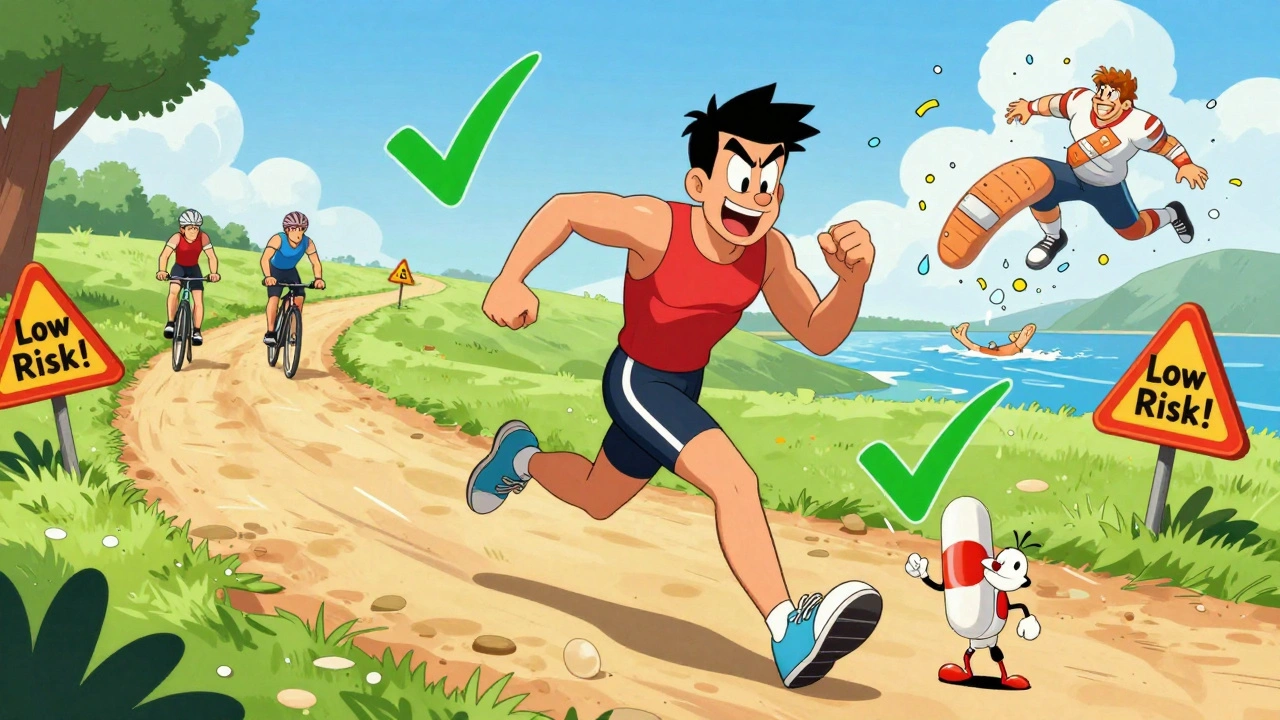
- Low-risk (generally safe): Running, cycling, swimming, rowing, tennis-less than 10% trauma risk. Often manageable with minor adjustments.
Warfarin vs. DOACs: Which Is Safer for Athletes?
Not all blood thinners are created equal. Your choice of medication makes a huge difference in how you can train and compete. Warfarin has been around for decades. It works by blocking vitamin K, but it’s unpredictable. Your INR (a blood test measuring clotting time) needs to stay between 2.0 and 3.0. Too low, and clots form. Too high, and you bleed. Weekly blood tests are required. Food, alcohol, even antibiotics can throw it off. And because it lasts 36-72 hours, you can’t easily “turn it off” before a game. DOACs (direct oral anticoagulants) like apixaban and rivaroxaban are newer. They’re more predictable. Fewer food interactions. Shorter half-lives: apixaban clears in 8-15 hours, rivaroxaban in 5-13. That’s the key advantage. You can time your dose to reduce anticoagulant effect right before competition. A 2025 JAMA study of over 160,000 patients found apixaban had lower risks of both recurrent clots and major bleeding than warfarin or rivaroxaban. For athletes, that’s a big deal. Apixaban reduces major bleeding by 26% compared to warfarin and 19% compared to rivaroxaban. But here’s the catch: DOACs still carry bleeding risk. And they’re not approved for people with mechanical heart valves. If you have one, warfarin is your only option.Four Proven Strategies to Stay Active Safely
If you’re determined to keep playing, here are four evidence-backed approaches used by sports cardiologists:- Switch to low-impact sports-Running, cycling, swimming, and elliptical training are the safest bets. A 2023 study showed athletes who switched from basketball to cycling cut their major bleeding risk from 8.2% to just 1.9%. Wear protective gear: helmets, padding, even padded shorts for cycling. Avoid rough terrain, wet surfaces, and crowded areas.
- Adjust your warfarin dose before competition-Some athletes reduce their warfarin dose 3-4 days before a big event to bring INR down to 1.5-1.8. This isn’t ideal-it raises clot risk slightly (from 0.2% to 0.8% per event)-but it’s been used successfully in endurance athletes like marathoners. Requires close INR monitoring before and after.
- Use LMWH with timed breaks-Low molecular weight heparin (like enoxaparin) is injected daily. It has a 12-24 hour half-life. Athletes can skip the morning dose 24 hours before competition. This cuts bleeding risk by 42% while still protecting against clots. Requires daily injections, which can be inconvenient, but it’s reliable.
- Time your DOAC dose-This is the most advanced and effective strategy. Take your daily DOAC dose 24 hours before your event. For apixaban, drug levels drop below therapeutic range by 20-24 hours. A case study of a pro cyclist showed he maintained full clot protection for 20 hours after his dose, then had minimal anticoagulation during his race. This approach needs specialized testing-anti-Xa assays calibrated for DOACs-to confirm levels are safe. Not all clinics offer this, but it’s becoming more common.

What the Experts Say
Dr. Paul D. Thompson, who helped write the 2015 AHA/ACC guidelines, puts it bluntly: “You can’t just tell an athlete to stop. You have to figure out how they can keep going safely.” Dr. Matteo Palamà, a leading voice in European cardiology, says DOACs are now the first choice for athletes because they allow for “peri-competitive interruption without rebound clotting.” That means you can pause treatment briefly without triggering dangerous clots-a big win. But there’s a problem: almost no clinical trials include athletes. Only 0.3% of participants in major anticoagulation studies were competitive athletes. That means most guidelines are based on data from older, sedentary patients. What works for a 70-year-old with AFib might not work for a 28-year-old cyclist.What Professional Leagues Are Doing
The sports world is catching up. The NBA requires players on warfarin to have an INR below 2.0 before clearing them to play. The Union Cycliste Internationale (UCI), which governs professional cycling, allows DOACs but requires athletes to skip their dose 24 hours before competition and provide documentation. The World Anti-Doping Agency (WADA) confirmed in 2020 that therapeutic anticoagulants are not banned-so long as you declare them. No more hiding your meds. And athletic trainers? A 2022 survey showed 78% now consult formal anticoagulation guidelines before clearing athletes-up from just 32% in 2015. That’s progress.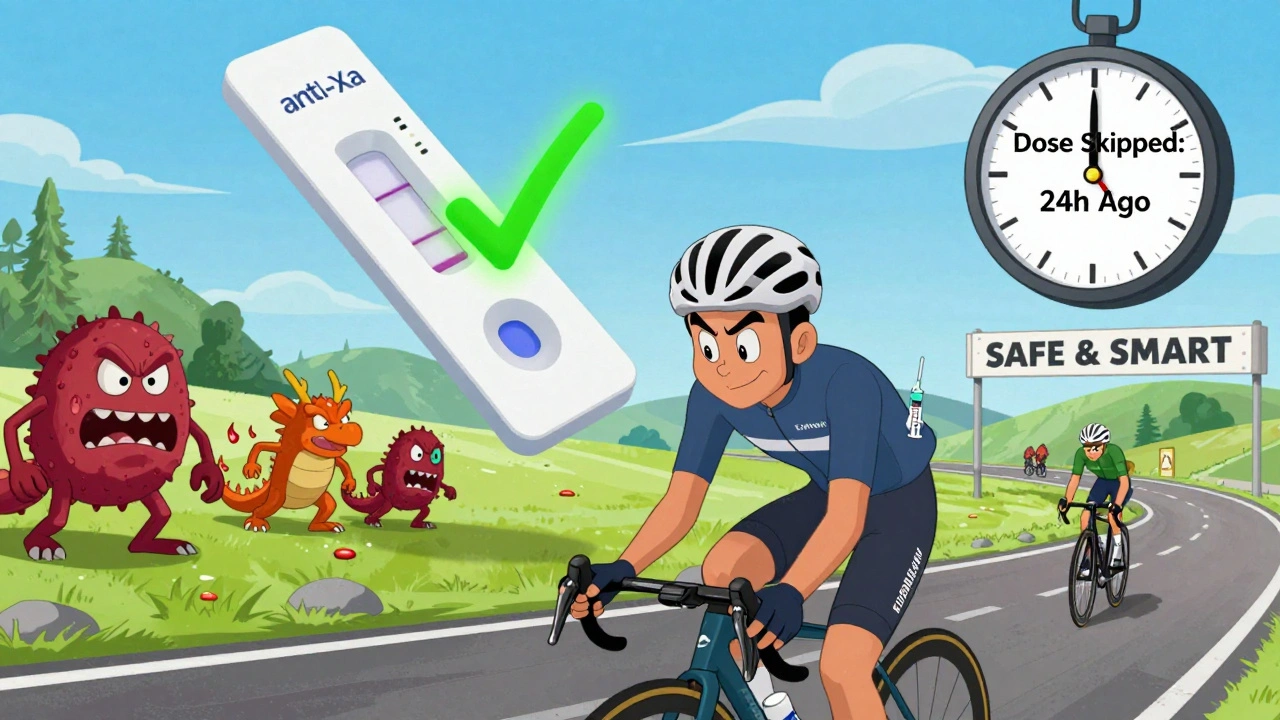
What’s Next? Precision Medicine for Athletes
The future of anticoagulation in sports is personal. Researchers are now using wearable sensors to measure impact forces in real time during sports. One 2023 study attached accelerometers to soccer players and skiers to map exactly how hard they hit the ground or each other. That data is being used to build “athlete-specific anticoagulation algorithms.” New home INR monitors like the CoaguChek INRange (FDA-cleared in March 2023) let you test your blood at home with 95% accuracy. No more driving to a lab every week. You can track your INR daily and adjust your schedule accordingly. By 2028, the American College of Sports Medicine predicts a 40% increase in athlete anticoagulation consultations. As more people stay active into their 50s and 60s-and as DOACs become even more refined-this won’t be a niche issue anymore. It’ll be standard care.Final Advice: Don’t Guess. Test. Plan.
If you’re on blood thinners and want to stay active:- Don’t assume your sport is “safe.” Ask your cardiologist to classify it using official risk levels.
- Know your medication. Is it warfarin or a DOAC? What’s your half-life? What’s your INR?
- Never skip a dose without medical advice-even if you’re “just going for a run.”
- Consider a personalized plan: timing your dose, switching to low-impact activity, or using LMWH.
- Wear protective gear. Always. Even in low-risk sports.
- Get regular coagulation testing. Home monitors are now accurate enough for daily use.
Can I still play basketball if I’m on a blood thinner?
Basketball is classified as an intermediate-risk sport due to frequent collisions and falls. While not strictly prohibited, it carries a 30-60% chance of trauma, which significantly increases bleeding risk for people on anticoagulants. Most cardiologists advise against it. If you’re determined to play, you must have a detailed plan: switch to a DOAC like apixaban, time your dose to be taken 24 hours before play, wear full protective gear, and get regular INR or anti-Xa testing. Even then, the risk remains elevated. For most, switching to low-impact alternatives like swimming or cycling is safer.
Is it safe to take blood thinners and run marathons?
Yes, running marathons is generally safe for people on anticoagulants, especially if you’re on a DOAC. Long-distance running is a low-impact sport with less than 10% trauma risk. The bigger concern is dehydration and inflammation-both can increase clotting risk in endurance athletes. Stay well-hydrated, avoid extreme heat, and maintain your prescribed dose. Some runners on warfarin adjust their dose slightly before races to keep INR closer to 2.0, but this should only be done under medical supervision. DOACs like apixaban are preferred because they’re more stable and don’t require frequent blood tests.
Can I stop taking my blood thinner before a game or race?
Stopping anticoagulants without medical guidance is dangerous and can lead to life-threatening clots. However, under a doctor’s supervision, temporary adjustments are possible. For DOACs like apixaban or rivaroxaban, skipping your dose 24 hours before competition is a common and safe strategy because these drugs clear quickly from your system. For warfarin, reducing the dose days ahead is possible but increases clot risk. Never stop cold turkey. Always work with your cardiologist and get blood tests to confirm your levels are safe before and after.
Which blood thinner is best for athletes?
Apixaban is currently the best option for most athletes. It has the lowest risk of major bleeding compared to other anticoagulants, based on large-scale studies. It also has a short half-life (8-15 hours), making it ideal for timing doses around competitions. Rivaroxaban is also acceptable but carries slightly higher bleeding risk. Warfarin is less ideal due to its unpredictable effect and need for frequent blood tests. DOACs are not suitable for people with mechanical heart valves-in those cases, warfarin is required. Always discuss your sport, lifestyle, and medical history with your doctor before choosing.
Do I need to tell my coach or team about my blood thinner?
Yes. Your coach, athletic trainer, and teammates should know you’re on anticoagulants. In case of injury, they need to recognize the signs of internal bleeding-unusual swelling, extreme pain, dizziness, or unexplained bruising-and act quickly. They should also know not to apply pressure to bleeding areas unless trained, and to call emergency services immediately. Many professional teams now have medical protocols in place for athletes on blood thinners. Even in amateur sports, informing your team can save your life.



Aman deep
December 11, 2025 AT 19:23man i just found out my cousin plays pickup basketball on warfarin 😳 he says he takes his med at 8pm and plays at 7am so it's mostly outta his system... i was like bro that's either genius or a death wish. he wears a helmet and knee pads like he's in a robot battle. respect tho. he says his doc monitors him like a hawk and he's been doing it for 3 years. no incidents. but also... why basketball? why not just ride a bike? 🤔
john damon
December 13, 2025 AT 03:03bro if you're on blood thinners and you're still playing contact sports you're either a legend or a walking lawsuit 🤡🩸 i mean come on... i had a friend who took rivaroxaban and got elbowed in the chest during a pickup game and ended up with a hematoma the size of a grapefruit. he cried. i cried. his dog cried. just... swim. please. 🏊♂️💧
Monica Evan
December 13, 2025 AT 03:07apixaban is the real MVP for athletes. i'm a nurse and i've worked with 3 competitive cyclists on DOACs. one of them races in the Tour de France regionals. she takes her dose at 8pm the night before, skips the next day, and gets an anti-Xa test done 2 hours before the race. if it's below 0.3 U/mL, she's cleared. no bleeding, no clots. it's not magic, it's science. also, wear a helmet even when cycling on quiet roads. you'd be surprised how many people get thrown off by a squirrel or a pothole. safety first. 🚴♀️❤️
Aidan Stacey
December 15, 2025 AT 00:24THIS. IS. A. GAME. CHANGER. 🎉 I just read this and I'm crying. not because i'm sad. because i'm inspired. my dad was on warfarin after his valve replacement. he used to ride his bike every morning. he'd wake up at 5am, check his INR with his home monitor, and if it was 2.1 he'd go. if it was 2.8? he'd sit it out. he didn't quit his life. he adapted. he became a better athlete because he had to be smarter. if you're on blood thinners and you're still moving? you're not broken. you're upgraded. 💪❤️
Jean Claude de La Ronde
December 15, 2025 AT 20:35so let me get this straight... we've got a whole 12-page essay on how to safely bleed out while riding a bike or running? and the solution is... to time your meds like you're prepping for a heist? wow. brilliant. next up: how to juggle chainsaws while on anticoagulants. i'm sure there's a peer-reviewed paper on that too. maybe we can get a grant from the Department of Common Sense. 🤷♂️
Jim Irish
December 16, 2025 AT 12:47Clotting and bleeding are both dangerous. The goal is balance. Low-impact sports reduce trauma risk. DOACs offer more predictable pharmacokinetics. Timing doses around events is medically supported. Protective gear is non-negotiable. Testing is essential. These are not opinions. These are clinical recommendations based on evidence. Adapt. Don't avoid. But don't ignore risk either.
Mia Kingsley
December 17, 2025 AT 19:11ok but what if you just stop taking the blood thinner? like... what if you just say no to the whole thing? i mean if you're fit and young and your atrial fibrillation is mild maybe you don't need it? i read this one guy on Quora who cured his AFib with turmeric and yoga and now he plays rugby. he says his doctor was 'just scared of lawsuits' 😏 also i heard DOACs cause brain tumors? or was that vaccines? anyway... i think we're all being manipulated by Big Pharma and their fancy lab reports 🤫
Katherine Liu-Bevan
December 18, 2025 AT 04:25The data is clear: apixaban has the lowest major bleeding risk among DOACs, and its pharmacokinetic profile makes it uniquely suitable for athletes who need peri-event dose adjustments. Studies show that skipping a single dose 24 hours before competition reduces bleeding risk by approximately 35-45% without increasing thrombotic events. Home INR monitoring devices now have FDA clearance and accuracy comparable to central labs. Athletes with mechanical valves remain an exception-warfarin is still required, but even here, structured protocols with LMWH bridging and dose timing can improve safety. The key is not to eliminate activity, but to engineer it with precision. Consult your cardiologist. Document your plan. Test regularly. Stay informed. This isn't about risk elimination-it's about risk management.