
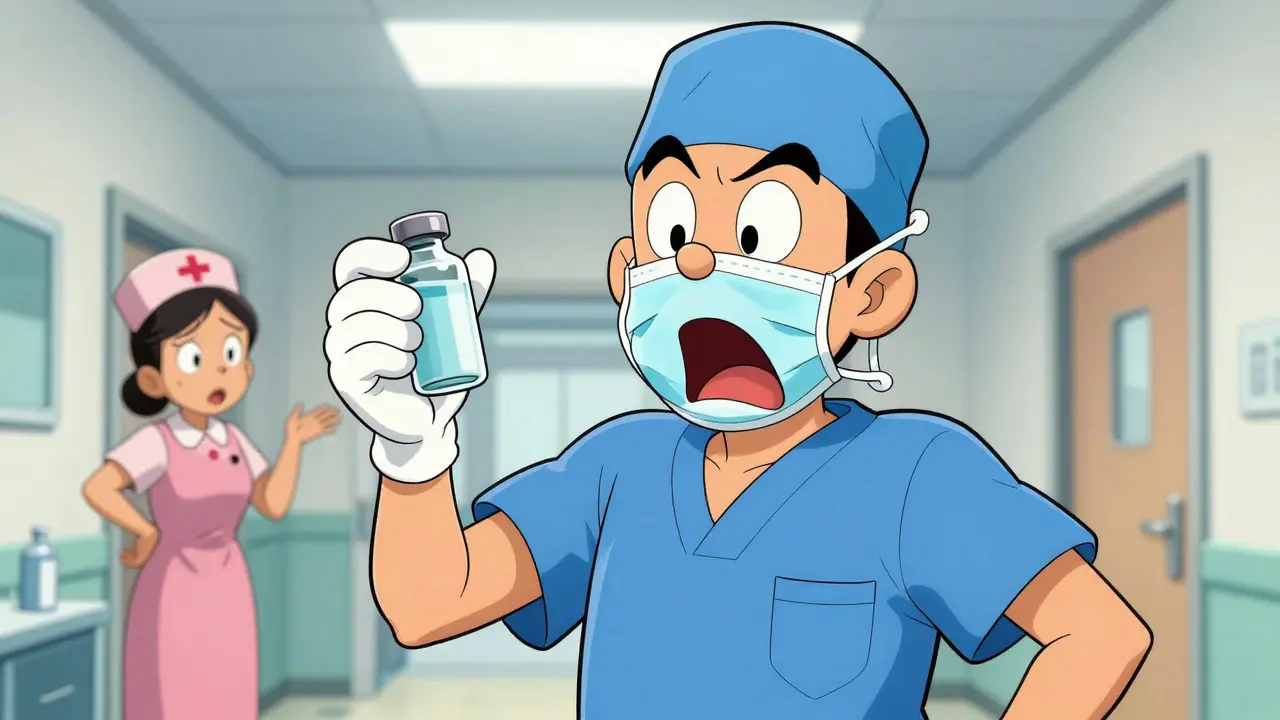
Imagine a surgeon scrubbing in for a critical operation, only to be told the necessary anesthetic is unavailable. Or a cancer patient arriving for chemotherapy, but the clinic has to postpone the session because the drug isn't in stock. This isn't a hypothetical nightmare; it's a recurring reality in hospitals across the country. While you might notice a missing brand of vitamins at a local drugstore, injectable medication shortages is a systemic crisis where sterile drugs delivered via IV or injection are unavailable, directly threatening life-saving patient care.
For the average person, a drug shortage means a trip to a different pharmacy. For a hospital, it means changing clinical protocols on the fly, canceling surgeries, and facing ethical dilemmas about who gets the last vial of a drug. Because hospitals rely so heavily on these sterile products, their pharmacies are the front lines of this chaos.
| Metric | Retail/Community Pharmacy | Hospital Pharmacy |
|---|---|---|
| Inventory Affected by Shortages | 15-20% | 35-40% |
| Reliance on Sterile Injectables | Low | Very High (60-65% of shortages) |
| Immediate Patient Impact | Treatment delay/switch | Surgical cancellation/Critical care risk |
| Operational Burden | Moderate | Severe (Average 11.7 hours/week spent sourcing) |
The Perfect Storm: Why Sterile Injectables Fail
Why are IV bags and vials so much harder to keep in stock than pills? It comes down to the chemistry and the cost. Sterile Injectables are medications that must be completely free of contaminants and pyrogens, requiring aseptic processing environments. If a single speck of dust enters a batch, the whole lot is trashed. This manufacturing complexity makes the process fragile.
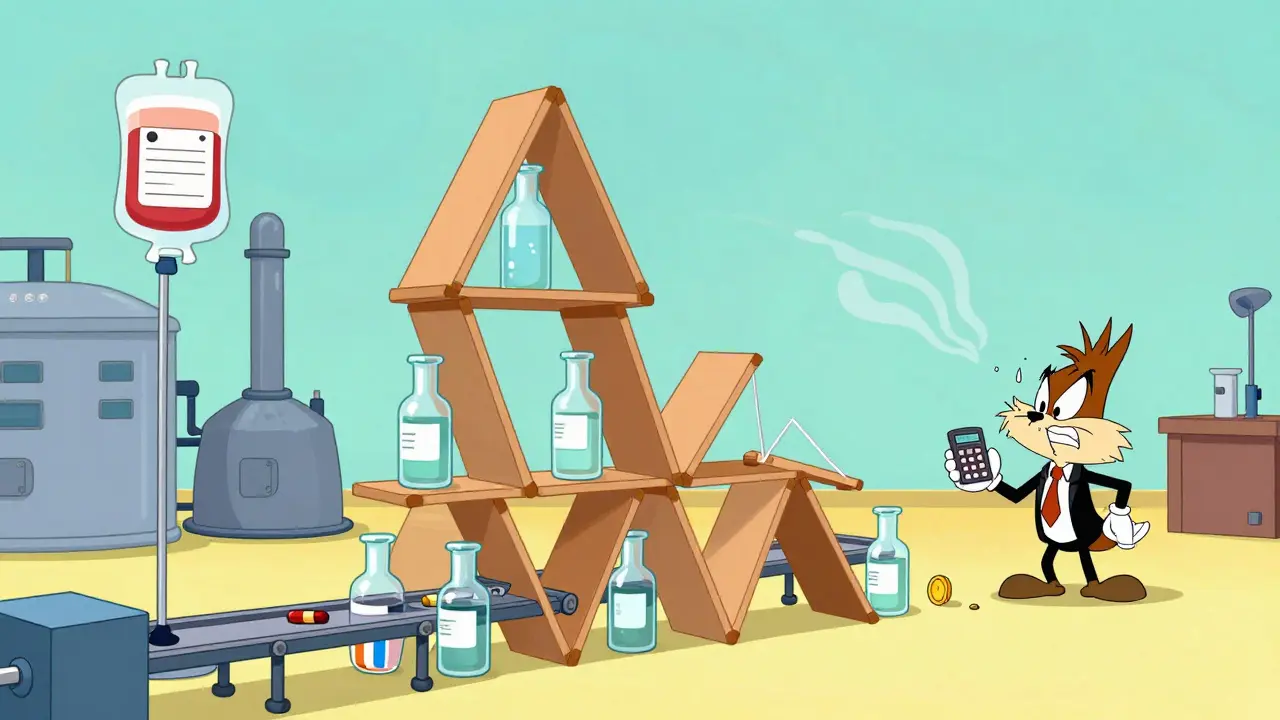
Then there's the money problem. Most of these drugs are generics with razor-thin profit margins-often just 3% to 5%. When a drug doesn't make much money, manufacturers have zero incentive to invest in newer, more resilient equipment or build backup facilities. They operate on a "just-in-time" model, meaning there is no safety net. If a factory shuts down, the supply vanishes almost instantly.
Geography also plays a huge role. About 80% of the active pharmaceutical ingredients for generics come from China and India. When a quality issue hits a plant in India-like the 2024 shutdown of a Cisplatin facility-it creates a nationwide vacuum. Similarly, unexpected disasters, such as the 2023 tornado that hit a Pfizer plant in North Carolina, can instantly wipe out the production of over a dozen critical medications.
The Ripple Effect on Patient Care
When a hospital pharmacy runs dry, the consequences move quickly from the pharmacy basement to the patient's bedside. The most dangerous gaps appear in anesthetics, chemotherapeutics, and cardiovascular injectables. In fact, some reports show anesthetic shortage rates as high as 87%.
This forces doctors into a precarious position. They must use therapeutic interchange, which is the practice of replacing a prescribed drug with a chemically or therapeutically similar one. While this sounds like a simple swap, it's not. Injectables have different bioavailability-meaning how they are absorbed by the body-and substituting them requires rigorous approval from a pharmacy and therapeutics committee.
We've seen cases where hospitals ran out of basic normal saline for weeks. In those scenarios, medical teams had to revert to using oral hydrating agents for post-op patients-a step backward in care that most modern practitioners never expected to encounter. For elderly patients (65-85), who make up over 30% of those affected by shortages, these disruptions can lead to significant setbacks in recovery or prolonged hospital stays.
The Operational Nightmare for Pharmacists
The burden of these shortages falls squarely on the shoulders of hospital pharmacists. It's no longer just about dispensing meds; it's about detective work. Pharmacy directors are spending nearly 12 hours a week just trying to find alternative suppliers or hunting for stock in other regions.
Beyond the workload, there is a heavy emotional toll. Many pharmacists face ethical dilemmas: do you give the last dose to the patient who arrived first, or the patient who is most critically ill? According to surveys, nearly 42% of hospital pharmacists have had to use less effective alternatives, knowing it could potentially compromise the patient's outcome. This level of moral distress is a hidden epidemic within the healthcare workforce.

How Hospitals are Fighting Back
Since the federal government hasn't provided a magic fix, hospitals have had to build their own survival guides. Many have established formal shortage management committees to decide how to allocate limited supplies fairly. But these committees are often underfunded and overworked.
To keep patients safe, pharmacies are adopting several key strategies:
- Consolidating Stock: Instead of keeping small amounts of a drug in various wards, they centralize high-risk items to prevent waste and track usage better.
- Tiered Allocation: Creating a priority system where the most critical patients get first access to the remaining supply.
- Standardizing Order Sets: Updating the electronic records so that when a doctor orders a drug, the system automatically suggests a pre-approved alternative.
These steps help, but they aren't a cure. It takes months for a new pharmacy director to become proficient in these mitigation strategies, and many hospitals still rely on ad-hoc, informal methods that increase the risk of medication errors.
Looking Ahead: Will it Get Better?
There is some hope. The U.S. government has allocated $1.2 billion to boost domestic manufacturing through Executive Order 14080. The goal is to stop relying so heavily on overseas plants. However, building a sterile manufacturing facility isn't like opening a retail store; it takes years of construction and regulatory validation. We likely won't see the real-world impact of these investments until 2029 or 2030.
Meanwhile, the industry is slowly moving toward continuous manufacturing, which is more efficient and less prone to the "all-or-nothing" failures of traditional batch processing. Right now, only about 12% of producers use this technology. Until that number climbs, the supply chain remains a house of cards.
For now, hospital pharmacies will continue to be the ones managing the crisis. Whether it's navigating geopolitical tensions in Asia or dealing with extreme weather events, the resilience of our healthcare system depends on the ability of these pharmacies to find a way around the next shortage.
Why are injectable drugs more prone to shortages than oral pills?
Injectable drugs require sterile manufacturing processes (aseptic processing) to ensure no contaminants enter the product. This is far more complex and expensive than making a tablet. Additionally, the profit margins for generic injectables are extremely low, meaning manufacturers don't invest in the backup capacity needed to prevent shortages.
What is a therapeutic interchange?
Therapeutic interchange is when a pharmacist or doctor substitutes a prescribed medication with a different drug in the same therapeutic class that is expected to have a similar clinical effect. In hospitals, this is usually governed by a formal protocol approved by a pharmacy and therapeutics committee to ensure patient safety.
How do drug shortages affect surgical procedures?
Shortages of anesthetics and sterile saline often lead to the postponement of non-urgent surgeries. This creates significant backlogs in hospital schedules and increases patient anxiety, as critical procedures are delayed until a viable alternative medication is sourced.
Who is most at risk during these medication shortages?
Elderly patients, particularly those between 65 and 85, and the critically ill are the hardest hit. This is because they are the primary recipients of IV medications in hospital settings and often have complex health needs that make drug substitutions more dangerous.
What is the FDA doing to prevent these shortages?
The FDA has implemented the Drug Supply Chain Security Act to improve tracking and has a Strategic Plan for Drug Shortage Prevention that includes quality incentives. However, many experts argue the FDA lacks sufficient enforcement power to force manufacturers to increase capacity or improve stability.

Simon Jenkins
April 12, 2026 AT 15:54The sheer audacity of calling this a 'systemic crisis' when it is clearly a failure of basic logistical foresight. It is simply tragic, truly tragic, that the intellectual bankruptcy of our current pharmaceutical infrastructure has reached a point where surgeons are playing a game of musical chairs with anesthetics. One would think that the most rudimentary understanding of supply chain fragility would have prevented this, yet here we are, wallowing in the consequences of mediocrity!
Doug DeMarco
April 14, 2026 AT 07:37Man, this really puts things into perspective for anyone who thinks the pharmacy is just a place to pick up a prescription :)
Will Gray
April 15, 2026 AT 16:53Funny how the 'shortages' always seem to happen right when the government is pushing new mandates. It is not a coincidence that the supply chain is 'fragile' just as they move production overseas to places they can more easily control or manipulate for political leverage. The 1.2 billion for domestic manufacturing is a smokescreen to keep us quiet while they figure out which medicines they actually want us to have access to.
Franklin Anthony
April 17, 2026 AT 12:36just look at the profit margins mentioned here 3 to 5 percent is a crime when lives are on the line. its honestly kind of funny how we pretend to value health but really just value the bottom line of a few shareholders who dont even step foot in a hospital. the whole system is just a big loop of greed and we are all just numbers in a spreadsheet to these people
Sarina Montano
April 18, 2026 AT 18:02It's a kaleidoscopic nightmare for the staff. I've seen how these shortages create a domino effect where a lack of one saline concentrate leads to a scramble for alternative diluents, which then puts an insane burden on the compounding technicians who have to manually mix things that used to be pre-filled. The mental gymnastics required to maintain safety standards while the shelves are bare is an invisible labor that deserves way more recognition and funding than it currently gets from administration.
Camille Sebello
April 19, 2026 AT 23:57This is scary!! Who is actually checking the doses during these swaps...??
Victor Parker
April 21, 2026 AT 03:04Typical. They tell us it's a 'tornado' or 'quality issue' but it's probably just a way to hike prices once the 'solution' arrives 🙄 They want us dependent on the system so they can flip the switch whenever they want. Don't trust the official timelines for 2030, it'll be 2040 before we see a single vial made locally!
Emily Wheeler
April 22, 2026 AT 21:27I feel like we are touching upon a deeper philosophical struggle here, where the value of human life is being weighed against the efficiency of a globalized market, and it really makes me wonder if we can ever truly find a balance between economic viability and the moral imperative to provide care. Perhaps if we shifted our collective energy toward supporting these pharmacists who are essentially the unsung heroes of the triage process, we could foster a more resilient community that prioritizes wellness over the cold, hard metrics of a corporate balance sheet, though I realize that's a very optimistic way of looking at a very bleak situation.
Peter Meyerssen
April 23, 2026 AT 11:24The ontological dissonance here is palpable 🙄. We are basically dealing with a failure of the Just-In-Time paradigm, which is a total heuristic error in high-stakes environments. The systemic fragility is just a byproduct of maximizing alpha at the expense of redundancy, and honestly, the lack of a robust buffer is just peak late-stage capitalism. Truly a banal tragedy 💅