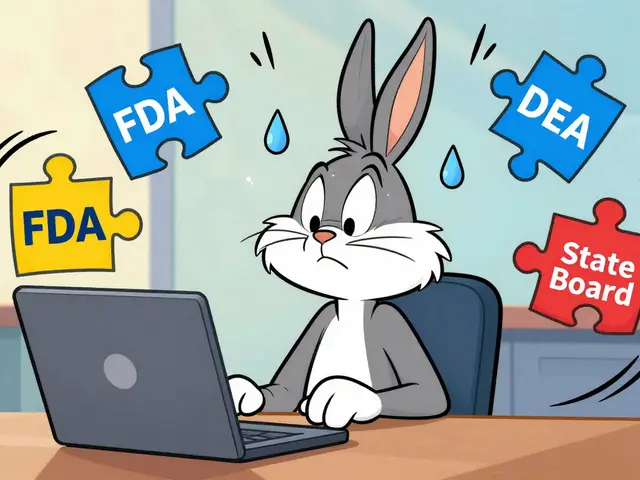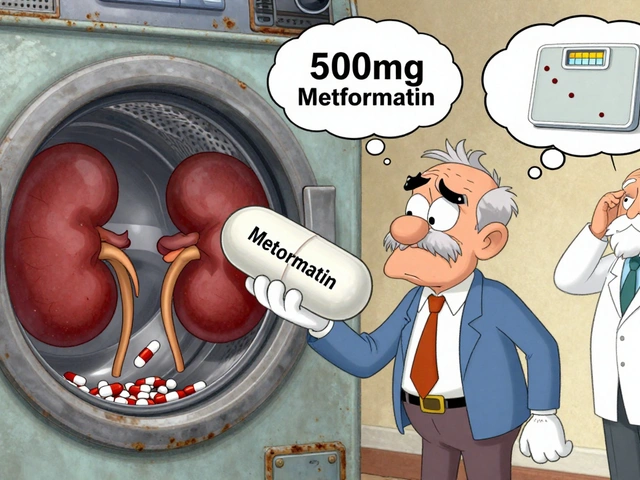
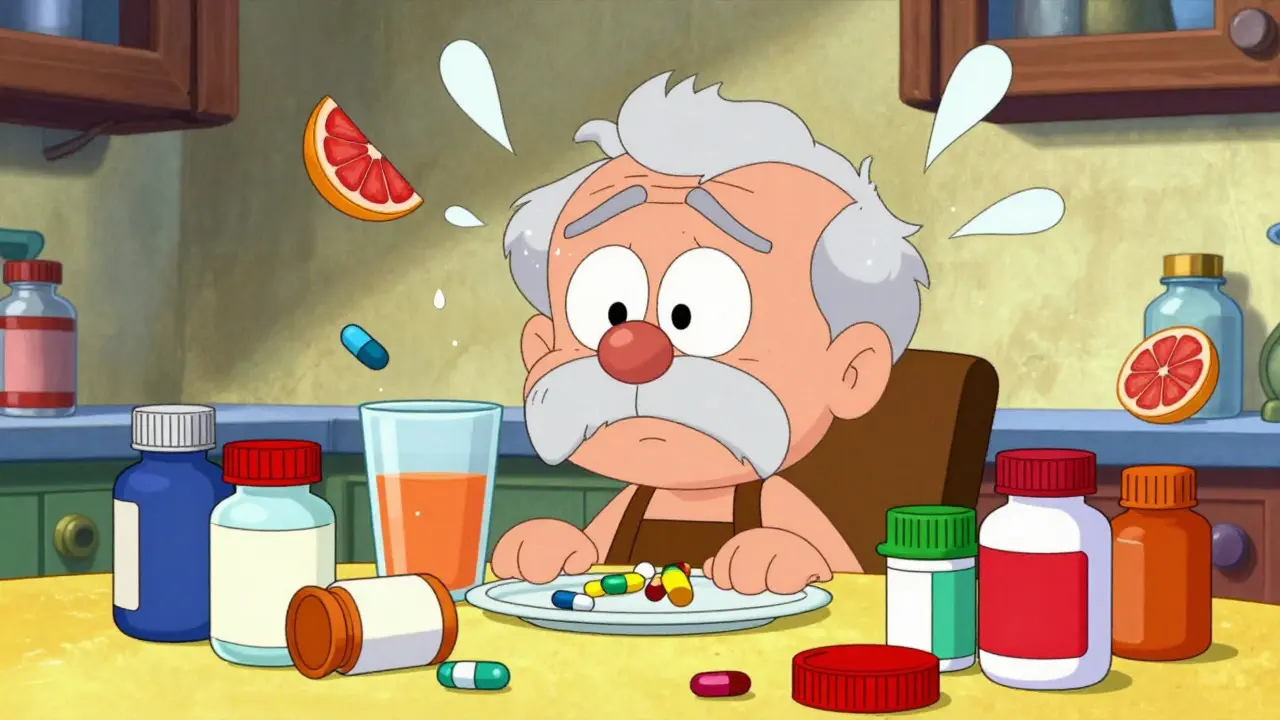
Imagine this: your loved one takes five different pills every morning. One is for blood pressure, another for cholesterol, a vitamin supplement, a pain reliever, and an antibiotic for a recent infection. It sounds manageable until you realize that one of those medications interacts dangerously with the grapefruit juice they had at breakfast, or that the bathroom humidity has degraded the effectiveness of their heart medicine. For millions of families, this isn't a hypothetical scenario-it's daily life.
As we age, our bodies change how they process drugs. The National Institute on Aging (NIA) reports that adults aged 65 and older account for 34% of all prescription medication use in the United States, despite making up only 16% of the population. With 90% of seniors taking at least one medication and 40% taking five or more daily, the risk of adverse drug events skyrockets. In fact, medication mismanagement is now considered a leading cause of hospitalization in older adults, surpassing even heart disease in preventability according to geriatric experts. If you are a senior managing your own health or a caregiver supporting a loved one, these five evidence-based safety tips can mean the difference between independence and crisis.
1. Maintain a Master Medication List
The single most effective tool for preventing dangerous interactions is a comprehensive, up-to-date list of everything going into the body. This isn't just about prescriptions. It includes over-the-counter painkillers, vitamins, herbal supplements, and even occasional cough syrups. The Health in Aging Foundation specifies that this list must include ten specific elements: medication name, dosage strength, frequency, purpose, start date, prescribing doctor, pharmacy contact, special instructions, known side effects, and expiration dates.
Why does this matter? Because pharmacists rely on this information to catch errors. A 2022 survey by the American Pharmacists Association found that 92% of pharmacists reported this practice prevents dangerous drug interactions. Update this list within 24 hours of any change-whether it’s a new prescription or stopping a supplement-and bring it to every healthcare appointment. It serves as the single source of truth for doctors, nurses, and emergency responders.
- Include: Prescriptions, OTC drugs, vitamins, supplements.
- Update Frequency: Within 24 hours of any change.
- Bring To: Every doctor visit, pharmacy pickup, and ER trip.
2. Organize with Purpose: Pill Boxes and Digital Tools
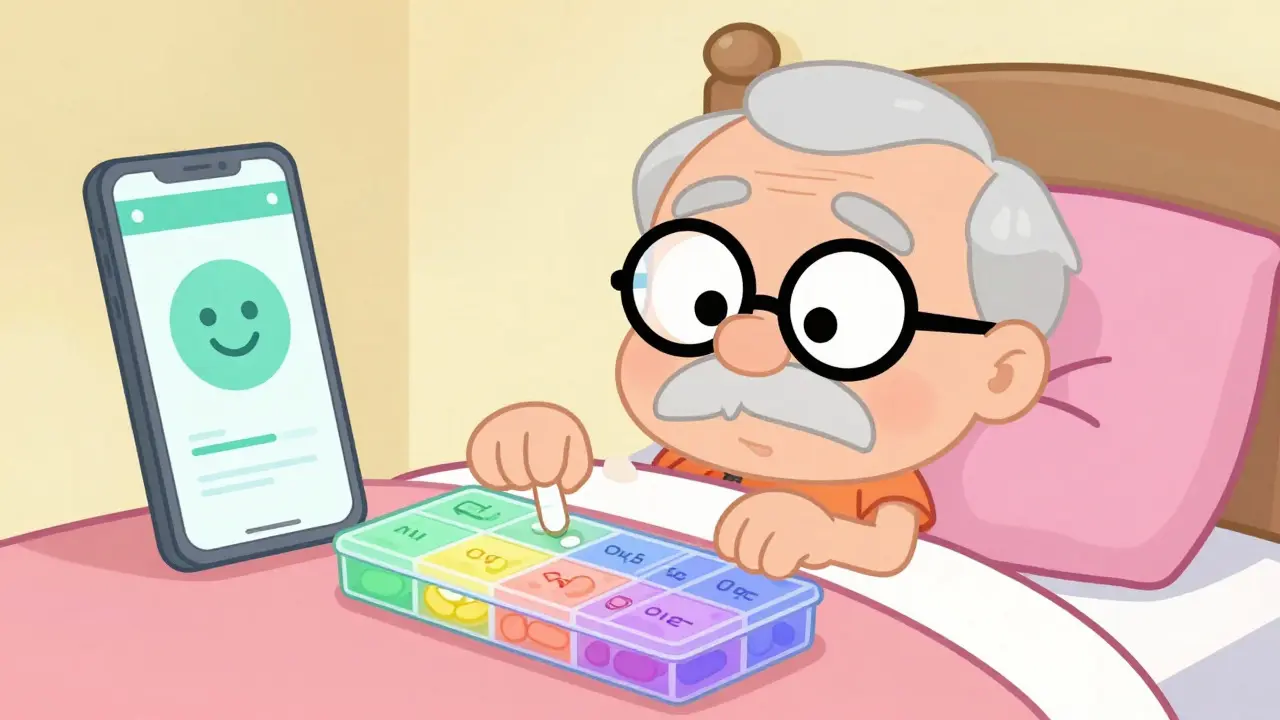
Relying on memory alone is a recipe for missed doses or double-dosing. Organization systems reduce cognitive load and create visual confirmation that a dose has been taken. For many seniors, simple physical pill organizers are the best solution. The NIA recommends color-coded systems, which have been shown to improve adherence by 47% in seniors with mild cognitive impairment.
However, if manual organization feels overwhelming, technology offers robust alternatives. Digital tools like Medisafe, which holds a 4.7/5 rating from thousands of users, provide automated reminders and tracking. For higher-risk cases, smart dispensing systems like Hero automatically dispense pills at scheduled times and alert caregivers if a dose is missed. Studies show that technology-assisted management improves adherence rates from 55% to 89% in seniors aged 75 and older. Just remember: technology should simplify life, not complicate it. If a device causes confusion, stick to low-tech solutions.
| Method | Best For | Pros | Cons |
|---|---|---|---|
| Physical Pill Organizer | Mild cognitive impairment, routine schedules | Low cost, no tech skills needed, visual confirmation | Requires daily refilling, easy to forget to take |
| Digital Apps (e.g., Medisafe) | Tech-savvy seniors, complex schedules | Automated reminders, caregiver alerts, refill tracking | Requires smartphone literacy, battery dependence |
| Smart Dispensers (e.g., Hero) | High-risk patients, dementia care | Forces adherence, locks out extra doses, remote monitoring | High upfront cost ($499+), monthly subscription fees |
3. Monitor for Dangerous Interactions
Not all medications play well together. Some interact with food, others with alcohol, and many with each other. The Beers Criteria®, updated biennially by the American Geriatrics Society, identifies potentially inappropriate medications for older adults. The 2023 version lists 138 such medications. Regularly review your regimen against this criteria with your pharmacist or doctor.
Pay close attention to common dietary triggers. The FDA specifically warns that grapefruit juice interacts with 85 commonly prescribed medications, including statins and blood pressure drugs. Alcohol interacts dangerously with over 150 medications, including sedatives and diabetes drugs. Ask your provider: "What foods or drinks should I avoid while taking this?" Proactive monitoring prevents subtle but serious health declines, such as sudden dizziness or kidney strain.
4. Store Medications Correctly
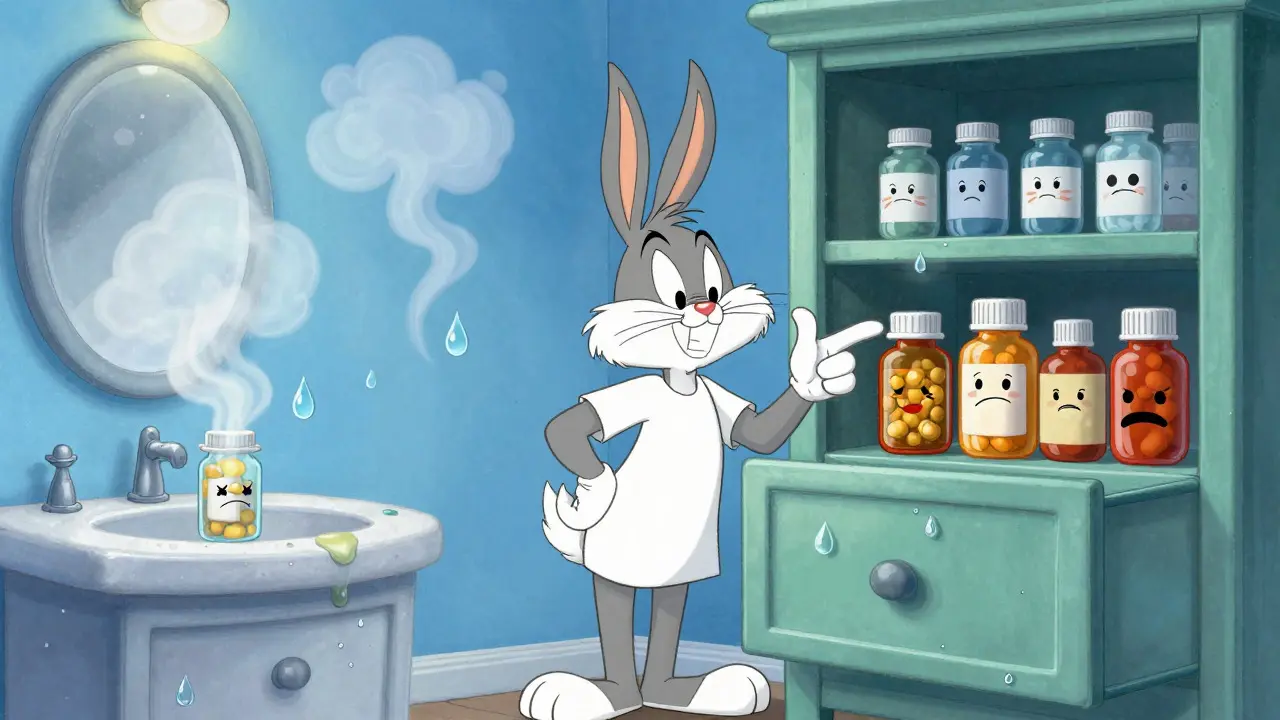
Where you keep your meds matters more than you might think. Most people store medications in bathroom medicine cabinets, but this is often the worst place. A 2022 University of Florida study found that steam and humidity degrade 37% of common medications. Ideal storage conditions are temperatures between 68-77°F (20-25°C) with humidity below 60%.
Keep drugs in their original containers to preserve labeling and expiration dates. If you live with grandchildren, consider locked storage; the Poison Control Center reports 60,000 accidental pediatric poisonings annually from improperly stored medications. Additionally, regularly purge expired drugs. The average senior home contains $317 worth of unused or expired medications, which can lose potency or become harmful. Set a quarterly reminder to check expiration dates and dispose of old pills safely through local take-back programs.
5. Establish Clear Communication Protocols
Don't wait for problems to arise. Establish a routine of structured communication with healthcare providers. Prepare specific questions for each appointment, such as: "Is this medication still necessary?", "What interactions should I watch for?", "Are there lower-cost alternatives?", and "What are the signs of dangerous side effects?"
The Alzheimer's Association documents that structured communication reduces medication errors by 63% in dementia patients. For caregivers, this means advocating for deprescribing when appropriate. The American Geriatrics Society’s Choosing Wisely campaign recommends reducing high-risk medication classes like benzodiazepines and anticholinergics when safer alternatives exist. Simplifying regimens-such as reducing dosing frequency from four times daily to once daily-can increase adherence rates from 50% to 90%, according to Dr. Michael Steinman of the San Francisco VA Medical Center.
Real-World Challenges and Solutions
Even with the best intentions, implementation can be tricky. On caregiver forums, many report that digital apps sometimes backfire. For instance, a caregiver on Reddit noted that their mother dismissed app reminders without taking pills, leading to undetected low blood sugar episodes. In such cases, low-tech solutions like laminated charts with color photos of each pill next to its name and purpose can reduce anxiety and improve compliance by up to 80%.
AARP’s 2023 Medication Safety Survey found that 55% of seniors aged 75+ prefer written schedules over digital tools. Start simple. Use large-print labels, available free through participating pharmacies via the FDA’s Safe Use Initiative. Establish a consistent daily routine, perhaps linking medication times to meals or brushing teeth. Visual cues improve success rates by 65%, and establishing a habit typically takes 21-30 days.
How often should I update my medication list?
You should update your medication list within 24 hours of any change, whether starting, stopping, or changing the dose of any prescription, over-the-counter drug, or supplement. Bring this updated list to every healthcare appointment.
Is it safe to store medications in the bathroom?
Generally, no. Bathrooms often have high humidity and temperature fluctuations from showers, which can degrade up to 37% of common medications. Store meds in a cool, dry place like a bedroom drawer, ideally between 68-77°F (20-25°C).
What are the Beers Criteria?
The Beers Criteria is a clinical guideline developed by the American Geriatrics Society that identifies medications potentially inappropriate for older adults due to increased risks of adverse effects. It is updated every two years and helps doctors choose safer alternatives.
Can grapefruit juice really affect medications?
Yes. Grapefruit juice interacts with approximately 85 commonly prescribed medications, including many statins and blood pressure drugs. It can alter how the liver processes these drugs, leading to toxic levels or reduced effectiveness. Always ask your pharmacist about food interactions.
When should I consider using a smart pill dispenser?
Smart dispensers like Hero are beneficial for seniors with significant memory issues, complex regimens, or those living alone who need caregiver oversight. They are less suitable for those who struggle with technology or may try to override safety features. Consult a pharmacist to determine if the complexity matches the user's abilities.