
Anticonvulsant Birth Control Interaction Checker
Your Seizure Medication
Your Birth Control Method
Interaction Result
If you're taking medication for seizures and also using birth control pills, patches, or rings, there's a real chance your birth control isn't working as well as you think. This isn't a rare issue - it's a well-documented, dangerous interaction that affects over a million women in the U.S. alone. Many women don't even know it's happening until they get pregnant - despite using birth control perfectly. The problem isn't user error. It's a hidden drug interaction between anticonvulsants and hormones.
Which Anticonvulsants Lower Birth Control Effectiveness?
Not all seizure medications cause this problem. Only the ones that boost liver enzymes do. These are called enzyme-inducing antiepileptic drugs (EIAEDs). They speed up how fast your body breaks down estrogen and progestin - the hormones in most birth control methods. When that happens, your body clears the hormones before they can do their job.The big offenders include:
- Carbamazepine (Tegretol)
- Oxcarbazepine (Trileptal)
- Phenytoin (Dilantin)
- Phenobarbital
- Primidone (Mysoline)
- Topiramate (Topamax) - especially at doses over 200 mg/day
- Felbamate (Felbatol)
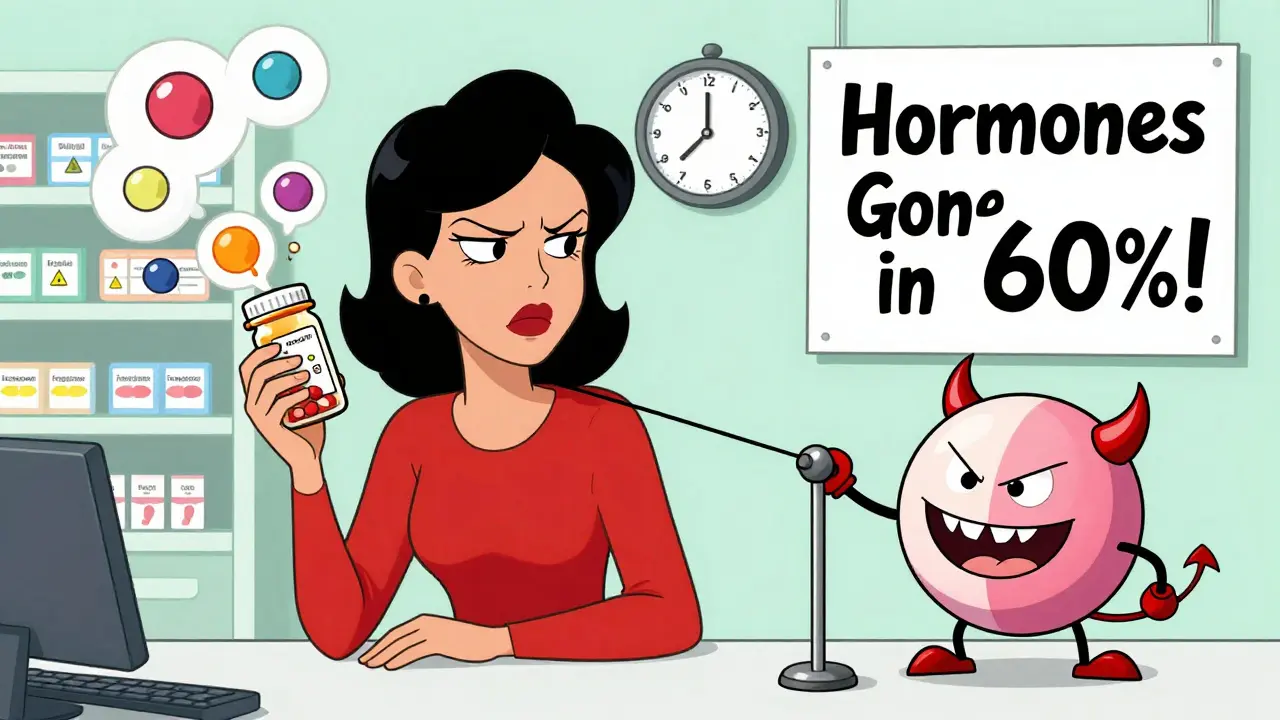
Studies show these drugs can drop estrogen levels by up to 60% and progestin by half. That’s not a small drop - it’s enough to make birth control pills useless. Even if you take them at the same time every day, your body is flushing the hormones out too fast.
What Birth Control Methods Are Affected?
Any birth control that relies on hormones absorbed through the liver is at risk:- Combined oral contraceptive pills (COCs)
- The patch (Ortho Evra)
- The vaginal ring (NuvaRing)
These all deliver estrogen and/or progestin that get broken down by the same liver enzymes the anticonvulsants activate. The result? Less hormone in your bloodstream. Less protection.
Emergency contraception is also compromised. Levonorgestrel (Plan B, Next Choice) loses about half its effectiveness. Ulipristal acetate (Ella) may not work at all if you’re on enzyme-inducing drugs. That means if you need emergency birth control after unprotected sex, standard options might fail.
What Birth Control Still Works?
Good news: not all methods are affected. Some work just fine - even with strong anticonvulsants.- Levonorgestrel IUDs (Mirena, Kyleena): These release progestin directly into the uterus. Blood levels stay high enough to prevent pregnancy, even with enzyme inducers. Pregnancy rates are under 0.1% per year.
- Copper IUD (ParaGard): No hormones at all. It works by creating a local reaction in the uterus. Anticonvulsants don’t touch it. It’s 99% effective and lasts up to 12 years.
- Depo-Provera (DMPA): This shot delivers a very high dose of progestin every 12-13 weeks. Even with faster metabolism, the levels stay high enough to prevent ovulation.
- Progestin-only pills (mini-pills): These are tricky. While they don’t contain estrogen, some studies suggest enzyme inducers might still lower their effectiveness. They’re not the best choice unless combined with another method.
Experts from ACOG and the CDC agree: IUDs and the shot are the safest bets for women on enzyme-inducing anticonvulsants.

The Lamotrigine Problem: A Two-Way Street
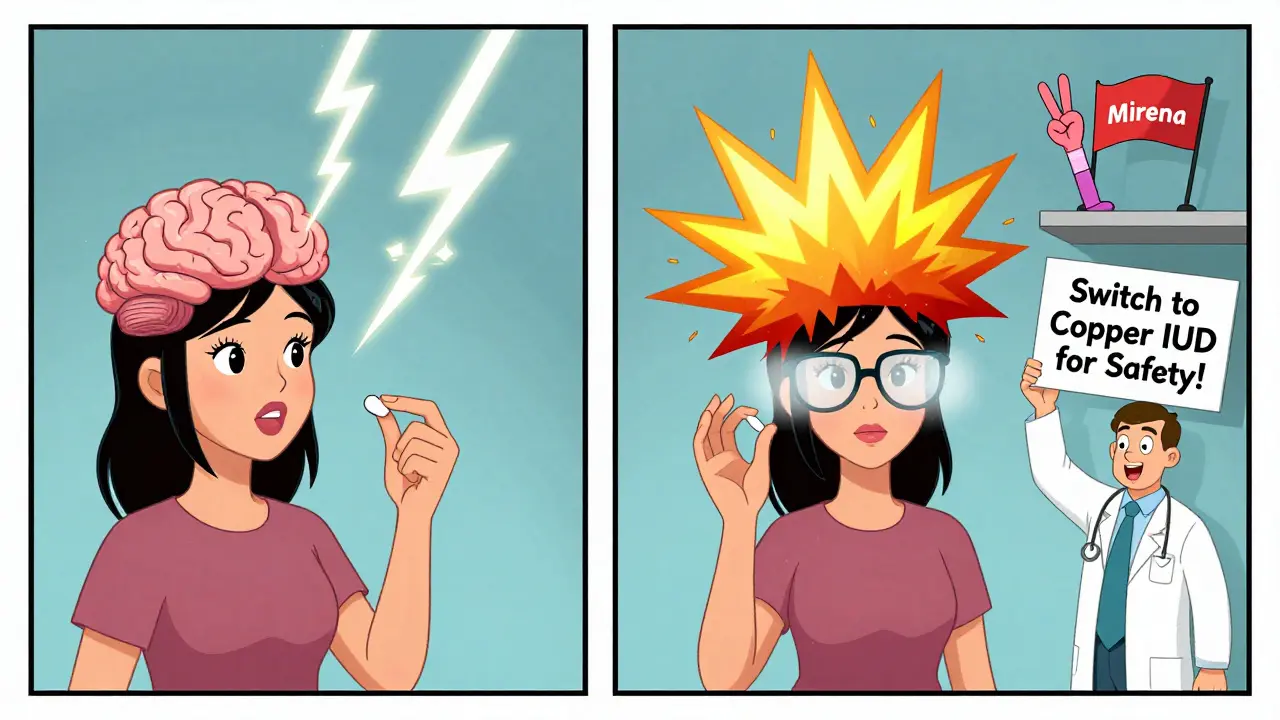
Lamotrigine (Lamictal) is different. It doesn’t boost liver enzymes - but it’s still dangerous to mix with estrogen-containing birth control.Here’s the twist: birth control pills lower lamotrigine levels by about 50%. That means your seizure control could suddenly worsen. Many women don’t realize their seizures are getting worse because they think it’s stress or sleep loss. But it’s the pill.
And when you stop taking the pill - during your week off - lamotrigine levels spike. That can cause dizziness, blurred vision, or even dangerous skin rashes. This cycle of low and high levels is risky.
Doctors recommend avoiding estrogen-containing birth control if you’re on lamotrigine. If you must use it, your lamotrigine dose may need to be increased by 50-100%, and levels must be monitored closely. Non-hormonal options like the copper IUD are often the best solution.
What About Safer Anticonvulsants?
If you’re planning to start birth control - or already on it - ask your neurologist if switching to a safer anticonvulsant is possible. Some newer drugs don’t interfere with hormones:- Valproate (Depakote) - doesn’t affect birth control, but has other risks in pregnancy
- Gabapentin (Neurontin)
- Pregabalin (Lyrica)
- Levetiracetam (Keppra)
- Perampanel (Fycompa)
- Brivaracetam (Briviact)
These drugs don’t trigger liver enzymes the same way. That means your birth control stays effective, and your seizure control stays stable. Switching isn’t always easy - especially if you’ve had seizures for years - but it’s worth discussing.
Real Stories: What Happens When No One Warns You
A 2019 study of 327 women with epilepsy found that 42% had breakthrough bleeding while on birth control pills and enzyme-inducing drugs. Almost 1 in 5 had an unplanned pregnancy - even though they took their pills correctly.One Reddit user wrote: “I got pregnant on Ortho Tri-Cyclen while taking Tegretol. My neurologist never said a word.”
Another shared: “After switching from pills to Mirena when I started Keppra, my periods became regular and my seizures didn’t change. Finally, peace of mind.”
These aren’t outliers. They’re common. And the biggest problem? Most women aren’t warned.
A 2022 survey by the Epilepsy Foundation found only 35% of women with epilepsy received contraceptive counseling from their neurologist. Only 22% got it from their gynecologist. That’s a massive gap in care.
What Should You Do?
If you’re taking any anticonvulsant and using hormonal birth control, here’s what to do now:- Check your drug. Is it one of the enzyme-inducing ones? If yes, your birth control is likely compromised.
- Don’t panic. But do act. Talk to both your neurologist and your gynecologist - together, if possible.
- Switch to an IUD or shot. These are the most reliable options. The copper IUD is hormone-free and lasts 12 years. Mirena or Kyleena are progestin-only and just as effective.
- If you must use pills, use the highest dose available (at least 50 mcg ethinyl estradiol) and always use condoms as backup. Even then, effectiveness is still reduced.
- Never rely on Plan B if you’re on enzyme-inducing drugs. It probably won’t work.
Why This Matters Beyond Pregnancy
Unplanned pregnancy isn’t just inconvenient - it’s dangerous for women on anticonvulsants. Many of these drugs increase the risk of birth defects by 30-40%. The baseline risk for birth defects in the general population is 2-3%. For women on carbamazepine or phenytoin, it’s 6-10%.That’s why preventing unintended pregnancy isn’t just about avoiding a baby - it’s about protecting a future baby from serious harm.
Also, if you’re on lamotrigine and get pregnant unexpectedly, your seizure risk could rise - and so could the risk of dangerous side effects from sudden lamotrigine level changes.
What’s Changing in 2026?
There’s new hope. The NIH is tracking 5,000 pregnancies to better understand how different anticonvulsants affect birth outcomes. The Bill & Melinda Gates Foundation is funding research into a non-hormonal contraceptive gel that works without touching liver enzymes - potentially solving this problem for good.Meanwhile, ACOG and the American Academy of Neurology are launching a shared decision-making toolkit for doctors in early 2024. It’s designed to make sure no woman slips through the cracks again.
But until then - if you’re on anticonvulsants and birth control - don’t assume it’s working. Ask. Check. Switch if needed. Your body, your future, and your health deserve nothing less.



John O'Brien
January 28, 2026 AT 07:02Bro I was on Tegretol and NuvaRing for two years and never knew this was a thing. Got pregnant anyway. My OB didn't say shit and my neurologist just shrugged. This post saved me from doing it again. Switched to Mirena and my seizures are way better too. Fuckin' wild.
astrid cook
January 29, 2026 AT 03:17Of course the system fails women again. Doctors are too lazy to connect the dots. You think they actually read the damn drug interaction charts? Nah. They just prescribe and hope. And then when you get pregnant, it's your fault for 'not being careful.' Please tell me you're not one of those people who blame the victim.
Andrew Clausen
January 30, 2026 AT 08:52The claim that topiramate at >200 mg/day reduces efficacy is based on a 2012 retrospective cohort study with a sample size of 47. The CDC's own guidelines note insufficient evidence for dose-dependent effects. Also, Depo-Provera is not 100% effective - failure rate is 0.3% per year with perfect use, but 6% with typical use. Don't treat guidelines as gospel.
Anjula Jyala
January 30, 2026 AT 10:16Enzyme induction via CYP3A4 and UGT pathways is the key mechanism here. EIAEDs accelerate phase I metabolism of ethinyl estradiol and progestins leading to subtherapeutic plasma concentrations. Copper IUD is gold standard due to non-hormonal mechanism. Lamotrigine pharmacokinetics are compromised by estrogen-mediated glucuronidation. No ambiguity.
Kegan Powell
February 1, 2026 AT 00:40Just want to say this is one of the most important posts I've read all year 💙
So many women are walking around thinking they're protected when they're not. It's not just about birth control - it's about bodily autonomy. I wish every gyno and neuro doc had to read this before they saw patients. Thank you for putting this out there. You're doing the work.
Harry Henderson
February 3, 2026 AT 00:02STOP USING PILLs if you're on carbamazepine. Just stop. It's not even a debate. IUDs are cheap, long-lasting, and don't care what liver enzymes you've got. You want to live your life without panic attacks every month? Do the right thing. No excuses.
suhail ahmed
February 3, 2026 AT 19:21Man I remember when I was on Keppra and my cousin switched from pills to ParaGard - she said it felt like she got her body back. No mood swings, no spotting, no worrying. And her seizures stayed calm. Sometimes the simplest solution is the most powerful one. Don't let fear of change keep you stuck in a risky loop.
Candice Hartley
February 5, 2026 AT 16:01This is terrifying. I'm on lamotrigine and just started the patch. I didn't know this could happen. I'm calling my doctor tomorrow.
Kirstin Santiago
February 7, 2026 AT 01:29I'm so glad this is getting attention. I had a friend who got pregnant on Trileptal and the pill - she was devastated. She thought she was being responsible. Turns out the system failed her. We need better education, not just for patients but for doctors too. This shouldn't be a secret.
Kathy McDaniel
February 7, 2026 AT 21:04so i switched to the shot after my neuro said my meds were messing with my pill and omg it was a game changer. no more spotting and my seizures are way more chill. also i forgot to get my next shot once and i was like oh no but then i realized like... i still wasn't pregnant lol
Conor Flannelly
February 8, 2026 AT 22:01Interesting how this intersects with global health disparities. In rural India or sub-Saharan Africa, access to IUDs is extremely limited. Many women rely on pills because they're cheaper and more available. This isn't just a medical issue - it's a justice issue. We need affordable, accessible alternatives for everyone.
Conor Murphy
February 9, 2026 AT 21:51My sister’s on Lamictal and got pregnant on the pill. She didn’t know the pill was lowering her meds until she had a seizure in the third month. They almost lost the baby. Now she’s on copper IUD and her neurologist checks her levels every 3 months. It’s not glamorous, but it’s safe. This needs to be common knowledge.
Marian Gilan
February 11, 2026 AT 18:40Who funds this research? Big Pharma. They don't want you to know about non-hormonal options because IUDs and copper don't make them billions. The 'new gel' they're talking about? Probably gonna cost $800 and be covered by 3% of insurers. This whole thing is a profit scheme disguised as medicine.
Paul Taylor
February 13, 2026 AT 00:33I've been on Keppra for 12 years and was on Yaz for 5 before I found out about this. I thought I was fine. Turns out I was just lucky. I switched to Mirena and my life changed. No more anxiety about forgetting a pill. No more spotting. No more wondering if I'm protected. I wish someone had told me this 10 years ago. I wasted so much time. Don't make my mistake. Talk to your doctors. Ask for the IUD. It's not that hard.