

You’re feeling fine on your medication. Your blood tests are stable. Then, at the pharmacy counter, you get a different-looking pill. The pharmacist says it’s the generic version, and it’s cheaper. You take it home, swallow it, and go about your day. But two weeks later, you feel off. Maybe your energy is lower, or your heart rate is weird. You call your doctor, and they ask for new blood work. The result? Your levels have shifted, and now you need a dose adjustment.
This scenario isn’t rare, especially if you take what pharmacists call Narrow Therapeutic Index (NTI) drugs. Unlike common medications where a tiny variation in absorption doesn’t matter much, NTI drugs have a very tight window between being effective and being toxic. For these specific medicines, switching from a brand-name product to a generic-or even swapping between two different generic manufacturers-can sometimes require a change in dosage. It’s not that generics are bad; it’s that some bodies are sensitive to the small differences allowed by regulatory standards.
What Are Narrow Therapeutic Index Drugs?
To understand why dose adjustments happen, you first need to grasp the concept of the therapeutic index. Think of it as the gap between the dose that helps you and the dose that hurts you. For most drugs, like ibuprofen or amoxicillin, this gap is wide. You can take slightly more or less without serious consequences. But for NTI drugs, that gap is razor-thin.
The FDA defines these drugs as those where "small differences in dose or blood concentration may lead to serious therapeutic failures or serious adverse events." In technical terms, the therapeutic index is often defined as ≤2 or ≤3. This means the toxic dose is only twice or three times higher than the effective dose. Because the margin for error is so small, even a minor fluctuation in how much drug gets into your bloodstream can push you out of the safe zone.
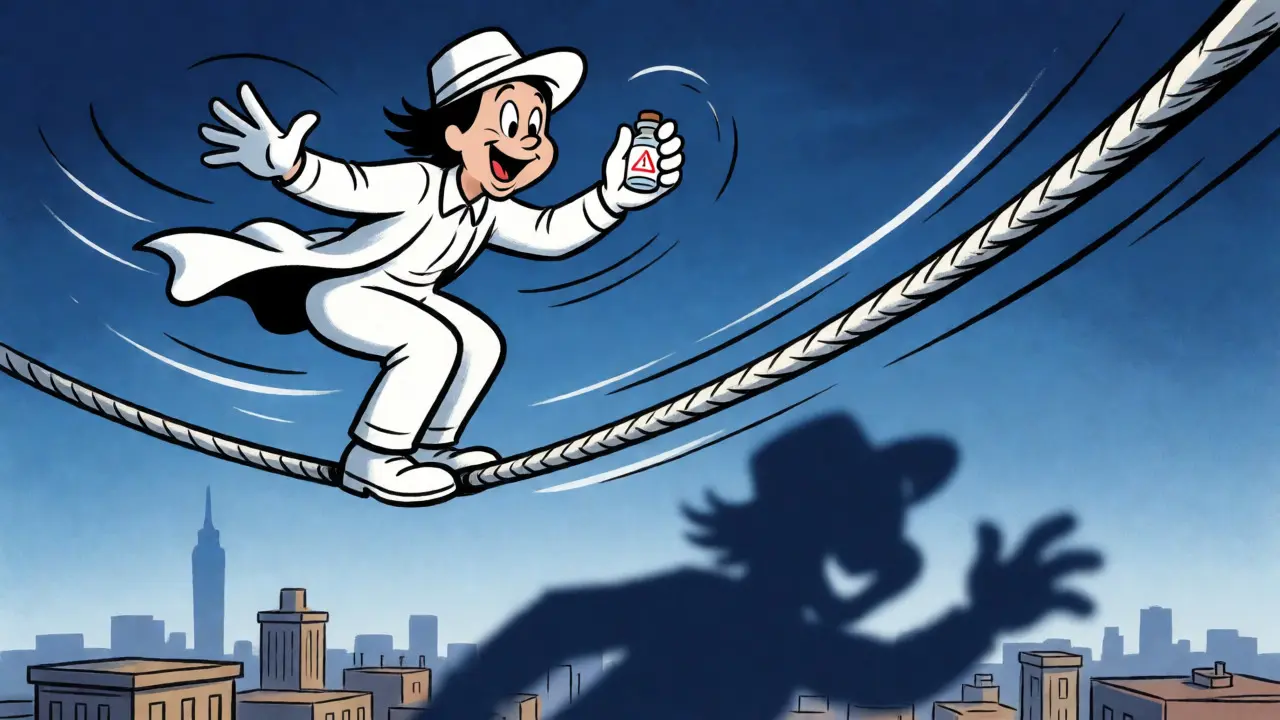
Common examples include anticoagulants like warfarin, antiepileptics like phenytoin, immunosuppressants like tacrolimus, cardiac glycosides like digoxin, and thyroid medications like levothyroxine. If you take any of these, your body is essentially walking a tightrope. A slight shift in wind direction-a change in formulation-can make you wobble.
Why Bioequivalence Isn’t Always Clinical Equivalence
When a generic drug is approved, it must prove "bioequivalence" to the brand-name original. This means the generic delivers the same amount of active ingredient into your bloodstream over the same amount of time. However, regulatory agencies allow a confidence interval of 80% to 125% for certain pharmacokinetic parameters. For most drugs, this range is clinically irrelevant. Your body handles the variation just fine.
But for NTI drugs, that 80-125% window can be too wide. A generic might fall within the legal limit but still deliver 15% less drug than the brand name you were stabilized on. For a warfarin patient, a 15% drop in drug levels can significantly alter INR readings, increasing the risk of clotting. Conversely, a slight increase could raise bleeding risks. This is why experts argue that standard bioequivalence standards don’t always guarantee clinical equivalence for these sensitive medications.
| Feature | Standard Medications | Narrow Therapeutic Index (NTI) Drugs |
|---|---|---|
| Therapeutic Window | Wide (High tolerance for variation) | Narrow (Low tolerance for variation) |
| Bioequivalence Acceptance | 80-125% confidence interval | Tighter scrutiny required; debate on narrowing to 90-111% |
| Risk of Dose Adjustment | Very Low | Moderate to High depending on patient stability |
| Monitoring Needed | Routine check-ups | Frequent blood tests (TDM) after switches |
| Examples | Ibuprofen, Metformin, Amoxicillin | Warfarin, Levothyroxine, Tacrolimus, Phenytoin |
Real-World Scenarios: When Switches Trigger Changes
Let’s look at actual clinical data to see how often these adjustments happen. It’s not every switch, but it’s frequent enough that doctors plan for it. Studies show that patients switching between different formulations of warfarin experienced a 23% higher rate of INR instability requiring dose adjustment within 30 days compared to those who stayed on one consistent product. That’s a significant jump.
For transplant patients taking tacrolimus, the stakes are even higher. Research indicated that 18.7% of patients required dose adjustments within 14 days of switching from brand to generic, compared to just 5.2% in control groups. Why such a difference? Tacrolimus has a steep exposure-response curve. A small dip in blood levels can trigger organ rejection, while a spike can cause kidney toxicity.
Then there’s levothyroxine. Many practitioners report that once a patient is stabilized on a specific source, switching brands causes fatigue, weight changes, or anxiety until the dose is tweaked. One case study noted a patient experiencing severe fatigue for three weeks after a switch, which resolved only after a 12.5 mcg dose increase. While some patients switch with no issues, the variability highlights why blanket rules don’t work for everyone.
How Doctors Decide to Adjust Your Dose
If you switch your NTI medication, your doctor won’t necessarily change your dose immediately. They will likely order a follow-up test. This process is called Therapeutic Drug Monitoring (TDM). TDM involves measuring the concentration of the drug in your blood to ensure it’s within the target range.
Here’s the typical workflow:
- Baseline Check: Before the switch, your doctor confirms your current levels are stable.
- The Switch: You start the new generic formulation.
- Monitoring Window: For warfarin, INR checks usually happen within 7-14 days. For antiepileptics, serum concentration monitoring occurs within 2 weeks.
- Analysis: If your levels deviate by more than 10-20% from your previous steady state, the doctor considers an adjustment.
- Adjustment: Doses are often changed in small increments, typically less than 20%, to gently steer you back to the target range.
Clinical decision support tools now alert pharmacists and doctors to these risks. Systems like Lexicomp flag NTI drugs and suggest considering a 5-15% dose adjustment based on monitoring results. This proactive approach helps prevent adverse events before they become emergencies.

Pitfalls and Practical Tips for Patients
Navigating generic switches can be confusing, especially when insurance companies force changes due to formulary updates. About 43.7% of pharmacists report difficulty maintaining consistent NTI products because payers mandate switches. Here’s how you can protect yourself:
Ask for consistency. If you are stable on a specific generic manufacturer, ask your pharmacist if they can keep you on that same source. Some pharmacies offer "brand-consistent" dispensing for NTI drugs, though it might cost a bit more.
Don’t skip the follow-up. If your doctor orders a blood test after a switch, do it. Even if you feel fine, your internal chemistry might be shifting. Symptoms of subtherapeutic levels (too little drug) or toxic levels (too much) can be subtle at first.
Watch for symptoms. With warfarin, watch for unusual bruising or bleeding. With levothyroxine, note changes in energy, temperature sensitivity, or heart rate. With phenytoin, look for dizziness or coordination issues. Report these early.
Communicate with your provider. Tell your doctor exactly what happened. Did the pill shape change? Did the color change? Sometimes, the psychological effect of a new pill can mimic physical side effects, but it’s crucial to rule out actual pharmacokinetic changes first.
The Future of Generic Switching
The landscape is changing. The FDA has proposed tighter bioequivalence standards for NTI drugs, potentially narrowing the acceptable confidence interval from 80-125% to 90-111%. This would mean generics must match the brand name much more closely, reducing the likelihood of needing dose adjustments.
Manufacturers are also responding. Companies like Teva are developing "supergeneric" formulations with stricter manufacturing controls to minimize variability. Early data suggests these products show significantly lower within-subject variability. As these higher-quality generics become more common, the need for post-switch dose adjustments should decrease.
Until then, awareness is your best tool. Knowing that you are on an NTI drug puts you in a better position to manage your health. It’s not about avoiding generics-they save billions and provide access to life-saving treatments. It’s about managing the transition carefully so your treatment remains effective and safe.
Do I always need a dose adjustment when switching to a generic?
No, not always. Most people tolerate generic switches without any issues. However, for Narrow Therapeutic Index (NTI) drugs like warfarin or levothyroxine, the risk is higher. Your doctor will decide based on your stability and blood test results, not just the fact that you switched.
How soon after switching should I get blood tests?
It depends on the drug. For warfarin, INR checks are typically recommended within 7-14 days. For antiepileptics like phenytoin, serum level monitoring is often suggested within 2 weeks. Always follow the specific schedule provided by your healthcare provider.
Can I refuse a generic substitution?
In many cases, yes, especially for NTI drugs. You can ask your doctor to write "Dispense as Written" (DAW) on your prescription. Note that this might result in a higher copay, as insurance plans often prefer generics.
What is the biggest sign my dose needs adjusting?
The signs vary by drug. For blood thinners, it’s unusual bleeding or bruising. For thyroid meds, it’s fatigue or heart palpitations. For anti-seizure meds, it’s breakthrough seizures or dizziness. Blood tests are the only way to confirm the issue definitively.
Are all generics the same?
They contain the same active ingredient, but inactive ingredients (fillers, binders) can differ between manufacturers. These differences can affect how quickly the drug dissolves and absorbs, which matters most for sensitive NTI drugs.
ARPIT SAHU
September 6, 2026 AT 11:27Big Pharma is hiding the fact that generics are just cheap filler with a sprinkle of active ingredient. They want you to think it's science, but it's actually a conspiracy to lower your immune response so they can sell you more drugs later. I bet the FDA is in their pocket too.
michael colasi
September 7, 2026 AT 08:32This is such an important topic! 🌟 As someone who loves traveling and seeing how healthcare works globally, I've noticed this issue everywhere. It’s not just a US thing. 😊 We need to advocate for better transparency in bioequivalence testing. 🌍💊
Jack Lanham
September 7, 2026 AT 18:58Oh, please... do you really think that switching pills causes all these dramatic shifts? It is mostly psychological, isn't it? The placebo effect is powerful, and people panic when the pill color changes, causing them to feel "off" without any actual physiological change occurring at all!!
I mean, sure, the data says 23% instability, but correlation does not equal causation, does it?? Maybe those patients were just stressed about the cost savings or something else entirely!!! Why must we always blame the manufacturer when it could be our own minds playing tricks on us??? :-(
Emma Garub
September 9, 2026 AT 15:30The distinction between pharmacokinetic equivalence and clinical efficacy is paramount here. While regulatory bodies mandate a specific confidence interval for AUC and Cmax, individual patient variance in metabolizer status (e.g., CYP450 polymorphisms) often dictates the actual therapeutic outcome. Therefore, therapeutic drug monitoring remains the gold standard for NTI medications regardless of formulation source.
Camryn Matis
September 11, 2026 AT 12:48I totally agree with the point about consistency being key!! Its so hard when insurance switches your provider every few months, right?? I used to take levothyroxine and had to fight my pharmacy to keep me on the same brand because I felt terrible otherwise... its worth paying the extra copay if it means staying stable!!! Also, dont forget to mention that some pharmacies have special programs for this now, which is super helpful!!! ❤️👍
Sophia Calimbahin
September 13, 2026 AT 06:55America needs to stop relying on foreign manufacturing for our meds. If we produced our own generics under strict domestic standards, we wouldn't have this mess. Foreign labs cut corners, period. We should demand Made in USA for all NTI drugs.
Deepak Sharma
September 14, 2026 AT 18:56Stay positive! This is manageable. Just communicate with your doctor and get those blood tests done. You got this!
Elizabeth Lucero
September 16, 2026 AT 02:43It is frankly embarrassing that medical professionals still debate this. Any first-year pharmacology student knows that excipient differences alter dissolution rates. To suggest that 'psychological effects' mimic physical side effects is a lazy dismissal of genuine pharmacokinetic variance. Patients deserve rigorous scientific literacy, not hand-waving explanations.
Ste Gomez
September 17, 2026 AT 20:37If you cannot afford to pay for the brand name or a consistent generic, perhaps you should reconsider your lifestyle choices rather than blaming the pharmaceutical industry. Personal responsibility matters.
Aliyu Summaiyya
September 18, 2026 AT 16:15most doctors dont care about this stuff unless you force them to look at the numbers. i had to beg my cardiologist to check my levels after a switch. he almost laughed at me. typical attitude.
Michelle Wright
September 19, 2026 AT 22:41Insurance companies are evil. Period. They profit from the chaos. Stop letting them dictate your health.
James Clarke
September 20, 2026 AT 23:43Let's try to find common ground here!!! It seems like everyone agrees that monitoring is important, even if we disagree on the cause of the instability!!! Maybe we can focus on solutions like asking for DAW codes instead of arguing about whether the problem exists??? That feels much more productive!!! :-)
Paige! :) Bremer
September 22, 2026 AT 22:38I think it is really nice that there is so much information out there now because before I did not know what NTI meant and I was so scared when my pill changed but now I understand that sometimes things happen and it is okay to ask for help and get tested and make sure everything is good inside your body and that makes me feel much better about going to the pharmacy and picking up my medicine every month because knowledge is power and love and light to everyone dealing with this!!!